(7% discount is applied at checkout)
Cart is empty
Your go-to destination for cutting-edge server products
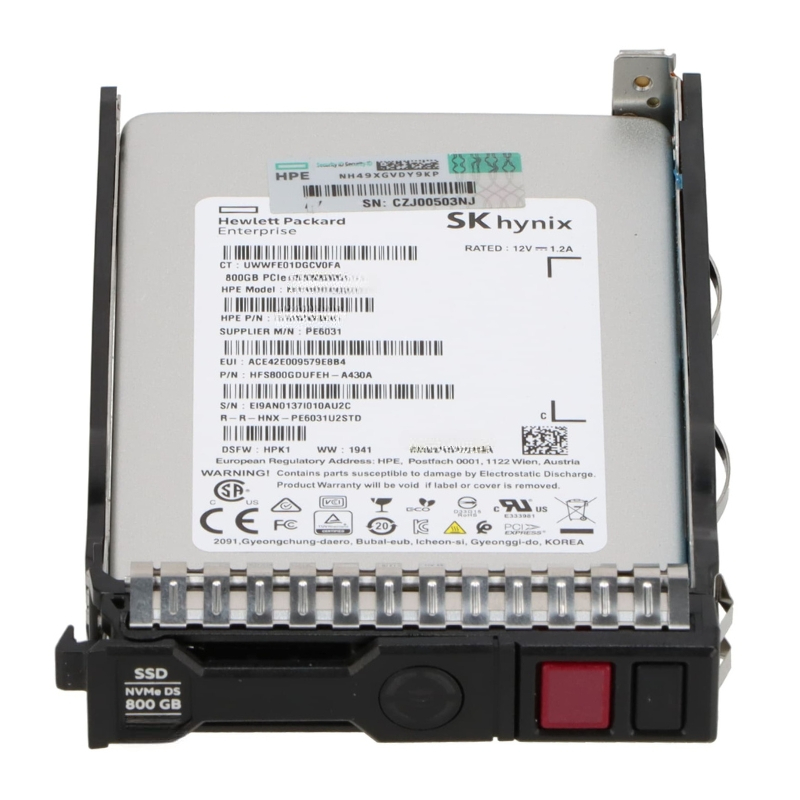


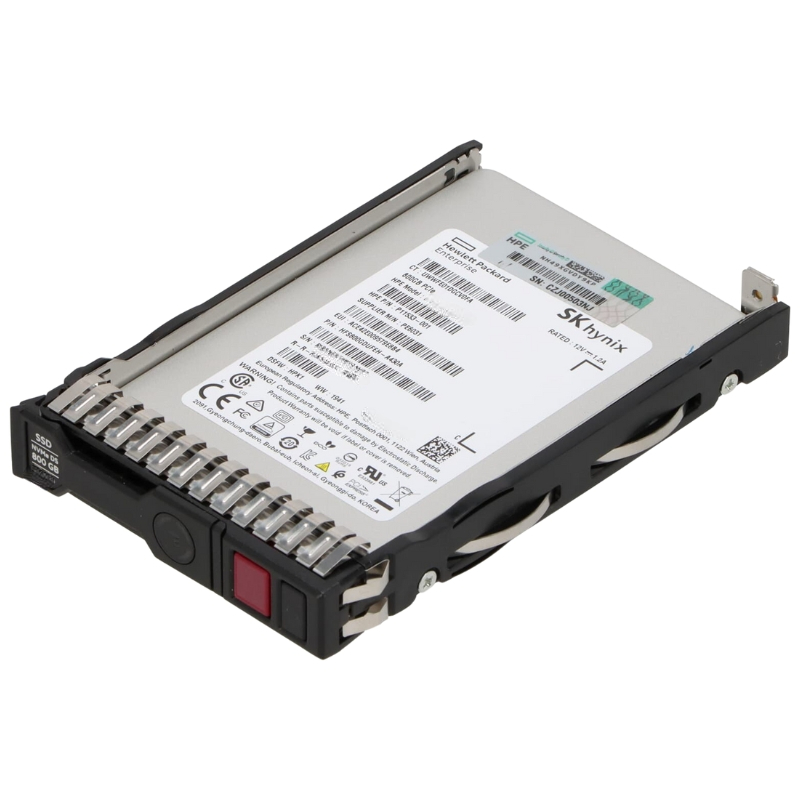
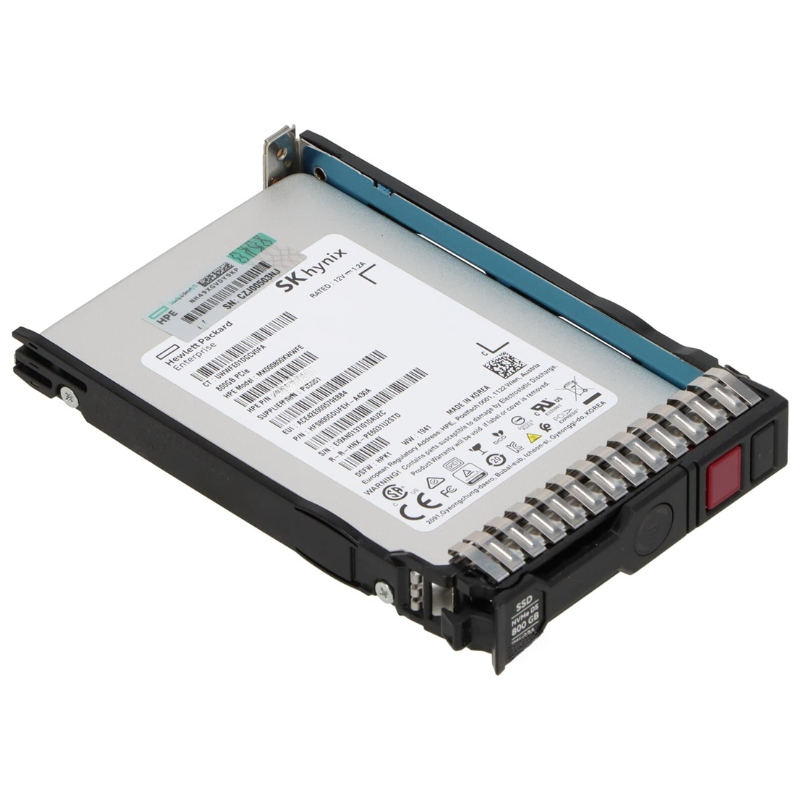
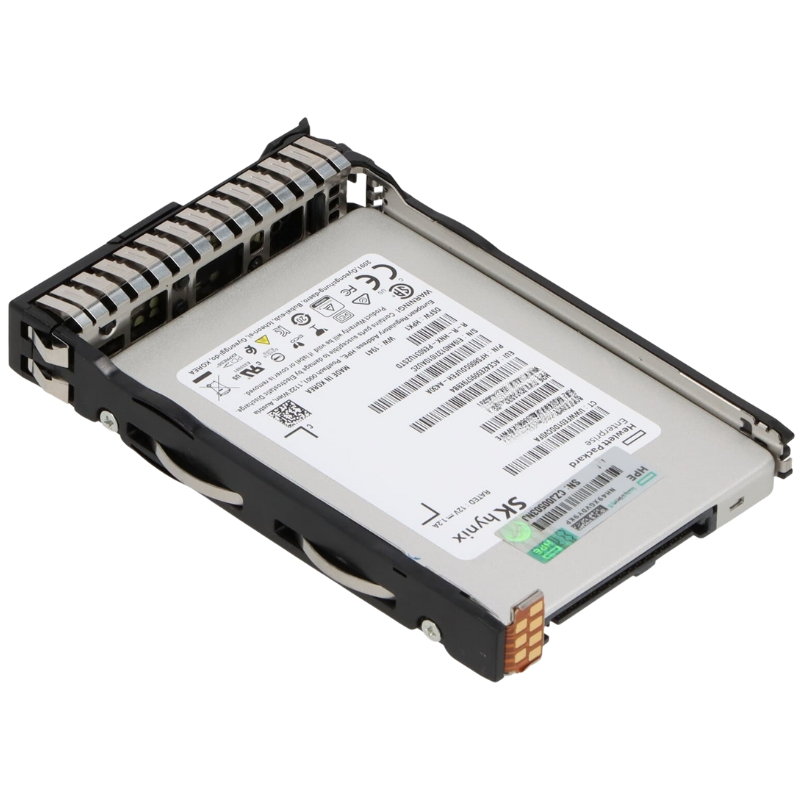
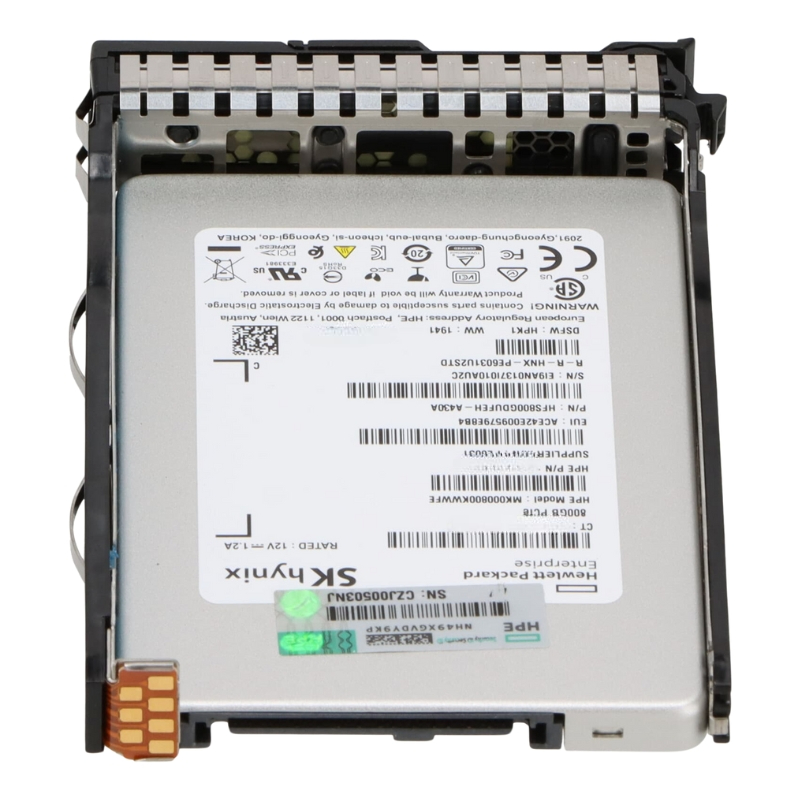
HPE P48216-001 800GB NVMe Mixed Use Gen3 Mainstream Performance 2.5inch Sff BC U.3 Static Multi Vendor SSD for Gen10 Plus Servers. Excellent Refurbished with 1 year replacement warranty
The HPE P48216-001 800GB NVMe Gen3 SSD delivers exceptional speed and reliability for enterprise storage environments. Designed for mixed-use workloads, this small form factor (SFF) U.3 solid-state drive offers mainstream performance and efficient data handling across multiple applications. Ideal for HPE ProLiant servers and SimpliVity systems, it ensures high throughput, low latency, and dependable uptime.
This HPE 800GB NVMe Gen3 SSD is fully optimized for HPE ProLiant and SimpliVity servers, ensuring excellent integration and reliability in enterprise environments.
The HPE P48216-001 represents a pinnacle of enterprise-grade storage technology, delivering exceptional performance and reliability for data-intensive workloads. This 800GB NVMe Gen3 Mixed Use SSD combines cutting-edge non-volatile memory express architecture with HPE's rigorous engineering standards to create a storage solution that bridges the gap between read-intensive and write-intensive applications. Designed specifically for HPE server environments while maintaining multi-vendor compatibility, this drive offers organizations the flexibility to deploy high-performance storage across diverse infrastructure configurations without compromising on enterprise features or data integrity.
At the core of the P48216-001 lies a sophisticated technical architecture engineered to meet the demanding requirements of modern enterprise environments. This section explores the comprehensive technical specifications that define this storage solution's capabilities and performance characteristics.
The HPE P48216-001 utilizes the Small Form Factor (SFF) 2.5-inch design with a U.3 interface, providing optimal balance between storage density and physical space requirements. This form factor ensures compatibility with a wide range of HPE server platforms including ProLiant, Apollo, and Synergy systems. The U.3 interface represents a significant advancement in enterprise storage connectivity, offering backward compatibility with U.2 systems while supporting the NVMe protocol exclusively. The drive's static multi-vendor designation indicates its firmware and compatibility testing across multiple server platforms beyond HPE's ecosystem, providing deployment flexibility for heterogeneous data center environments.
With an 800GB capacity, this SSD strikes an ideal balance for enterprise applications requiring substantial storage without the premium cost of maximum capacity drives. The drive employs enterprise-grade 3D TLC NAND flash memory, optimized through advanced controller algorithms to deliver consistent performance across varied workload patterns. The physical construction includes robust thermal management features essential for maintaining optimal operating temperatures during sustained heavy workloads, including advanced power management circuitry and thermal throttling protection mechanisms.
The P48216-001 delivers exceptional performance metrics characteristic of NVMe Gen3 technology, including sequential read speeds up to 3,200 MB/s and sequential write speeds reaching 1,800 MB/s. Random performance capabilities extend to 600,000 IOPS for read operations and 180,000 IOPS for write operations at queue depth 256, making it suitable for mixed workload environments. The drive's performance consistency remains within 90% of peak performance even under sustained write workloads, thanks to advanced garbage collection algorithms and substantial over-provisioning. Latency figures typically measure below 100 microseconds for read operations and 20 microseconds for write operations, ensuring responsive performance for latency-sensitive applications.
The implementation of NVMe technology in the P48216-001 represents a fundamental shift from traditional storage protocols, offering substantial performance and efficiency benefits for enterprise workloads. This section examines the NVMe architecture and its practical implications for data center operations.
Non-Volatile Memory Express protocol revolutionizes storage communication by optimizing the command set and queue structure specifically for flash memory, unlike legacy protocols adapted from hard disk era. The P48216-001 implements NVMe 1.3 specification, supporting up to 64,000 command queues each capable of holding 64,000 commands simultaneously. This massive parallelism eliminates the I/O bottleneck inherent in legacy protocols, enabling the drive to fully utilize the PCIe Gen3 x4 interface bandwidth. The protocol reduces software overhead through efficient interrupt handling and simplified command processing, resulting in lower CPU utilization compared to SAS or SATA equivalents when handling equivalent I/O workloads.
The PCI Express Gen3 x4 interface provides a theoretical bandwidth of approximately 4GB/s bidirectional, substantially higher than the 1.2GB/s limit of 12Gb/s SAS interfaces. This increased bandwidth enables the P48216-001 to support data-intensive applications including real-time analytics, high-frequency trading platforms, and large-scale virtualization environments. The interface supports end-to-end data protection features including Cyclic Redundancy Check across the PCIe bus, enhancing data integrity beyond the storage device itself. The interface implementation includes advanced power state management supporting multiple active and idle power states, optimizing energy consumption based on workload demands without compromising performance readiness.
While the P48216-001 operates as a direct-attached storage device, its NVMe architecture provides foundational compatibility with NVMe over Fabrics technologies. This future-proofing aspect enables potential integration with software-defined storage architectures and composable infrastructure solutions as organizations evolve their data center strategies. The drive's standardized NVMe implementation ensures compatibility with emerging storage technologies including computational storage and zoned namespaces, protecting infrastructure investments against technological obsolescence.
The "Mixed Use" classification distinguishes the P48216-001 from read-intensive or write-intensive alternatives, positioning it as a versatile solution for diverse enterprise applications. This section explores the technical implementations that enable this balanced performance profile and its practical implications for workload deployment.
With a rated endurance of 5.11 Petabytes Written over its operational lifespan, the P48216-001 significantly exceeds typical consumer SSD endurance while providing better cost-efficiency than extreme endurance models. This translates to approximately 7.0 drive writes per day throughout the 5-year warranty period, sufficient for most enterprise mixed workloads. Advanced write amplification control mechanisms maintain write amplification below 1.5 under typical enterprise workloads, extending both performance consistency and operational lifespan. The drive employs sophisticated wear-leveling algorithms that distribute write operations evenly across all available NAND blocks, preventing premature wear on frequently written sectors.
Enterprise applications demand predictable storage performance, which the P48216-001 delivers through advanced Quality of Service features. The drive maintains consistent latency profiles even during background maintenance operations including garbage collection and wear leveling. Performance throttling mechanisms activate progressively based on temperature and workload patterns rather than abrupt performance degradation, ensuring graceful performance scaling during peak demand periods. The mixed-use optimization includes intelligent read/write balancing that prioritizes critical I/O patterns while maintaining background operations, resulting in 99.9% consistent performance delivery within specified latency envelopes.
A multi-tiered caching architecture combines power-loss protected DRAM with dedicated NAND cache regions to optimize both performance and data safety. The 2GB DDR4 DRAM cache accelerates metadata operations and address translation, while the dedicated SLC cache region absorbs burst write operations without impacting primary storage performance. Advanced power loss protection circuits include both immediate energy storage and delayed flush capabilities, ensuring data integrity across planned and unplanned power events. The cache implementation supports full end-to-end data path protection with 128-bit integrity checking for all data transfers between host, cache, and NAND media.
Enterprise storage demands exceed consumer-grade solutions in both reliability expectations and data protection capabilities. The P48216-001 incorporates comprehensive features designed to ensure data availability and integrity under demanding operational conditions.
The drive implements a sophisticated multi-level error correction strategy combining low-density parity check codes with specialized NAND error correction algorithms. This multi-tiered approach corrects both random bit errors and more complex error patterns that can occur in high-density NAND flash memory. The error correction capability extends to correcting up to 120 bits per 1KB sector, substantially exceeding typical consumer SSD correction capabilities. Background media scanning continuously monitors and proactively refreshes data in potentially vulnerable NAND cells before errors become uncorrectable, significantly reducing the risk of data loss due to silent data corruption.
While operating as an individual storage device, the P48216-001 includes features optimized for RAID implementations common in enterprise environments. These include enhanced error recovery controls that minimize the risk of unnecessary drive drops from RAID arrays due to transient errors. The drive's power-loss protected write cache ensures completed write acknowledgments correspond to permanently stored data, maintaining write ordering consistency essential for RAID rebuild operations. Advanced diagnostic capabilities provide early warning of potential failure conditions through comprehensive SMART attribute monitoring with HPE-specific extensions for predictive failure analysis.
Comprehensive data security features include always-on 256-bit AES hardware encryption compliant with TCG Enterprise and TCG Opal 2.0 standards. The encryption implementation occurs at the hardware level with no performance impact, maintaining full performance while all data remains encrypted at rest. Crypto-erase capabilities enable instant drive sanitization by securely deleting encryption keys, rendering all data permanently inaccessible. The security subsystem includes comprehensive authentication mechanisms supporting multiple security protocols simultaneously, enabling integration with diverse enterprise security frameworks without modification to existing security infrastructure.
The performance characteristics and reliability features of the P48216-001 make it ideally suited for specific enterprise applications where balanced read/write performance and data integrity are paramount.
In virtualized environments including VMware vSphere, Microsoft Hyper-V, and Kubernetes deployments, the P48216-001 provides optimal storage performance for mixed virtual machine workloads. The drive's consistent low latency ensures responsive performance for latency-sensitive applications while handling background storage operations transparently. For hyper-converged infrastructure implementations, the balanced read/write performance profile aligns perfectly with the mixed I/O patterns generated by compute and storage consolidation. The quality of service features prevent "noisy neighbor" scenarios where one workload negatively impacts others sharing the same storage resource.
Database workloads including Microsoft SQL Server, Oracle Database, and MySQL benefit from the drive's mixed-use optimization through efficient handling of simultaneous read queries and write transactions. The power-loss protection features ensure transaction integrity while the consistent performance profile maintains predictable query response times. For in-memory databases, the drive provides rapid persistence of changed data pages while delivering high read throughput for reporting and analytics queries operating on persisted data. The endurance rating supports frequent transaction log writes without concerns about premature wear-out in high-transaction-volume environments.
Content delivery networks and media streaming platforms utilize the P48216-001 for edge cache storage where both write operations (content ingestion) and read operations (content delivery) occur simultaneously. The drive's performance profile supports rapid content ingestion from origin servers while delivering consistent read performance to multiple concurrent viewers. The thermal design maintains optimal performance even in high-density server configurations with limited airflow, essential for space-constrained edge data center environments. The hardware encryption ensures content protection without impacting streaming performance, maintaining content security while delivering high-quality user experiences.
Understanding the P48216-001's position within the broader storage landscape helps infrastructure architects make informed technology selection decisions based on specific workload requirements.
Compared to read-optimized SSDs, the P48216-001 provides substantially higher write endurance (5.11 PBW versus typically 1-2 PBW for read-intensive models) while maintaining similar read performance characteristics. This endurance advantage translates to better total cost of ownership for mixed workloads despite a higher initial acquisition cost. The mixed-use optimization includes more aggressive write caching and superior garbage collection efficiency, maintaining performance during sustained write operations where read-intensive models might experience performance degradation. The additional endurance headroom also extends operational lifespan in environments where workload patterns might evolve toward more write-intensive applications over time.
Against write-optimized alternatives, the P48216-001 offers a more cost-effective solution for workloads that don't require extreme write endurance (typically 10+ PBW for write-intensive models). The performance profile delivers better read performance at comparable queue depths while providing sufficient write performance for most enterprise mixed workloads. The power consumption profile is typically 15-20% lower than write-intensive models with similar capacity, contributing to better power efficiency in high-density storage deployments. For applications with balanced read/write patterns, the mixed-use optimization provides better overall performance consistency than write-intensive models optimized primarily for write performance.
Versus SAS interface SSDs with similar capacity, the P48216-001 delivers substantially higher performance through the NVMe protocol's reduced latency and increased queue depths. The PCIe interface provides approximately 3x the bandwidth of 12Gb SAS, enabling faster data transfer for sequential operations. The NVMe protocol reduces CPU overhead for I/O processing by up to 50% compared to SAS equivalents, freeing processor resources for application workloads. While SAS infrastructure offers advantages in legacy environments, the NVMe implementation provides better future-proofing as storage architectures evolve toward NVMe-centric designs.
Enterprise storage deployments require careful consideration of environmental factors and power consumption, particularly in high-density configurations where thermal management and power efficiency significantly impact operational costs.
The P48216-001 operates within a temperature range of 0°C to 70°C during active operation and -40°C to 85°C during storage and transportation. The drive incorporates multiple thermal sensors that monitor both controller and NAND temperatures independently, enabling precise thermal management through graduated throttling mechanisms. The thermal design supports continuous operation at full workload without performance degradation in properly cooled server environments with airflow rates of 200-300 LFM. For extreme environmental conditions, the drive implements progressive performance throttling that maintains data integrity while reducing power consumption and heat generation, preventing thermal shutdown during cooling system impairments.
Typical power consumption ranges from 8-10 watts during active operation depending on workload intensity, with idle power consumption as low as 4 watts during periods of inactivity. The power management implementation includes multiple active and idle power states that transition seamlessly based on I/O patterns, optimizing energy efficiency without impacting performance responsiveness. The 12V power supply requirement aligns with standard server backplane implementations, ensuring compatibility without requiring special power cabling or distribution. Comprehensive power budgeting features enable accurate capacity planning for power distribution units and uninterruptible power supplies in high-density storage deployments.
The P48216-001 complies with international environmental regulations including RoHS (Restriction of Hazardous Substances) and REACH (Registration, Evaluation, Authorisation and Restriction of Chemicals) requirements. The manufacturing process emphasizes reduced environmental impact through energy-efficient production techniques and minimal hazardous material usage. Product packaging utilizes recyclable materials with minimal plastic content, supporting corporate sustainability initiatives. The drive's power-efficient operation contributes to reduced data center power consumption and associated carbon emissions, particularly important for organizations with carbon neutrality commitments or operating in regions with carbon taxation policies.


 Contact Us
 Information
 Catalog
 Solid State Drives (SSD)
 Network Switches
 Hard Disk Drives
 HBA & Controllers
 PC & Servers
 PC & Server Memory
 CPU & Processors
 Network Routers
 Power Supplies
 Tape Drives & Libraries
 Network Devices
 Computer & Network Cables