(7% discount is applied at checkout)
Cart is empty
Your go-to destination for cutting-edge server products
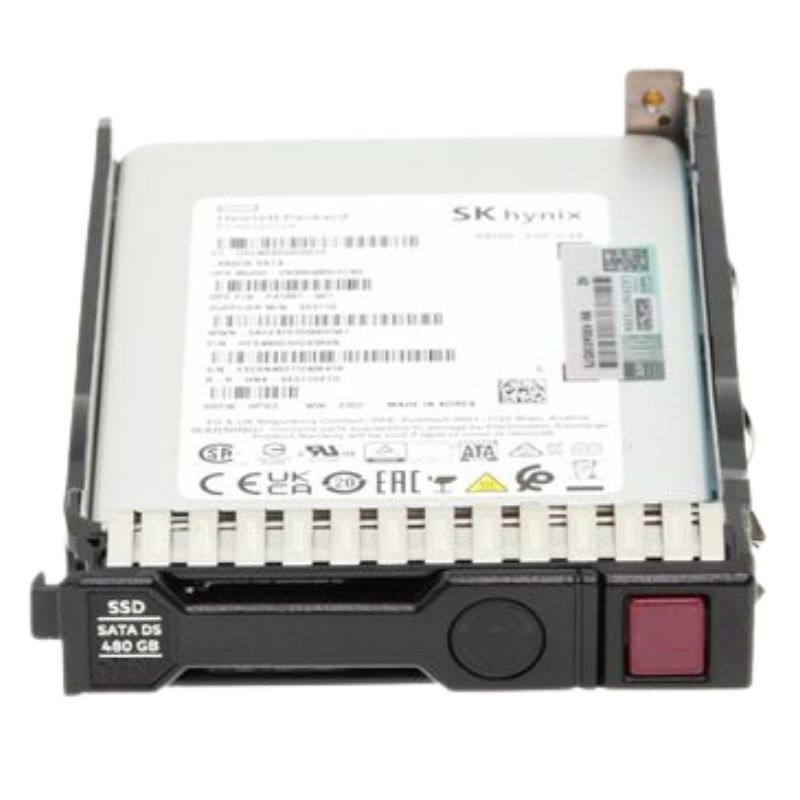


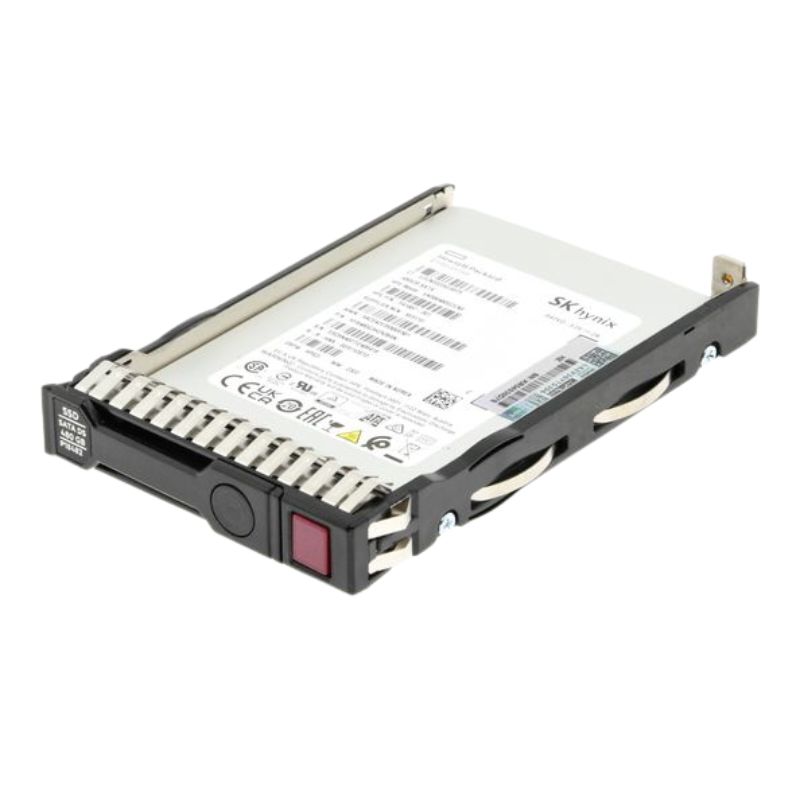
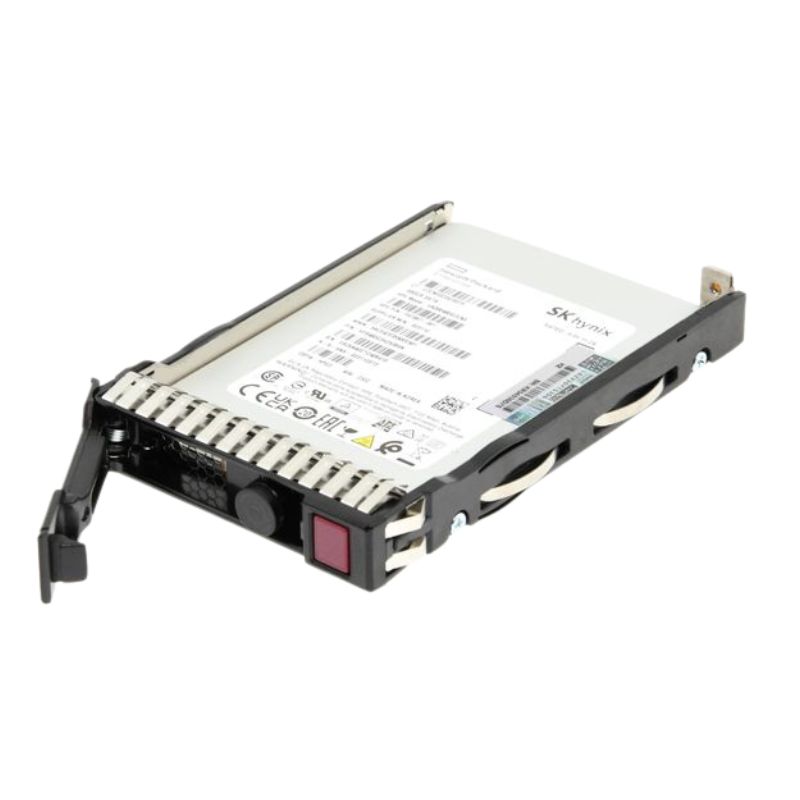
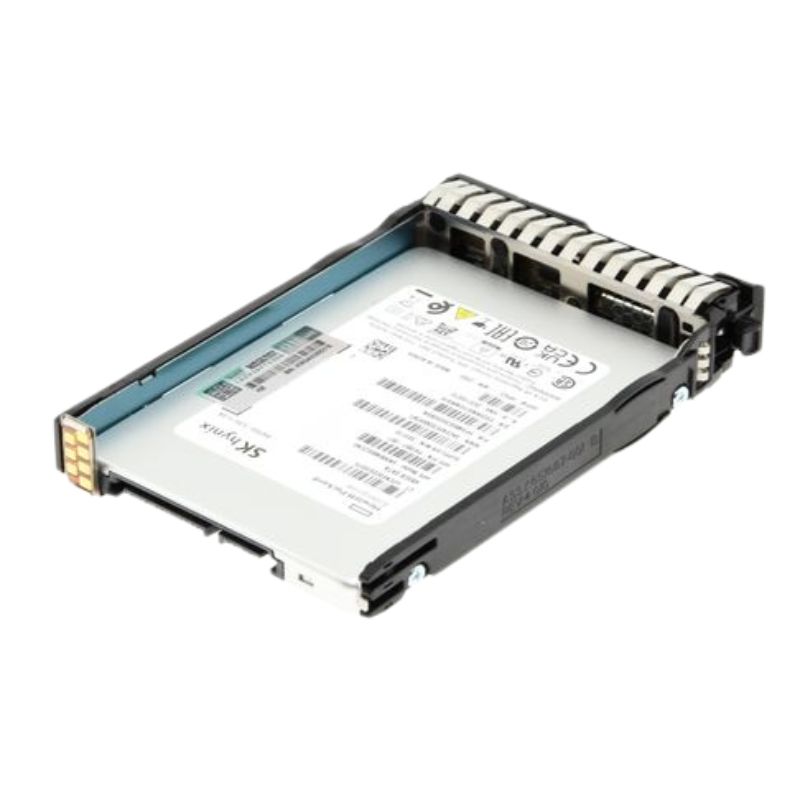
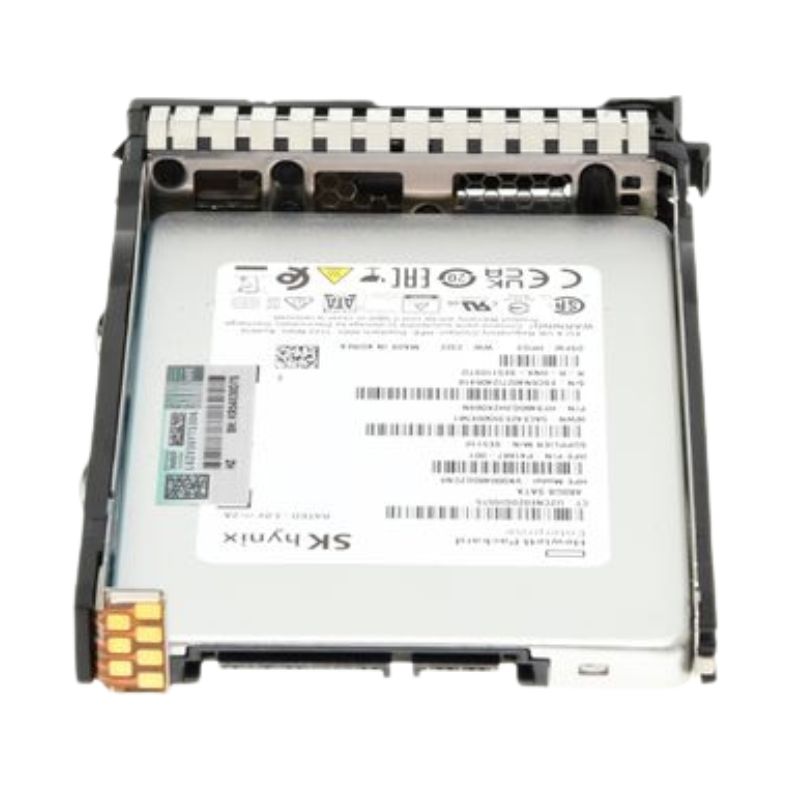
HPE P48228-001 480GB SATA 6GBPS Hot-swap Read Intensive 3.5Inch Solid State Drive. New Sealed with 1 year Replacement Warranty
The HPE P48228-001 480GB SATA 6GBPS hot-swap solid state drive is engineered to support read-focused enterprise workloads where consistency, efficiency, and predictable performance are critical. Designed around Triple-Level Cell (TLC) NAND flash technology, this SSD balances capacity and endurance while maintaining low latency access for frequently read data sets.
Enterprise SSDs are segmented by their workload endurance, typically classified as Read-Intensive (RI), Mixed-Use (MU), or Write-Intensive (WI). The HPE P48228-001 falls squarely into the Read-Intensive category, a designation that dictates its underlying NAND flash technology, over-provisioning, and controller firmware.
Read-intensive SSDs leverage high-quality Multi-Level Cell (MLC) or 3D NAND TLC (Triple-Level Cell) flash memory, optimized for scenarios where data is written once and read many times. The primary advantage is a superior cost-to-capacity ratio while maintaining high random read performance and predictable latency. The drive's controller and firmware are tuned to prioritize read queue depths and sustain read throughput, ensuring data is delivered to the CPU with minimal delay. This makes them ideal for hosting operating systems, applications, libraries, and frequently accessed datasets where write cycles are predictable and less frequent.
A key metric for enterprise SSDs is endurance, expressed as Drive Writes Per Day (DWPD) or Total Bytes Written (TBW). A read-intensive drive like the HPE P48228-001 typically offers a DWPD rating in the range of 0.5 to 1 over its warranty period (commonly 3 or 5 years). This means you can completely write the drive's capacity (480GB) 0.5 to 1 times every day for the warranty duration. While lower than a write-intensive model (which may offer 3-10 DWPD), this is perfectly aligned with workloads where write operations constitute less than 20% of total I/O.
The 3.5-inch form factor is a significant feature, as it allows for direct, drop-in replacement of traditional hard disk drives (HDDs) in existing server and storage array bays. This enables seamless technology refreshes, dramatically boosting performance without altering chassis or backplane infrastructure. The SATA 6Gbps (SATA III) interface, while not the fastest available (compared to SAS or NVMe), provides a robust, universally compatible, and cost-effective pathway that saturates the bandwidth needs of many read-centric applications, making it a practical choice for large-scale deployments.
The hot-swap functionality is non-negotiable in an enterprise setting. It allows for the drive to be safely removed and replaced while the server or storage system remains powered on and operational. This is critical for maintaining service level agreements (SLAs), performing proactive maintenance, and swiftly handling drive failures without incurring costly downtime. The HPE P48228-001 is designed with this hot-swap ecosystem in mind, ensuring smooth integration with HPE's array management software and hardware.
VDI "boot storms," where hundreds of virtual desktops start simultaneously, generate massive random read operations. A tier of HPE P48228-001 drives can absorb these storms, delivering a consistent and responsive desktop experience for end-users. They are ideal for hosting the linked clone images or gold master images.
When paired with an HPE Smart Array controller (e.g., the HPE Smart Array E208i-p, P408i-a, or similar), the drive's management is unified within the HPE system. The controller's firmware works in concert with the SSD's built-in monitoring, enabling advanced features like HPE Smart SSD Wear Gauge technology. This provides proactive health alerts, predicting end-of-life based on actual wear, not just time in service.
Drive status, temperature, S.M.A.R.T. (Self-Monitoring, Analysis and Reporting Technology) data, and predictive failure alerts are surfaced directly through the HPE Integrated Lights-Out (iLO) management interface. This allows IT administrators to monitor drive health remotely, plan maintenance, and prevent unexpected failures from impacting business operations, all from a single pane of glass.
HPE qualifies specific firmware versions for its drives to ensure stability, performance, and compatibility within its server platforms. Using the HPE P48228-001 provided firmware and drivers through the HPE Service Pack for ProLiant (SPP) eliminates guesswork and reduces the risk of compatibility issues that can arise with generic, third-party SSDs.
Enterprise procurement decisions hinge on reliability and TCO, not just upfront purchase price. The HPE P48228-001 is engineered for continuous operation in climate-controlled data centers. It features enhanced error correction, power-loss protection (or analogous data integrity features common in enterprise SATA SSDs), and robust thermal design to handle the sustained loads of server environments—a stark contrast to consumer SSDs which are designed for lighter, intermittent use.
The true value of an HPE-branded drive like the P48228-001 is its deep integration with HPE server platforms. This ensures seamless compatibility, optimized performance, and comprehensive health monitoring. NVMe is not a wholesale replacement for SATA in the enterprise. Cost-per-gigabyte, bay compatibility, and interface saturation mean that SATA SSDs will remain a vital tier for read-intensive and capacity-optimized workloads for years to come. For many applications, the performance of a SATA SSD is more than sufficient, and the infrastructure investment is lower
Built in a 3.5-inch Large Form Factor (LFF), the drive is tailored for enterprise server bays that prioritize airflow and serviceability. Its compact internal height of approximately 0.3 inches allows efficient integration into storage-dense chassis.


 Contact Us
 Information
 Catalog
 Solid State Drives (SSD)
 Network Switches
 Hard Disk Drives
 HBA & Controllers
 PC & Servers
 PC & Server Memory
 CPU & Processors
 Network Routers
 Power Supplies
 Tape Drives & Libraries
 Network Devices
 Computer & Network Cables