(7% discount is applied at checkout)
Cart is empty
Your go-to destination for cutting-edge server products
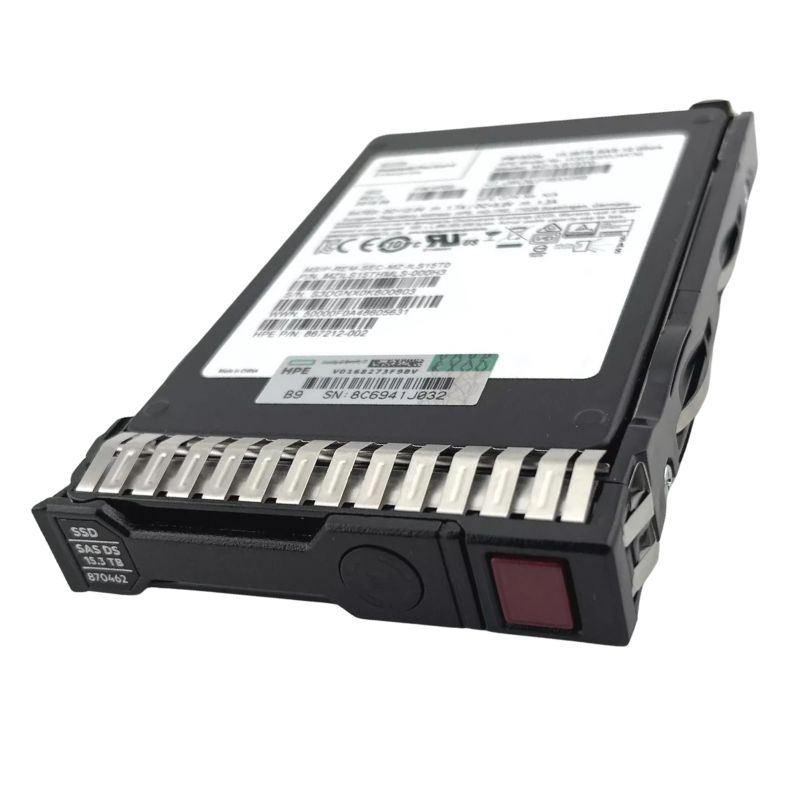


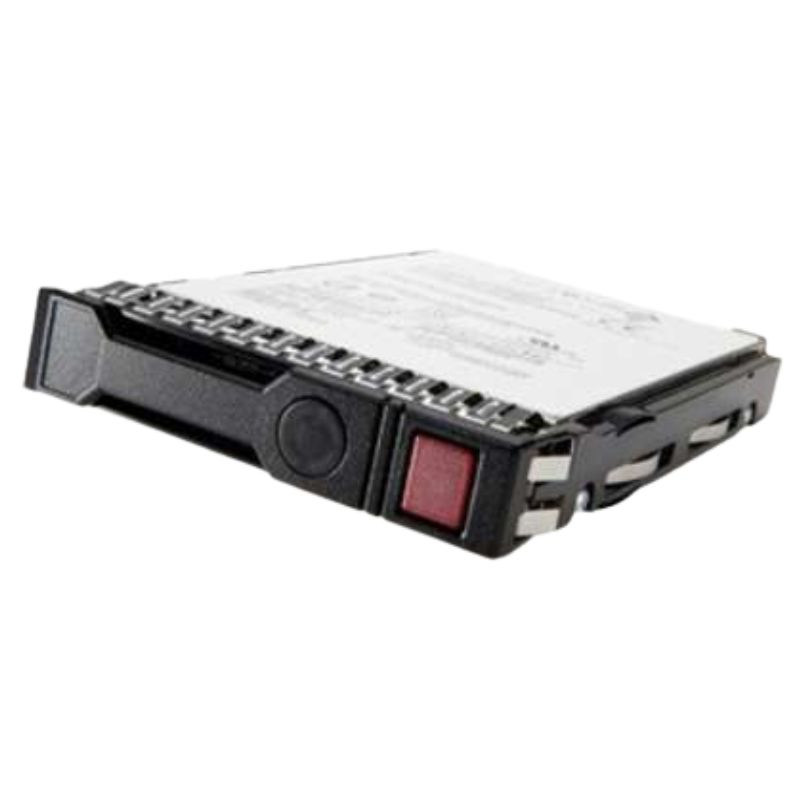
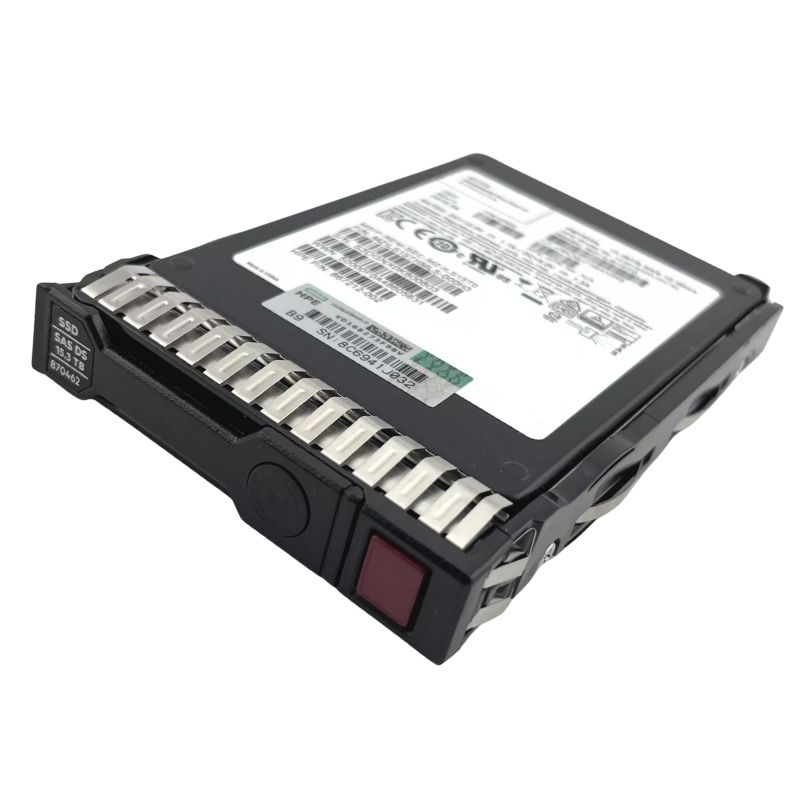
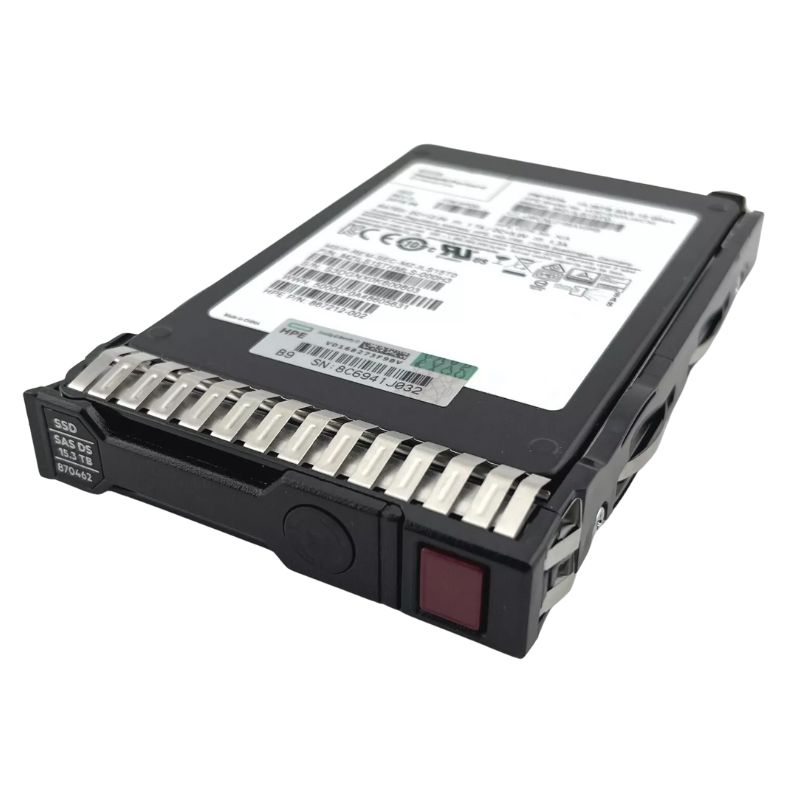
HPE P49044-B21 15.36TB SFF 2.5inch SAS-12GBPS Read Intensive SC MV Solid State Drive with Tray. Factory-Sealed New in Original Box (FSB) with 3 Years Warranty - Call
Unlock high‑density, low‑latency storage for modern data centers with the HPE P49044‑B21 solid state drive. Engineered for mission‑critical workloads, this SAS 12Gb/s SSD delivers consistent throughput, swift response times, and robust endurance for HPE ProLiant Gen10 and Gen10 Plus servers.
Key highlights and value proposition
This drive integrates natively with HPE ProLiant Gen10 and Gen10 Plus servers, enabling tool‑less hot‑plug installation via the SC carrier. The SAS 12Gb/s interface ensures broad ecosystem support and straightforward scaling in existing storage backplanes.
The HPE P49044-B21 15.36TB SFF 2.5" SAS-12Gbps Read Intensive SC MV Solid State Drive with Tray represents a high-capacity, enterprise-grade SSD option designed for read-heavy workloads and mixed virtualized environments. This category description covers the drive family characteristics, technical advantages, deployment patterns, performance expectations, compatibility and interoperability considerations, lifecycle and maintenance best practices, procurement and cost-to-own considerations, and frequently asked questions tailored for channel partners, systems integrators and enterprise buyers.
Drives in this category typically combine a small form factor (SFF 2.5"), robust SAS 12Gbps host interfaces, and high-density NAND configurations to deliver large usable capacity—here, a notable 15.36TB. The read-intensive classification indicates the drive is optimized for scenarios with predominantly read operations or mixed workloads with a read bias. Typical deployments include virtualization (VM boot images, VDI), large-scale content repositories, read-caching tiers, analytics query acceleration, and database indices where read latency and sustained throughput are critical.
When evaluating drives in this category, focus on the following performance metrics: sequential throughput (MB/s), random read IOPS (4K/8K), latency at queue depth, and sustained performance under realistic mixed traffic. The SAS-12Gbps interface removes a common bandwidth bottleneck found in slower interconnects, allowing the SSD to deliver its peak read throughput to host controllers and RAID controllers commonly used in HPE servers and arrays.
In production, expect read-intensive SSDs at this capacity to provide consistently high random read IOPS and low latency for read operations while delivering strong sequential read bandwidth. Performance under sustained mixed or heavy write conditions will be constrained by the drive's endurance class and write caching algorithms, so plan tiers accordingly.
Compatibility is a decisive factor for enterprise procurement. The P49044-B21 series and similar SAS-12Gbps SFF drives are designed to integrate with HPE ProLiant servers, HPE storage enclosures, and third-party SAS backplanes that support 12Gbps SAS. The included tray ensures correct mechanical fit and hot-swap capability in HPE chassis bays.
Enterprise deployments should verify host controller compatibility (HBA/RAID) and firmware revision alignment. HPE often publishes firmware bundles and advisory notes for specific drive models; applying vendor-recommended firmware ensures stability and unlocks performance and reliability enhancements.
This drive class is frequently used in tiered storage architectures and converged infrastructure. Consider them for a fast read tier that feeds compute clusters or analytics engines. Combine with higher endurance mixed-write SSDs or NVMe devices for write-heavy or latency-sensitive metadata operations.
Implement automated tiering where cold or infrequently written data resides on high-capacity HDDs, and hot or read-dominant working sets live on the HPE P49044-B21 15.36TB SSD tier. Alternatively, use the drive as a primary read cache (L2ARC-style) in software-defined storage stacks or as the main data tier for read-mostly index partitions to drastically reduce query times.
Use RAID levels optimized for read performance (RAID 10 provides excellent read/write performance and rebuild speed but at a higher capacity cost).
Erasure coding in distributed storage systems can provide better usable capacity vs. RAID but requires careful tuning for rebuild bandwidth.
Keep spare capacity and hot spares available in the rack-level pool to minimize rebuild windows and stress during drive replacement.
Enterprise SSDs include telemetry and SMART-like attributes for wear, media errors, spare blocks, and temperature. Operational readiness demands proactive monitoring of these attributes plus firmware-level health indicators. HPE tools such as HPE Systems Insight Manager (SIM), HPE OneView, and array management software can be configured to alert on warning thresholds, enabling preemptive replacement decisions and scheduled maintenance that avoid emergency outages.
SFF 2.5" SAS SSDs are dense by design. Rack planners must account for thermal dissipation and power draw, especially in dense server enclosures or storage drawers. Operating outside nominal temperature ranges can accelerate wear and increase error rates. Ensure front-to-back airflow in server bays and validate that ambient temperatures and chassis fans are sized to handle the added SSD population.
Include average and peak power draw per drive in rack power calculations. While SSDs typically draw less than 2.5" HDDs during steady-state reads, peak currents during internal housekeeping or write bursts must be considered. For battery-backed or UPS-supplied systems, include drive count in battery runtime estimates.
Use vendor-specified drive blanking panels and airflow baffles.
Monitor inlet and outlet temperatures at chassis level; track per-drive temperature if telemetry allows.
Design cooling zones for the highest-density shelves and ensure redundant fan paths where possible.
Modern enterprise SSDs often support security features including secure (crypto) erase, TCG Opal or similar on-board encryption, and consistency features such as power-loss protection. Confirm whether the drive supports hardware encryption and whether administrative protocols align with your compliance requirements (e.g., data sanitization for decommissioning).
For drives holding sensitive data, use manufacturer-recommended secure erase procedures or cryptographic erase where supported. Verify that erase operations meet organizational and legal standards for data destruction and retain logs of erase operations for compliance audits.
If your environment is regulated (healthcare, finance, government), check that drive procurement, handling, and disposal meet applicable standards (e.g., HIPAA data handling guidance, local data residency laws). HPE typically provides product documentation and compliance statements for enterprise drives—retain these documents as part of your procurement and audit package.
While the OEM new-drive path gives clean warranty and guaranteed firmware support, refurbished or compatible third-party drives may offer cost savings. Proceed cautiously: ensure firmware compatibility, validate health metrics, and verify the vendor provides a reliable warranty and return policy.
Compare the 15.36TB SAS-12Gbps read-intensive SFF drive to alternatives:
HDDs — HDDs still provide lower $/GB for cold storage but cannot match SSD read latency or random IOPS. Choose HDD for archival or sequential workloads.
Mixed-write enterprise SSDs — offer higher endurance for write-heavy workloads at higher cost; choose if write traffic is significant.
NVMe SSDs — deliver superior latency and throughput but often at higher cost and may require NVMe-capable backplanes and controllers; NVMe is preferred for the absolute highest performance tiers.
Lower-capacity SSDs — can deliver higher endurance per TB and better sustained write performance, but require more drive slots for the same total capacity.
Opt for this drive when: you have large, read-dominant datasets; you need consolidated capacity in limited bay counts; you require a SAS interface for existing infrastructure compatibility; and you want a lower $/GB than NVMe while preserving strong enterprise features.
Choose higher-endurance SSDs or NVMe if your workload includes heavy write amplification, intense metadata updates, or you need the absolute lowest latency for storage-attached compute.


 Contact Us
 Information
 Catalog
 Solid State Drives (SSD)
 Network Switches
 Hard Disk Drives
 HBA & Controllers
 PC & Servers
 PC & Server Memory
 CPU & Processors
 Network Routers
 Power Supplies
 Tape Drives & Libraries
 Network Devices
 Computer & Network Cables