(7% discount is applied at checkout)
Cart is empty
Your go-to destination for cutting-edge server products
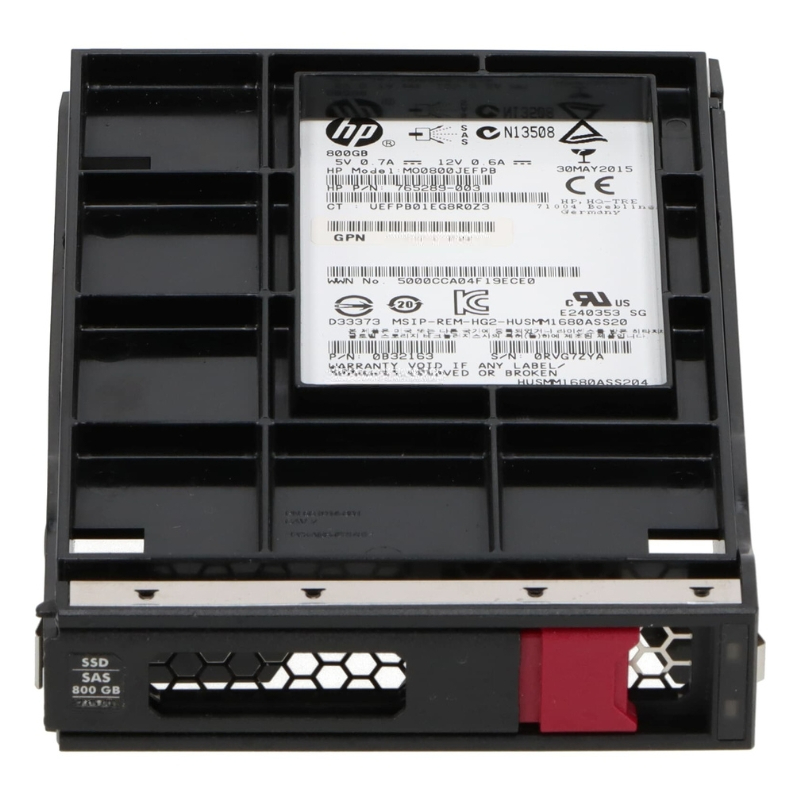


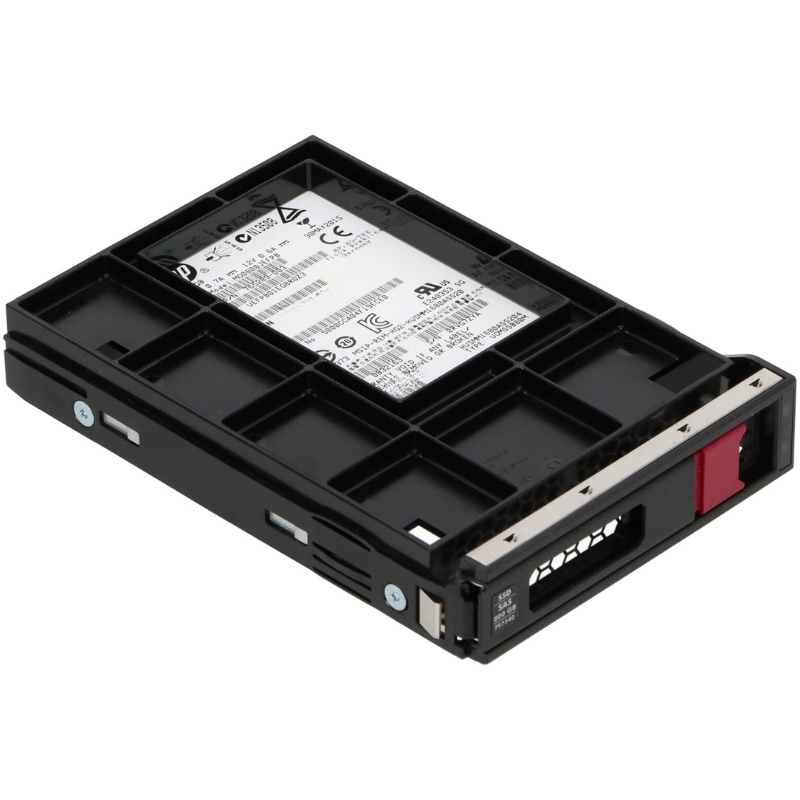
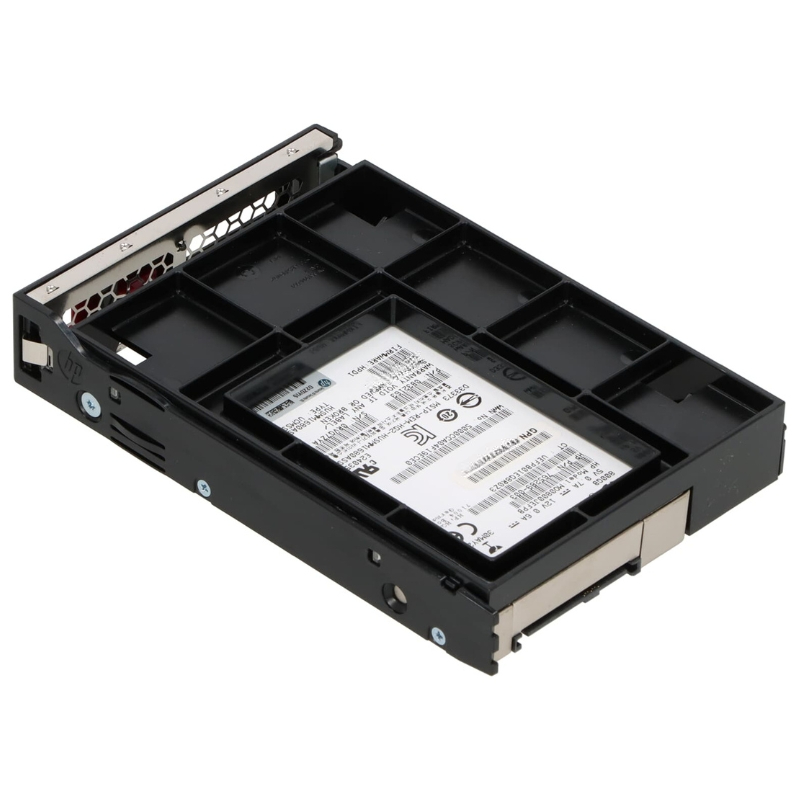
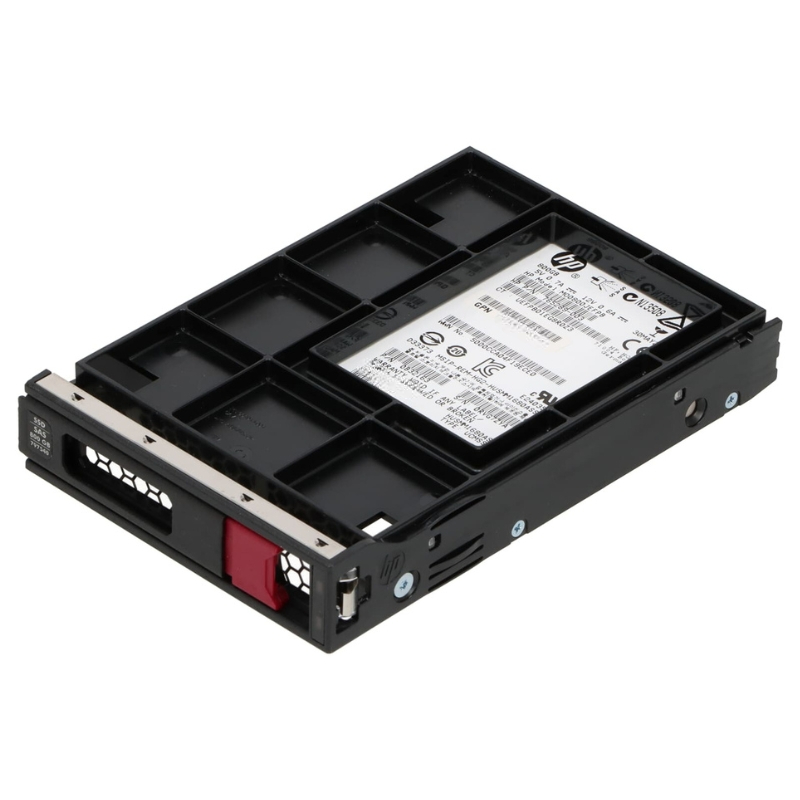
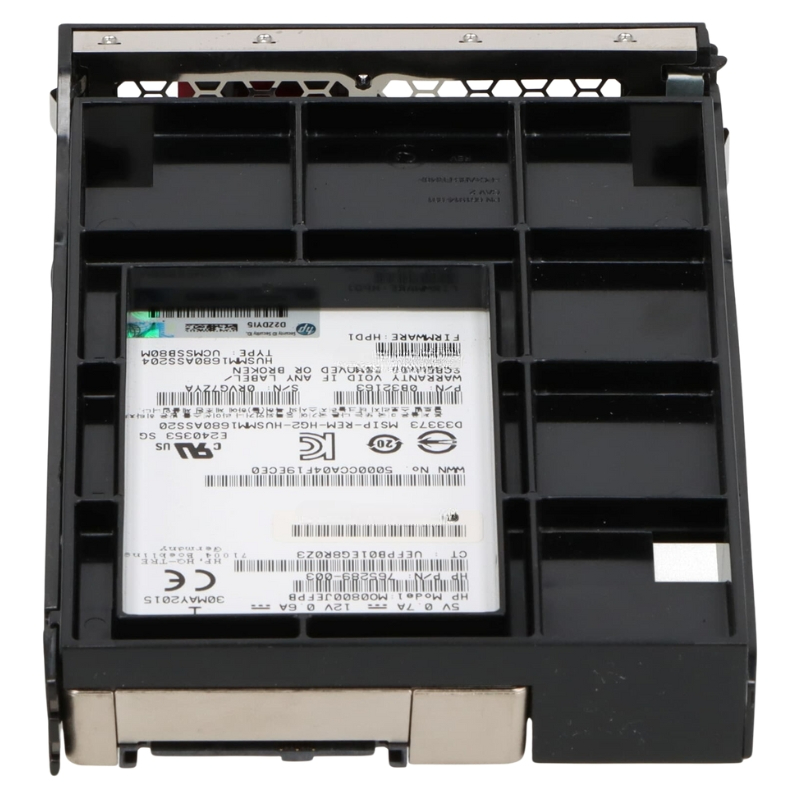
HPE P49046-B21 800GB SSD DS SAS-12GBPS SC Mixed Use Smart Carrier. Factory-Sealed New in Original Box (FSB) with 3 Years Warranty
| SKU/MPN | Warranty | Price | Condition | You save |
|---|---|---|---|---|
| P49046-B21 | 1 Year Warranty | $270.00 | Excellent Refurbished | You save: $94.50 (26%) |
| P49046-B21 | 1 Year Warranty | $1,323.00 | Factory-Sealed New in Original Box (FSB) | You save: $463.05 (26%) |
The HPE P49046-B21 is a high-performance enterprise solid-state drive built to meet demanding business workloads. With 800 GB of storage capacity and a 12 Gbps SAS interface, this SSD provides exceptional speed, endurance, and reliability. Its Smart Carrier design, digitally signed firmware, and mixed-use optimization make it ideal for data centers, cloud infrastructures, virtualization clusters, and enterprise-level applications that demand both high read and write performance.
The 12 Gbps SAS interface allows significantly faster data transfer compared to older 6 Gbps models. This provides smooth and uninterrupted data flow in enterprise applications. Sequential read speeds can exceed one gigabyte per second, while write speeds remain close to this performance level, ensuring balanced throughput for diverse workloads.
This SSD is classified as a mixed-use drive, meaning it is designed to efficiently handle both read-intensive and write-intensive workloads. Its endurance rating allows for sustained daily writes, making it reliable in database, virtualization, and high-transaction environments. The balance between endurance and performance ensures a long operational life in 24×7 data center deployments.
The HPE Smart Carrier tray includes LED indicators that display drive activity, status, and identification for maintenance convenience. The integrated do-not-remove icon helps prevent accidental removal of active drives. This intelligent carrier system simplifies monitoring and drive replacement without downtime, increasing service efficiency in rack servers.
Digitally signed firmware ensures that the drive operates using only authentic HPE firmware, protecting systems from unauthorized or malicious updates. This security feature is critical in enterprise environments, where firmware integrity is essential for maintaining trust and system stability.
The P49046-B21 uses a dual-port 12 Gbps SAS interface and a 2.5-inch small form factor. The Smart Carrier tray allows hot-plug functionality, making installation and replacement possible without system shutdowns. It supports both ProLiant Gen9 and Gen10 servers, ensuring broad compatibility across HPE’s enterprise portfolio.
The SSD delivers outstanding performance across multiple metrics. Sequential read operations can reach over 1,000 MB per second, and sequential writes can approach similar values. Random input/output operations per second (IOPS) are typically in the hundreds of thousands, delivering extremely low latency for transactional workloads. This level of performance enables fast application loading, reduced latency in virtual environments, and accelerated database queries.
Power consumption remains efficient, with idle operation below four watts and peak consumption below nine watts. Despite its compact design, the drive incorporates advanced error correction, wear-leveling algorithms, and over-provisioning to enhance endurance. This combination provides high reliability, maintaining consistent performance throughout its lifecycle.
In cloud and virtualized environments, storage systems must deliver consistent high performance to multiple virtual machines simultaneously. The mixed-use optimization of the P49046-B21 ensures that read and write operations are processed efficiently even under high concurrency. This helps maintain stable performance during resource-intensive virtual machine migrations and data replications.
Database applications, especially those running SQL or NoSQL systems, rely heavily on low latency and high IOPS. This SSD category significantly reduces query execution times, speeds up transaction processing, and ensures reliability for write-intensive workloads such as logging and indexing. In big data and analytics platforms, it accelerates access to datasets, improving insight generation speed and overall data throughput.
For enterprise file servers and application platforms, consistent performance is vital. The P49046-B21 maintains responsiveness even during heavy I/O spikes, ensuring stable user access. Applications such as ERP, CRM, and web hosting benefit from reduced read/write delays and enhanced data availability.
Serial Attached SCSI (SAS) drives like the P49046-B21 are designed for enterprise systems that require superior reliability, dual-port access, and higher throughput compared to SATA drives. SAS supports full-duplex communication, ensuring better multitasking and minimal latency. While SATA drives are adequate for entry-level storage, SAS 12 Gbps drives deliver double the speed and much greater fault tolerance.
HPE categorizes its enterprise SSDs into Read-Intensive, Mixed-Use, and Write-Intensive types. Mixed-Use drives like this one provide a balanced endurance level and performance range that covers a wide variety of workloads. They are ideal for businesses seeking a cost-effective balance between reliability and throughput without overspending on specialized drives.
Drives equipped with Smart Carrier trays offer better manageability, hot-plug capability, and visual indicators. The blue locate LED assists technicians in quickly identifying specific drives in densely packed environments. The mechanical latch and indicator system also improve safety and maintenance efficiency in live servers, a vital benefit in mission-critical environments.
The HPE P49046-B21 SSD is designed to integrate seamlessly with HPE ProLiant Gen9 and Gen10 server families, including the DL, ML, and Apollo series. Its compatibility extends across a range of Smart Array controllers and HPE storage architectures. The drive’s dual-port SAS capability allows redundant data paths, enhancing fault tolerance in clustered or mirrored storage configurations.
This SSD performs exceptionally well in RAID configurations, including RAID 1, 5, 6, 10, and 50 arrays. Its endurance profile and high IOPS capacity make it ideal for mirrored and parity-based setups. The consistent read/write balance helps sustain performance across all drives in the array, reducing rebuild times and ensuring consistent system uptime.
Digitally signed firmware provides protection against unauthorized updates, while HPE management tools allow easy firmware monitoring and updates. Using the SmartSSD Wear Gauge utility, administrators can track wear levels and remaining lifespan, ensuring proactive maintenance. Regular firmware updates enhance stability and provide ongoing compatibility with evolving server ecosystems.
The drive offers sequential throughput exceeding 1 GB per second, ensuring faster application load times and data migrations. For high-density data centers, this level of throughput minimizes latency and boosts responsiveness across virtual and physical servers alike.
Using enterprise-quality NAND flash memory, the drive ensures reliable data retention, extended durability, and minimal performance degradation over time. The mixed-use design supports continuous read/write operations with consistent performance, ideal for systems operating around the clock.
Despite its high speed, the P49046-B21 remains energy efficient. Its power draw is significantly lower than mechanical drives and many older SSDs, reducing data center energy consumption. Efficient heat dissipation and low idle power contribute to long-term operational stability.
SAS SSDs like the P49046-B21 outperform SATA drives in both speed and durability. The 12 Gbps connection doubles potential throughput compared to 6 Gbps SATA. Additionally, SAS drives offer advanced command queuing and dual-port connectivity for continuous data availability, a vital feature for enterprise storage networks.
Read-intensive SSDs provide higher capacity at lower cost but cannot handle sustained writes as effectively. Write-intensive drives are durable but costlier. Mixed-use models balance both extremes, making them a practical choice for diverse workloads that include transaction logging, virtual machine operations, and database indexing.
Before deployment, verify that the target server supports SAS 12 Gbps drives and Smart Carrier trays. If migrating from legacy SATA drives, confirm controller and backplane compatibility to ensure full speed utilization. Using the proper SAS cable and controller firmware will prevent throughput limitations.
Use HPE management tools to regularly monitor performance indicators such as IOPS, latency, temperature, and remaining endurance. Early detection of degradation allows timely replacement, ensuring business continuity. Implementing predictive analytics within HPE’s ecosystem helps maintain optimal reliability.
Although power consumption is low, dense rack environments can generate significant heat. Ensure proper airflow across drive bays and maintain recommended operating temperatures for optimal longevity. Following HPE’s thermal guidelines preserves drive endurance and prevents throttling under sustained loads.
This category of enterprise SSDs represents an ideal balance of speed, security, and durability. The HPE P49046-B21 combines a robust SAS 12 Gbps interface with advanced firmware integrity, ensuring both performance and trustworthiness. The Smart Carrier system simplifies operations, and the mixed-use optimization meets the needs of most enterprise applications without excessive cost.
The drive provides consistent speed across sequential and random operations. Its design ensures minimal latency fluctuations, maintaining responsiveness during unpredictable workload spikes. This performance stability is crucial for enterprise environments that cannot afford downtime or delays.
The SSD employs advanced error correction and end-to-end data path protection, ensuring data accuracy even under high load. With power-loss protection and firmware signing, data security is maintained throughout the device’s lifespan.
As part of HPE’s enterprise SSD lineup, the P49046-B21 integrates seamlessly into existing server infrastructures. It supports Smart Array controllers, HPE OneView, and other management platforms, providing full lifecycle monitoring and alert systems for predictive maintenance.
Ensure compatibility with the server model, backplane speed, and Smart Carrier tray requirements. Cross-reference part numbers and confirm support for SAS 12 Gbps interfaces before installation. For maximum efficiency, pair the drive with matching controller firmware.
Determine whether your workloads are balanced, read-heavy, or write-heavy. Mixed-use drives excel in balanced environments, such as enterprise applications, virtualization clusters, and online transaction systems. For extreme write workloads, consider higher endurance models within the same product family.
Set up proactive monitoring and firmware update schedules. Use HPE’s diagnostic utilities to check health metrics and plan replacements before reaching end-of-life thresholds. Maintaining a pool of spare drives ensures rapid recovery during unexpected failures.


 Contact Us
 Information
 Catalog
 Solid State Drives (SSD)
 Network Switches
 Hard Disk Drives
 HBA & Controllers
 PC & Servers
 PC & Server Memory
 CPU & Processors
 Network Routers
 Power Supplies
 Tape Drives & Libraries
 Network Devices
 Computer & Network Cables