(7% discount is applied at checkout)
Cart is empty
Your go-to destination for cutting-edge server products
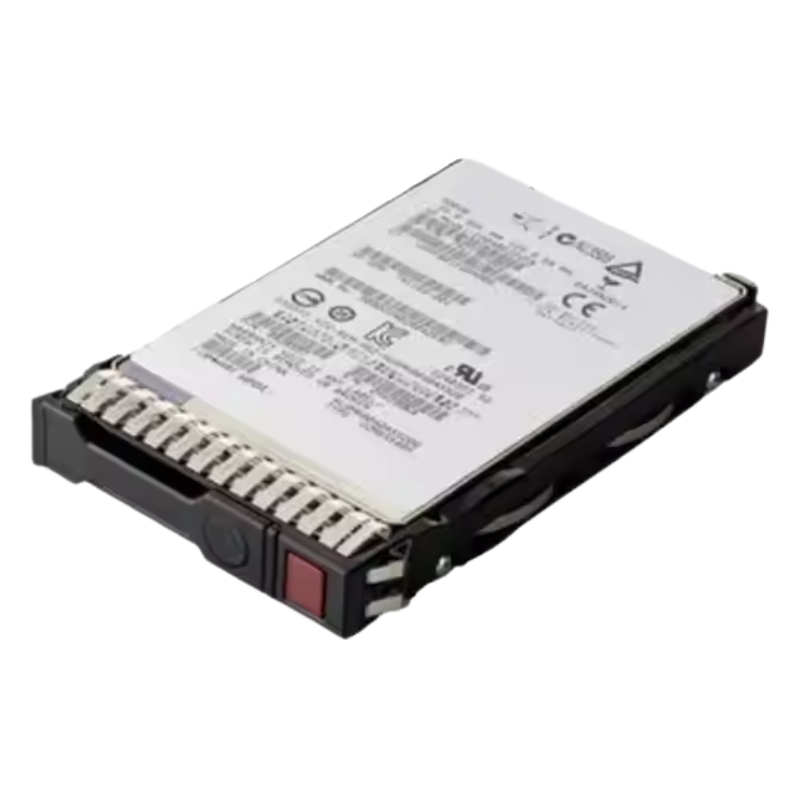


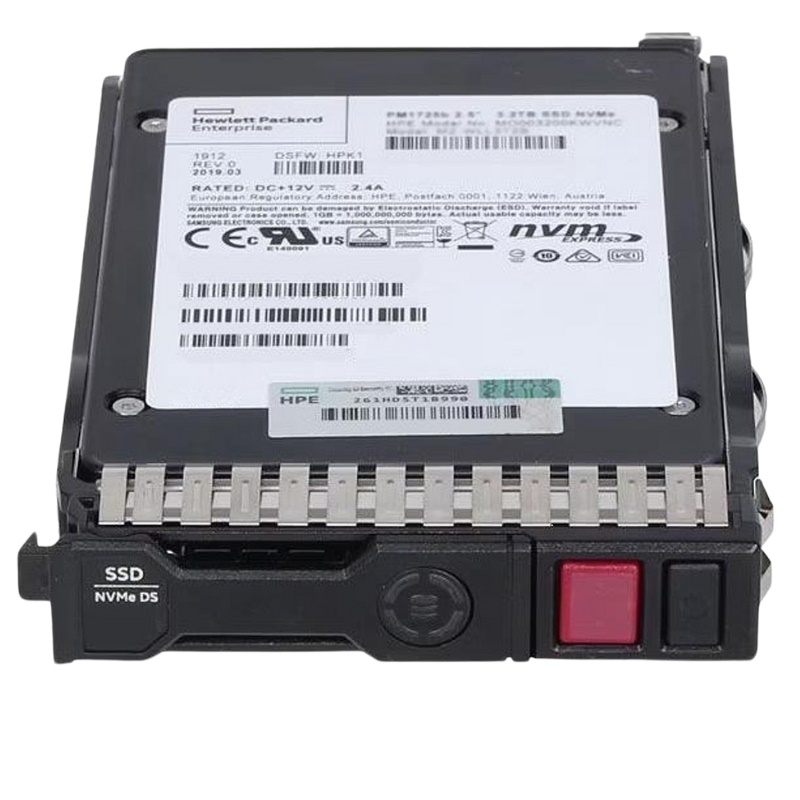
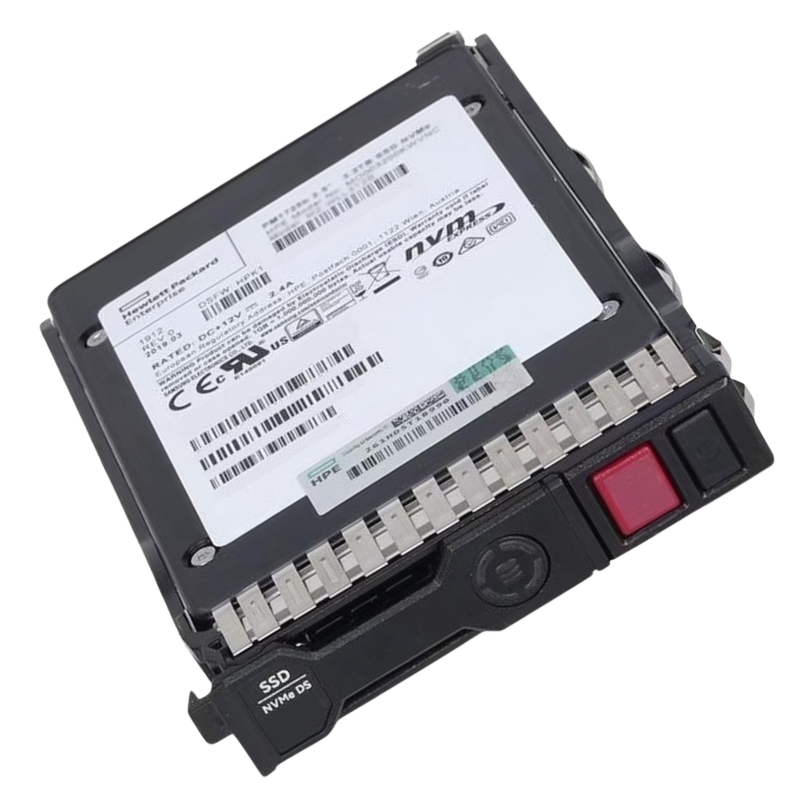
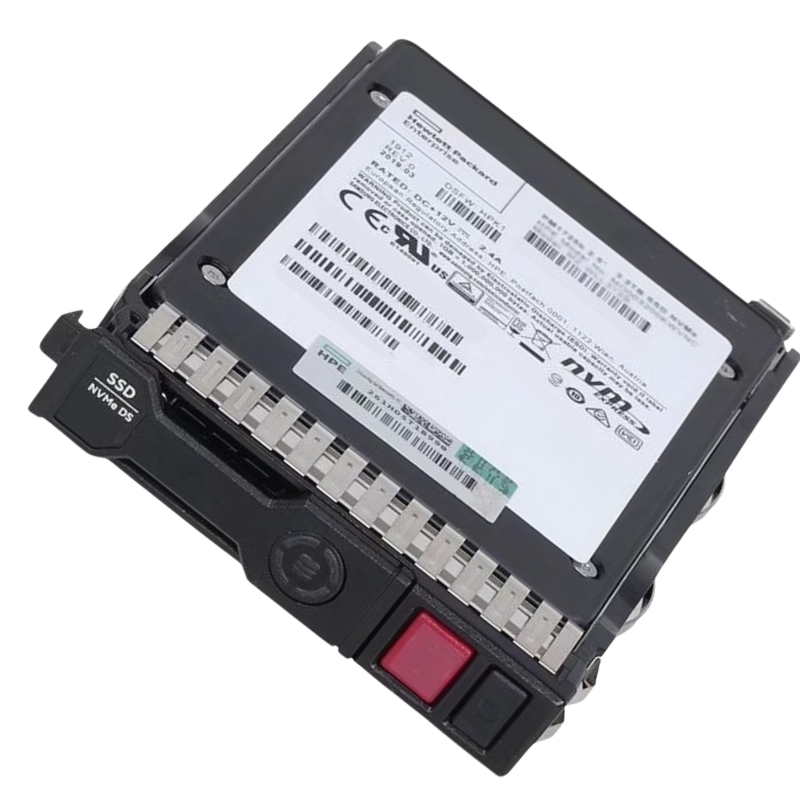
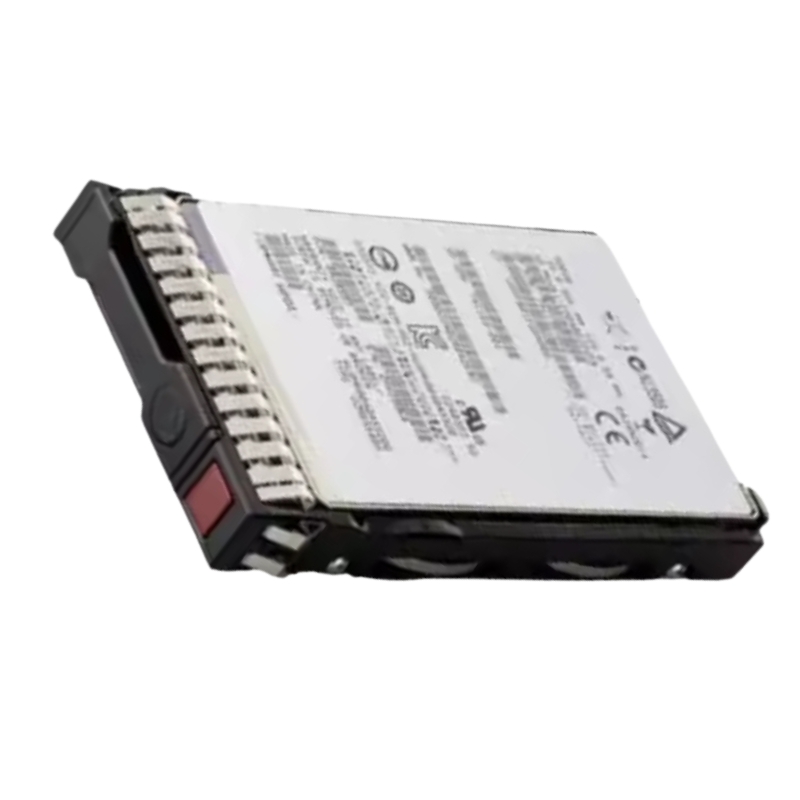
HPE P50224-B21 15.36 TB SSD NVMe Gen4 High Performance Read Intensive SFF TLC Bc U.3 For Gen10 Plus Servers. New Sealed with 1 year Replacement Warranty
| SKU/MPN | Warranty | Price | Condition | You save |
|---|---|---|---|---|
| P50224-B21 | 1 Year Warranty | $5,272.00 | Factory-Sealed New in Original Box (FSB) | You save: $1,845.20 (26%) |
| P50224-B21 | 1 Year Warranty | $4,198.00 | New Sealed in Box (NIB) | You save: $1,469.30 (26%) |
The HPE P50224-B21 15.36TB NVMe Gen4 SSD represents an exceptional blend of efficiency, endurance, and power for today’s data-driven enterprises. Designed for demanding workloads, this U.3 solid-state drive delivers lightning-fast data access, ensuring seamless operation in mission-critical applications. Its advanced TLC NAND technology and Gen4 NVMe interface provide businesses with the cutting-edge speed and reliability they expect from Hewlett Packard Enterprise storage solutions.
The HPE P50224-B21 excels in high-demand enterprise storage systems. Its NVMe Gen4 technology ensures minimal latency, making it an optimal choice for database acceleration, analytics workloads, and virtualization environments. The drive’s high IOPS rating supports rapid parallel operations, ensuring your applications maintain consistent responsiveness even under heavy load.
Equipped with digitally signed firmware, the drive ensures compatibility and enhanced security across HPE ProLiant Gen10 and Gen11 servers. The U.3 interface supports dual-port functionality, allowing redundancy and fault tolerance essential for business continuity. Its BC carrier tray design streamlines deployment while maintaining airflow and thermal balance within dense rack environments.
With PCIe Gen4 NVMe technology, the HPE P50224-B21 SSD delivers double the throughput of Gen3 drives. This leap in performance translates to faster boot times, reduced latency in transaction-heavy systems, and improved efficiency across data center operations. The drive’s interface supports higher bandwidth, enabling better scalability for next-generation workloads such as machine learning, real-time analytics, and cloud computing.
The 2.5-inch SFF (Small Form Factor) design allows seamless integration into HPE server architectures. The hot-plug capability enhances uptime by enabling drive replacement or maintenance without shutting down the system. With compatibility across a broad range of HPE ProLiant and Apollo servers, it supports both legacy and modern infrastructures, ensuring long-term investment protection.
HPE’s enterprise SSDs are engineered to maintain data integrity under continuous workloads. The P50224-B21 includes built-in error correction mechanisms, power-loss protection, and secure firmware management. These features ensure data consistency, minimize downtime, and prevent unauthorized access or firmware tampering.
The SSD is designed to operate efficiently under heavy workloads while maintaining optimal thermal balance. Its energy-efficient NVMe controller reduces power consumption, supporting sustainable and cost-effective data center operations. With advanced cooling compatibility and low heat generation, it helps maintain consistent system performance.
The HPE P50224-B21 is an enterprise-class NVMe solid-state drive (SSD) engineered for modern server platforms, delivered in a small form factor (SFF) U.3 connector and optimized for read-intensive workloads. The full product identifier conveys vendor (HPE), model/family (P50224), and the specific configuration (B21). For merchants and site categorization, this SKU represents a high-density NVMe Gen4 device with 15.36 TB raw capacity, built on TLC (triple-level cell) technology with controller and firmware tuned for read-heavy datacenter operations. Use this product family label in page metadata, alt image text, and long-tail keyword phrases such as "HPE P50224-B21 NVMe 15.36TB Gen4 U.3 SSD".
NVMe Gen4 drives excel at both high sequential throughput (large file transfers, streaming) and high random IOPS (small random reads common in databases and virtualization). The P50224-B21's controller firmware prioritizes read paths to reduce latency and deliver predictable read IOPS across sustained loads. Expect consistently low read latency under steady-state conditions when the drive operates within its recommended thermal and power envelope.
Enterprise-grade firmware focuses on QoS by trimming background activities, smoothing garbage collection, and using intelligent I/O scheduling to minimize latency spikes. This is crucial for applications with tight SLAs such as online transaction processing (OLTP) front ends and interactive analytics. Reporting features like SMART attributes and telemetry counters help administrators validate QoS in production.
Read-intensive SSDs have endurance ratings expressed in drive writes per day (DWPD) or total bytes written (TBW) over the warranty period. For the P50224-B21, endurance targets read-centric service levels and typically carry warranty and endurance figures suitable for caching and read-replica roles. When specifying drives for write-heavy roles, evaluate the TBW numbers carefully and compare against projected daily write volumes to ensure they meet expected lifecycle requirements.
The P50224-B21 is validated for HPE ProLiant Gen10 Plus server families and tested for interoperability with HPE firmware stacks. Using HPE-validated SSDs in ProLiant systems preserves feature compatibility with HPE system management tools, iLO telemetry, and ProLiant firmware update chains—simplifying lifecycle management and reducing the risk of unsupported configurations.
Although vendor-branded, the drive implements industry-standard NVMe and U.3 specifications and will function in many third-party servers and backplanes. However, for mission-critical deployments, prefer proven interoperability matrices or request vendor support statements to avoid subtle firmware or backplane compatibility issues—especially when mixing controllers, HBAs, and backplanes from different OEMs.
Enterprise SSDs often ship with digitally signed firmware images and versioning that adhere to vendor security policies. Digital signing reduces the risk of unauthorized firmware modifications and ensures that only validated firmware releases are applied. Maintain a process for scheduled firmware updates using vendor-supplied tools to benefit from bug fixes and performance enhancements while preserving compatibility with server management systems.
High-capacity NVMe drives generate heat under heavy load. Deploy them in server bays with adequate airflow, and follow chassis placement recommendations to avoid thermal throttling. Monitor drive temperatures using system management interfaces and configure cooling policies on denser servers that host multiple high-capacity NVMe devices. Proper thermal design extends performance stability and device lifespan.
Over-provisioning (allocating extra internal space not presented to the OS) can improve endurance and performance consistency. Combined with firmware-level garbage collection and wear-leveling, modest over-provisioning increases headroom for sustained writes and reduces write amplification. For databases with predictable access patterns, plan logical over-provisioning or use storage-layer features (like namespace sizing) to fine-tune behavior.
While NVMe drives offer high reliability, standard data protection practices remain essential. Use RAID (software or hardware) or erasure coding in distributed storage systems to protect against device failure. For read-intensive deployments, RAID-optimized configurations can be tuned to favor read parity layouts, balancing rebuild durations and performance during failure scenarios. Consider rebuild impact on read latency and set appropriate rebuild throttling.
Compared to PCIe Gen3 drives, Gen4 devices such as the P50224-B21 deliver substantially higher sequential bandwidth and better random IOPS for applications that can exploit the extra lanes. In many workloads, Gen4 yields lower end-to-end latency and better parallelism. However, the realized advantage depends on host platform compatibility—older servers limited to Gen3 lanes will not reach Gen4 peak metrics.
NVMe SSDs provide lower latency, higher parallelism, and better IOPS-per-watt than SAS/SATA SSDs. For read-intensive, latency-sensitive applications, NVMe is the superior choice. SAS/SATA devices may still be relevant for cost-optimized tiers or legacy systems, but NVMe's architectural advantages make it the natural fit for modern Gen10 Plus deployments where performance and density matter.
Within enterprise SSD portfolios, vendors offer different endurance classes: read-intensive (RI), mixed-use (MU), and write-intensive (WI). The P50224-B21 belongs to the read-intensive category; if your environment produces heavy writes (e.g., write-back caching, heavy logging, or large-scale ingestion), consider mixed-use or write-intensive models with higher TBW/DWPD specifications.
Consider vendor-provided services such as installation assistance, drive lifecycle management, and benchmarking validation to accelerate safe deployment and maintain performance baselines over time.
Enterprise drives often carry regulatory compliance labels for safety, electromagnetic compatibility, and environmental directives. Verify regional certification needs when shipping at scale (CE, FCC, RoHS, REACH, etc.).
When comparing storage strategies, include power consumption per TB and cooling overhead in total cost calculations. High-capacity NVMe drives can reduce rack-level power and space costs versus equivalent HDD-only configurations while offering vastly improved performance.
The HPE P50224-B21 is an enterprise-class NVMe solid-state drive (SSD) engineered for modern server platforms, delivered in a small form factor (SFF) U.3 connector and optimized for read-intensive workloads. The full product identifier conveys vendor (HPE), model/family (P50224), and the specific configuration (B21). For merchants and site categorization, this SKU represents a high-density NVMe Gen4 device with 15.36 TB raw capacity, built on TLC (triple-level cell) technology with controller and firmware tuned for read-heavy datacenter operations. Use this product family label in page metadata, alt image text, and long-tail keyword phrases such as "HPE P50224-B21 NVMe 15.36TB Gen4 U.3 SSD".
With 15.36 terabytes of usable raw capacity, this drive sits in the high-capacity tier of enterprise SSDs. The compact SFF (2.5" compatible) U.3 interface provides hot-swap convenience and an enterprise-grade electrical/physical connection for modern server backplanes. The combination of large capacity and SFF density makes it a prime candidate for capacity-dense arrays, NVMe-based caching layers, and mixed storage tiers where high read throughput is essential.
Built on the PCIe Gen4 NVMe standard, this SSD benefits from doubled per-lane bandwidth compared with PCIe Gen3 parts. The Gen4 interface unlocks significantly higher sequential and random I/O bandwidth, reducing latency and improving application responsiveness in read-heavy or mixed databases, virtualization hosts, and analytics nodes. When combined with platform support (Gen10 Plus servers and controllers that expose full Gen4 lanes), this drive delivers its peak throughput and IOPS potential.
The drive uses TLC (3 bits per cell) NAND flash with an emphasis on read-intensive endurance class. Read-optimized NAND programming, firmware-level read error management, and internal over-provisioning are tuned to maximize read efficiency and reduce write amplification for workloads dominated by random or sequential reads. While TLC typically has slightly lower endurance than SLC/MLC, the controller's wear-leveling and error-correction strategies extend useful life for the targeted read-centric use-cases.
U.3 drives support flexible backplane protocols and, depending on host architecture, can present as NVMe without changing the physical form factor. U.3 also eases deployment in mixed backplanes (SAS/SATA/NVMe capable trays) and simplifies upgrades from SATA/SAS generation products—especially important for data centers planning phased modernization.
Although optimized for read-heavy operations, the P50224-B21 can serve effectively in mixed workloads where a higher proportion of capacity is required and writes are moderate. It is also often used as an upper-tier storage tier in tiered architectures: hot read cache backed by higher-capacity HDD arrays or lower-cost SSD tiers for cold data. In multi-tier, software-defined storage environments, it functions as the fast "read layer" to offload frequent requests from spinning disks.
The P50224-B21 is validated for HPE ProLiant Gen10 Plus server families and tested for interoperability with HPE firmware stacks. Using HPE-validated SSDs in ProLiant systems preserves feature compatibility with HPE system management tools, iLO telemetry, and ProLiant firmware update chains—simplifying lifecycle management and reducing the risk of unsupported configurations.
Although vendor-branded, the drive implements industry-standard NVMe and U.3 specifications and will function in many third-party servers and backplanes. However, for mission-critical deployments, prefer proven interoperability matrices or request vendor support statements to avoid subtle firmware or backplane compatibility issues—especially when mixing controllers, HBAs, and backplanes from different OEMs.
Enterprise SSDs often ship with digitally signed firmware images and versioning that adhere to vendor security policies. Digital signing reduces the risk of unauthorized firmware modifications and ensures that only validated firmware releases are applied. Maintain a process for scheduled firmware updates using vendor-supplied tools to benefit from bug fixes and performance enhancements while preserving compatibility with server management systems.
Compared to PCIe Gen3 drives, Gen4 devices such as the P50224-B21 deliver substantially higher sequential bandwidth and better random IOPS for applications that can exploit the extra lanes. In many workloads, Gen4 yields lower end-to-end latency and better parallelism. However, the realized advantage depends on host platform compatibility—older servers limited to Gen3 lanes will not reach Gen4 peak metrics.
NVMe SSDs provide lower latency, higher parallelism, and better IOPS-per-watt than SAS/SATA SSDs. For read-intensive, latency-sensitive applications, NVMe is the superior choice. SAS/SATA devices may still be relevant for cost-optimized tiers or legacy systems, but NVMe's architectural advantages make it the natural fit for modern Gen10 Plus deployments where performance and density matter.
Within enterprise SSD portfolios, vendors offer different endurance classes: read-intensive (RI), mixed-use (MU), and write-intensive (WI). The P50224-B21 belongs to the read-intensive category; if your environment produces heavy writes (e.g., write-back caching, heavy logging, or large-scale ingestion), consider mixed-use or write-intensive models with higher TBW/DWPD specifications.
Consider vendor-provided services such as installation assistance, drive lifecycle management, and benchmarking validation to accelerate safe deployment and maintain performance baselines over time.


 Contact Us
 Information
 Catalog
 Solid State Drives (SSD)
 Network Switches
 Hard Disk Drives
 HBA & Controllers
 PC & Servers
 PC & Server Memory
 CPU & Processors
 Network Routers
 Power Supplies
 Tape Drives & Libraries
 Network Devices
 Computer & Network Cables