(7% discount is applied at checkout)
Cart is empty
Your go-to destination for cutting-edge server products
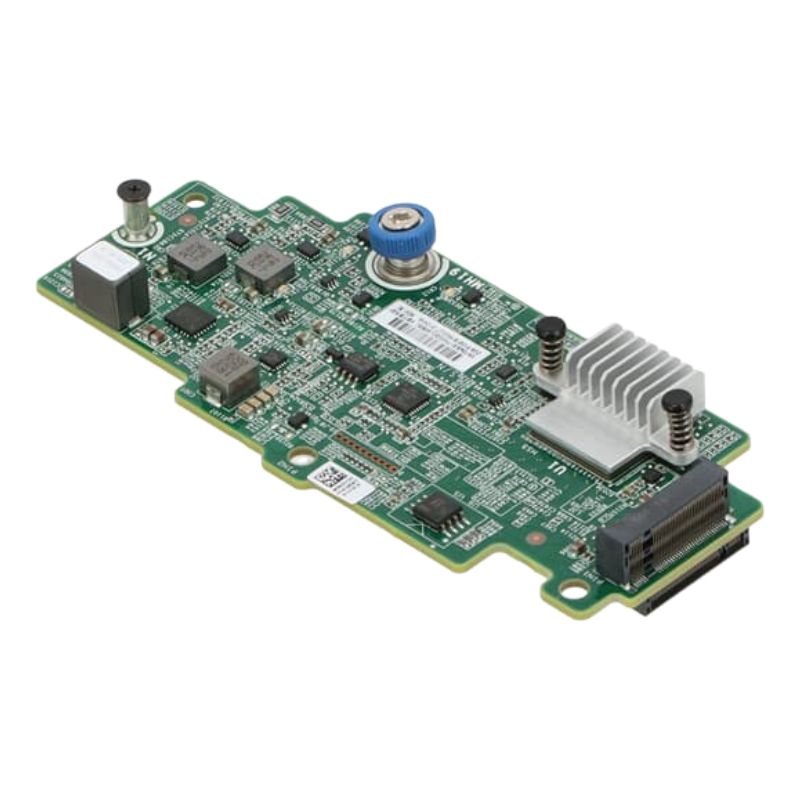


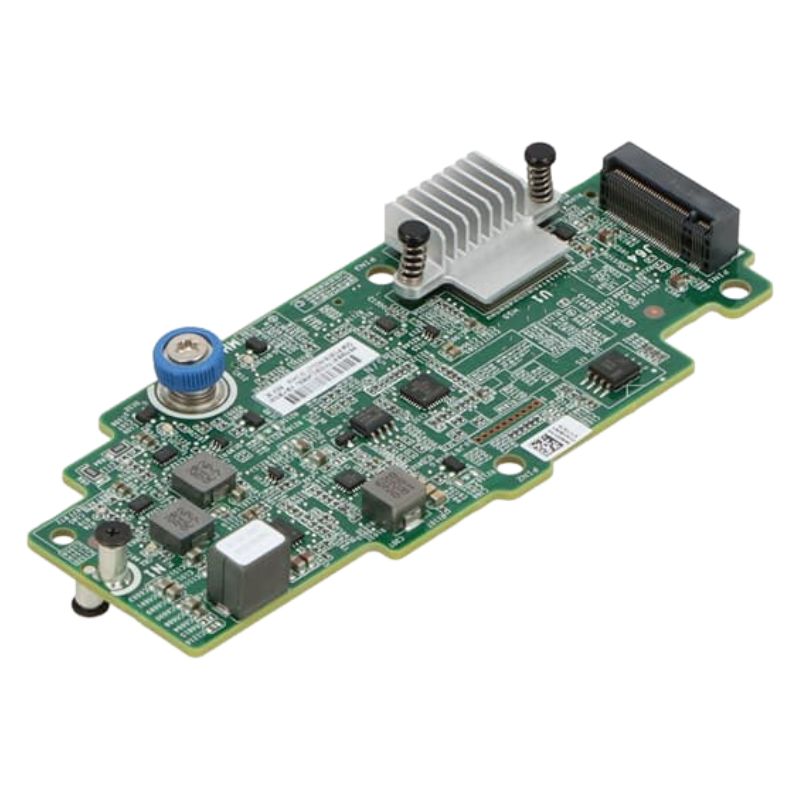
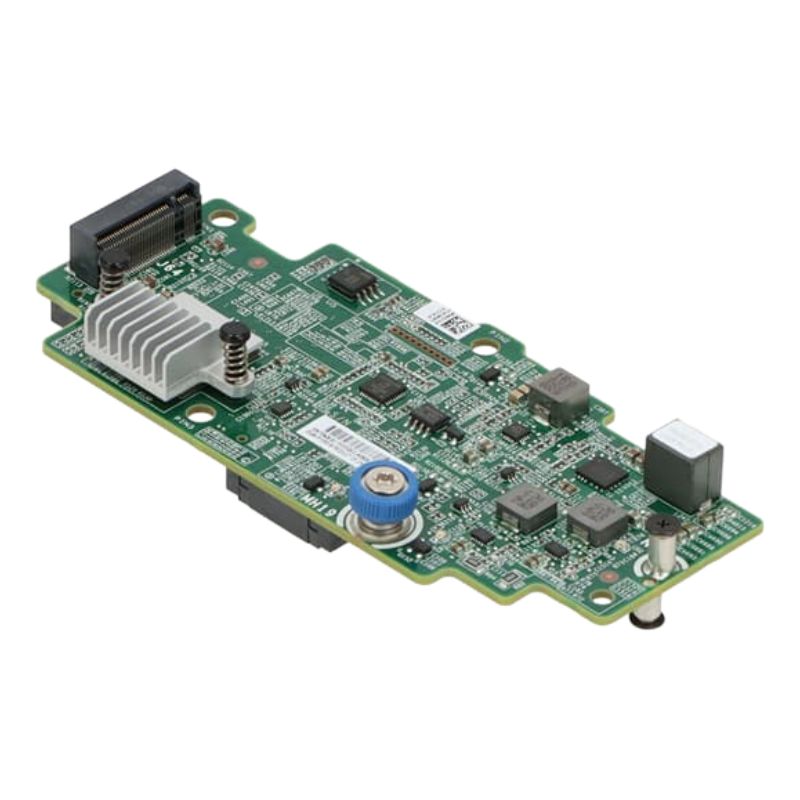
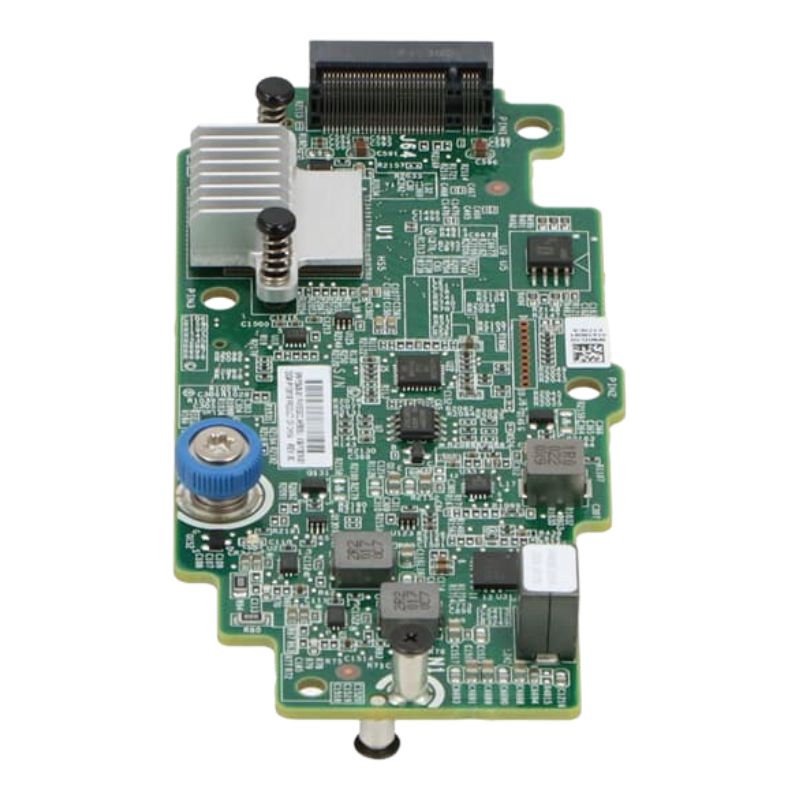
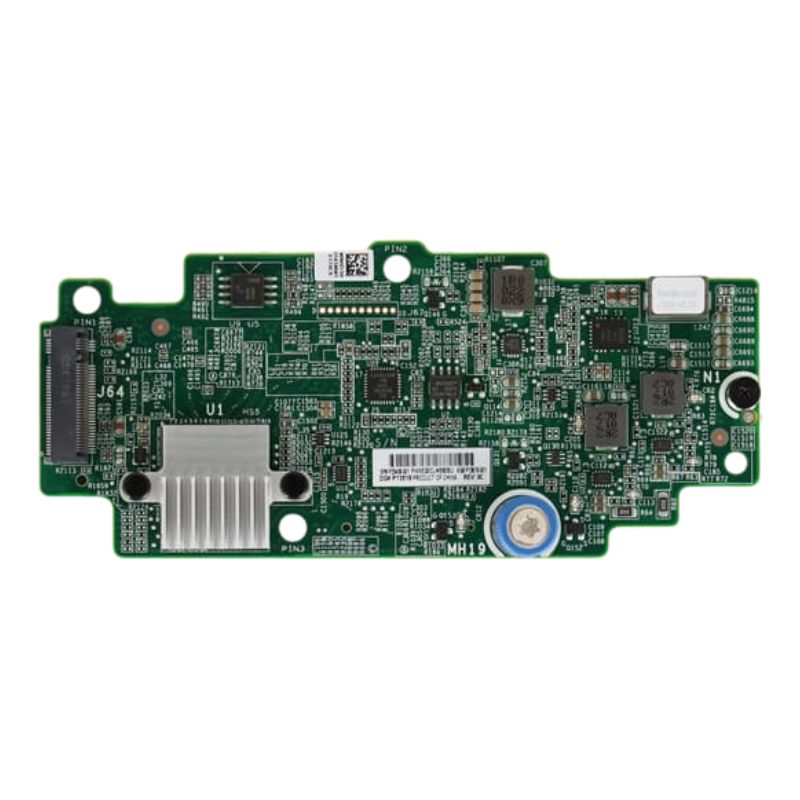
HPE P52964-B21 NVMe PCIe 3 x8 DX NS204I-T Gen10 Plus x2 Lanes Boot Controller. New (System) Pull with 1-Year Replacement Warranty (Card Only No SSD InClouded)
The HPE P52964-B21 NVMe PCIe 3 x8 DX NS204i-T Gen10 Plus Boot Controller is engineered to deliver dependable boot storage with accelerated data access. Designed for HPE Gen10 Plus server platforms, this PCI-Express solution enhances system responsiveness while maintaining efficient power usage.
At its core, the P52964-B21 is a highly specialized piece of hardware designed to solve a specific challenge: making PCIe-based NVMe drives appear as standard, bootable controllers to the HPE ProLiant Gen10 Plus server's system BIOS (UEFI). It acts as an intelligent bridge, managing the connectivity and initialization of up to four NVMe drives.
The controller is a low-profile, half-height PCIe 3.0 add-in card. It interfaces with the server via a PCIe 3.0 x8 host connection, providing ample bandwidth for multiple high-speed drives. The card itself features two internal SFF-8639 (U.2) connectors. This is a critical detail: each U.2 port is bifurcated, supporting two logical NVMe namespaces or drives over a single physical cable using x4 lanes per drive. This elegant design enables the support for a total of four NVMe devices from a compact, single-slot card, maximizing storage density without consuming additional PCIe slots.
The P52964-B21's operation is intrinsically linked to the server's PCIe bifurcation capabilities. Bifurcation is the process of splitting a wider PCIe link (e.g., x8) into multiple smaller, independent links (e.g., x4, x4). The NS204i-t relies on the HPE Gen10 Plus server's BIOS to bifurcate its x8 upstream link into two x4 links. The controller then further manages each x4 link to the U.2 connector, which itself is wired for dual x4 connections. This results in four independent PCIe 3.0 x4 pathways, one for each connected NVMe drive, providing a full bandwidth pipeline that avoids the contention often seen in shared-port architectures.
Internally, a PCIe switch integrated circuit is the heart of the card. This switch handles the routing of data and commands between the host server and the individual NVMe drives. It also plays a vital role in drive discovery and initialization during the pre-boot environment, which is a prerequisite for making the NVMe drives bootable. Without this controller, many server BIOS versions would not recognize NVMe drives in the U.2 bays, rendering them unusable as boot devices.
The HPE P52964-B21 is strategically deployed in scenarios where storage performance is the paramount concern. It transforms the HPE Gen10 Plus server into an ideal platform for the most demanding applications.
By enabling NVMe as a boot medium, system administrators can achieve server boot times that are fractions of traditional SAS-boot scenarios. This leads to faster provisioning, quicker restarts after patches, and improved overall agility. Applications hosted on these drives launch and respond with remarkable speed, improving productivity for end-users and computational workflows alike.
In conjunction with HPE's direct-attached storage cages, the NS204i-t controller allows a Gen10 Plus server to host multiple high-performance NVMe drives. These drives can then be pooled using Windows Storage Spaces Direct (S2D), VMware vSAN, or Linux-based solutions like Ceph to create a hyper-converged or SDS node with extremely low latency and high throughput, forming the bedrock of a modern, scalable private cloud.
The controller is certified for use in a wide range of HPE Gen10 Plus servers, including DL, ML, and XL series models. It is crucial to verify compatibility with the specific server model and ensure the system BIOS is at a revision that supports the necessary PCIe bifurcation settings for the card to function correctly. HPE provides detailed QuickSpecs and compatibility matrices for this purpose.
The card is designed to work in tandem with HPE's NVMe-enabled drive backplanes, such as those found in the HPE 8SFF or 24SFF NVMe drive cages. The use of standard SFF-8639 cables ensures a clean, supported connection from the controller card to the server's drive bays. This integration ensures proper cooling, hot-plug support, and status LED synchronization through HPE's iLO management.
The most critical step is configuring the server's BIOS. The PCIe slot intended for the P52964-B21 must have its bifurcation setting manually adjusted. This is typically found in the "PCIe Device Options" or "Slot Configuration" menu of the System BIOS. The setting must be changed from the default (usually "Auto" or "x8") to "x4x4" bifurcation. Failure to perform this step will result in the server only recognizing a maximum of two NVMe drives instead of four. Install the card into a PCIe 3.0 x8 or x16 slot. Using the provided HPE cables, connect each SFF-8639 port on the card to the corresponding ports on the server's NVMe drive backplane. Each cable will service two physical U.2 drive bays. Ensure cables are securely seated and routed to avoid blocking airflow.
Because the card presents the NVMe drives directly to the operating system, no specific vendor driver is typically required for basic functionality; the standard in-box NVMe driver in Windows Server, Linux, or VMware is sufficient. However, for optimal performance and advanced management features in Windows environments, installing the HPE NVMe Driver is recommended. This driver is part of the HPE Service Pack for ProLiant (SPP) and can provide enhanced stability and integration with the HPE hardware management stack.
Understanding the performance envelope and constraints of the P52964-B21 is important for setting realistic expectations and proper system design.
With a PCIe 3.0 x8 host interface, the controller has a theoretical maximum bidirectional bandwidth of approximately 8 GB/s (8 GT/s per lane x 8 lanes / 8 bits per byte). This is shared across all four connected drives. In a scenario where four high-end NVMe drives (each capable of ~3.5 GB/s read on PCIe 3.0 x4) are operating at peak sequential read simultaneously, the host interface can become a bottleneck, capping aggregate throughput near 8 GB/s. For most mixed and random workloads, this is rarely a limiting factor. The architecture ensures each drive has a dedicated x4 link to the controller, preserving low latency.
It is imperative to understand that the HPE P52964-B21 does not provide hardware RAID functionality. It does not include a RAID-on-Chip (ROC) processor, battery-backed cache, or any mechanism to create hardware RAID arrays (e.g., RAID 1, RAID 5) across the connected NVMe drives. Each drive is presented individually to the host operating system. Data protection must be implemented at the software layer using operating system features like Windows Storage Spaces, Linux MDADM/Logical Volume Manager (LVM), or hypervisor-level RAID.
HPE offers another variant, the NS204i-p (P52964-B21), which is a true hardware RAID controller for NVMe. The key difference is that the "p" (RAID) model includes a hardware RAID processor and cache, allowing for bootable RAID arrays from NVMe drives. The "t" (non-RAID) model discussed here is more lightweight, lower cost, and defers RAID responsibilities to software. The choice depends on the need for hardware-based data protection versus a desire for maximum performance and flexibility with software-defined storage.
The P52964-B21 is not a generic PCIe card; it is designed and validated specifically for seamless operation within the HPE server ecosystem. This integration provides significant advantages in manageability and support.


 Contact Us
 Information
 Catalog
 Solid State Drives (SSD)
 Network Switches
 Hard Disk Drives
 HBA & Controllers
 PC & Servers
 PC & Server Memory
 CPU & Processors
 Network Routers
 Power Supplies
 Tape Drives & Libraries
 Network Devices
 Computer & Network Cables