(7% discount is applied at checkout)
Cart is empty
Your go-to destination for cutting-edge server products
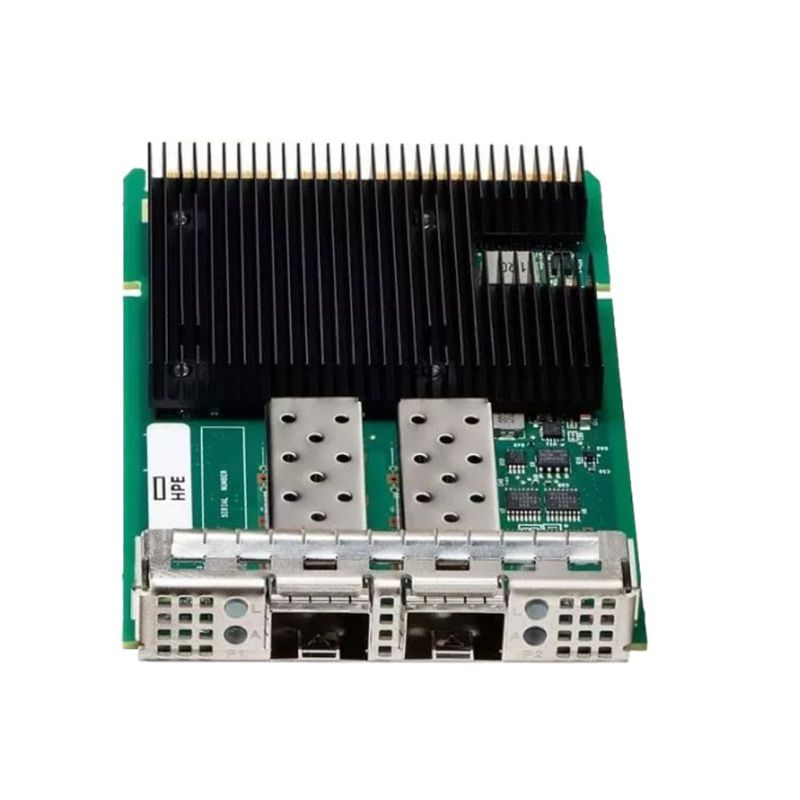


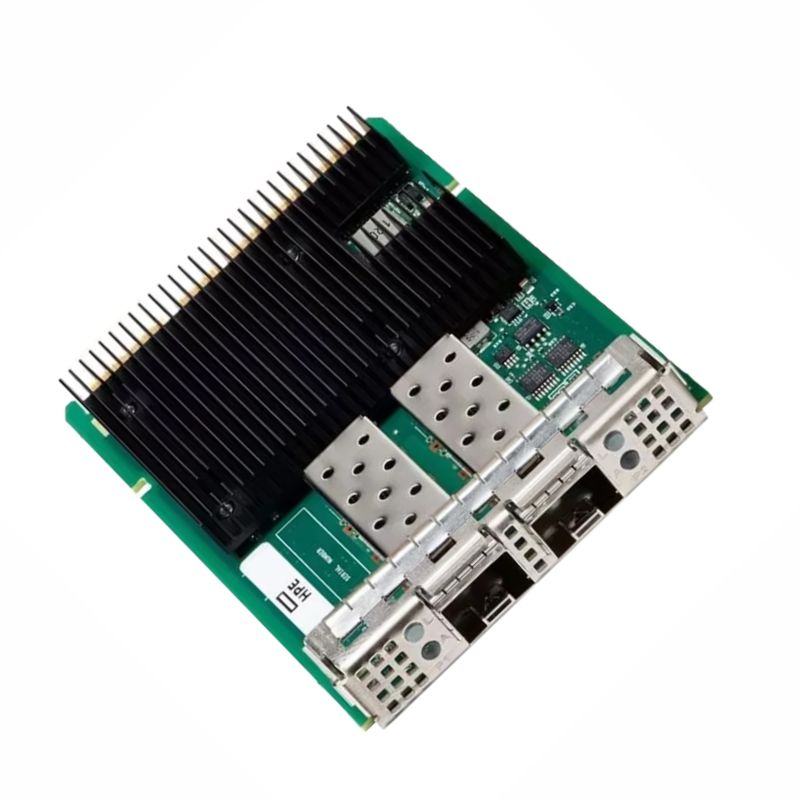
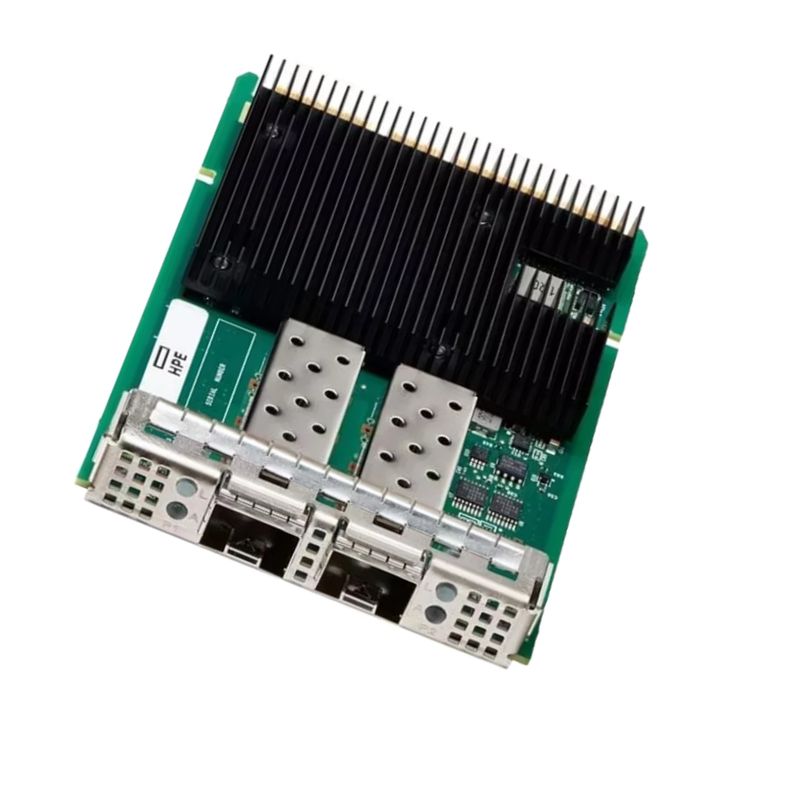
HPE P53861-B21 Broadcom BCM57414 Gigabit 10/25GB Ethernet 2 Port SFP28 OCP3 Adapter. New Sealed in Box (NIB) with 1 Years replacement warranty
Overview of High-Performance OCP 3.0 Ethernet Adapter
The HPE P53861-B21 network interface card is engineered to support demanding enterprise and cloud workloads by combining Broadcom BCM57414 controller technology with the Open Compute Project 3.0 mezzanine architecture. This adapter is purpose-built for HPE DX platforms, delivering flexible connectivity options and optimized throughput for virtualized, containerized, and bare-metal environments.
The HPE P53861-B21 Broadcom BCM57414 Ethernet 10/25Gb 2-port SFP28 OCP3 Adapter belongs to a specialized category of high-performance, server-integrated networking adapters designed for modern data center architectures. This category addresses the growing demand for flexible bandwidth scaling, ultra-low latency, and efficient CPU utilization in environments that rely on virtualization, containerized workloads, private and hybrid clouds, and software-defined networking platforms. Products within this category are engineered to provide consistent throughput and deterministic performance while aligning with the physical and electrical standards of Open Compute Project version 3 mezzanine slots.
As Ethernet speeds transition from traditional 10Gb to 25Gb per lane, adapters in this category act as a critical bridge between legacy infrastructures and next-generation networking fabrics. The inclusion of dual-port SFP28 connectivity allows enterprises to deploy link aggregation, redundant paths, or workload segmentation without increasing adapter count. This positioning makes the category particularly relevant for organizations seeking to optimize rack density, reduce power consumption, and maintain compatibility with a wide ecosystem of optical and direct-attach copper transceivers.
The Open Compute Project 3.0 mezzanine form factor defines a standardized approach to server networking expansion that differs significantly from traditional PCI Express add-in cards. Adapters in this category, including the HPE P53861-B21, are installed directly onto the server motherboard through a dedicated mezzanine connector. This design minimizes signal path length, improves airflow characteristics, and reduces mechanical complexity inside dense server chassis.
OCP3 adapters are particularly valued in hyperscale and enterprise data centers where consistency across server fleets is essential. The standardized pinout and physical dimensions ensure interoperability across supported HPE server platforms, simplifying procurement and lifecycle management. This category emphasizes mechanical efficiency, electrical integrity, and thermal optimization, allowing network interfaces to operate reliably at sustained 25Gb speeds per port.
Networking adapters built for the OCP3 interface benefit from closer integration with the host system. Reduced cabling complexity inside the chassis improves airflow and lowers operating temperatures, which in turn can enhance component longevity. The category also supports front-facing network connectivity, making cable management more efficient in high-density racks and enabling faster serviceability during maintenance operations.
At the core of this category lies the Broadcom BCM57414 Ethernet controller, a highly regarded chipset known for its balance of performance, efficiency, and feature depth. The controller supports dual-port operation with each port capable of auto-negotiating between 10Gb and 25Gb Ethernet speeds. This flexibility allows IT teams to deploy the adapter in mixed-speed environments without sacrificing performance consistency.
The BCM57414 architecture is optimized for modern server workloads that generate high packet rates and require predictable latency. Advanced packet processing pipelines, efficient DMA engines, and optimized interrupt handling contribute to lower CPU overhead. This design philosophy aligns with the category’s emphasis on maximizing application performance while minimizing the networking stack’s impact on compute resources.
Adapters in this category are designed to adapt to evolving network infrastructures. Support for both 10GbE and 25GbE enables gradual upgrades, allowing organizations to reuse existing cabling and transceivers while preparing for higher bandwidth demands. Auto-negotiation ensures seamless interoperability with upstream switches, reducing configuration complexity and deployment risk.
Dual-port configurations within this category support a variety of network topologies. Administrators can configure ports for active-active link aggregation to increase throughput or active-standby modes to enhance fault tolerance. These capabilities are essential in environments where uptime and data integrity are critical, such as financial services platforms, healthcare systems, and large-scale e-commerce infrastructures.
High-performance Ethernet adapters are evaluated not only by raw bandwidth but also by their ability to handle sustained workloads without packet loss or latency spikes. The category encompassing the HPE P53861-B21 emphasizes consistent throughput across a wide range of packet sizes, making it suitable for both storage traffic and east-west application communication.
Support for advanced offloading technologies allows these adapters to handle tasks such as checksum calculations, segmentation, and receive side scaling directly in hardware. By offloading these operations from the host CPU, the adapter enables servers to allocate more processing power to application workloads. This efficiency becomes increasingly important in virtualized and containerized environments where CPU cycles are a shared resource.
Latency sensitivity is a defining characteristic of modern data center applications. Adapters in this category are engineered to deliver deterministic latency profiles, reducing jitter and ensuring predictable application response times. This is particularly beneficial for real-time analytics, high-frequency trading platforms, and distributed databases that rely on fast inter-node communication.
The category is designed with virtualization at its core. Native support for technologies such as SR-IOV allows a single physical adapter to present multiple virtual functions to guest operating systems. This capability enables near-native I/O performance for virtual machines while maintaining isolation and security between tenants.
Cloud-native environments benefit from the adapter’s compatibility with leading hypervisors and container orchestration platforms. The ability to integrate seamlessly with software-defined networking frameworks ensures that network policies can be enforced consistently across physical and virtual layers. This alignment makes the category a natural fit for private clouds, hybrid deployments, and managed service provider infrastructures.
As container adoption accelerates, networking adapters must handle rapid workload scaling and high connection churn. The category supports efficient handling of small packet flows and high connection counts, enabling microservices architectures to operate without network bottlenecks. Hardware-assisted features reduce overhead during container spin-up and teardown, contributing to faster application deployment cycles.
Security considerations are integral to enterprise networking categories. Adapters based on the BCM57414 controller incorporate features that enhance data integrity and protect against common network threats. Hardware-based checks ensure packet integrity, while support for secure boot and firmware validation helps maintain a trusted hardware baseline.
These security features are particularly relevant in regulated industries where compliance requirements demand strict control over data flows. By integrating security at the hardware level, the category reduces reliance on software-only defenses, which can introduce additional latency and management complexity.
In multi-tenant environments, isolation between workloads is critical. The category supports virtual function isolation and traffic segmentation, ensuring that network traffic from different applications or tenants remains separate. This capability enhances security while also simplifying network policy enforcement across shared infrastructures.
The HPE P53861-B21 adapter is part of a broader category tailored specifically for HPE server platforms that support OCP3 mezzanine networking. Compatibility extends across multiple generations of HPE ProLiant servers, ensuring consistent performance and management experiences. Tight integration with HPE system firmware and management tools enables centralized monitoring, diagnostics, and firmware updates.
This category benefits from HPE’s validation and certification processes, which ensure that adapters operate reliably under sustained workloads. Enterprises gain confidence knowing that the networking components are tested alongside server hardware, reducing the risk of interoperability issues in production environments.
Energy efficiency is a key consideration in modern data centers, where power and cooling costs represent a significant portion of operational expenses. The category emphasizes low power consumption per gigabit of throughput, achieved through efficient silicon design and optimized power management features.
Thermal characteristics are equally important, particularly in dense server configurations. Mezzanine-based adapters benefit from direct airflow paths, reducing hotspots and enabling stable operation at high ambient temperatures. This thermal efficiency supports higher rack densities without compromising reliability.
By delivering higher bandwidth without proportional increases in power draw, the category supports sustainability initiatives aimed at reducing carbon footprints. Efficient networking components contribute to overall data center energy optimization, aligning technical performance goals with environmental responsibility.
The versatility of this Ethernet adapter category makes it suitable for a wide range of industry applications. In enterprise IT environments, it supports consolidation of workloads and high-availability architectures. In cloud service provider settings, it enables scalable network fabrics that can adapt to fluctuating demand.
Industries such as telecommunications, research and education, media streaming, and financial services benefit from the category’s balance of bandwidth, latency, and reliability. The ability to handle diverse traffic patterns ensures consistent performance regardless of workload composition.
High-speed Ethernet is increasingly used for storage networking protocols that demand low latency and high throughput. Adapters in this category support these requirements, making them suitable for software-defined storage, distributed file systems, and backup infrastructures. Consistent performance under load ensures that storage operations do not become a bottleneck for application performance.
Investing in adapters within this category provides a degree of future readiness as network demands continue to evolve. Support for 25Gb Ethernet aligns with current industry trends toward higher per-lane speeds, while maintaining backward compatibility with 10Gb environments. This dual-speed capability extends the useful lifespan of the hardware and protects infrastructure investments.
Firmware upgradability and ongoing driver support ensure that the category can adapt to new operating systems, hypervisors, and security requirements over time. This long-term adaptability is a key factor for organizations planning multi-year infrastructure roadmaps.
Scalability is a defining attribute of enterprise networking categories. The ability to scale bandwidth, workload density, and virtualization levels without replacing core networking components delivers long-term value. Adapters like the HPE P53861-B21 exemplify this approach by combining flexible connectivity, robust performance, and deep ecosystem integration.
Within the broader landscape of high-speed Ethernet adapters, the category represented by the HPE P53861-B21 occupies a strategic middle ground between entry-level 10Gb solutions and ultra-high-end 40Gb or 100Gb adapters. This positioning makes it ideal for organizations seeking significant performance improvements without the complexity and cost associated with higher-speed optics and switching infrastructures.
The balance of performance, efficiency, and compatibility defines the category’s appeal. By addressing current workload requirements while anticipating future growth, it serves as a foundational component in modern data center networking strategies.


 Contact Us
 Information
 Catalog
 Solid State Drives (SSD)
 Network Switches
 Hard Disk Drives
 HBA & Controllers
 PC & Servers
 PC & Server Memory
 CPU & Processors
 Network Routers
 Power Supplies
 Tape Drives & Libraries
 Network Devices
 Computer & Network Cables