(7% discount is applied at checkout)
Cart is empty
Your go-to destination for cutting-edge server products
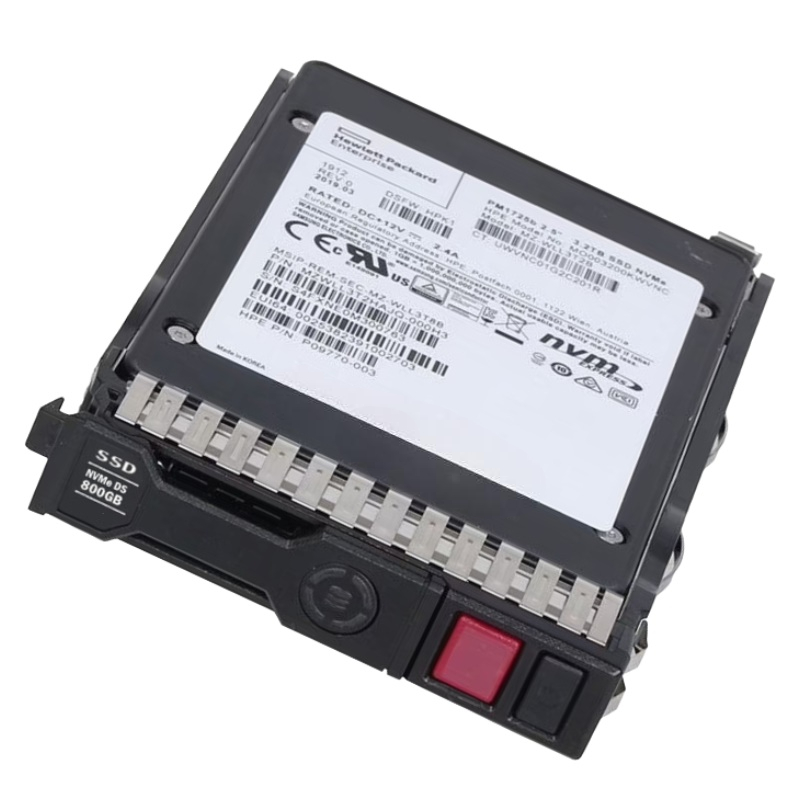


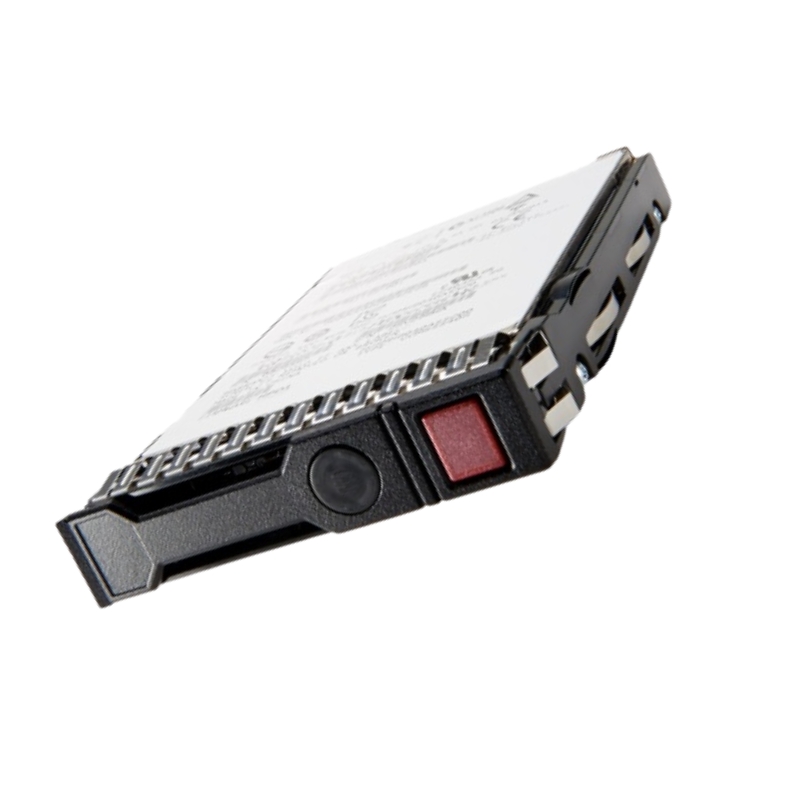
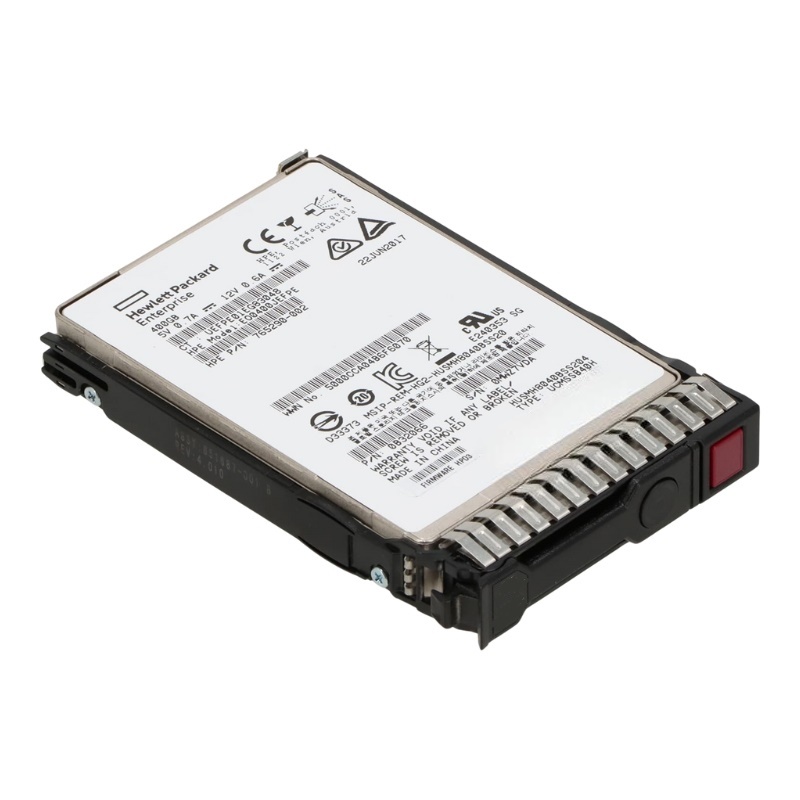
HPE P51858-B21 800GB Nvme Gen4 High Performance Low Latency Write Intensive SFF Scn U.2 P5800x Solid State Drive for Servers. Factory-Sealed New in Original Box (FSB) with 3-Year Replacement Warranty
The HPE P51858-B21 is a high-performance 800GB NVMe Gen4 SSD engineered for exceptional speed, durability, and ultra-low latency. Designed for enterprise-grade workloads, it’s perfect for write-intensive applications and mission-critical systems that require consistent performance and minimal downtime.
Built to support write-intensive workloads, the P5800X drive delivers outstanding durability and long-term reliability, ensuring optimal performance across sustained write operations.
The HPE P51858-B21 SSD utilizes a PCIe Gen4 NVMe interface, offering fast access speeds and seamless integration with next-gen server infrastructures.
The P51858-B21 comes in a Small Form Factor (SFF), making it compatible with compact server and storage solutions that demand space-efficient yet high-performing storage devices.
Thanks to its hot-pluggable functionality, this SSD can be replaced or upgraded without needing to shut down systems, minimizing downtime and improving serviceability.
Scope and Relevance
The category “HPE P51858‑B21 800GB NVMe 4.0 High Performance Write Intensive SFF U.2 Solid State Drive” refers to a narrow but critical segment of enterprise storage: ultra‑low latency, high endurance NVMe drives built for write‑intensive workloads in compact form factors. Products in this category are engineered to support demanding applications in enterprise data centers, financial systems, virtualization hosts, high‑performance computing, and real‑time analytics. Under this umbrella, one might also find similar models in the same family (for example, different capacities, endurance grades, or interface variants) that share the core architecture of the P5800X controller series, leveraging the PCIe Gen4 (NVMe 4.0) interface, and packaged in the U.2 small form factor (SFF) with hot‑pluggable support.
Devices in this category emphasize four primary attributes: high throughput, low latency, sustained write endurance, and enterprise reliability features. High throughput ensures that large volumes of data can be moved or processed rapidly. Low latency is critical because many applications demand sub‑millisecond responses for every IO. Sustained write endurance is essential for write-intensive workloads such as logging, write caching, database transaction journals, and continuous streaming writes. Enterprise reliability features include error correction, power loss protection, SMART monitoring, and hot-swap capabilities so that drives may be replaced without shutting down systems.
Within this category, one sees the adoption of PCIe Gen4 x4 lanes under the NVMe 4.0 protocol. The move from Gen3 to Gen4 effectively doubles maximum theoretical throughput, offering improved I/O per second (IOPS) headroom for read and write operations. Drives like the P51858‑B21 typically can achieve data transfer rates well into the multiple gigabytes per second range (for example, 16 Gb/s internal interface utilization). This performance is critical across workloads such as large sequential writes, streaming loads, backup or replication tasks, and bulk data ingest operations.
In this category, the drives are optimized for minimum latency under high concurrency. The firmware, drive internals, and controller architectures all aim to minimize queuing delays, arbitration overhead, and internal mapping latencies so that each I/O can be executed with minimal delay—even under heavy load. This is what distinguishes “high performance” from merely “fast sequential.” Applications such as real-time databases, time series ingestion, caching layers, and financial transaction processing benefit greatly when latency variance is minimized.
Because this category is labeled “Write Intensive,” the drives are built with overprovisioning, stronger internal wear leveling, optimized write layering, and robust firmware protections to support sustained and heavy write workloads for long useful life. That is, the internal architecture is tuned so that write amplification is reduced, temperature-induced wear is managed, and performance is preserved even as drive capacity is used. In this class, the SSD should handle workloads such as continuous logging, journaling, VDI swap files, real-time processing outputs, or multi-tier cache writes without significant performance degradation over time.
Within this category, the physical form factor is SFF U.2, and that brings constraints and advantages. The U.2 connector offers robust enterprise-level port reliability, grounded signal integrity, and practical hot-plug capability. The SFF size ensures that the drive can fit into dense server chassis while still being serviceable. Many systems built for enterprise use are designed around U.2 bays, offering power, cooling, and backplane connectivity optimized for these drives. In this category, the mechanical design usually also integrates power loss protection capacitors and thermal sensors to maintain data integrity and drive health.
A defining feature of this category is the ability to be hot-swapped—that is, a drive can be removed or replaced without powering down the system. This is vital in high-availability environments where downtime is costly or unacceptable. Enterprise data centers often use drive trays, carrier sleds, and backplanes that support safe hot removal under load. The category expects such capabilities as standard, so replacement, maintenance, or scale-out upgrades can happen without service interruptions.
Within this category one might encounter several variants or siblings that differ by capacity (for example, a 400 GB, 1.6 TB, or 3.2 TB variant of the same P5800X architecture), by endurance class (e.g. read-intensive, mixed-use vs write-intensive), or by firmware optimization (latency‑tuned edition, power‑optimized edition). Each subcategory still retains the core NVMe Gen4, U.2 SFF, low-latency architecture but is tuned for different trade‑offs between capacity, endurance, performance consistency, and cost efficiency. A 400 GB variant might offer even lower latency under some conditions, whereas a higher capacity variant might offer more throughput headroom or better cost per gigabyte for less demanding write workloads.
Another axis of differentiation in this category is firmware – some versions may offer advanced monitoring, telemetry, latency tracking, adaptive runtime throttling, self‑healing routines, or integration with drive health platforms. Monitoring of SMART attributes and real-time performance metrics is essential for preemptive maintenance. Firmware updates within this category can deliver improvements in wear leveling, bug fixes, and performance tuning over time while keeping the underlying hardware consistent.
This category is ideal for deployment in environments where every microsecond of latency counts and write volumes are substantial. Use cases include high‑frequency trading systems that execute thousands of transactions per second, time‑series databases ingesting streaming data, real-time analytics platforms, and logging or journaling layers for enterprise databases. Virtualization hosts (VMware, Hyper-V) may leverage such drives for swap or write cache, and containerized microservices handling heavy logs or message queues may also benefit. In modern hyperconverged systems, these drives may underpin caching tiers or metadata layers where consistent low latency is paramount.
In database systems, the transaction log or write-ahead log must be persisted quickly and reliably. Drives in this category provide low-latency synchronous commits, reducing commit wait time, improving transaction throughput, and preventing IO backlog even under peak write surges.
Virtual machines often generate ephemeral I/O bursts, especially on swap or write cache layers. The category supports heavy random writes and high concurrency, mitigating performance bottlenecks under heavy VM density or bursty traffic.
Streaming pipelines with sustained writes, edge devices aggregating telemetry, or real-time analytics ingest modules benefit from predictable drive performance. The low-latency, consistent write performance ensures ingestion pipelines do not lag or stall due to storage bottlenecks.
When placed under stress tests typical for this category, drives exhibit stable IOPS, minimal latency spikes, and consistent throughput even as write utilization climbs. The firmware is tuned to prevent sudden performance drops under thermal or wear conditions. Overprovisioning allowances and intelligent media management help maintain headroom so that performance degradation is gradual and predictable rather than abrupt. Under mixed I/O load (reads and writes), the drive must handle concurrent commands effectively without latency outliers that would perturb upstream services.
Latency consistency is a key differentiator. This category demands that latency tail percentiles (e.g. 99.9th percentile) remain tightly bounded, even in high I/O or full-drive scenarios. High tail latency is unacceptable for critical applications. The drive’s internal architecture, queuing, and scheduling strategies play pivotal roles in preserving consistency.
Under sustained load, thermal throttling can degrade performance. Thus, products in this category integrate thermal sensors or throttling logic to balance performance and reliability. Power draw must remain within server tolerances, and performance must not degrade excessively under thermal constraints. Efficient power and thermal management is a hallmark of well-designed drives in this class.
Ensuring that drives are on the latest firmware is important for performance, reliability, and bug fixes. Many vendors release firmware updates addressing wear leveling, latency irregularities, error handling, and performance tuning. In this category, firmware updates should be non-disruptive and transparent. Migration strategies should ensure backward compatibility and data integrity during upgrades.
Since the category uses the SFF U.2 format, drives must physically fit into server chassis designed for 2.5‑inch U.2 bays. The drive height, connector placement, and thermal spacing must comply with data center standards. Proper airflow and cooling paths must be maintained to ensure that drives do not overheat under high I/O loads.
Within this category one should follow several best practices. First, monitor drive health via SMART metrics and telemetry dashboards to preempt wear-out. Next, schedule firmware updates during maintenance windows and validate performance post-update. Allocate correct overprovisioning and reserve spare capacity to maintain performance over time. Configure host drivers and NVMe queues optimally to avoid bottlenecks. In multi-drive systems, distribute write load evenly to avoid hotspots. Additionally, allow for drive replacement with minimal disruption by leveraging hot-swap capabilities and redundant configurations. Finally, plan for read/write workloads throughput to match the drive’s capability, avoiding oversubscription or overcommitment that might lead to latency anomalies.
Allowing sufficient spare margin ensures that internal wear-leveling algorithms have breathing room to relocate writes and manage endurance. Avoid filling the drive to its absolute full capacity. Keeping some free space aids performance consistency, prolongs lifespan, and reduces chances for write amplification surges. In this category, write-intensive drives tend to reserve larger spare areas to balance performance and lifetime.
Within a larger e-commerce or tech site, this category description can link to related items: sibling capacities (e.g. 400 GB or 1.6 TB variants), alternative form factors (e.g. EDSFF, U.3, M.2), complementary accessories (e.g. drive trays, NVMe backplanes), and firmware update pages or datasheets. Strategically linking to product pages with anchor text like “P51858‑B21 800GB SSD specifications” or “HPE P5800X family lineup” helps users and crawlers navigate deeply.


 Contact Us
 Information
 Catalog
 Solid State Drives (SSD)
 Network Switches
 Hard Disk Drives
 HBA & Controllers
 PC & Servers
 PC & Server Memory
 CPU & Processors
 Network Routers
 Power Supplies
 Tape Drives & Libraries
 Network Devices
 Computer & Network Cables