(7% discount is applied at checkout)
Cart is empty
Your go-to destination for cutting-edge server products
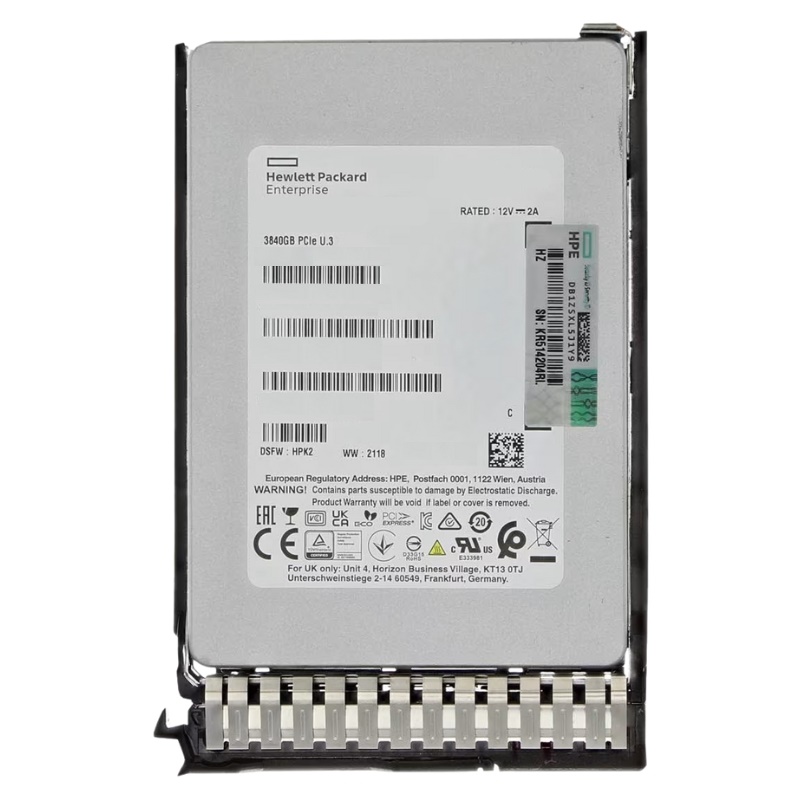


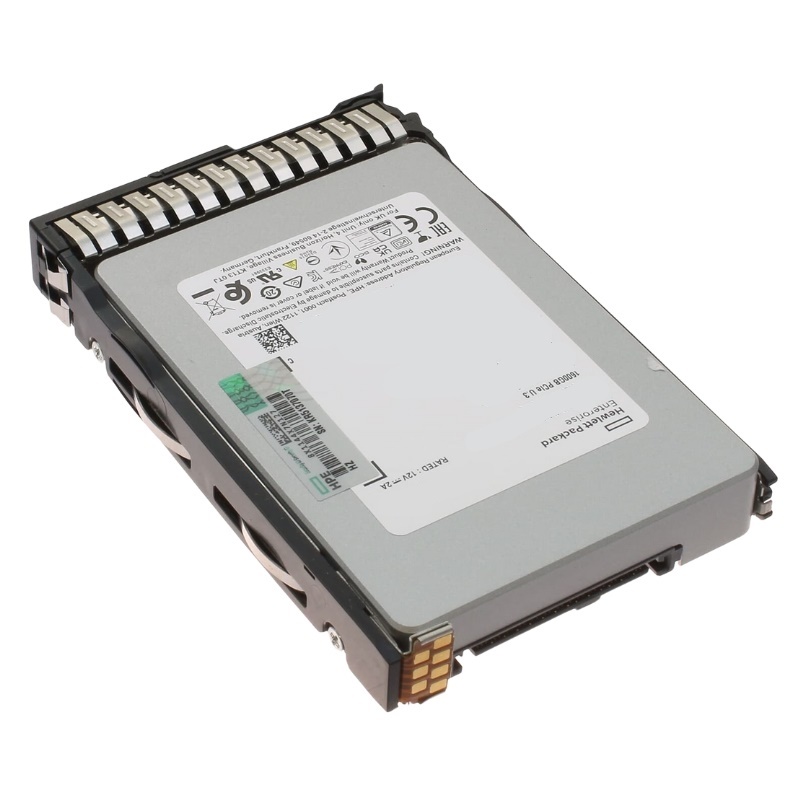
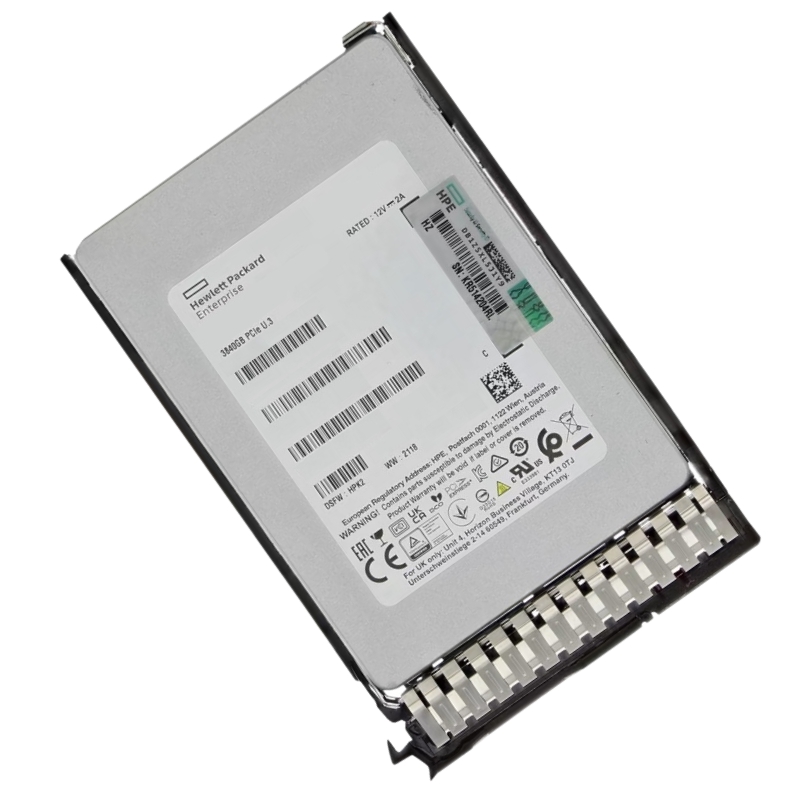
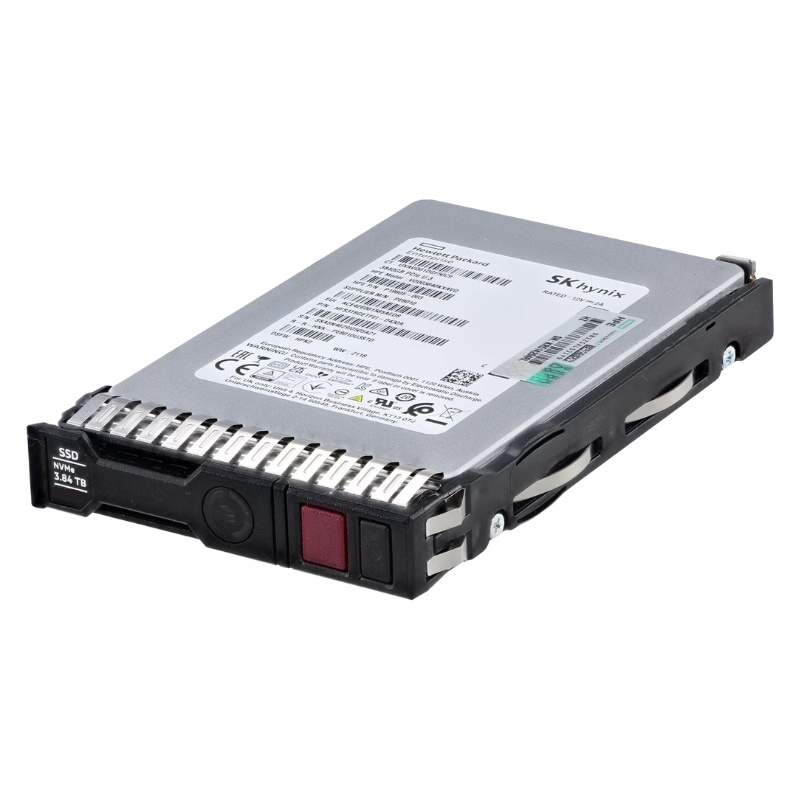
HPE P61027-B21 3.84TB NVMe Gen4 High Performance Read Intensive SFF SC U.3 SSD. Factory-Sealed New in Original Box (FSB) with 3 Years Warranty
The HPE P61027-B21 3.84TB NVMe Gen4 RI SFF SC U.3 SSD is a high-performance solid-state drive engineered for enterprise workloads. Designed with advanced NVMe technology, it ensures rapid data access, reliability, and scalability for modern IT infrastructures.
The HPE P61027-B21 3.84TB NVMe Gen4 High Performance Read Intensive SFF SC U.3 SSD belongs to a specialized enterprise solid state drive category designed to meet the extreme performance, reliability, and scalability demands of modern data centers. This category focuses on NVMe-based storage solutions that leverage PCIe Gen4 technology to deliver significantly higher throughput and lower latency compared to legacy SAS and SATA SSDs. Within enterprise environments, this class of storage is widely deployed for read-intensive workloads that require fast access to large datasets, predictable performance under load, and seamless integration with HPE ProLiant server architectures.
As organizations continue to adopt data-driven applications, virtualization platforms, containerized workloads, and real-time analytics, the need for high-performance NVMe storage becomes critical. The category represented by the HPE P61027-B21 addresses these needs by offering optimized read-intensive endurance characteristics, advanced firmware integration, and enterprise-grade data protection. It is designed to function reliably in 24x7 operational environments where downtime, latency spikes, or data inconsistency can have significant business impact.
NVMe Gen4 SSDs represent a substantial advancement over previous generations by utilizing the PCI Express 4.0 interface, which doubles the available bandwidth per lane compared to PCIe Gen3. This category is engineered to take full advantage of the NVMe protocol, which was specifically designed for non-volatile memory and removes many of the bottlenecks associated with legacy storage protocols. The result is dramatically improved sequential read speeds, higher IOPS capacity, and reduced command latency.
The HPE P61027-B21 fits squarely into this high-performance NVMe Gen4 category, making it ideal for enterprise workloads that depend on rapid data access. These include large-scale databases, online transaction processing systems, data warehousing platforms, and virtualization clusters that support hundreds or thousands of virtual machines. The drive’s architecture ensures that performance remains consistent even during peak usage periods, which is essential for maintaining service-level agreements and overall system responsiveness.
Read-intensive NVMe SSDs are optimized to deliver exceptional read performance while maintaining sufficient write endurance for workloads where read operations significantly outweigh write operations. In this category, latency reduction is a primary design objective. The NVMe protocol’s ability to support multiple parallel command queues allows the drive to process a high volume of read requests simultaneously, minimizing wait times and improving application responsiveness.
The HPE P61027-B21 benefits from this design philosophy by offering predictable low-latency behavior across a wide range of enterprise applications. This makes the category particularly suitable for search engines, content delivery systems, virtual desktop infrastructure, and analytics platforms where rapid access to stored data directly impacts user experience and operational efficiency.
Another defining characteristic of this NVMe Gen4 SSD category is its ability to scale performance effectively in multi-drive configurations. When deployed across multiple server bays or storage nodes, these drives can collectively deliver massive aggregate throughput. This scalability is essential for modern data center architectures that rely on distributed storage, hyperconverged infrastructure, and software-defined storage solutions.
The HPE P61027-B21 is designed to integrate seamlessly into such environments, allowing organizations to scale storage performance alongside compute and networking resources. This ensures balanced system architectures that can grow with evolving workload requirements without introducing bottlenecks.
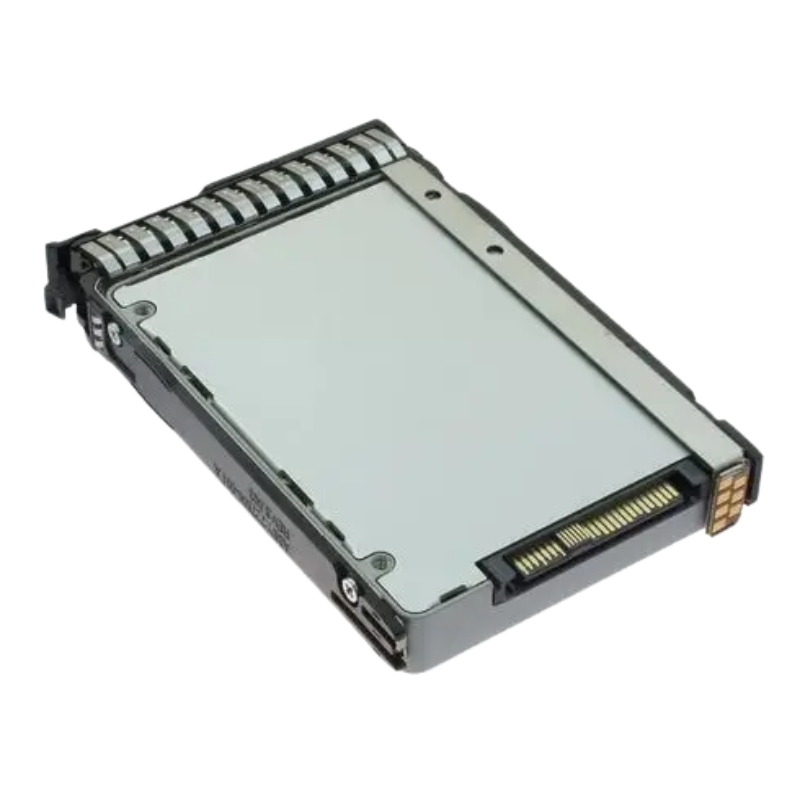
The U.3 interface represents an important evolution in enterprise storage connectivity, offering backward compatibility with U.2 and SAS/SATA interfaces while enabling NVMe performance over a unified connector. This category of SSDs is designed to simplify server and storage configurations by supporting multiple protocols through a single drive bay architecture. The HPE P61027-B21 utilizes the U.3 interface to provide flexibility and future-proofing for enterprise deployments.
The small form factor design further enhances the appeal of this category by allowing higher drive density within standard server chassis. This is particularly valuable in data centers where rack space is at a premium and maximizing storage capacity per unit of space is a key objective.
Drives in this category are engineered to align with HPE’s Smart Carrier design and ProLiant server ecosystem. This ensures consistent physical compatibility, streamlined installation, and unified management through HPE’s storage monitoring and management tools. The U.3 interface allows administrators to deploy NVMe drives without requiring specialized backplanes, reducing complexity and improving upgrade paths.
The HPE P61027-B21 benefits from this compatibility by enabling seamless integration into existing HPE infrastructures, making it easier for organizations to adopt NVMe technology without extensive hardware changes.
Small form factor enterprise SSDs are designed with careful consideration for airflow and thermal performance. NVMe Gen4 drives generate more heat due to their higher performance characteristics, making effective thermal management essential for sustained operation. This category incorporates advanced thermal designs that ensure stable performance even under continuous heavy workloads.
The HPE P61027-B21 is engineered to operate within the thermal envelopes of HPE ProLiant servers, contributing to system reliability and longevity while minimizing the risk of thermal throttling.
The read intensive endurance classification defines this SSD category as an optimal choice for applications where data is written once or infrequently and read many times. This includes content repositories, data lakes, analytics datasets, and virtual machine images. The endurance characteristics are carefully balanced to provide long service life while maximizing read performance and capacity efficiency.
With a capacity of 3.84TB, the HPE P61027-B21 offers substantial storage space within this category, enabling organizations to store large datasets locally within high-performance servers. This reduces reliance on external storage systems and improves overall application performance.
Enterprise read intensive NVMe SSDs are commonly deployed in scenarios where fast data retrieval is critical. Examples include business intelligence platforms that query large datasets, media streaming services that deliver content to end users, and machine learning inference workloads that require rapid access to trained models. In each case, the ability to read data quickly and consistently is more important than handling heavy write activity.
The category represented by the HPE P61027-B21 supports these use cases by delivering high read throughput and low latency while maintaining sufficient write endurance for metadata updates, logging, and periodic data refreshes.
Reliability is a cornerstone of enterprise storage categories, and NVMe Gen4 read intensive SSDs are no exception. These drives are built with advanced error correction, wear leveling algorithms, and power loss protection mechanisms to safeguard data integrity. The HPE P61027-B21 benefits from HPE’s rigorous qualification processes and firmware optimization, ensuring consistent performance and dependable operation throughout its lifecycle.
Enterprise firmware plays a critical role in managing performance, endurance, and error handling. In this category, firmware is designed to integrate tightly with server management platforms, enabling proactive monitoring and predictive failure analysis. This helps organizations maintain high availability and plan maintenance activities more effectively.
Power loss protection is an essential feature of enterprise NVMe SSD categories. In the event of an unexpected power interruption, onboard capacitors provide enough energy to flush in-flight data to non-volatile memory, preventing corruption. This capability is particularly important in environments where data consistency is critical, such as databases and transactional systems.
The HPE P61027-B21 incorporates these protections as part of its enterprise design, reinforcing its suitability for mission-critical workloads.
Enterprise NVMe SSD categories increasingly incorporate advanced security features to protect sensitive data. These may include secure firmware signing, cryptographic erase capabilities, and support for data sanitization standards. The HPE P61027-B21 aligns with these expectations by offering security features that help organizations meet regulatory and compliance requirements.
In industries such as finance, healthcare, and government, data protection is a top priority. Storage solutions within this category are designed to support secure decommissioning and data lifecycle management, reducing the risk of data exposure when drives are repurposed or retired.
The NVMe Gen4 read intensive SSD category is designed to support modern data center architectures that emphasize agility, scalability, and performance. This includes cloud-native platforms, virtualization stacks, and container orchestration systems that demand fast and predictable storage performance. The HPE P61027-B21 fits naturally into these environments, providing local high-speed storage that complements networked and cloud-based resources.
As organizations transition toward hybrid and multi-cloud strategies, on-premises storage performance remains a critical factor. High-performance NVMe SSDs enable workloads to run efficiently at the edge or within private clouds while maintaining integration with broader IT ecosystems.
Virtualized environments place unique demands on storage systems, including high IOPS, low latency, and consistent performance across multiple tenants. NVMe Gen4 SSD categories are well-suited to these requirements, enabling dense virtualization without compromising responsiveness. The HPE P61027-B21 provides the performance headroom needed to support large virtual machine populations and dynamic workload shifts.
Software-defined storage platforms rely on fast underlying media to deliver their full potential. NVMe SSDs in this category serve as an ideal foundation for such solutions, providing the raw performance needed for data replication, erasure coding, and real-time analytics. The HPE P61027-B21 enhances these platforms by offering reliable, high-capacity NVMe storage that integrates smoothly with HPE-certified solutions.
With a capacity of 3.84TB, this SSD category strikes a balance between high storage density and performance. This allows organizations to consolidate data onto fewer drives while maintaining high throughput and low latency. Higher capacity NVMe SSDs reduce the number of required drive bays, simplifying system design and potentially lowering power and cooling requirements.
The HPE P61027-B21 exemplifies these benefits by enabling efficient use of server storage resources, making it easier to design compact yet powerful systems.
Data center efficiency is often measured in terms of performance per rack unit. High-capacity NVMe SSDs contribute to this metric by delivering large amounts of storage within a small physical footprint. This category supports organizations seeking to optimize space utilization while meeting demanding performance targets.
As data volumes continue to grow, storage solutions must scale without introducing performance penalties. NVMe Gen4 SSDs are designed to handle this growth by maintaining high throughput even as capacity utilization increases. The HPE P61027-B21 supports this objective by combining substantial capacity with enterprise-grade performance characteristics.


 Contact Us
 Information
 Catalog
 Solid State Drives (SSD)
 Network Switches
 Hard Disk Drives
 HBA & Controllers
 PC & Servers
 PC & Server Memory
 CPU & Processors
 Network Routers
 Power Supplies
 Tape Drives & Libraries
 Network Devices
 Computer & Network Cables