(7% discount is applied at checkout)
Cart is empty
Your go-to destination for cutting-edge server products
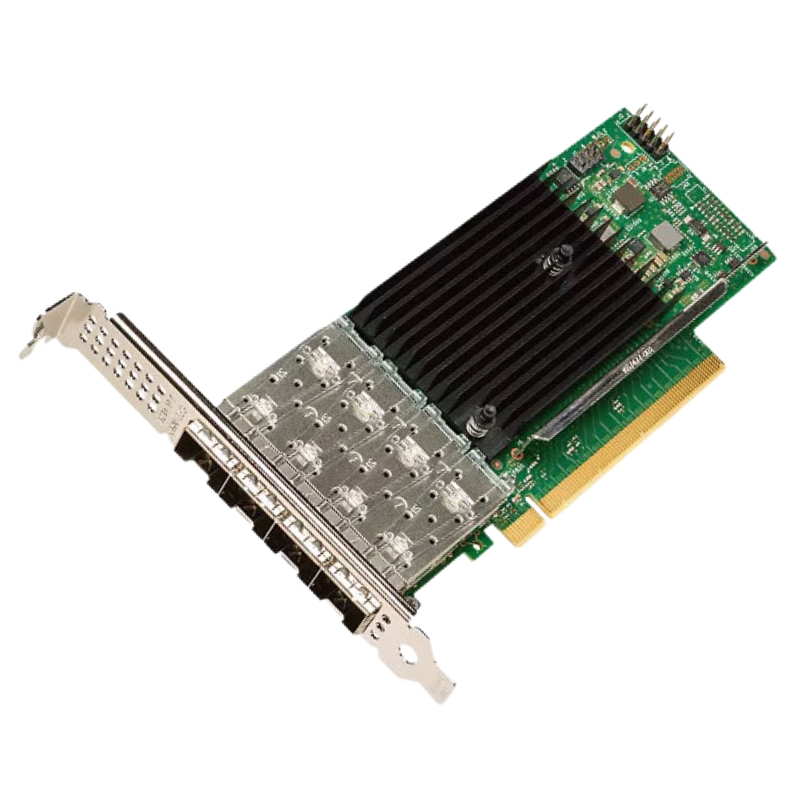


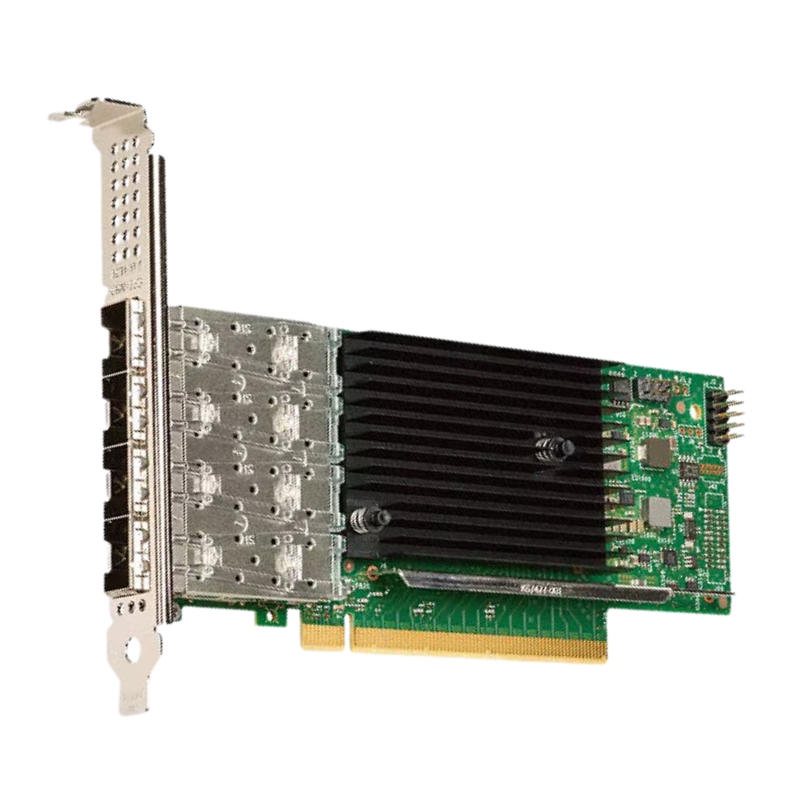
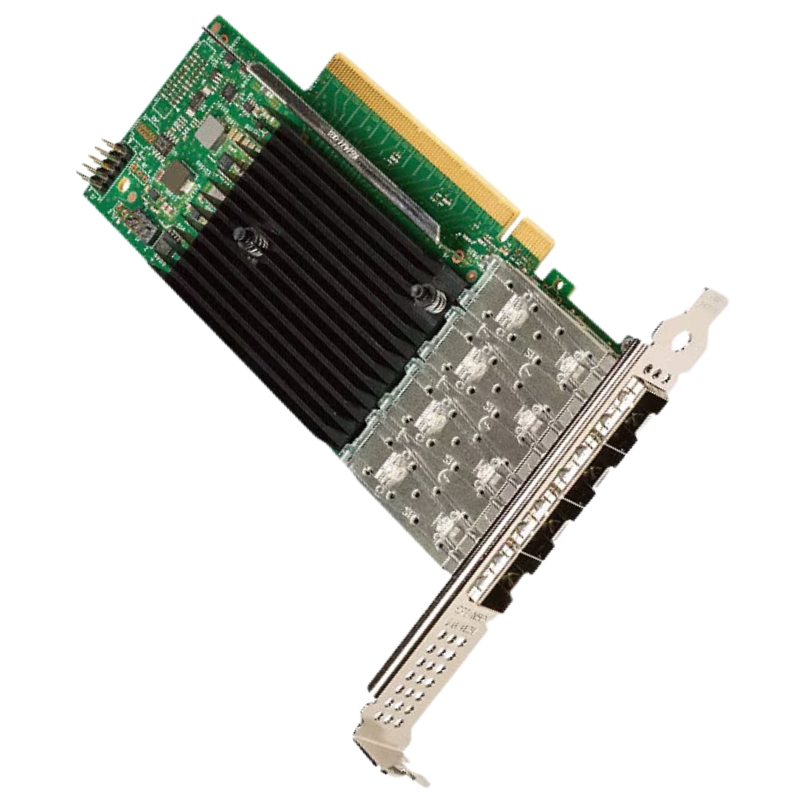
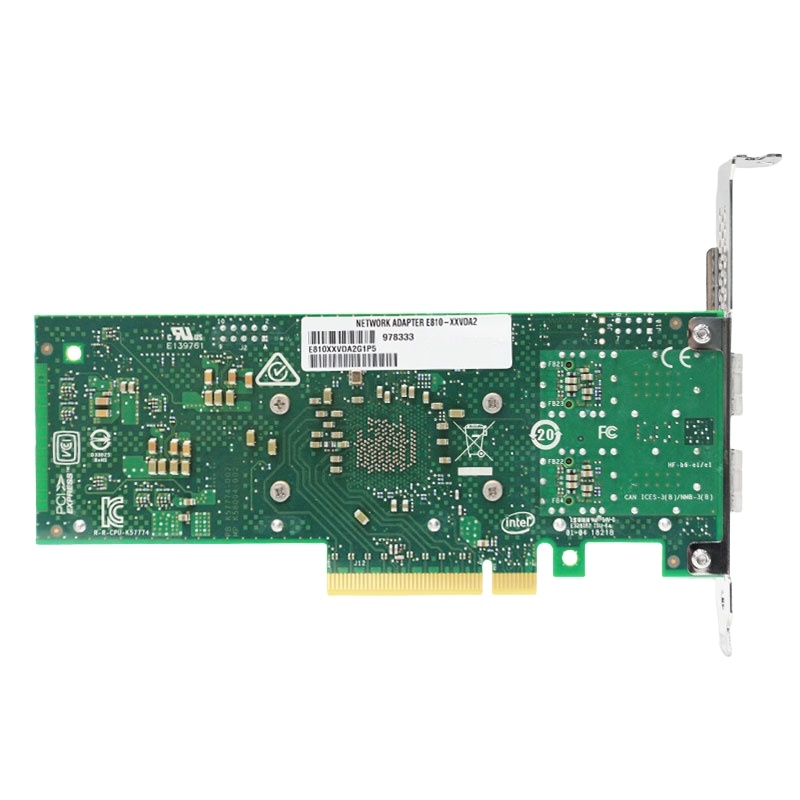
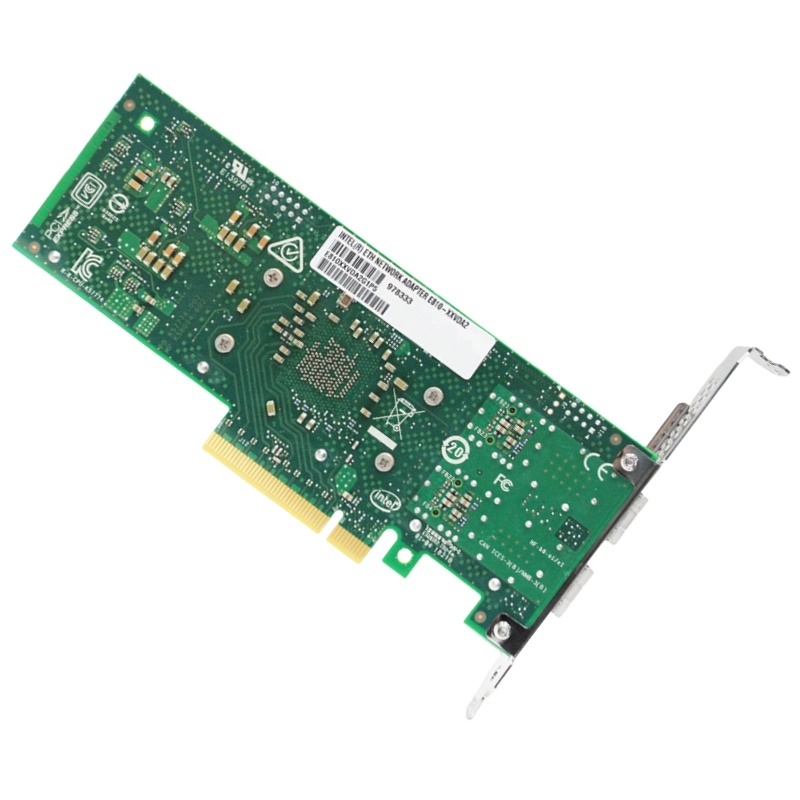
HPE P63739-E01 Intel E810-XXVDA4 Ethernet 10/25Gb 4 Ports PCI-E 4.0 X16 SFP28 Low Profile Network Adapter. New Sealed in Box (NIB) with 3 Years Warranty
The HPE P63739-E01 represents the pinnacle of high-density network interface controller (NIC) technology within the HPE ecosystem. Engineered for the most demanding virtualization, cloud, and software-defined storage (SDS) environments, this adapter is part of a distinguished category of 10/25 Gigabit Ethernet solutions that leverage the revolutionary Intel E810-XXVDA4 controller. As a quad-port, low-profile PCIe 4.0 x16 form factor adapter, it is specifically designed to address the escalating bandwidth requirements of modern data centers while maintaining backward compatibility with existing 10GbE infrastructures.
The HPE P63739-E01 Intel E810-XXVDA4 network adapter is engineered for high-performance enterprise and data center environments that require ultra-fast connectivity, flexible port density, and advanced hardware acceleration. Designed around a PCI Express 4.0 x16 interface, this adapter provides four independent SFP28 ports capable of delivering 10GbE or 25GbE throughput per port, enabling scalable network bandwidth for virtualization clusters, software-defined storage, hyper-converged infrastructure, and high-frequency transaction systems. Its low-profile form factor ensures compatibility with compact rack servers, blade systems, and dense compute nodes where expansion slot space is limited but performance requirements remain uncompromised.
The adapter is built on a highly optimized Ethernet controller architecture that supports multi-queue processing, advanced offload engines, and low-latency packet handling. Its silicon design integrates intelligent traffic steering capabilities and hardware-based virtualization acceleration to minimize CPU overhead during high-volume network activity. By offloading tasks such as checksum validation, segmentation, and packet classification directly to hardware, the adapter ensures consistent throughput while maintaining predictable latency characteristics across demanding workloads.
The P63739-E01 PCIe Gen4 x16 host interface offers significantly higher bandwidth compared to previous generations, ensuring that the adapter can sustain aggregated multi-port traffic without bottlenecking at the bus level. With improved signaling efficiency and reduced latency, the interface supports simultaneous full-duplex data streams across all four ports. This capability is essential for environments where multiple high-speed network links operate concurrently, such as clustered compute fabrics, distributed analytics nodes, and high-performance storage networks.
The P63739-E01 low-profile mechanical design allows installation in servers with half-height expansion slots while maintaining full electrical lane support. Precision board layout and thermal-optimized component placement allow reliable operation even in dense rack configurations. The bracket and PCB assembly are engineered to maintain structural stability under high airflow conditions commonly present in enterprise chassis.
Each of the four SFP28 ports supports both 10Gb and 25Gb Ethernet operation, providing deployment flexibility across mixed-speed network infrastructures. Administrators can configure ports individually to match switch capabilities or application bandwidth requirements. The adapter supports a wide range of optical transceivers and direct-attach copper cables, enabling both short-range intra-rack connectivity and long-distance fiber links.
Independent port configuration enables granular control of link speed, flow control, and traffic segmentation. This flexibility allows IT teams to assign dedicated ports to separate traffic classes such as storage replication, VM migration, management networks, or application front-end connectivity. Hardware-level isolation between ports ensures that heavy traffic on one interface does not degrade performance on another.
Advanced signal conditioning circuitry ensures clean transmission across high-speed links. Integrated equalization, adaptive gain control, and error correction mechanisms help maintain stable connections even over longer cable runs or in electrically noisy environments. These features contribute to reduced retransmissions, improved throughput consistency, and enhanced overall network reliability.
The adapter incorporates numerous hardware acceleration technologies designed to optimize throughput and minimize processing overhead. These enhancements enable servers to dedicate more CPU resources to applications rather than networking tasks, improving system efficiency and scaling capability.
Support for multiple transmit and receive queues allows the adapter to distribute network processing across multiple CPU cores. Intelligent queue assignment ensures balanced workload distribution, preventing single-core bottlenecks and improving parallel processing efficiency. This capability is particularly beneficial in multi-socket systems or virtualization hosts running numerous concurrent workloads.
Optimized data paths, streamlined packet pipelines, and advanced interrupt moderation mechanisms contribute to extremely low latency. Reduced buffering delays and direct memory access acceleration enable near-instantaneous packet delivery, which is critical for latency-sensitive applications such as financial trading systems, real-time analytics, and distributed storage synchronization.
The adapter is engineered to integrate seamlessly into virtualized environments and cloud platforms. Its hardware virtualization features provide isolation, scalability, and consistent performance for virtual machines and containers.
Single Root I/O Virtualization allows the adapter to present multiple virtual network interfaces directly to guest operating systems. Each virtual function operates with dedicated bandwidth allocation and hardware-enforced isolation, enabling near-native network performance within virtual machines. This reduces hypervisor overhead and improves network efficiency for multi-tenant environments.
Support for encapsulation technologies ensures efficient processing of overlay network protocols. Hardware-accelerated encapsulation and decapsulation reduce CPU load when handling tunneled traffic commonly used in software-defined networking deployments. This capability improves scalability for cloud orchestration systems and containerized application platforms.
Enterprise networking demands robust security and continuous uptime. The adapter integrates hardware-level safeguards and reliability features to ensure secure and uninterrupted operation across mission-critical systems.
Built-in verification mechanisms validate firmware authenticity during initialization, preventing unauthorized code from executing on the adapter. Cryptographic signature checks ensure that only trusted firmware versions are loaded, protecting systems against firmware-level threats and ensuring compliance with enterprise security standards.
Comprehensive error detection circuitry monitors data integrity across internal buses and external links. Automatic correction mechanisms address transient faults, while diagnostic reporting tools allow administrators to monitor health status and identify potential issues before they impact operations.
The adapter is optimized for efficient power consumption while maintaining high performance. Intelligent power management dynamically adjusts energy usage based on traffic load, reducing heat output during idle or low-utilization periods. Carefully engineered heat dissipation paths ensure stable operation within standard server airflow environments without requiring additional cooling solutions.
The four-port configuration allows a single adapter to replace multiple lower-port cards, reducing slot usage and simplifying cabling. This density is particularly advantageous in compact servers where expansion capacity is limited. By consolidating connectivity into one device, administrators can maintain high bandwidth while preserving additional slots for storage or accelerator cards.
In clustered environments, each port can be dedicated to specific inter-node communication channels. High throughput and low latency ensure efficient synchronization between nodes, improving performance for distributed computing frameworks and parallel processing tasks.
The adapter supports high-speed connectivity for storage traffic, enabling rapid data transfers between servers and networked storage arrays. Consistent throughput and low latency improve performance for database operations, backup processes, and large-scale data replication.
With support for both 10Gb and 25Gb Ethernet speeds, the adapter allows gradual infrastructure upgrades without requiring immediate replacement. Organizations can deploy the adapter in existing 10Gb networks and later transition to 25Gb connectivity as switches and cabling are upgraded. This forward-compatible design protects investment while ensuring readiness for higher-bandwidth applications.
When multiple ports are configured for link aggregation, the adapter can provide extremely high combined throughput for servers handling heavy network loads. Aggregated links also offer redundancy, maintaining connectivity if one physical link fails. This enhances reliability for mission-critical services that require uninterrupted network access.


 Contact Us
 Information
 Catalog
 Solid State Drives (SSD)
 Network Switches
 Hard Disk Drives
 HBA & Controllers
 PC & Servers
 PC & Server Memory
 CPU & Processors
 Network Routers
 Power Supplies
 Tape Drives & Libraries
 Network Devices
 Computer & Network Cables