(7% discount is applied at checkout)
Cart is empty
Your go-to destination for cutting-edge server products
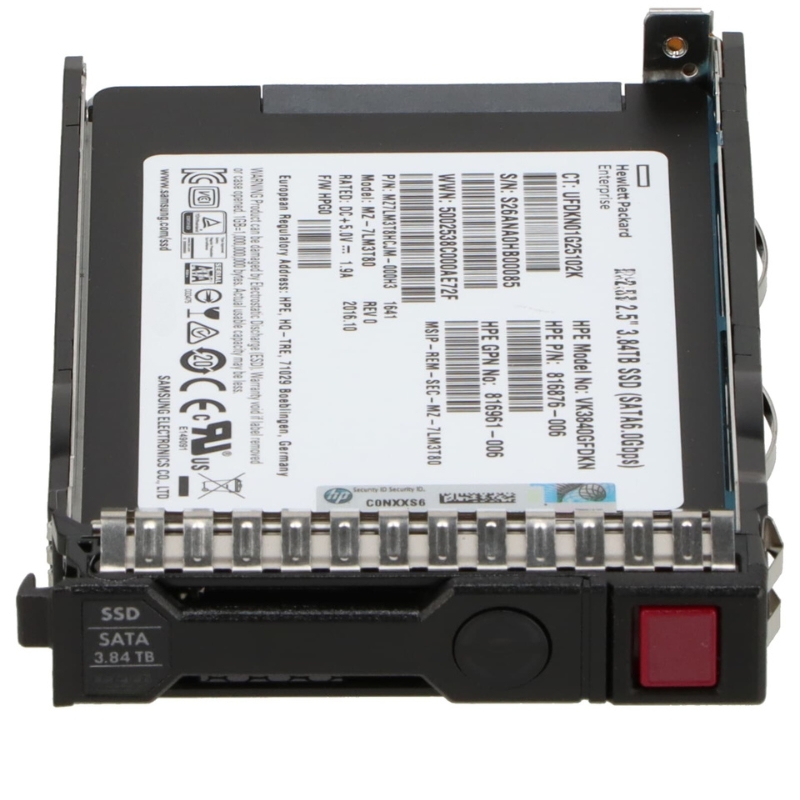


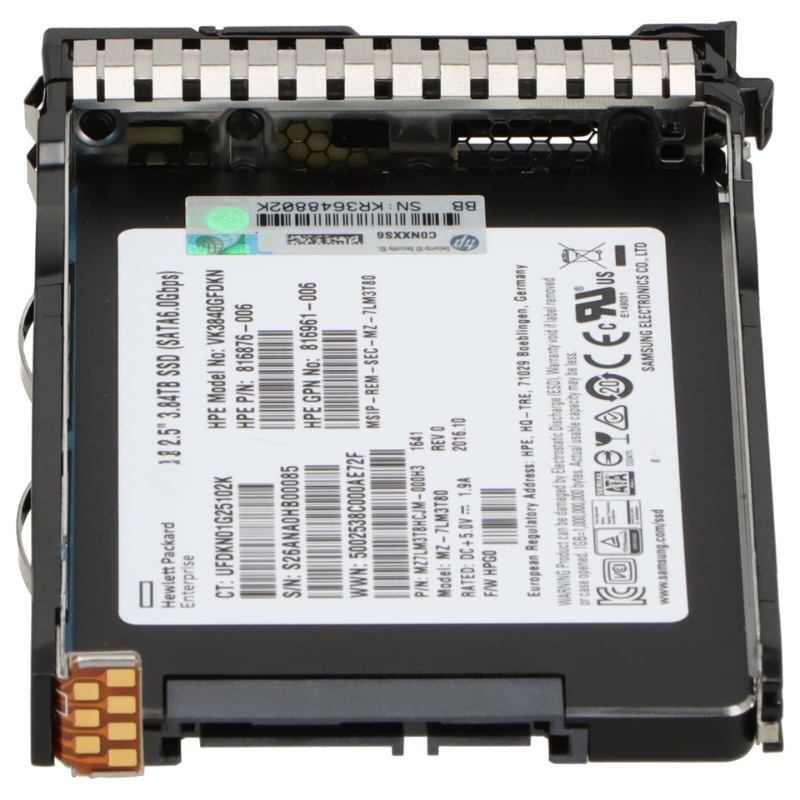
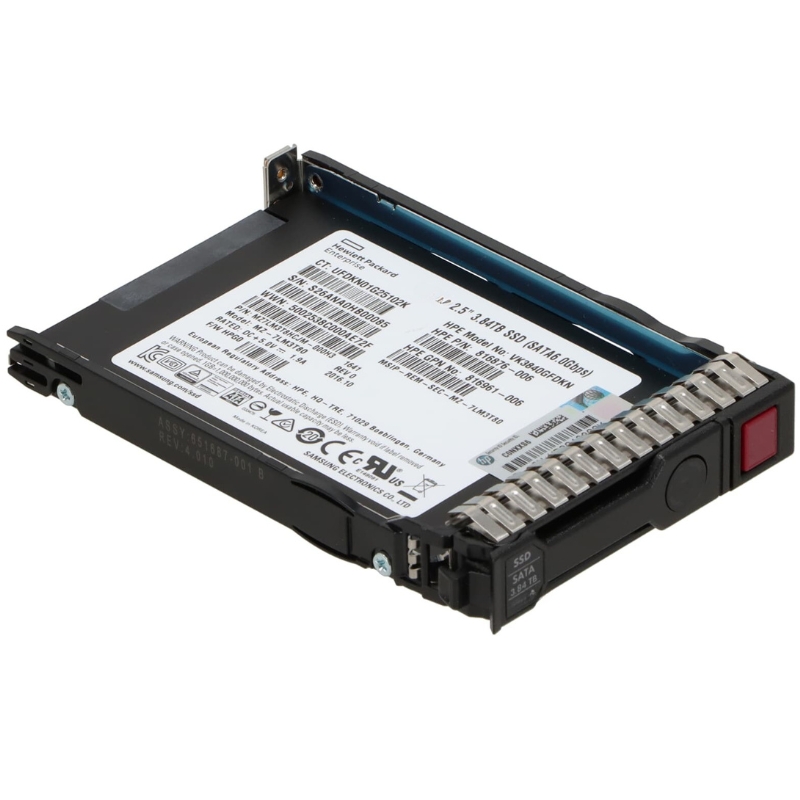
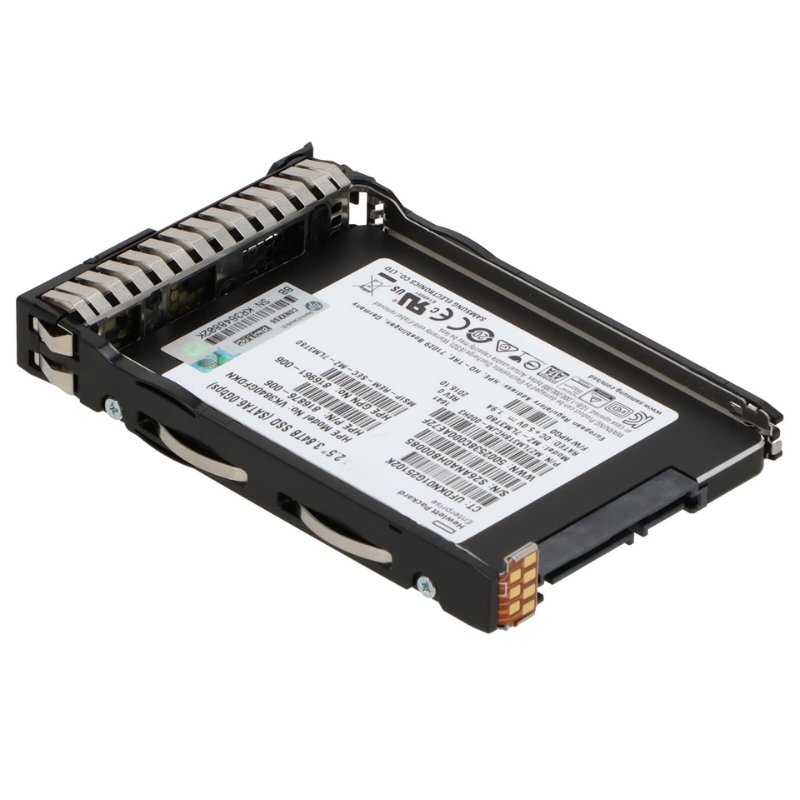
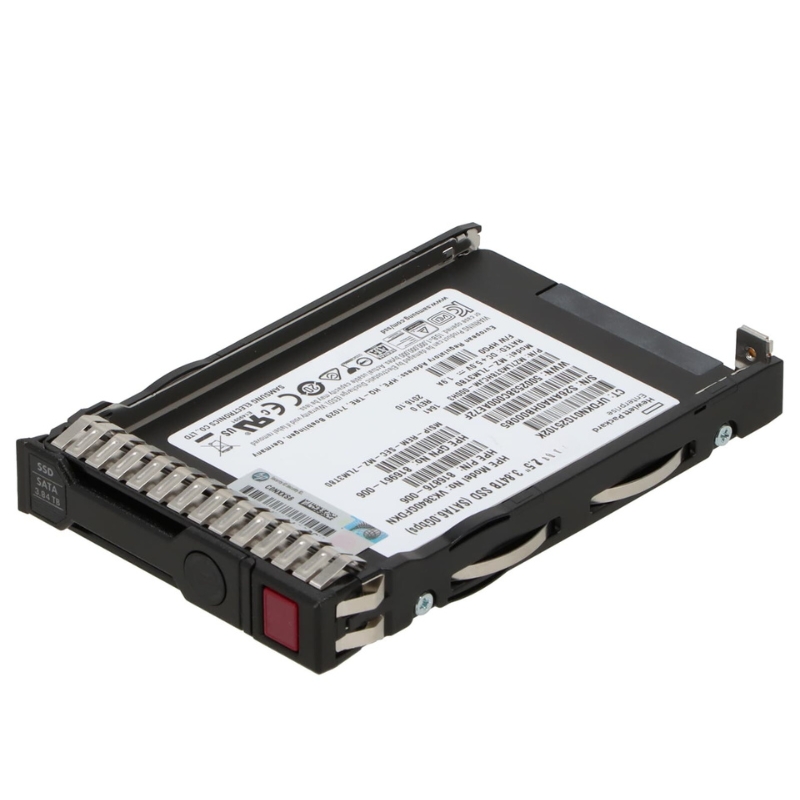
HPE P63910-B21 PM893a 3.84TB 2.5Inch SATA 6G Read Intensive (RI) Solid State Drive. Excellent Refurbished with 1 year Replacement Warranty
The HPE P63910-B21 PM893a is a high-capacity enterprise 2.5-inch SATA solid state drive engineered for read-intensive applications. With 3.84TB of usable storage, the drive delivers consistent read throughput, low latency and power efficiency — making it ideal for web servers, caches, boot volumes and read-dominant storage tiers.
Key Features
Designed for environments where read performance matters most, the PM893a provides steady sequential and random read speeds and low IO latency. It is tuned to keep read-dominant services responsive under sustained load while maintaining predictable QoS.
The PM893a balances enterprise reliability and cost efficiency. The drive includes firmware-level wear leveling and ECC to protect data integrity and extends service life. Low idle power helps keep rack-level power budgets in check.
The SATA 6Gb/s interface and common 2.5-inch form factor make the drive compatible with a wide range of HPE ProLiant servers, HPE storage enclosures and many third-party platforms that accept SFF SATA SSDs. Always confirm firmware compatibility via vendor compatibility matrices prior to deployment.
Selecting the HPE PM893a 3.84TB Read-Intensive SSD brings a mix of capacity efficiency, predictable endurance and performance benefits for read-centric workloads.
At the center of this category are engineering choices that make read performance predictable and operational overhead lower. The PM893a family emphasizes firmware that prioritizes read performance under sustained load, enterprise-grade error correction and telemetry, and thermal/power attributes suitable for dense rack deployments. For organizations that run large-scale read caches, CDN front-ends or OS/boot volumes, the category delivers a compelling price-to-performance balance compared to higher-cost NVMe alternatives.
Within the category, users should expect strong sequential and random read throughput adequate for heavy read caching, file serving and boot volume acceleration. Write performance will be sufficient for transactional updates and moderate background writes, but this category is not tuned for heavy write-intensive database logging, data ingestion tasks or write-heavy virtualization hosts. Performance is usually specified by manufacturers with separate read/write IOPS and throughput figures — read numbers will notably exceed write numbers in sustained scenarios.
This category fits several clearly defined workload clusters. Listing these clusters with specific examples helps match application needs to the PM893a family.
High-capacity read-optimized SSDs serve as excellent primary volumes for web servers and CDN edge caches where requests are predominantly read operations — static content, images, compressed assets and frequently accessed objects. The low latency and high sequential read capability translate to faster page loads and improved user experience.
Operating system disks and system images benefit from SSD responsiveness. Using a 3.84TB SFF read-intensive SSD allows consolidation of multiple OS images in a small number of bays while ensuring quick boot times and fast application start-up for virtual machines or physical servers.
Object storage front-ends, proxy caches, and read caches in analytics tiers use large-capacity SATA SSDs to keep hot data accessible with minimal latency. Compared with larger arrays of spinning disks, a few high-capacity SATA SSDs reduce IOPS contention and power draw.
VDI environments with many users booting simultaneously or streaming shared images can adopt read-optimized SSDs for cache tiers. The category helps preserve more expensive NVMe slots for write-heavy tiering while delivering responsive read performance for many simultaneous sessions.
Understanding where Read-Intensive SATA SSDs sit relative to other storage options clarifies procurement decisions. The table below summarizes the relative tradeoffs typically encountered when choosing among spinning disks, SATA RI SSDs and NVMe high-end SSDs.
To maximize the value of Read-Intensive SATA SSDs in production, certain deployment practices are recommended. These guidelines emphasize interoperability, lifecycle management and infrastructure alignment.
Before wide-scale deployment, validate drives in a staging environment that mirrors production traffic. Synthetic benchmarks and application-level tests should focus on read throughput under sustained load, mixed I/O scenarios with realistic read/write ratios, and monitoring of latency distributions rather than relying solely on peak throughput numbers.
Even read-optimized SSDs must be managed securely. Implement secure erase procedures for decommissioned drives, maintain firmware update processes to patch known vulnerabilities, and apply standard encryption strategies when required by policy or regulation.


 Contact Us
 Information
 Catalog
 Solid State Drives (SSD)
 Network Switches
 Hard Disk Drives
 HBA & Controllers
 PC & Servers
 PC & Server Memory
 CPU & Processors
 Network Routers
 Power Supplies
 Tape Drives & Libraries
 Network Devices
 Computer & Network Cables