(7% discount is applied at checkout)
Cart is empty
Your go-to destination for cutting-edge server products
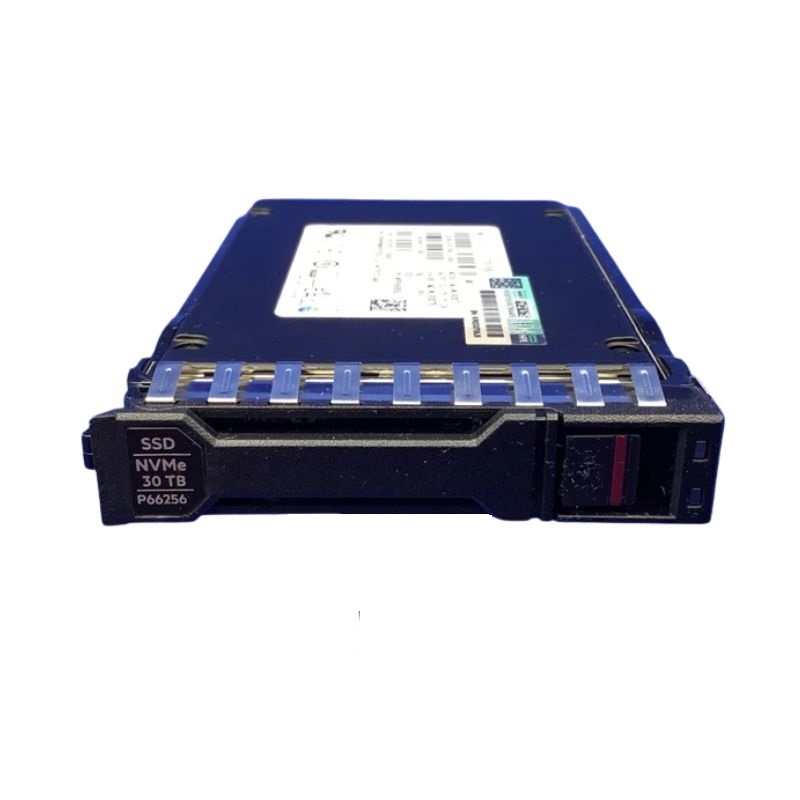


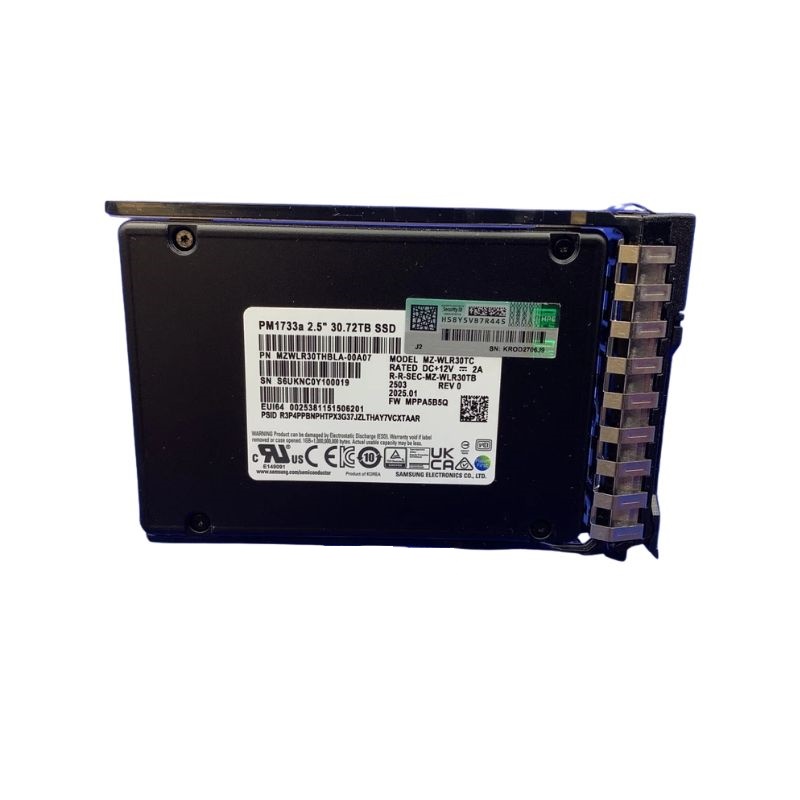
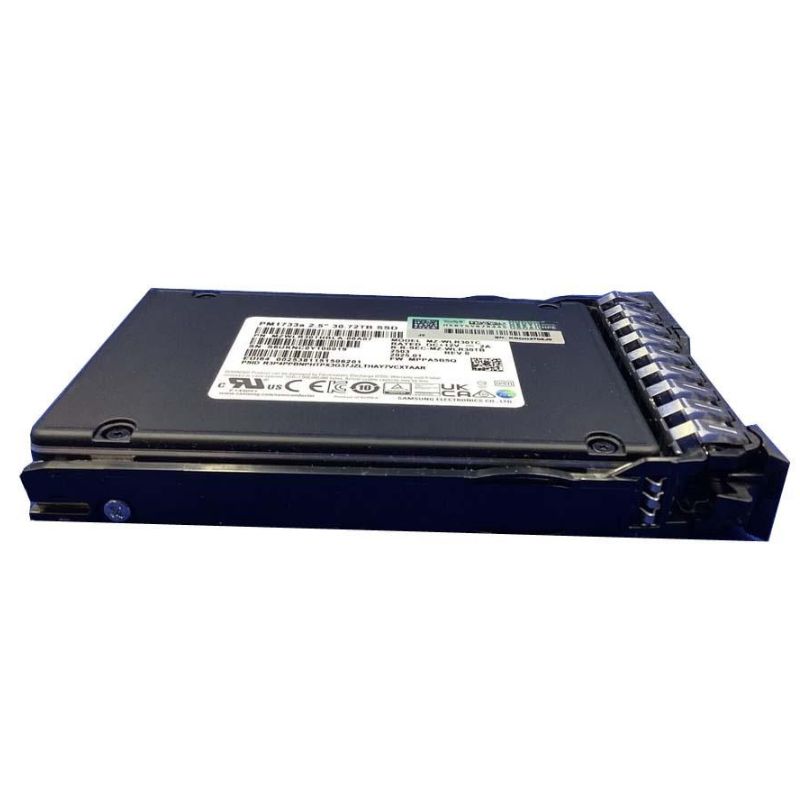
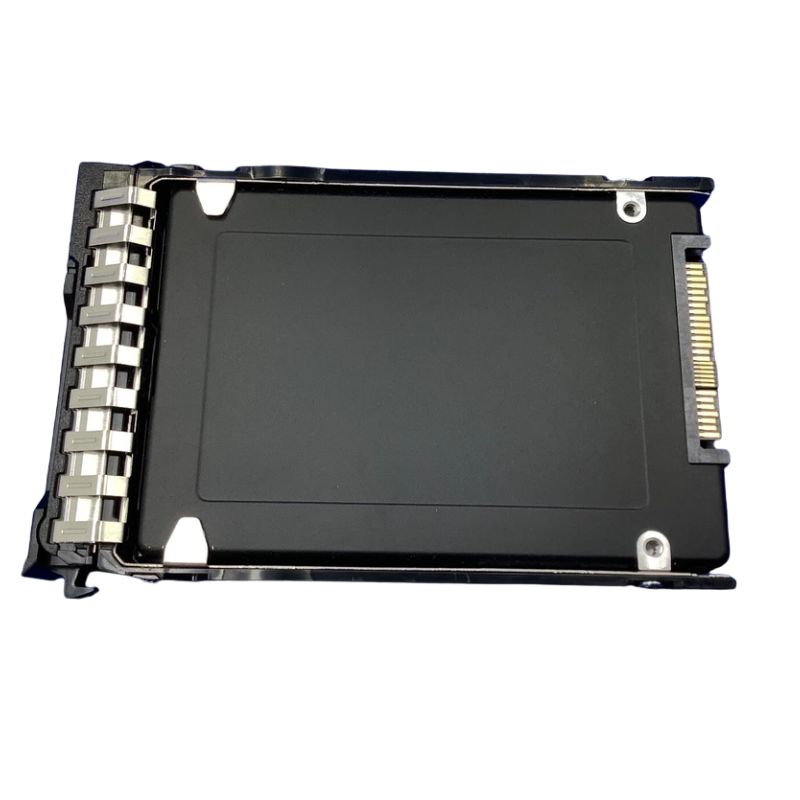
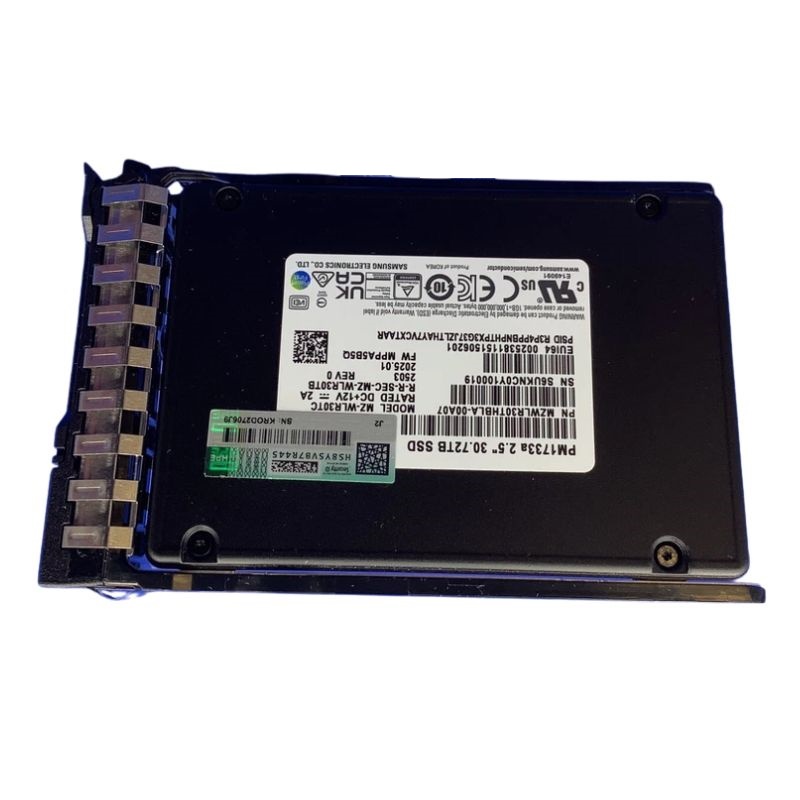
HPE P66205-B21 30.72TB NVMe RI BC SFF SSD. New Sealed in Box (NIB) with 3 years replacement warranty
The HPE P66205-B21 30.72TB NVMe Read-Intensive Solid State Drive is engineered for enterprise-grade environments that demand uncompromising reliability, blazing-fast throughput, and optimized data accessibility. Designed for servers that rely on sustained uptime and high-performance storage, this SSD brings together advanced NVMe architecture, exceptional scalability, and seamless SFF integration.
Featuring a hot-plug design, a BC carrier, and state-of-the-art NAND management, the drive supports modern workloads such as analytics platforms, large-scale virtualization, cloud frameworks, and read-centric database applications. Its massive 30.72TB capacity helps organizations consolidate storage, reduce latency, and enhance application responsiveness.
The HPE P66205-B21 is a high-capacity enterprise NVMe solid state drive sold under HPE part numbering and commonly listed as a 30.72TB U.3 / SFF NVMe device. It is positioned for data-center use where dense capacity, low latency and enterprise manageability are required. Listings and reseller catalogs identify this part as a 30.72TB NVMe drive and show it packaged and sold under HPE channel SKUs, often referencing the underlying OEM model (PM1733A / similar OEM families) used in HPE-branded configurations.
The full HPE part number P66205-B21 appears on reseller pages and HPE-compatible parts listings; that part number is used by system integrators and service channels to identify the specific capacity and firmware pairing HPE supports. When you see “P66205-B21 30.72TB NVMe RI BC SFF U.3” in a catalog it is conveying the following at-a-glance: manufacturer (HPE part), capacity (30.72TB), interface (NVMe over PCIe, U.3 / SFF form factor), and workload class indication (RI commonly shorthand for Read-Intensive).
The drive is listed as a small form factor (SFF / 2.5") enterprise NVMe device compatible with U.3 backplanes. U.3 supports NVMe and (in mixed systems) can also support SAS/SATA; for HPE servers the U.3 form factor provides a common mechanical interface and allows the drive to operate as an NVMe device when installed into NVMe-capable bays. HPE documentation on NVMe and PCIe device types explains capacity and form-factor mappings for their server product lines.
With a nominal capacity of 30.72TB, the P66205-B21 sits in the ultra-high capacity segment of enterprise SSDs — intended for workloads that benefit from fewer devices per rack or chassis while preserving NVMe performance. This density allows consolidation of large datasets, metadata stores, and read/cache tiers into a reduced drive count, which simplifies management and lowers drive-slot consumption in rack servers. Product listings consistently identify the drive at 30.72TB.
The “RI” tag commonly seen in catalogs stands for Read-Intensive. Read-intensive SSDs are optimized for workloads where read IOPS and sustained read throughput are more important than maximum sustained write throughput. Typical read-intensive use cases include large-scale content delivery, virtualization read caches, analytics where reads dominate, and certain database query patterns. While manufacturers publish endurance and workload profiles, many channel pages and listings will label drives by intended workload class so purchasers can quickly match drives to application profiles.
HPE frequently sources drives from major SSD OEMs and rebrands or configures them with HPE firmware, validation and support entitlements. The P66205-B21 listings commonly reference the OEM family/model (for example PM1733A or allied enterprise OEM families), indicating the drive likely shares controller and NAND characteristics with those high-end OEM products. This relationship is important: it means performance characteristics and endurance classes are derived from a proven enterprise SSD design, and HPE adds their validation, labeling and firmware revisions for compatibility with their server platforms.
HPE lists NVMe-capable server families and validated drive pairings in its support matrix. When purchasing a P66205-B21 you should verify your server backplane supports U.3 NVMe devices and that the server firmware/BIOS has the necessary NVMe support level. HPE’s support pages and compatibility matrices are the authoritative reference for which chassis and controller combinations are validated.
Because this part is an NVMe U.3 device, it will require an NVMe-aware backplane or adapter in older systems. Mixed backplanes that accept U.3, U.2 and SATA may be able to physically receive the drive, but correct operation depends on the server's firmware and the backplane wiring. Always check HPE server documentation and part compatibility lists before large-scale purchase or deployment.
Drives in this class aim to deliver low-latency NVMe access and high sustained read throughput suitable for heavy-read workloads. Exact peak MB/s or IOPS numbers vary by firmware, NAND type and controller tuning; for precise performance figures (e.g., random IOPS at specific queue depths, sequential throughput), always consult the OEM technical datasheet or HPE product brief associated with the exact part and firmware revision you intend to deploy. Reseller listings point to the OEM family, but they do not replace the official technical datasheet for precise performance metrics.
Read-intensive enterprise SSDs trade some write endurance for capacity and cost efficiency. Endurance is typically expressed in drive writes per day (DWPD) over a warranty period or in total terabytes written (TBW). For mission-critical deployments you should request the specific endurance rating and warranty terms from the vendor or HPE product documentation to model replacement cycles and write-heavy scenarios. Channel pages list the part and capacity, but endurance and warranty specifications must be checked against the official product datasheet.
If your workload routinely performs sustained heavy writes (e.g., log-intensive OLTP primary nodes, continuous capture streams at large scale without upstream buffering), a higher-endurance drive class (e.g., Mixed-Use or Write-Intensive) might be a better fit. Carefully pair drive class to workload to maximize lifetime and TCO. Channel listings indicate the RI classification; align that tag with your workload profile during procurement.
Dense capacity NVMe drives in a single chassis increase thermal load; plan airflow to maintain recommended operating temperatures. HPE servers and validated NVMe backplanes include guidelines for drive placement, cooling profiles and fan speeds — follow those guidelines to prevent thermal throttling and to preserve drive lifetime.
High-capacity NVMe drives generally consume more power than smaller, lower-capacity SSDs under peak sustained I/O; when planning racks full of 30.72TB devices calculate power draw, heat dissipation and serviceability. Some HPE and OEM datasheets list typical operating and peak power figures; consult the official technical resources for exact numbers.
Several vendors offer 30.72TB NVMe options (OEM variations from Samsung, Dell/partnered models, Solidigm, and others). Differences among models often come down to firmware tuning, endurance class (QLC vs TLC NAND), and validated ecosystem support. Use the HPE part number to ensure server-level compatibility; compare OEM datasheets for raw performance, endurance, and power metrics when selecting alternatives. Channel pages list various 30.72TB options alongside part numbers to facilitate comparison shopping.
Choose 30.72TB drives when you need to maximize bytes per slot and reduce the number of devices to manage; pick smaller capacities when random I/O performance per TB or higher endurance per dollar is more critical. Evaluate based on capacity density needs, endurance requirements (DWPD), and total cost of ownership (TCO) including power, cooling and expected replacement cycles.


 Contact Us
 Information
 Catalog
 Solid State Drives (SSD)
 Network Switches
 Hard Disk Drives
 HBA & Controllers
 PC & Servers
 PC & Server Memory
 CPU & Processors
 Network Routers
 Power Supplies
 Tape Drives & Libraries
 Network Devices
 Computer & Network Cables