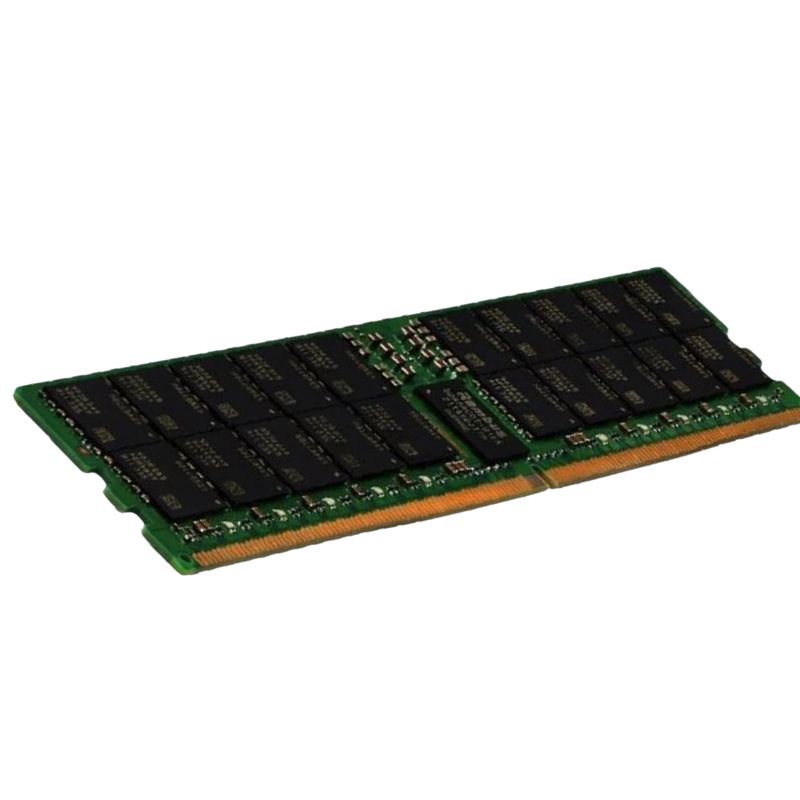
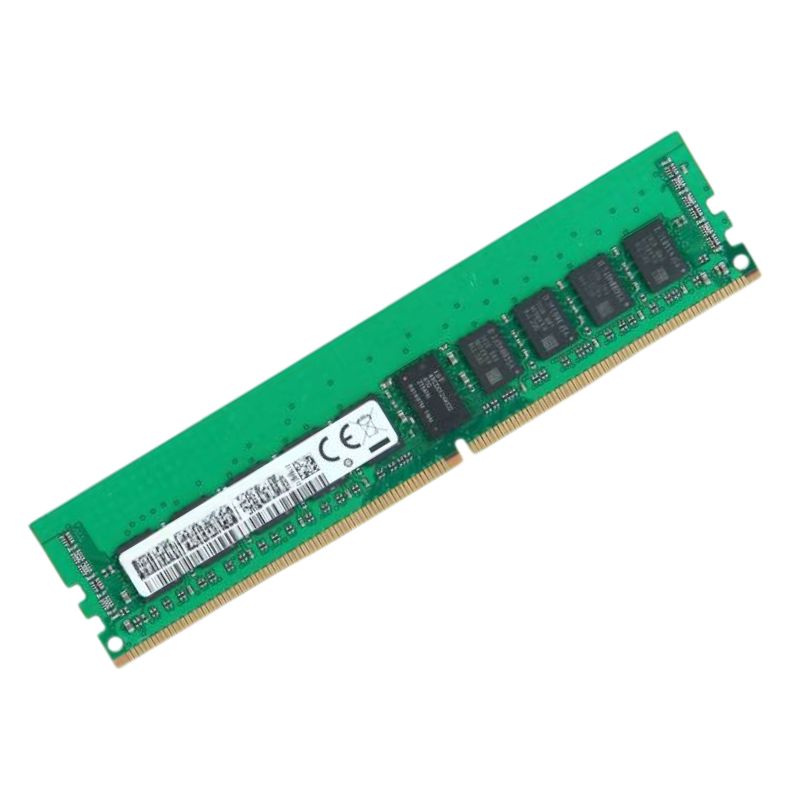
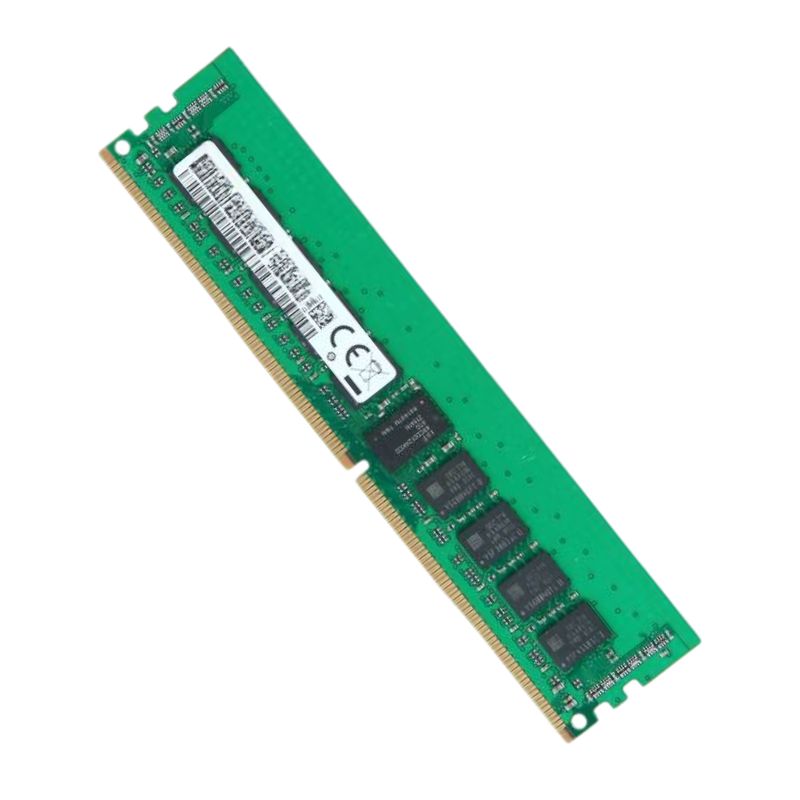
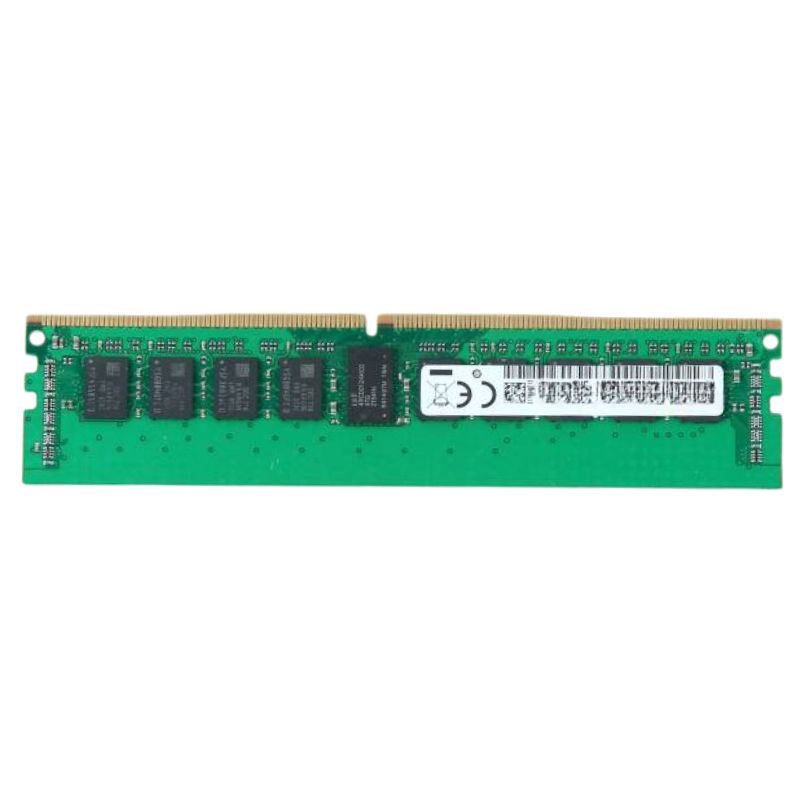
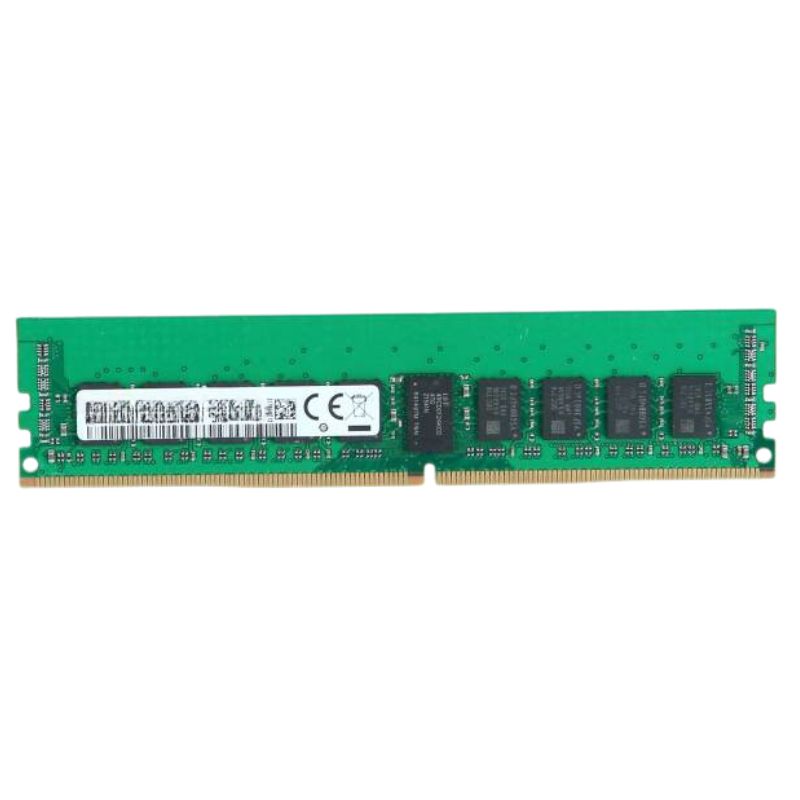
HPE P71254-001 is a 16GB (1x16GB) single-rank x8 DDR5-6400 (PC5-51200) registered memory module engineered for HPE ProLiant and enterprise-class servers. This ECC registered (RDIMM) module, operating at 1.1V with CL46 timing, delivers improved throughput, stronger error correction and consistent uptime for business-critical workloads.
Key specifications
- Manufacturer: HPE
- Part number: P71254-001
- Capacity: 16GB (single module, 1 x 16GB)
- Memory type: DDR5 SDRAM, Registered (RDIMM)
- Speed: 6400 MT/s (DDR5-6400) / PC5-51200
- CAS latency: CL46 (timings: 46-45-45)
- Voltage: 1.1V
- Error checking: ECC (Error-Correcting Code)
- Rank / organization: Single Rank x8
- Form factor / pins: 288-pin RDIMM
Performance benefits
- Higher bandwidth: DDR5-6400 technology increases memory throughput for database operations, virtualization and analytics.
- Lower power draw: 1.1V operation lowers energy consumption compared with previous-generation modules.
- Single-rank x8: Efficient for mixed-density server memory configurations while enabling predictable latency.
Reliability and data integrity
Equipped with ECC and registered buffering, the P71254-001 helps detect and correct single-bit memory errors and reduces the likelihood of data corruption in critical workloads.
Enterprise-class safeguards
- ECC error detection and correction.
- Registered (RDIMM) signaling for stable multi-module operation.
- HPE validation to ensure firmware and platform compatibility.
Compatibility and use cases
Designed for HPE ProLiant servers and compatible enterprise platforms, this DIMM is a solid choice for:
- Virtualization hosts and hyperconverged infrastructure
- Database servers and analytics appliances
- Web scale and application servers
- Cloud and container platforms
Comparison and upgrade guidance
If you are upgrading from DDR4 or lower-speed DDR5, expect measurable gains in sustained memory throughput and improved efficiency under parallel workloads. Consider these upgrade guidelines:
- Match or exceed the server’s supported memory speed—check your server’s maximum supported DDR5 frequency.
- For balanced performance, use identical DIMMs across channels (same part number where possible).
- When capacity is the priority, combine single-rank modules with compatible multi-rank modules according to vendor population rules.
Common comparisons
- Single Rank x8 vs Dual Rank: Single-rank modules can be advantageous for higher DIMM population and slightly lower latency in some workloads, while dual-rank modules may provide higher effective capacity per slot.
- RDIMM vs LRDIMM: RDIMM uses a register to buffer control signals and is usually less expensive; LRDIMM buffers the data path and can enable larger memory capacities at higher cost.
Performance characteristics: throughput, latency and real-world impact
High throughput for memory-bound applications
DDR5-6400 (PC5-51200) provides a theoretical peak bandwidth of ~51.2 GB/s per module under single-channel assumptions (bandwidth scales with channel count and DIMM population). This high transfer rate is particularly beneficial for:
- In-memory databases and caches (e.g., Redis, Memcached, in-memory OLTP)
- High-performance analytics, large-scale ETL and data processing pipelines
- Scientific computing and simulation workloads where memory bandwidth is the limiting factor
Latency considerations — CL46 context
CAS latency (CL46) for DDR5-6400 is higher numerically than many DDR4 modules, but absolute access time must be considered alongside MT/s. The net effect for most server workloads is improved effective performance because the increased transfer rate offsets higher cycle latency. For latency-sensitive applications, pairing the P71254-001 modules with appropriate CPU memory-controller settings and correct population per channel produces optimal results.
Scalability across DIMM population
Because this is a registered ECC DIMM, system designers can populate multiple DIMMs per channel with less signal integrity risk than unbuffered modules. That allows:
- Higher total memory per node for virtualization density.
- Large memory footprints for analytics and machine learning feature stores.
- Balanced performance across memory channels when using matched kits.
Compatibility and platform guidance
Correct compatibility is critical. The HPE P71254-001 is marketed for HPE ProLiant and select HPE server families that support DDR5 RDIMM modules at 6400 MT/s. When assessing compatibility, check:
- Server model and motherboard memory specifications (maximum DIMMs per channel, supported speeds)
- BIOS/firmware revisions — newer memory standards often require platform firmware updates to enable full speed and new features
- Operating system support — modern OS kernels and hypervisors support ECC and DDR5, but vendor HCL (Hardware Compatibility List) should be consulted for validated memory partners
- Population rules — single-rank vs dual-rank modules may affect achievable speed depending on channel population
Use the precise SKU (P71254-001) when cross-referencing HPE support matrices, and always validate memory density and rank combinations recommended by HPE for your server model.
Use cases and ideal deployment scenarios
Virtualization and cloud hosting
Memory density and reliability are primary drivers for virtualization hosts. The P71254-001 modules enable:
- Higher VM density per server because each VM can be provisioned with safer, error-checked memory.
- Reduced downtime risk through ECC protection—critical for multi-tenant environments.
- Consistent memory bandwidth to feed many concurrent VMs and containers.
Databases, caching and in-memory workloads
Databases and caches that keep working sets in RAM see direct benefit from PC5-51200 bandwidth:
- Faster query response due to higher sustained memory throughput.
- Improved transactional throughput for OLTP systems when paired with appropriate CPU and storage I/O.
High-performance computing (HPC) and analytics
Compute nodes with accelerated memory channels and RDIMM stability support memory-intensive simulations, scientific workloads and ML inference tasks. The single-rank x8 organization helps optimize channel utilization in distributed compute clusters.
Reliability, warranty and lifecycle considerations
Enterprise-grade reliability features
As an ECC Registered module, the P71254-001 includes architectural benefits for uptime and data integrity:
- ECC for single-bit error correction and multi-bit error detection.
- Register-based buffering to ease electrical loading in multi-DIMM topologies.
- Industry-standard testing and burn-in processes by HPE-qualified manufacturing partners.
Comparisons and upgrade planning
DDR5 RDIMM vs DDR4 RDIMM: what changes with DDR5
DDR5 introduces higher per-module bandwidth, improved power management features (e.g., on-die ECC, PMIC integration), and greater DIMM densities in general. When comparing DDR5 RDIMM modules like the P71254-001 to legacy DDR4:
- Bandwidth: DDR5-6400 offers substantially higher theoretical throughput than common DDR4 speeds.
- Density: System-level capacity grows as higher-density DDR5 DIMMs become available.
- Power & stability: DDR5 shifts some power regulation to the DIMM, and includes on-die improvements for reliability.
Choosing between single-rank and multi-rank modules
Rank affects performance and density. Single-rank modules like the P71254-001 often operate at higher speeds when more DIMMs are installed per channel, but dual-rank modules can provide greater capacity per module. Consider:
- If top sustained bandwidth per channel is critical, match ranks across channels and follow the platform’s recommended MIX rules.
- For maximum capacity per slot, multi-rank modules may reduce number of DIMMs needed but could influence achievable frequency when fully populated.
Comparative checklist for technical buyers
Use this practical checklist when evaluating P71254-001 for deployment:
- Confirm server model supports DDR5 RDIMM and specifically PC5-51200 speeds.
- Confirm BIOS/firmware version and update if needed.
- Validate DIMM population and channel balancing recommendations from HPE.
- Decide between single-rank and multi-rank kits based on capacity vs speed tradeoffs.
- Purchase from authorized channel to secure warranty and RMA options.
- Run full memory validation after installation before moving workloads into production.
Technical glossary and quick references
Glossary
- DDR5-6400 (PC5-51200): Double Data Rate 5 memory operating at 6400 MT/s with a peak theoretical bandwidth corresponding to PC5-51200.
- RDIMM: Registered DIMM; a module with a register to buffer address/command lines improving signal integrity.
- ECC: Error Correcting Code; hardware-level error detection and correction used in server memory.
- Rank: A rank is a set of DRAM chips accessed simultaneously; single-rank vs dual-rank affects performance and population rules.
- CL (CAS Latency): The number of clock cycles between a column address strobe and data availability; CL46 is typical for DDR5-6400.
Final practical considerations for procurement and deployment
Balancing cost, performance and longevity
When making purchasing decisions, consider the total cost of ownership beyond per-module pricing:
- Operational cost savings from reduced downtime due to ECC protection can justify higher module costs.
- Future-proofing: DDR5 adoption is ongoing; selecting RDIMM ECC modules positions infrastructure for higher-density memory needs.
- Compatibility and vendor support reduce risk—prioritize validated memory options for enterprise systems.
Checklist before launch
- Verify all modules recognized and at intended capacity and speed in BIOS/management tools.
- Run stress tests and memory diagnostics under expected production load profiles.
- Document the memory configuration in asset management systems for faster troubleshooting and lifecycle tracking.
Keywords and meta-friendly phrases to include on product pages
- HPE P71254-001 16GB
- 16GB DDR5-6400 RDIMM CL46
- PC5-51200 ECC Registered memory
- Server memory for HPE ProLiant
- DDR5 288-pin DIMM
- Memory upgrade HPE P71254-001
Suggested on-page elements for conversion
- Exact SKU in H2/H3 headings and product schema markup (not shown here) for crawler clarity.
- Clear bulleted spec table (above) and compatibility list linking to supported server models.
- Installation checklist, FAQs and return/warranty policy snippets to reduce purchase friction.





 Contact Us
 Information
 Catalog
 Solid State Drives (SSD)
 Network Switches
 Hard Disk Drives
 HBA & Controllers
 PC & Servers
 PC & Server Memory
 CPU & Processors
 Network Routers
 Power Supplies
 Tape Drives & Libraries
 Network Devices
 Computer & Network Cables