(7% discount is applied at checkout)
Cart is empty
Your go-to destination for cutting-edge server products
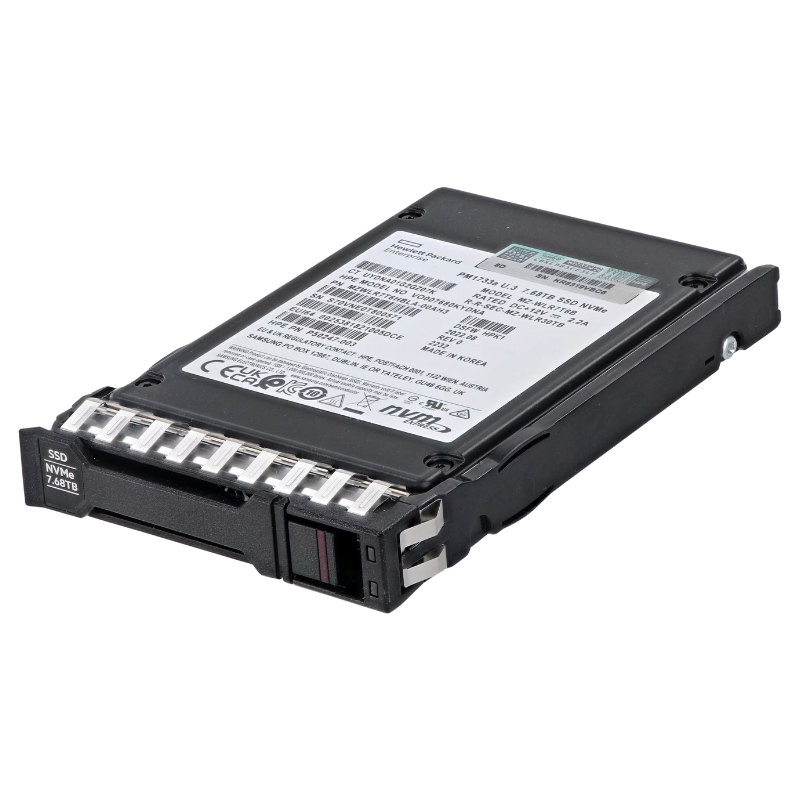


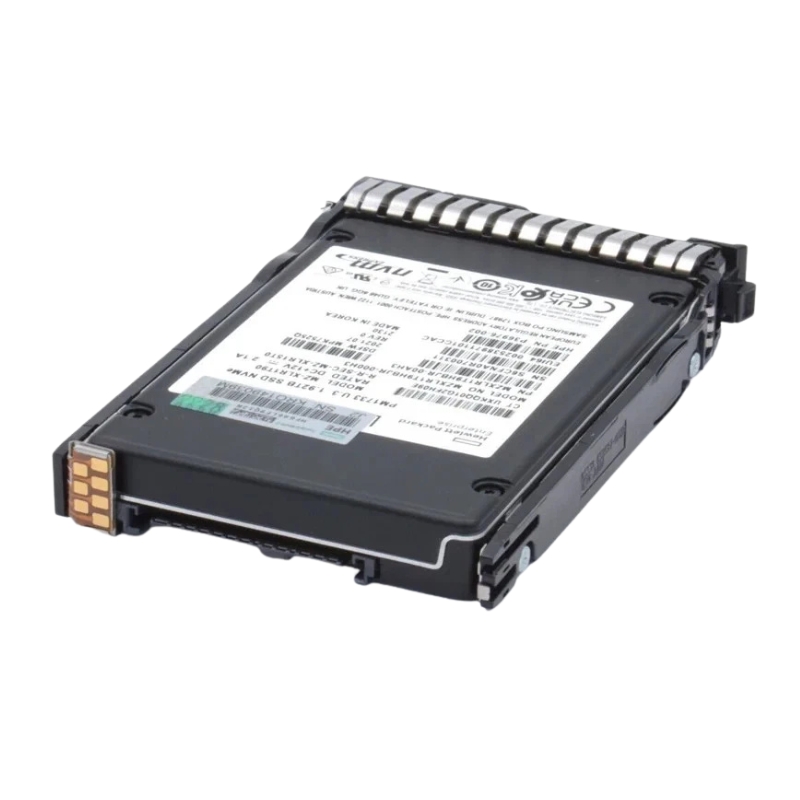
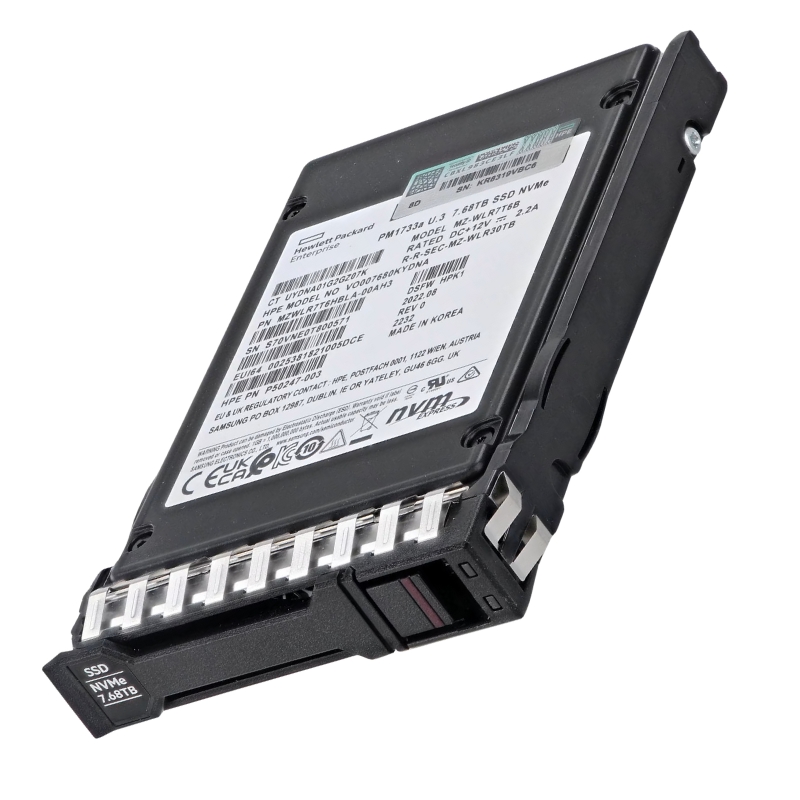
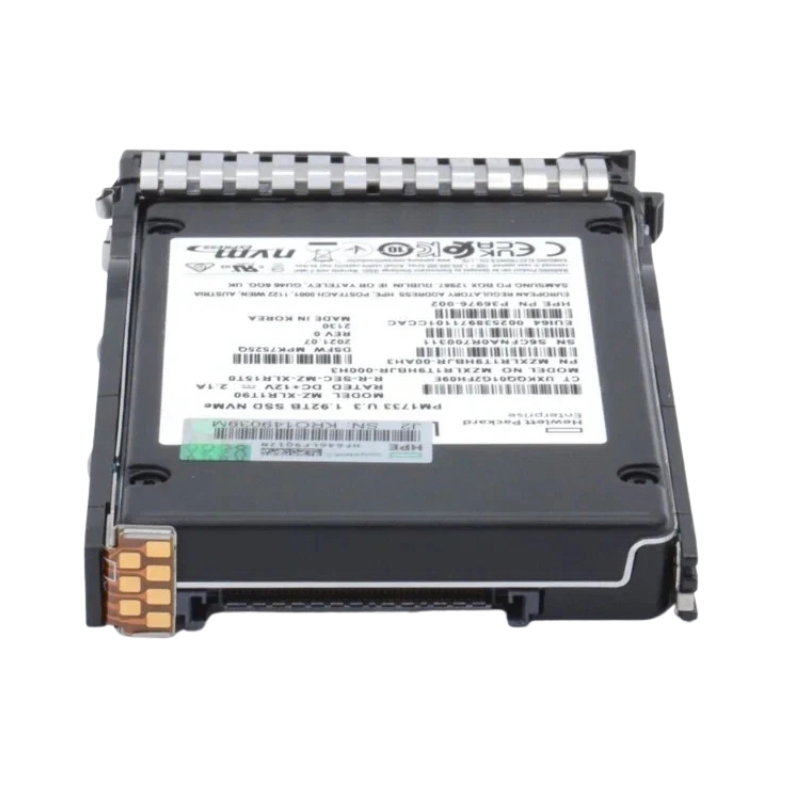
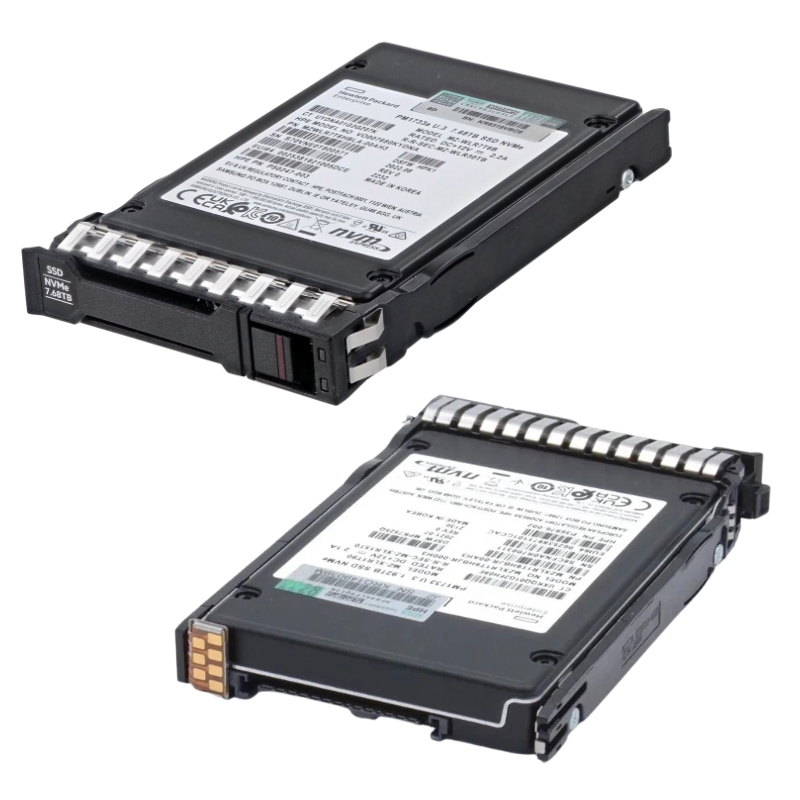
HPE P73298-B21 7.68TB NVMe Read Intensive SFF U.3 Hot Plug Solid State Drive. Factory-Sealed New in Original Box (FSB) with 3 years Warranty
The HPE P73298-B21 7.68TB NVMe Read Intensive Solid State Drive is engineered to deliver high-speed performance, reliability, and scalability for modern data center environments. Designed with NVMe technology and a compact SFF U.3 form factor, this enterprise-grade SSD is ideal for read-heavy workloads and mission-critical applications.
The "U.3" designation is a critical feature of this drive, signifying a converged, multi-protocol backplane interface. This innovation allows a single drive bay to support SATA, SAS, or NVMe storage devices interchangeably, providing unparalleled flexibility for data center operators during technology transitions and heterogeneous deployments.
By adopting the U.3 (SFF-8639) connector, the HPE P73298-B21 ensures seamless integration into existing server platforms that support the standard, protecting previous infrastructure investments. This enables a graceful, as-needed migration from SAS to NVMe without requiring a complete chassis or backplane overhaul.
The hot-plug functionality, a staple of enterprise storage, is fully maintained. This allows for the drive to be inserted or removed from a live server without powering down the system, facilitating proactive maintenance, capacity expansion, and failed drive replacement with zero application downtime.
HPE precisely tiers its SSD offerings to match specific workload profiles. The "Read-Intensive" classification indicates this drive is optimized for scenarios where data is frequently queried and read, but written less often. This targeted optimization allows for a cost-effective endurance rating while still delivering exceptional read performance.
Endurance is measured in Drive Writes Per Day (DWPD) and Total Terabytes Written (TBW). A read-intensive drive like the P73298-B21 typically offers a lower DWPD (e.g., 1 DWPD or similar) compared to mixed-use or write-intensive models. Over its 5-year warranty period, the 7.68TB capacity can sustain a substantial total terabytes written, perfectly aligned with its target use cases.
For a 7.68TB drive with a 1 DWPD rating, it can endure 7.68 terabytes of data written to it every single day for five years. This equates to a massive total endurance, often exceeding 7,000 TBW, which is more than sufficient for the vast majority of read-centric applications.
This drive excels in environments dominated by read operations. Its performance characteristics make it a superior choice for accelerating specific data-serving functions.
In relational databases (SQL Server, Oracle, MySQL), where transaction processing and reporting queries demand rapid random read access, this NVMe drive drastically reduces query latency and improves overall transaction throughput.
VDI boot storms and concurrent user operations generate intense random read workloads. The P73298-B21 ensures fast desktop boot times and smooth application responsiveness for thousands of virtual desktop users.
For static content delivery, media streaming, and high-traffic web servers, the drive’s high sequential read speeds ensure fast content delivery and reduced page load times.
At the heart of the HPE P73298-B21's performance is the Non-Volatile Memory Express (NVMe) protocol, designed from the ground up for flash memory. It operates over the PCIe bus, offering a streamlined command queue architecture that eliminates bottlenecks inherent in legacy protocols designed for mechanical hard drives.
This drive utilizes the PCIe 3.0 or 4.0 interface (depending on specific generation), providing a direct, high-bandwidth connection to the system CPU. This parallelism allows for significantly higher Input/Output Operations Per Second (IOPS) and lower microseconds of latency compared to SAS or SATA interfaces.
While exact figures vary, a drive of this class typically delivers exceptional performance metrics that redefine storage tier speed.
Expect random read IOPS in the high hundreds of thousands, enabling massive concurrency for database operations. Random write IOPS, while lower than read, remain orders of magnitude higher than any SATA SSD.
Sequential read speeds can approach several gigabytes per second (GB/s), saturating the PCIe lane allocation. Sequential write speeds are also exceptionally high, facilitating rapid data ingestion and backup operations.
One of NVMe's greatest advantages is consistent, predictable low latency, often in the tens of microseconds. This consistency is critical for real-time applications and maintaining service level agreements (SLAs).
As a genuine HPE drive, the P73298-B21 is not just compatible but deeply integrated with HPE ProLiant, Synergy, and Apollo server platforms, offering advantages beyond raw specifications.
The drive is fully discoverable and manageable through HPE's SSA tool and the Integrated Lights-Out (iLO) management firmware. This provides a unified interface for health monitoring, firmware updates, and diagnostics alongside other HPE hardware components.
When used in supported HPE servers, telemetry from the drive can contribute to the HPE InfoSight cloud-based AI platform. InfoSight analyzes global data patterns to predict and prevent issues before they cause downtime, potentially flagging drive degradation or performance anomalies.
HPE validates and certifies specific firmware versions for this drive model, ensuring stability, security, and interoperability within HPE server ecosystems. This eliminates the guesswork and compatibility risks associated with third-party drives.
Selecting the right storage tier is crucial for optimizing performance and Total Cost of Ownership (TCO). The P73298-B21 occupies a specific sweet spot in the storage hierarchy.
Compared to NVMe Mixed-Use drives, the read-intensive model offers a more cost-effective price point and sufficient endurance for workloads with a read/write ratio skewed heavily towards reads (e.g., 80/20 or 70/30). Mixed-Use drives, with higher DWPD, are designed for more balanced workloads.
The leap from even high-performance SAS SSDs to NVMe is significant. NVMe provides substantially lower latency and higher IOPS due to its protocol efficiency and direct PCIe connection. For latency-sensitive applications, NVMe is the definitive choice.
The 7.68TB capacity point is strategic. It offers substantial density in a small SFF (2.5-inch) form factor, allowing for petabytes of fast storage in a single server chassis. This capacity is ideal for consolidating multiple workloads or housing large, active datasets.


 Contact Us
 Information
 Catalog
 Solid State Drives (SSD)
 Network Switches
 Hard Disk Drives
 HBA & Controllers
 PC & Servers
 PC & Server Memory
 CPU & Processors
 Network Routers
 Power Supplies
 Tape Drives & Libraries
 Network Devices
 Computer & Network Cables