(7% discount is applied at checkout)
Cart is empty
Your go-to destination for cutting-edge server products
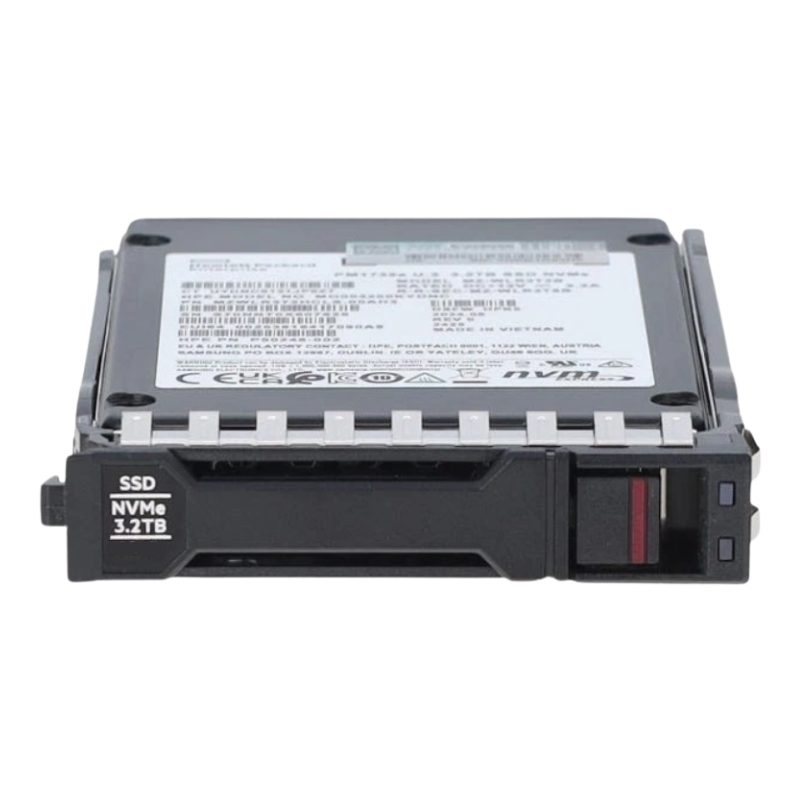


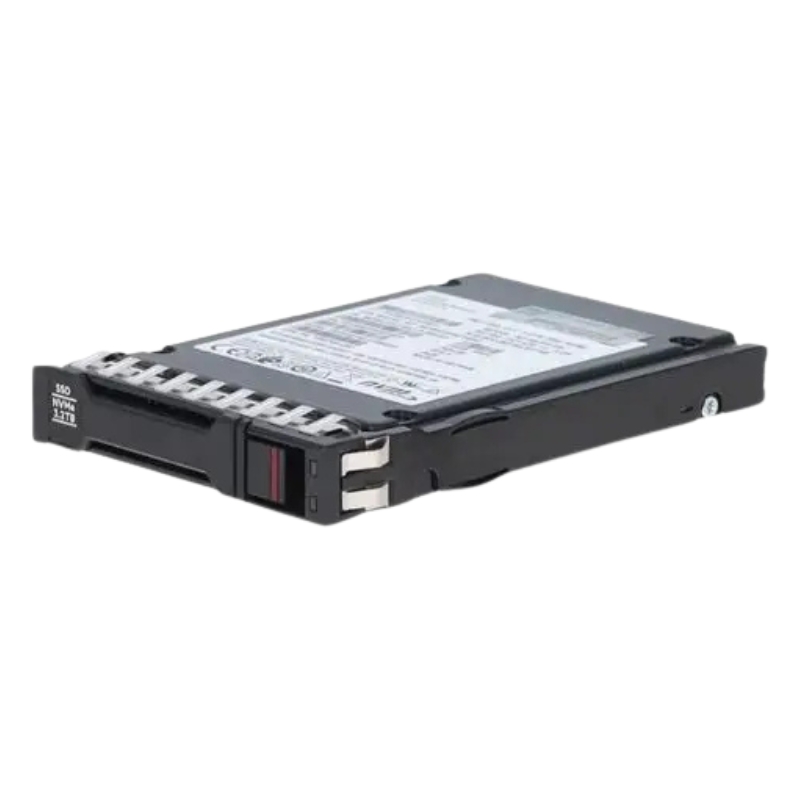
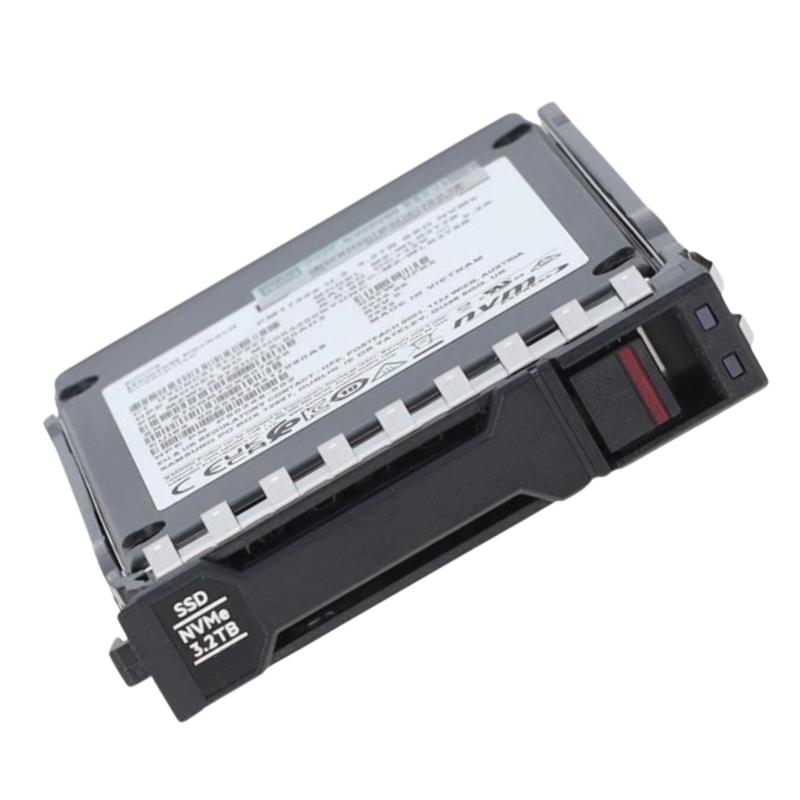
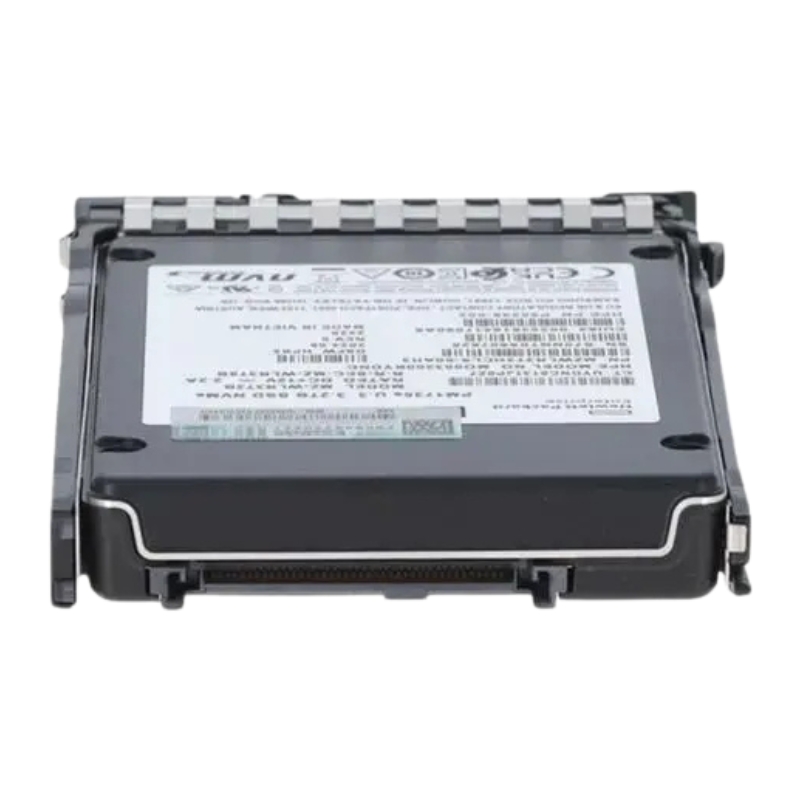
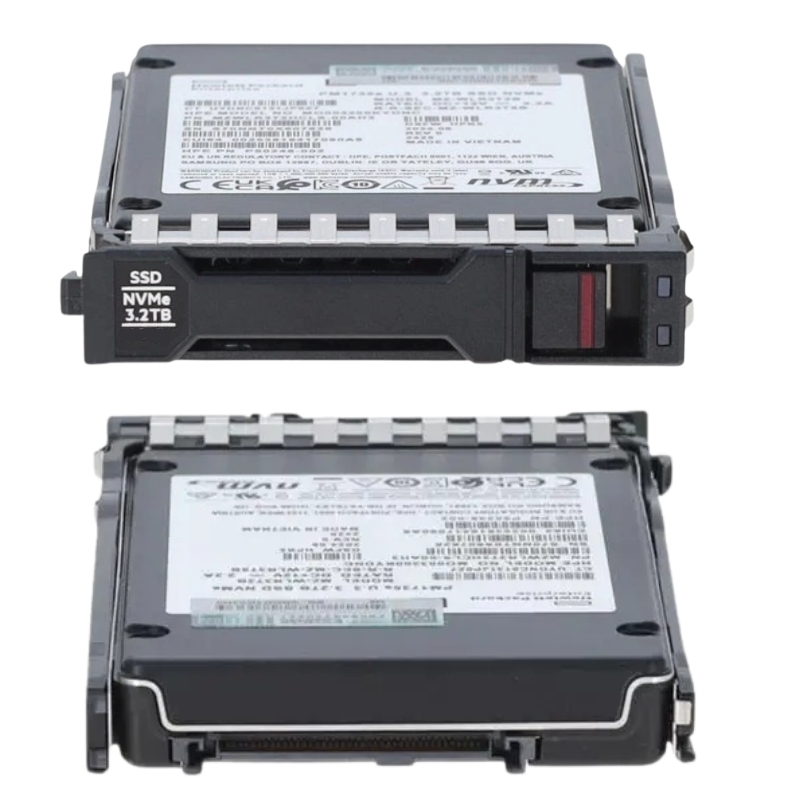
HPE P73302-B21 3.2TB NVMe Mixed Use SFF U.3 Hot Plug Solid State Drive. Factory-Sealed New in Original Box (FSB) with 3 years Warranty
The HPE P73302-B21 is a high-capacity NVMe solid state drive designed to deliver fast data access, dependable performance, and enterprise-level reliability. Built for mixed-use workloads, this SSD is ideal for modern data centers, cloud infrastructures, and performance-driven server environments.
The landscape of enterprise storage has been fundamentally reshaped by the advent of NVMe (Non-Volatile Memory Express) technology. Within this high-performance arena, Mixed-Use (MU) SSDs represent a critical category designed for the most demanding, I/O-intensive workloads. The HPE P73302-B21 3.2TB NVMe Mixed-Use SFF U.3 Hot Plug Solid State Drive stands as a prime example of this class, engineered to deliver a balanced and sustained performance for both read and write operations. Unlike read-intensive drives optimized for static data or write-intensive drives for logging, Mixed-Use drives are the workhorses of transactional databases, virtualization hosts, and real-time analytics platforms. Their architecture is built to handle the unpredictable, concurrent streams of data requests that define modern enterprise applications, offering consistent low latency and high throughput that SATA or SAS interfaces simply cannot match. By leveraging the direct PCIe connection and parallel processing capabilities of NVMe, these drives drastically reduce command overhead and unlock the full potential of flash memory, making them indispensable for accelerating business-critical applications.
Understanding the specifications of the HPE P73302-B21 is key to appreciating its capabilities. This drive is not a generic component but a highly optimized storage solution designed for HPE ProLiant and Synergy servers.
The drive offers a 3.2TB formatted capacity, a strategic point in the capacity curve that provides substantial storage for demanding applications without the potential performance trade-offs sometimes associated with higher-density cells. It employs the Small Form Factor (SFF) 2.5-inch drive bay standard, ensuring broad compatibility with modern server chassis. The interface is where it truly shines: it utilizes the U.3 (SFF-TA-1001) connector and is backward compatible with U.2. This tri-mode interface is pivotal, as it supports NVMe over PCIe, SATA, and SAS protocols on a single connector, offering unparalleled flexibility in heterogeneous storage environments. The Hot Plug capability is non-negotiable for enterprise environments, allowing for drive replacement or addition without powering down the server, thereby ensuring maximum system uptime and serviceability.
As a Mixed-Use drive, the P73302-B21 is engineered for a specific performance envelope. While exact figures can vary based on system configuration and workload, drives in this class typically target:
The drive is designed to maintain high levels of both read and write Input/Output Operations Per Second (IOPS). Expect ratings in the range of hundreds of thousands to over a million IOPS for mixed 70/30 read/write workloads. This ensures responsive performance under heavy concurrent loads.
Leveraging the PCIe Gen3 x4 lane interface (with a theoretical maximum of ~4GB/s), the drive can deliver sequential transfer speeds often exceeding 3,000 MB/s for reads and 2,000 MB/s for writes. This is crucial for large data transfers, backup operations, and streaming data applications.
Perhaps the most critical metric for transactional workloads is latency. NVMe MU drives like this one are architected to provide average read and write latencies measured in microseconds (µs), drastically reducing application wait times compared to drives with millisecond-level latency.
A defining characteristic of any SSD is its endurance, quantified as Drive Writes Per Day (DWPD) or Total Bytes Written (TBW). For a 3.2TB Mixed-Use drive, a typical endurance rating might be 3 DWPD over a 5-year warranty period. This means you can write 3 * 3.2TB = 9.6TB of data every single day for five years without exceeding its rated lifespan. This high endurance is what separates Mixed-Use from Read-Intensive drives and is essential for write-heavy components of mixed workloads.
The HPE P73302-B21 is not a general-purpose drive; it is a targeted solution for specific high-demand scenarios within the data center. Deploying it in alignment with its strengths maximizes ROI and system performance.
Relational Database Management Systems (RDBMS) like Microsoft SQL Server, Oracle Database, and SAP HANA thrive on low latency and high random I/O performance. This drive accelerates operations such as online transaction processing (OLTP), where thousands of small, concurrent reads and writes occur per second, directly improving transaction times and user experience.
Hypervisor platforms (e.g., VMware vSphere, Microsoft Hyper-V) create significant I/O "blender" effects, especially on storage hosting boot images (VMDK/VHDX files) for numerous virtual machines. The consistent performance and high IOPS of the P73302-B21 prevent I/O contention, leading to faster VM provisioning, smoother operation during peak loads, and higher VM density per host.
In non-persistent or persistent VDI deployments, "boot storms" and "login storms" create massive, simultaneous read/write demands. This NVMe MU drive can handle the intense random I/O of hundreds of virtual desktops booting or users logging in simultaneously, ensuring a responsive desktop experience.
Applications in fields like financial modeling, genomic sequencing, and computational fluid dynamics often work with massive datasets that exceed system RAM. Using drives like the P73302-B21 as fast swap space or for staging checkpoints can dramatically reduce computational stall times and accelerate time-to-solution.
The value of the HPE P73302-B21 is amplified by its deep integration with HPE server hardware and management software, ensuring reliability, predictable performance, and simplified operations.
This drive is qualified and tested for use in a wide range of HPE Gen10 Plus and later ProLiant servers (DL, ML, and Apollo families) as well as HPE Synergy compute modules. This ensures firmware compatibility, optimal thermal management, and validation of performance metrics within those specific system architectures. It is designed to work with HPE Smart Array and HPE NVMe software-defined controllers for advanced RAID functionality.
HPE provides curated firmware updates for its drives through standard service packs (SPPs), ensuring that updates are tested for stability within the broader server ecosystem. This eliminates the guesswork and risk associated with using generic firmware. Furthermore, the drive is covered under HPE's comprehensive support services, providing a single point of contact for both server and storage component issues.
Selecting the appropriate SSD type is crucial for cost-effective infrastructure design. Understanding where the Mixed-Use category fits is key.
Enterprise SSDs are typically segmented by endurance and performance profile:
Feature lower endurance (e.g., 1 DWPD or less), optimized for workloads with a high percentage of reads (80%+). They are cost-effective for boot drives, web servers, or hosting virtual machine libraries. The P73302-B21, with its higher endurance, is a more robust choice for any scenario involving significant writes.
Designed for extreme write endurance (e.g., 10+ DWPD), these are for logging, write-back caches, or high-frequency trading data capture. They command a premium price. The Mixed-Use drive offers a balanced and more economical alternative for workloads that are demanding but not exclusively write-saturated.
The interface choice dictates the performance ceiling:
SATA SSDs: Limited by the AHCI protocol and ~600MB/s bandwidth. Suitable for capacity tiers but not performance tiers.
SAS SSDs (12Gb/s or 24Gb/s): Offer higher throughput than SATA and excellent scalability in dual-port, shared storage arrays. However, they still have higher command latency than NVMe.
NVMe (U.3/U.2): As exemplified by the P73302-B21, provides the lowest latency, highest IOPS, and highest bandwidth per drive. It is the uncontested choice for accelerating applications directly attached to a server.
Beyond raw speed, enterprise drives incorporate features essential for data center operation.
The drive is equipped with advanced Power Loss Protection (PLP) circuits, often involving integrated capacitors. In the event of an unexpected power failure, this system provides sufficient hold-up energy to complete pending writes in the volatile cache and flush data to persistent NAND flash. This prevents data corruption and is a critical feature for maintaining transactional integrity in databases.
To meet stringent data governance and compliance requirements, the drive supports the NVMe Sanitize command. This feature allows for cryptographic erasure (instantaneous) or block erase of all user data, rendering it unrecoverable for drive repurposing or end-of-life disposal. It also supports TCG Opal 2.0 and IEEE 1667 standards for hardware-based, full-disk encryption, safeguarding data at rest.


 Contact Us
 Information
 Catalog
 Solid State Drives (SSD)
 Network Switches
 Hard Disk Drives
 HBA & Controllers
 PC & Servers
 PC & Server Memory
 CPU & Processors
 Network Routers
 Power Supplies
 Tape Drives & Libraries
 Network Devices
 Computer & Network Cables