(7% discount is applied at checkout)
Cart is empty
Your go-to destination for cutting-edge server products
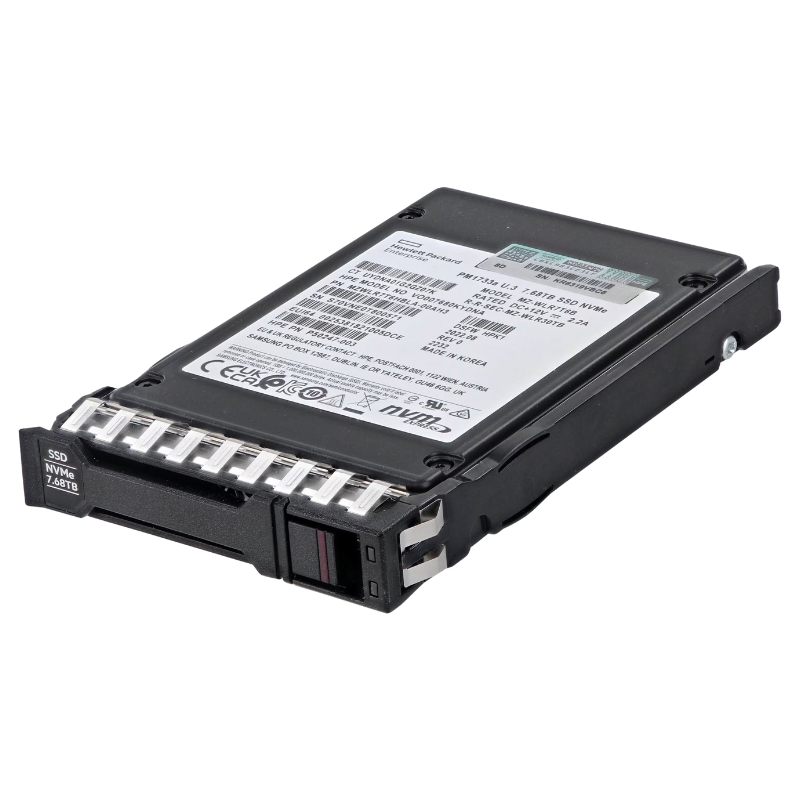


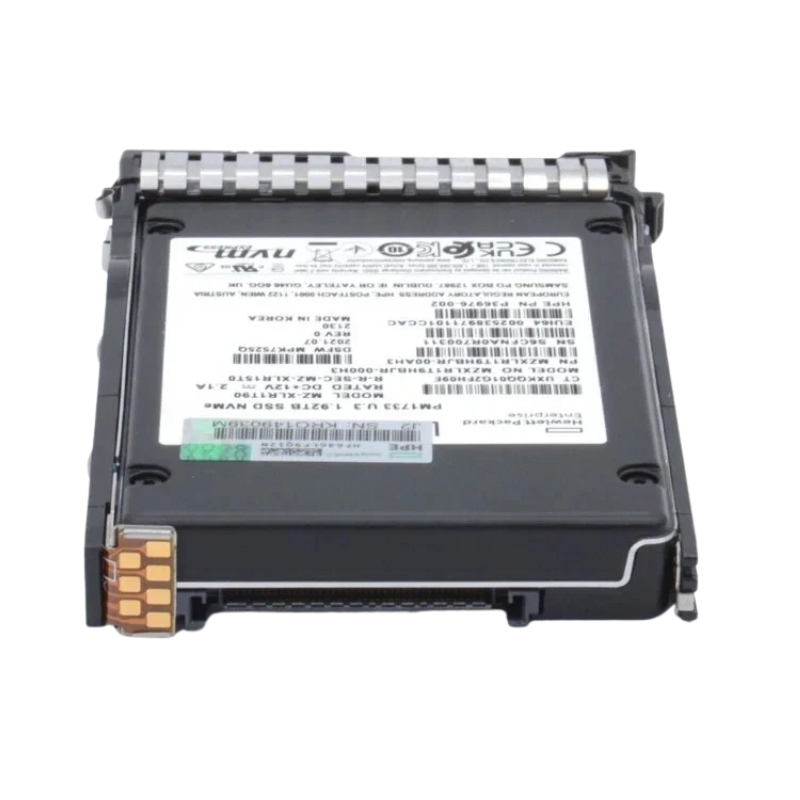
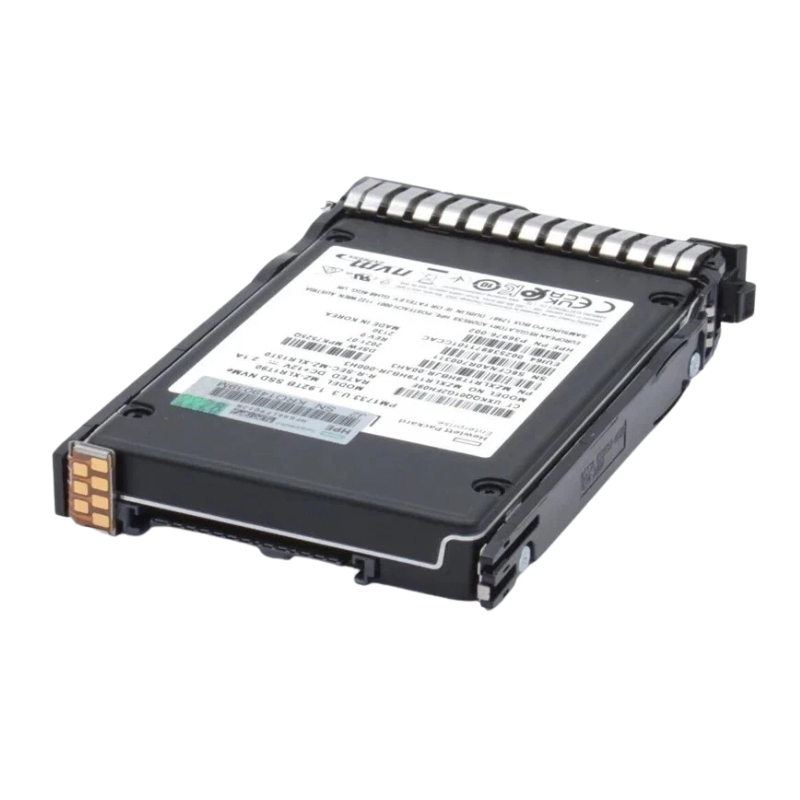
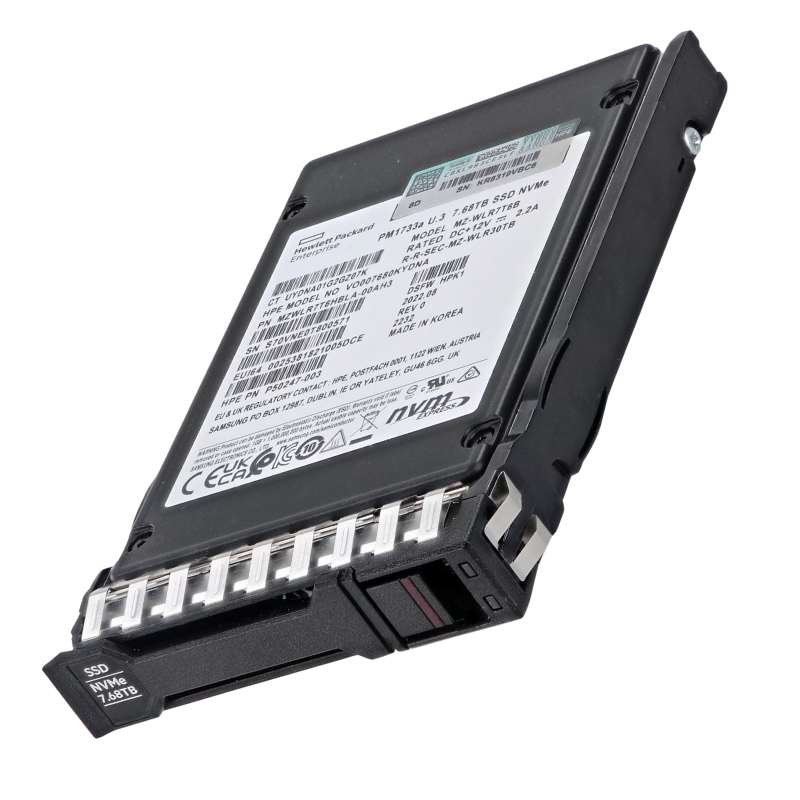
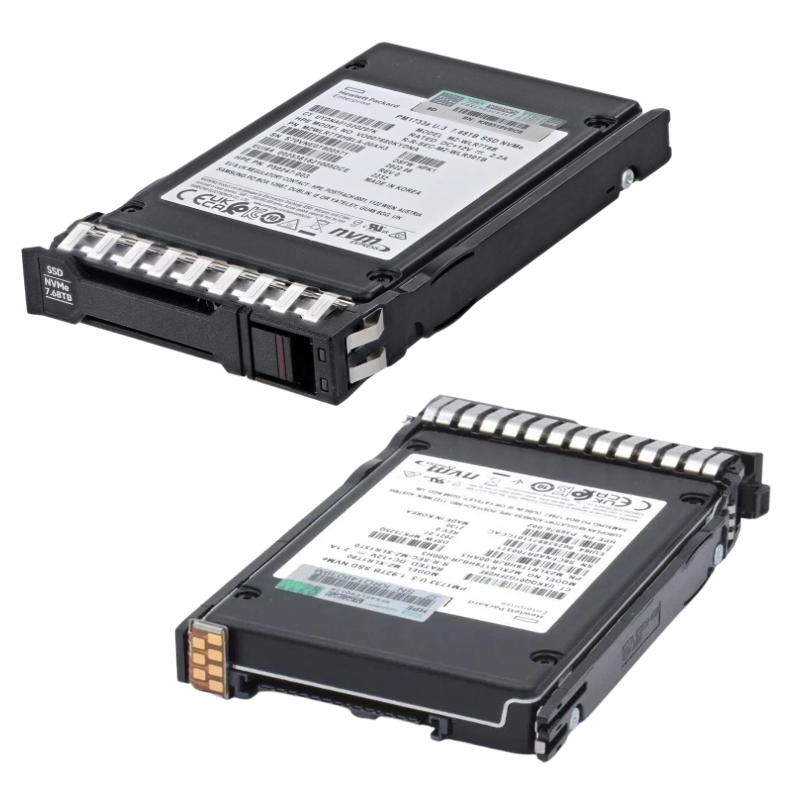
HPE P74641-001 7.68TB Read Intensive NVMe SFF U.3 Solid State Drive. Factory-Sealed New in Original Box (FSB) with 3 years Warranty
The HPE P74641-001 7.68TB Read Intensive NVMe SFF U.3 SSD is a high-performance enterprise storage solution engineered for fast data access, low latency, and reliable read-focused workloads. Built with modern NVMe technology, this drive is ideal for data centers, virtualization, cloud infrastructure, and analytics platforms.
The transition to NVMe is arguably the most significant leap in solid-state storage technology in the past decade. To understand the value of the HPE P74641-001, one must grasp the fundamentals of the interfaces it employs.
Traditional SSDs utilized SATA or SAS interfaces, which were designed for slower, mechanical hard disk drives. These protocols become a bottleneck, unable to saturate the immense potential bandwidth of NAND flash memory. NVMe is a protocol built from the ground up for non-volatile memory, communicating directly through the server's PCIe (Peripheral Component Interconnect Express) bus. This direct connection offers:
Lower Latency: Drastically reduced command overhead, enabling access times measured in microseconds.
Massive Parallelism: Support for tens of thousands of concurrent command queues versus the single queue of SATA.
Higher Bandwidth: Leveraging PCIe Gen 3.0/4.0 lanes to deliver sequential read/write speeds that are multiples of what SATA/SAS can achieve.
The HPE P74641-001 utilizes a Small Form Factor (SFF) U.3 (2.5-inch) drive bay. U.3 is a groundbreaking, tri-mode interface that is backward compatible with both SAS and SATA infrastructures. A U.3 backplane can automatically negotiate and connect to a SATA, SAS, or NVMe drive, providing unparalleled flexibility for IT administrators. This future-proofs your investment, allowing for a phased migration from SAS to NVMe within the same server chassis or storage enclosure without changing hardware.
The drive conforms to standard 2.5-inch, 15mm thickness specifications, allowing for hot-plug installation in a wide array of HPE ProLiant, HPE Apollo, and HPE Synergy servers, as well as HPE storage arrays. The U.3 connector ensures a secure, high-density connection that supports the full bandwidth of the NVMe protocol.
Not all enterprise workloads are created equal. HPE categorizes its SSDs based on drive writes per day (DWPD) and terabytes written (TBW) over the drive's warranty period, aligning them with specific use cases. The "Read-Intensive" designation is crucial for optimal performance and endurance management.
A read-intensive SSD, like the P74641-001, is optimized for workloads where read operations can constitute 70% to 90% of total I/O. Its endurance rating—typically lower than a mixed-use or write-intensive drive—is perfectly matched to these patterns, offering a cost-effective solution without over-provisioning for excessive write cycles. For this 7.68TB model, the endurance is meticulously calculated to handle substantial enterprise activity while maintaining data integrity and a long service life, often represented by a 5-year limited warranty with a specific TBW rating.
The combination of high capacity, blistering read speeds, and NVMe responsiveness makes this drive a cornerstone for numerous business-critical applications.
In VDI deployments, particularly for pooled or linked-clone environments, boot storms and login operations generate massive, concurrent read requests. The HPE Read-Intensive NVMe drive ensures a smooth, desktop-like experience for users by serving up OS and application data almost instantaneously.
For media servers and CDN edge nodes, the primary operation is serving static or streaming content to a vast number of users. The drive's high sequential read throughput ensures seamless video playback and rapid file distribution without bottlenecks.
In databases like Microsoft SQL Server or Oracle, read-intensive drives are perfect for hosting reporting instances, read replicas, or tablespaces for historical data where select queries far outnumber insert/update operations.
An HPE branded drive is more than just a commodity component. It is a fully integrated, tested, and supported piece of the HPE ecosystem, delivering unique advantages.
The HPE P74641-001 runs on custom HPE firmware that is rigorously tested and optimized for HPE server and storage architectures. This deep integration enables:
HPE SmartSSD Wear Gauge: Provides predictive health monitoring through the HPE iLO (Integrated Lights-Out) or HPE OneView, alerting administrators to potential issues before they cause downtime.
Simplified Management: The drive is fully manageable through standard HPE tools, ensuring consistency and reducing operational complexity.
Proactive Firmware Updates: HPE provides seamless, vetted firmware updates to enhance performance, security, and reliability, delivered via HPE Service Pack for ProLiant (SPP).
Enterprise data demands uncompromising protection. This drive incorporates multiple layers of security and integrity.
The drive is equipped with advanced power loss protection circuits. In the event of an unexpected power failure, onboard capacitors provide enough energy to flush all data in volatile buffers to the non-volatile NAND, preventing data corruption and ensuring transaction integrity.
To safeguard data at rest, the drive supports TCG (Trusted Computing Group) Enterprise and IEEE 1667 security protocols. When used with compatible HPE servers, it enables seamless hardware-enabled encryption, often leveraging the server's Trusted Platform Module (TPM) or HPE's Silicon Root of Trust, without a performance penalty.
From the host interface to the NAND media, the drive employs cyclic redundancy check (CRC) and error correction code (ECC) at every stage. This end-to-end data path protection detects and corrects errors, ensuring the highest possible data integrity.


 Contact Us
 Information
 Catalog
 Solid State Drives (SSD)
 Network Switches
 Hard Disk Drives
 HBA & Controllers
 PC & Servers
 PC & Server Memory
 CPU & Processors
 Network Routers
 Power Supplies
 Tape Drives & Libraries
 Network Devices
 Computer & Network Cables