(7% discount is applied at checkout)
Cart is empty
Your go-to destination for cutting-edge server products
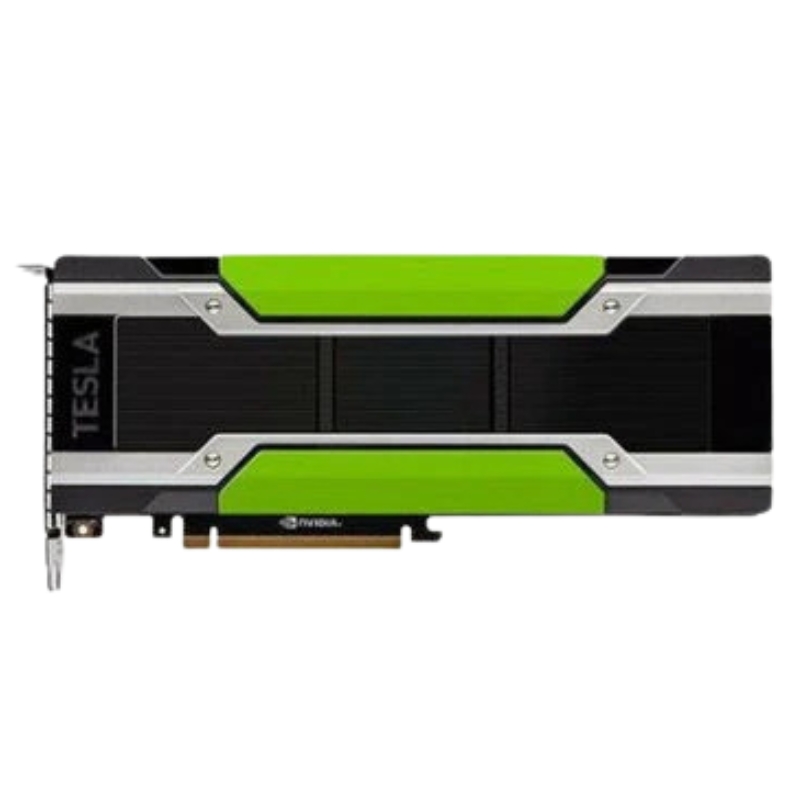


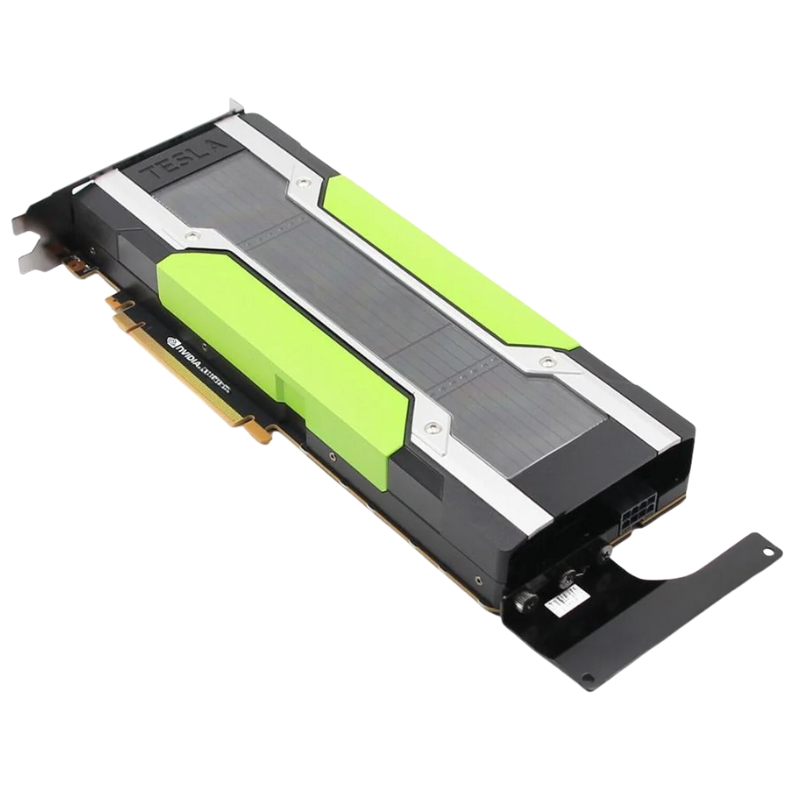
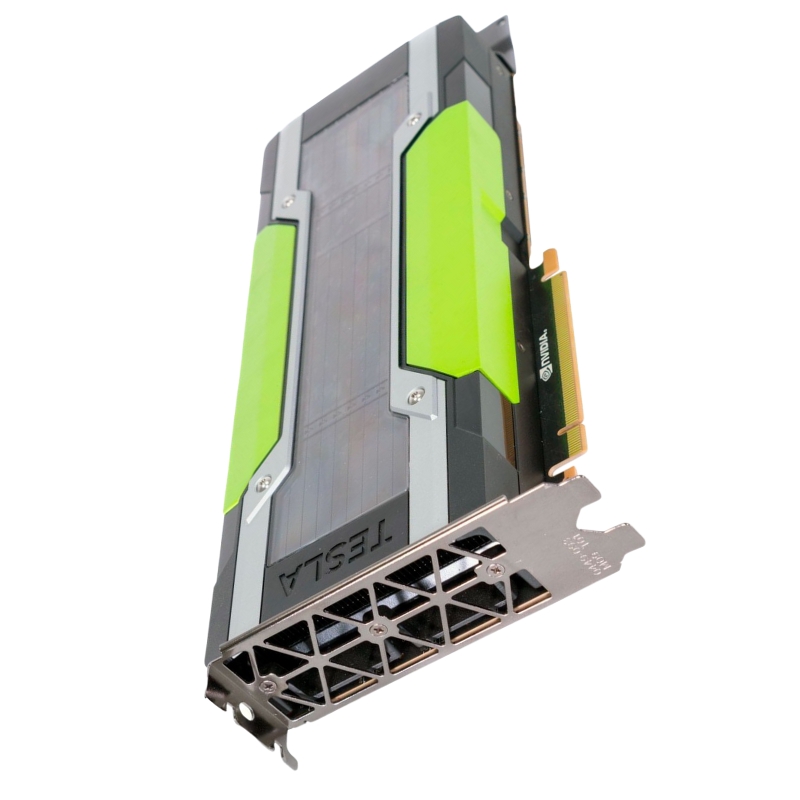
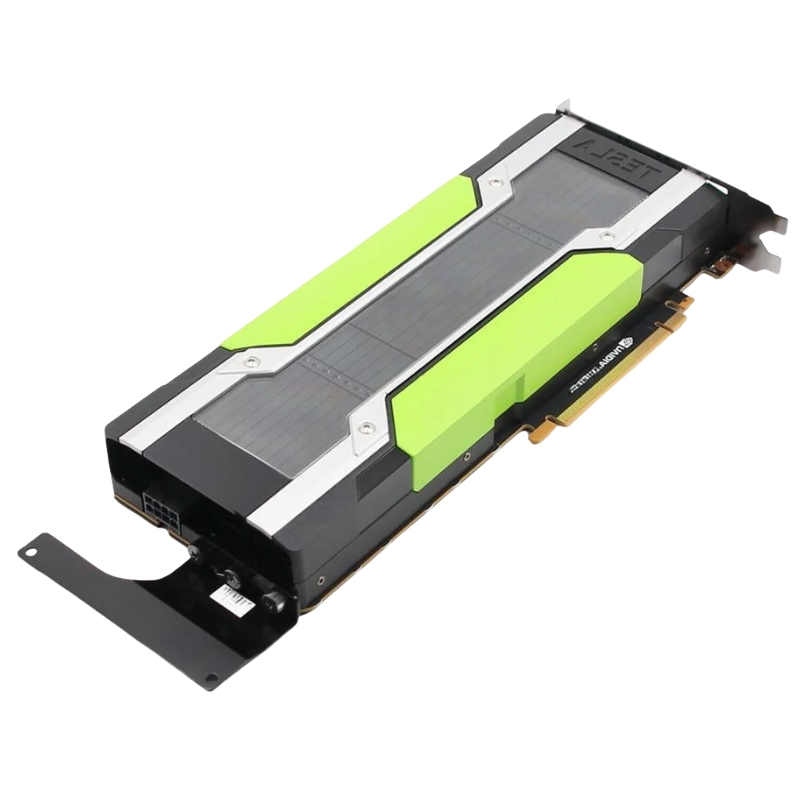
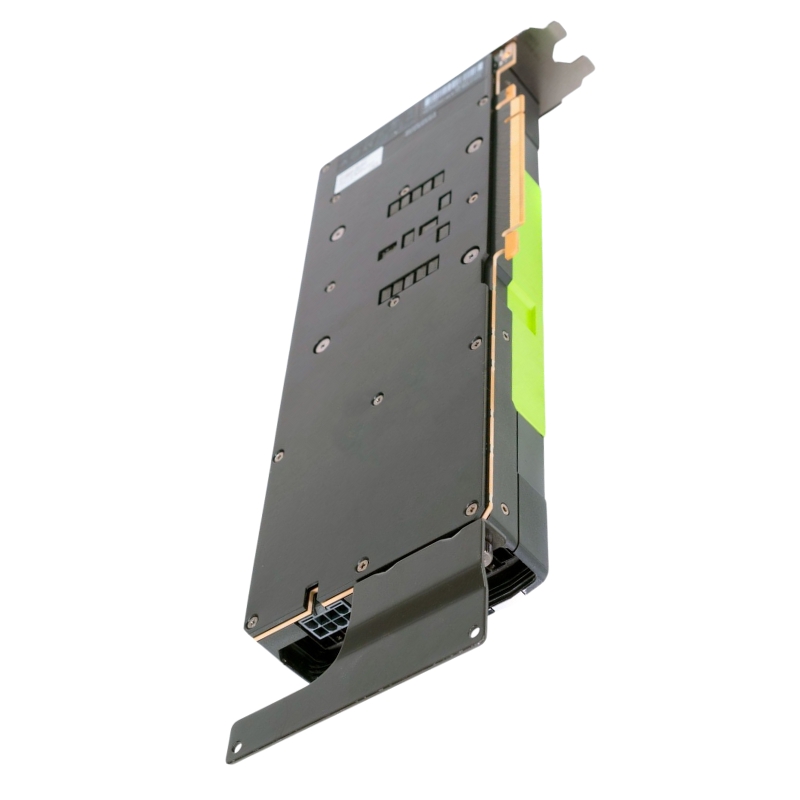
HPE Q0E21A 16GB PCI-E Nvidia Tesla P100 Accelerator GPU. Excellent Refurbished with 1-Year Replacement Warranty
Unlock high-performance parallel computing with the HPE Q0E21A featuring the NVIDIA Tesla P100 graphics accelerator. Designed for scientific modeling, AI workloads, and enterprise analytics, this 16GB HBM2-powered GPU delivers exceptional throughput and reliability for data-intensive environments.
The HPE Q0E21A NVIDIA Tesla P100 represents a groundbreaking advancement in accelerator technology, specifically engineered for the most demanding high-performance computing (HPC), artificial intelligence, and deep learning workloads. Built on NVIDIA's revolutionary Pascal architecture, this 16GB PCI-E accelerator delivers unprecedented computational performance for scientific research, data analytics, and enterprise AI applications.
At the heart of the Tesla P100 lies the GP100 processor, featuring 3,584 CUDA cores and 16GB of high-bandwidth HBM2 memory. This represents a significant architectural leap from previous generations, with the 16nm FinFET manufacturing process enabling higher transistor density and improved power efficiency. The Pascal architecture introduces unified memory and page migration engine, allowing seamless data access between CPU and GPU memory spaces.
The P100 incorporates cutting-edge HBM2 memory technology, delivering 732 GB/s of memory bandwidth - approximately 2.3x higher than previous generation GDDR5 solutions. This massive bandwidth is critical for memory-bound HPC applications and large neural network training. The 4096-bit memory interface operates with exceptional efficiency at lower voltages, contributing to the accelerator's overall power efficiency.
The Tesla P100 delivers exceptional double-precision (FP64) performance of 4.7 TFLOPS and single-precision (FP64) performance of 9.3 TFLOPS. This balanced approach makes it ideal for traditional HPC workloads requiring high FP64 accuracy while maintaining strong FP32 performance for AI and graphics-related computations.
With 18.7 TFLOPS of half-precision (FP16) performance, the P100 excels at deep learning inference and training. The architectural support for mixed-precision computing enables researchers and data scientists to accelerate AI workloads while maintaining numerical stability and accuracy.
The P100 features NVIDIA's NVLink technology, providing 160 GB/s of bidirectional bandwidth between GPUs and between GPU and CPU. This represents a 5x improvement over traditional PCIe 3.0, significantly reducing communication bottlenecks in multi-GPU configurations and CPU-GPU data transfers.
NVLink enables efficient scaling across multiple P100 accelerators, allowing applications to treat GPU memory as a unified pool. This capability is particularly valuable for large-scale simulations and neural networks that exceed the memory capacity of a single GPU.
In scientific computing environments, the Tesla P100 accelerates complex simulations including computational fluid dynamics, molecular dynamics, weather modeling, and astrophysics. The high FP64 performance ensures accurate results in numerically intensive calculations.
Financial institutions leverage the P100's computational power for Monte Carlo simulations, algorithmic trading strategies, and real-time risk analysis. The accelerator's ability to process massive datasets rapidly enables faster decision-making and more complex modeling scenarios.
The P100 excels at training deep neural networks for computer vision, natural language processing, and recommendation systems. The large 16GB memory capacity accommodates bigger batch sizes and more complex model architectures, reducing training time from weeks to days or hours.
For production AI deployments, the P100 delivers high-throughput inference performance, enabling real-time processing of images, video streams, and sensor data. The mixed-precision capabilities allow optimization of performance and accuracy based on application requirements.
The HPE Q0E21A utilizes the standard PCIe form factor, ensuring broad compatibility with existing server infrastructure. The active cooling solution is designed for data center environments, maintaining optimal operating temperatures under sustained computational loads.
With a thermal design power (TDP) of 250W, the P100 delivers exceptional computational density per watt. Advanced power management features dynamically adjust clock speeds and voltage based on workload characteristics, maximizing performance within power constraints.
The sophisticated blower-style cooling system ensures reliable operation in densely packed server configurations. The thermal solution is engineered to handle continuous maximum workloads, making it suitable for 24/7 data center operation.
The Tesla P100 fully supports CUDA 8 and subsequent versions, providing developers with access to the latest parallel computing features. The unified memory model simplifies programming by eliminating the need for explicit data transfers between host and device memory.
NVIDIA's comprehensive software stack includes optimized libraries for linear algebra (cuBLAS), signal processing (cuFFT), and parallel algorithms (Thrust). These pre-optimized libraries accelerate common computational patterns without requiring low-level GPU programming.
The HPE Q0E21A is certified for use in HPE ProLiant servers and HPE Apollo systems, ensuring optimal performance and reliability. HPE's engineering validation process guarantees compatibility with system firmware, management tools, and cooling solutions.
Support for multi-GPU deployments enables scaling computational resources to meet application demands. The P100 can be deployed in configurations ranging from single accelerators to fully populated GPU servers with multiple units.
The P100 delivers approximately 2x the performance per watt compared to the previous generation Tesla K80. This improvement enables data centers to increase computational density while managing power and cooling constraints.
The transition to HBM2 memory provides a dramatic increase in memory bandwidth, addressing one of the primary bottlenecks in memory-bound HPC applications and large model training.
The Tesla P100 features full Error Correction Code (ECC) protection for both register files and HBM2 memory. This ensures data integrity for mission-critical computations and long-running simulations where even single-bit errors could compromise results.
Designed for data center deployment, the P100 meets enterprise standards for reliability and longevity. The components are selected and validated for continuous operation under demanding computational workloads.
Comprehensive monitoring of temperature, power consumption, and clock frequencies enables proactive management of operating conditions. The accelerator can throttle performance to maintain safe operating parameters if cooling capacity is exceeded.
Academic institutions deploy P100 accelerators in research computing clusters to support diverse scientific disciplines. The balanced performance across FP64, FP32, and FP16 precision makes it suitable for multidisciplinary research environments.
National laboratories and government research facilities utilize P100 accelerators for classified and unclassified research projects. The computational capabilities support advanced modeling and simulation for defense, energy, and environmental applications.
In the energy sector, the P100 accelerates seismic processing and reservoir simulation. The high FP64 performance enables accurate modeling of complex geological formations and fluid dynamics.
Drug discovery and molecular modeling benefit from the P100's computational capabilities. Virtual screening of compound libraries and molecular dynamics simulations are accelerated, reducing time to market for new therapeutics.
While primarily designed for compute workloads, the P100 supports virtualization through NVIDIA GRID technology. This enables multiple virtual machines to share access to GPU resources with performance isolation and quality of service guarantees.
Major cloud providers offer instances featuring Tesla P100 accelerators, providing on-demand access to high-performance computing resources. The consistent architecture enables seamless migration between on-premises and cloud deployments.
Support for container technologies like Docker and orchestration platforms including Kubernetes enables modern application deployment patterns. NVIDIA's container runtime provides GPU awareness for containerized HPC and AI applications.
The Pascal architecture benefits from NVIDIA's long-term software support strategy. Continued driver updates and library optimizations ensure compatibility with evolving software frameworks and operating systems.
While the P100 delivers exceptional performance for current workloads, NVIDIA's consistent programming model across GPU generations facilitates migration to future architectures. CUDA code developed for P100 typically requires minimal modifications to run on newer accelerators.


 Contact Us
 Information
 Catalog
 Solid State Drives (SSD)
 Network Switches
 Hard Disk Drives
 HBA & Controllers
 PC & Servers
 PC & Server Memory
 CPU & Processors
 Network Routers
 Power Supplies
 Tape Drives & Libraries
 Network Devices
 Computer & Network Cables