(7% discount is applied at checkout)
Cart is empty
Your go-to destination for cutting-edge server products
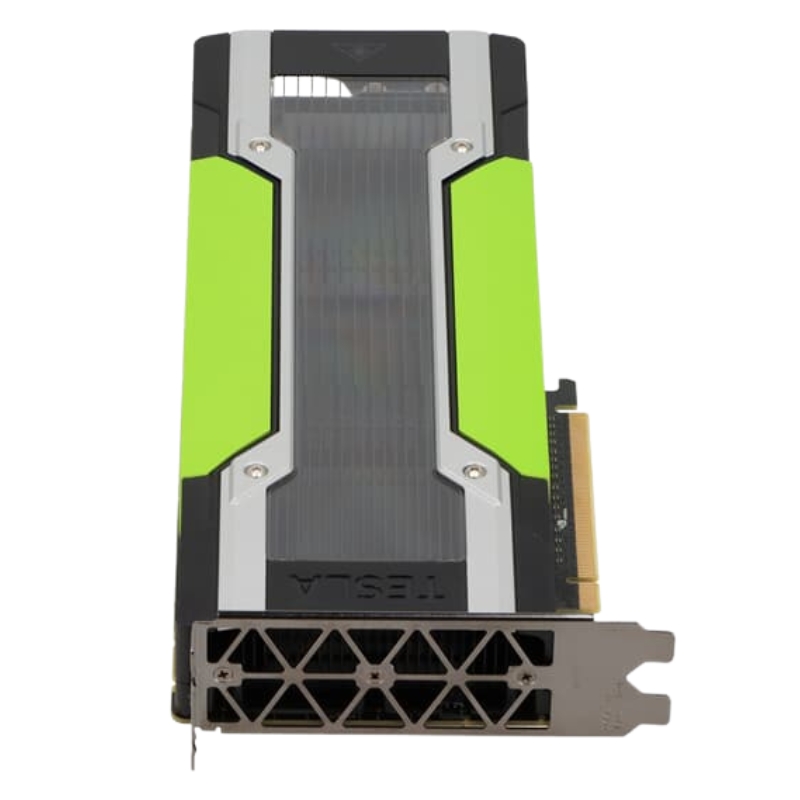


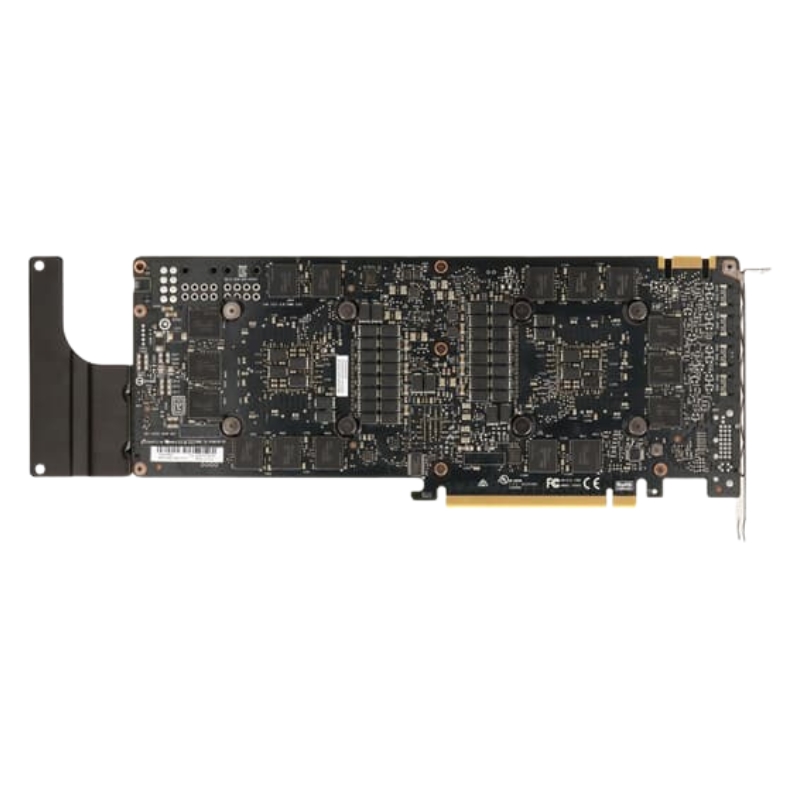
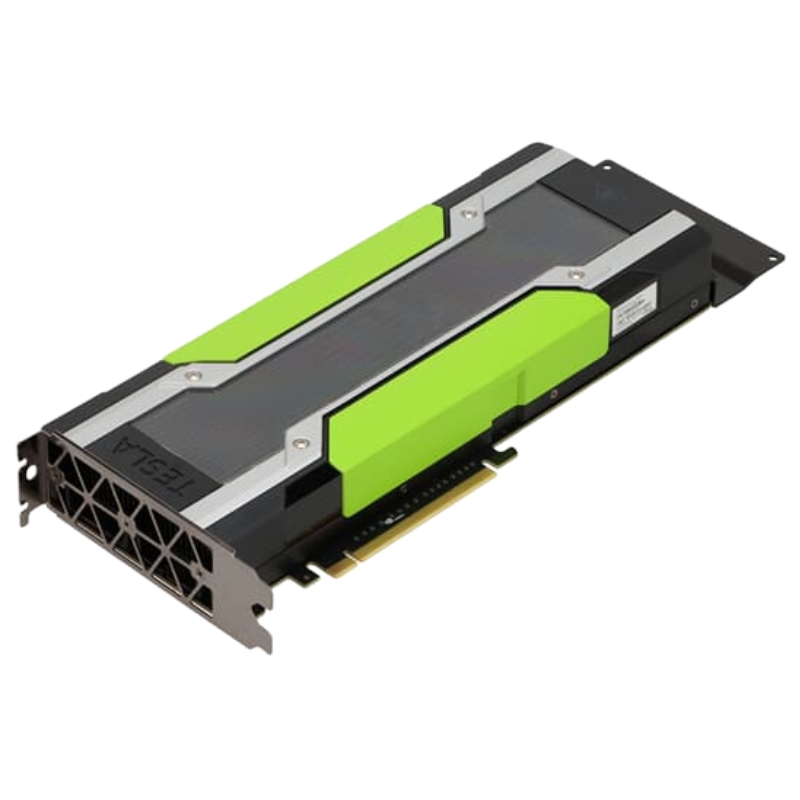
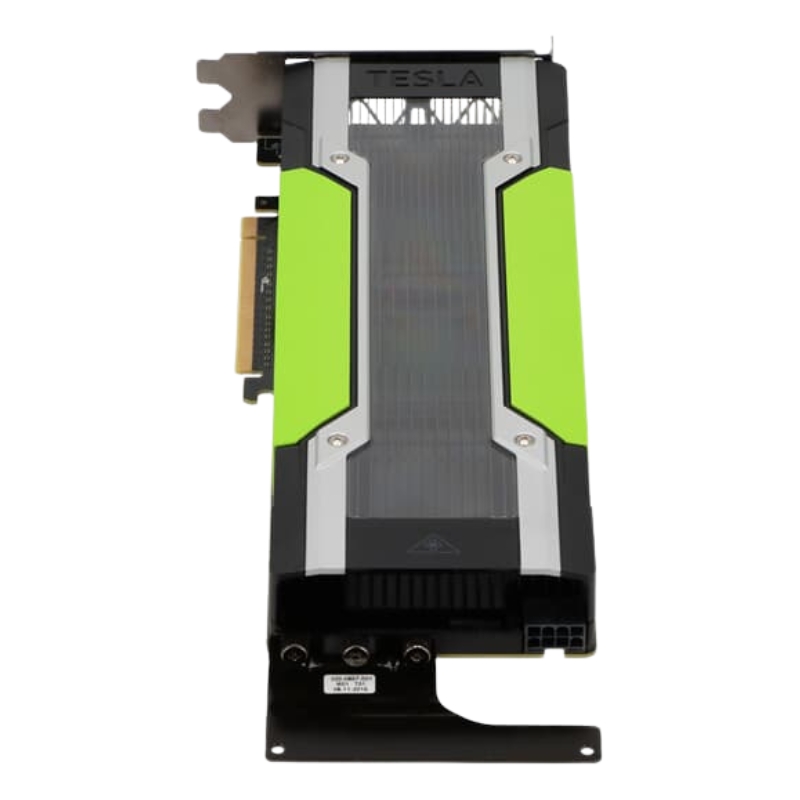
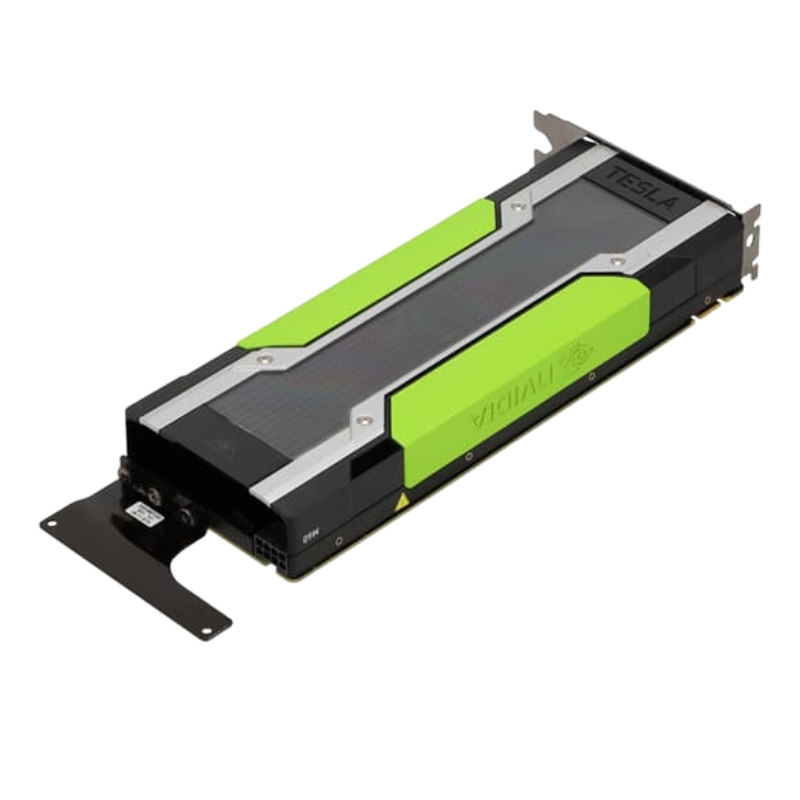
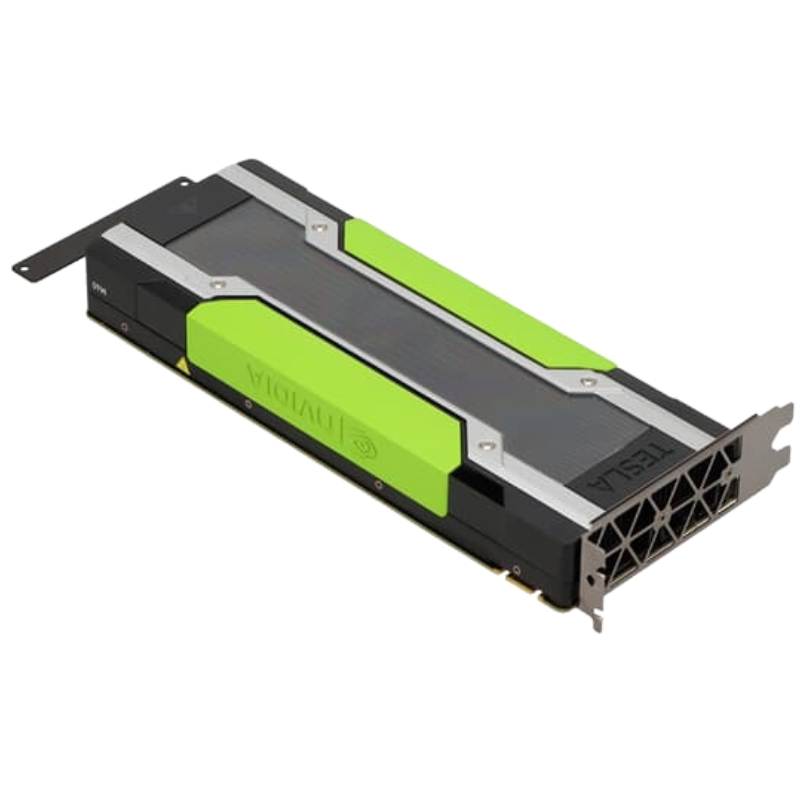
HPE Q0V79A 8GB GDDR5 Nvidia Tesla P4 Computational Accelerator Graphics Card. Excellent Refurbished with 1 year replacement warranty
The HPE Q0V79A Nvidia Tesla P4 Graphics Card is a high-efficiency GPU designed for accelerating demanding computational workloads, deep learning, AI inference, and professional visualization tasks. Featuring the power of NVIDIA’s Pascal architecture, this accelerator ensures top-tier performance, low power consumption, and optimized scalability for enterprise-level systems.
Designed for energy efficiency and exceptional reliability, the HPE Q0V79A Tesla P4 GPU enables seamless acceleration for AI, deep learning inference, and video transcoding workloads. Its GDDR5 memory and 256-bit data width provide faster data processing, ensuring smooth multitasking for intensive applications.
The HPE Q0V79A 8GB GDDR5 Nvidia Tesla P4 Computational Accelerator Graphics Card is a highly efficient and powerful GPU solution engineered for artificial intelligence (AI), deep learning inference, and high-performance computing (HPC) workloads. Designed for data centers and enterprise environments, this accelerator provides exceptional performance per watt, enabling users to handle massive computational workloads while maintaining energy efficiency. With its advanced GDDR5 memory, innovative architecture, and optimized power consumption, the Tesla P4 brings next-generation GPU acceleration to modern data-driven infrastructures, delivering breakthrough results for cloud servers, analytics, and machine learning tasks.
At the core of the Nvidia Tesla P4 lies the Pascal architecture, designed specifically for AI inference workloads and video transcoding operations. The card utilizes 2,560 CUDA cores to execute parallel processing operations with high throughput, ensuring accelerated performance for computationally demanding applications. The architecture allows for greater efficiency in low-power environments, making it ideal for hyperscale deployments where density and energy consumption are critical. Each core is capable of executing thousands of threads simultaneously, providing unmatched scalability across data-intensive workflows such as neural network inference, image recognition, and data analytics.
The Tesla P4 accelerator card redefines energy-efficient GPU computing by consuming less than 75 watts of power while maintaining impressive performance levels. This optimization allows businesses to deploy multiple GPUs within standard 1U or 2U servers, thereby enhancing total computational density. The card’s passive cooling design supports airflow-driven thermal management, reducing the need for additional cooling systems. This balance between performance and efficiency makes the HPE Q0V79A a top choice for organizations aiming to achieve high-performance results without excessive energy expenditure.
Thermal management is critical in continuous high-load environments. The Tesla P4 features an advanced thermal design that optimizes airflow within rack servers. Its low-profile form factor allows seamless integration into high-density server environments, promoting consistent cooling even under intense computational operations. The design minimizes thermal throttling, ensuring that processing speed remains stable over long durations. Reliability is further enhanced by robust components and materials that can endure sustained workloads, ensuring long-term stability and consistent output in enterprise-grade systems.
The HPE Q0V79A comes equipped with 8GB of GDDR5 memory that provides high-speed data access, allowing rapid retrieval and processing of massive datasets. This memory configuration ensures efficient data handling, supporting smooth execution of multiple workloads simultaneously. The memory bandwidth is optimized to accelerate both AI and HPC applications, minimizing latency during data transfers and enhancing the GPU’s ability to process large matrices in real-time. The GDDR5 technology also ensures improved signal integrity and reduced power draw, contributing to the card’s overall energy efficiency.
Memory throughput directly influences GPU performance, especially for AI inferencing and data processing workloads. The Tesla P4’s memory interface delivers superior throughput, supporting massive data sets without performance degradation. By leveraging high-bandwidth GDDR5 modules, the card achieves exceptional read/write speeds essential for complex computations, image rendering, and video analytics. This efficiency supports simultaneous execution of multiple inference models, making the card highly effective for AI-driven operations, including natural language processing and real-time video analysis.
The HPE Q0V79A Nvidia Tesla P4 is optimized for inference acceleration across deep learning frameworks such as TensorFlow, Caffe, PyTorch, and MXNet. It supports FP16 and INT8 precision, enabling faster data throughput for neural network inference while minimizing memory and power consumption. This balance between precision and performance allows developers and researchers to deploy trained models efficiently within production environments. The card’s low latency and high throughput make it ideal for tasks like image classification, speech recognition, and recommendation systems where rapid data inference is critical.
Nvidia’s Pascal architecture brings enhanced support for INT8 operations, a key feature for deep learning inference workloads. The Tesla P4 delivers up to eight times higher throughput compared to traditional CPUs when performing low-precision calculations. This ensures that machine learning models can run faster and more efficiently, making it an optimal solution for large-scale data center inference deployments. As a result, the HPE Q0V79A becomes a vital component in AI-driven ecosystems that require rapid response times and high operational throughput.
The Tesla P4 integrates seamlessly with major deep learning frameworks, allowing users to easily deploy pre-trained models into existing infrastructures. Its CUDA and cuDNN libraries provide optimized kernel operations, boosting the efficiency of training and inference tasks. The card also supports TensorRT, Nvidia’s inference optimizer, which allows conversion of deep learning models into highly efficient runtime engines. This ensures that AI inference workloads can achieve maximum performance across various deployment scenarios.
The HPE Q0V79A is designed for easy integration into HPE ProLiant and Apollo series servers, providing exceptional performance in both cloud and enterprise environments. Its low-profile form factor makes it suitable for 1U and 2U servers, maximizing rack density. The card uses the PCI Express 3.0 interface, ensuring high-speed communication between the GPU and CPU. This compatibility allows IT teams to scale computational capabilities efficiently across a wide range of server infrastructures. Whether used for AI inference, video analytics, or scientific computing, the Tesla P4 adapts seamlessly to evolving business requirements.
HPE ensures that the Q0V79A Nvidia Tesla P4 maintains compatibility with multiple operating systems, including Linux distributions, Windows Server editions, and virtualized environments. This broad support allows enterprises to deploy GPU-accelerated workloads in diverse environments. Additionally, the card supports Nvidia’s CUDA platform, enabling developers to write optimized code that takes full advantage of GPU acceleration. Integration with HPE’s software ecosystem further enhances manageability, offering simplified monitoring and maintenance through intelligent system tools.
Beyond AI and HPC applications, the HPE Q0V79A Tesla P4 excels in video transcoding and streaming workloads. Equipped with Nvidia’s NVENC and NVDEC hardware engines, the GPU delivers real-time encoding and decoding of multiple high-resolution video streams simultaneously. This makes it an excellent choice for cloud video delivery, content creation, and surveillance systems. By offloading video processing tasks from the CPU, the Tesla P4 improves overall system performance and reduces latency in content delivery networks. It supports major codecs such as H.264 and H.265, ensuring efficient compression and playback quality across various devices.
The Tesla P4 is widely used in data centers that handle large-scale video streaming and cloud-based content delivery. Its dedicated video engines accelerate encoding workloads, ensuring smooth playback and efficient resource utilization. Whether it is used for on-demand video services, cloud gaming, or virtual desktop infrastructure, the HPE Q0V79A offers superior performance for media-rich environments. Its ability to process multiple 4K or even 8K video streams concurrently ensures high scalability and minimal operational overhead.
Data centers require scalable GPU acceleration to handle fluctuating workloads efficiently. The HPE Q0V79A Nvidia Tesla P4 allows for horizontal scaling across multiple servers, enabling operators to expand computational capacity without increasing physical footprint. Its compact design and low power consumption make it a preferred choice for hyperscale data centers and edge computing environments. When combined with HPE’s infrastructure management tools, organizations can easily balance performance, energy usage, and cost-effectiveness across their operations.
Deploying multiple Tesla P4 accelerators in a single system can dramatically enhance performance for parallel workloads. Applications such as simulation, modeling, and real-time analytics benefit greatly from the ability to distribute computations across several GPUs. The Nvidia NVLink interconnect further enhances communication between GPUs, minimizing bottlenecks and improving efficiency. In data-intensive fields like genomics, seismic analysis, and financial modeling, multi-GPU setups powered by the HPE Q0V79A enable faster processing times and greater insights.
Security is a major concern in modern computing environments. The HPE Q0V79A includes enhanced security mechanisms to safeguard sensitive data during processing and transfer. Nvidia’s firmware-level protections prevent unauthorized code execution, while secure boot features ensure that only verified software is loaded at startup. These measures protect against firmware-level attacks and maintain data integrity throughout computational operations. Additionally, integration with HPE’s enterprise-grade security frameworks provides an extra layer of assurance for mission-critical deployments.
Firmware security in the Tesla P4 is maintained through cryptographically signed firmware updates and secure boot chains. This ensures that the card’s firmware cannot be tampered with, providing consistent reliability across enterprise environments. Combined with HPE’s secure management protocols, these features deliver a trustworthy computing foundation for AI, HPC, and data center workloads. For industries dealing with sensitive or regulated data, such as finance, healthcare, or defense, this level of protection is essential for compliance and operational resilience.
The HPE Q0V79A integrates seamlessly within the HPE ecosystem, providing reliable GPU acceleration for a variety of workloads. It is fully validated for HPE ProLiant servers, ensuring maximum compatibility and optimized power delivery. HPE’s Integrated Lights-Out (iLO) management and OneView software provide administrators with comprehensive monitoring and control capabilities, allowing real-time visibility into GPU performance, power usage, and thermal conditions. These management tools simplify deployment, reduce downtime, and enhance overall operational efficiency in large-scale environments.
HPE provides dedicated firmware updates and driver packages specifically optimized for the Tesla P4 accelerator. These updates enhance stability, ensure compatibility with newer operating systems, and improve the overall performance of GPU-accelerated workloads. The integration between Nvidia’s CUDA platform and HPE’s software stack ensures that users receive the best possible performance for deep learning inference, data analytics, and virtualization workloads. Continuous updates from both Nvidia and HPE guarantee long-term support and improved reliability for enterprise users.
Performance benchmarks reveal that the Tesla P4 delivers exceptional results in AI inference workloads, outperforming traditional CPU-based systems by a significant margin. In tests involving neural network inference, the card demonstrated up to 40x improvement in throughput compared to standard CPU servers. Its power-to-performance ratio sets a benchmark for energy-efficient AI computing. When integrated within HPE ProLiant servers, users can achieve optimal performance scaling across multi-node clusters. Benchmark results also indicate enhanced video encoding efficiency, with the ability to process numerous simultaneous HD or 4K streams without performance degradation.
Regular firmware updates from HPE and Nvidia ensure the Tesla P4 maintains peak performance and compatibility with evolving hardware and software environments. These updates often include improvements in driver stability, enhanced performance tuning, and additional framework support. Administrators can easily manage these updates through HPE’s centralized management console, streamlining maintenance processes and ensuring that all deployed GPUs operate under the latest configurations for optimal efficiency and reliability.
The HPE Q0V79A Nvidia Tesla P4 represents a significant step toward future-ready computing infrastructures. As industries continue to adopt AI-driven technologies, the demand for inference acceleration will grow rapidly. The Tesla P4 provides a scalable and efficient platform to support these evolving workloads, enabling organizations to stay competitive in data-intensive environments. Its compatibility with emerging AI frameworks and support for modern data center architectures make it a forward-looking investment for enterprises aiming to harness the power of GPU-accelerated computing.
Workloads in AI, analytics, and virtualization continue to evolve, demanding flexible hardware capable of adapting to new requirements. The Tesla P4’s modular design and broad compatibility ensure that it remains relevant across diverse application areas. Whether integrated into traditional servers or deployed in edge nodes, the HPE Q0V79A delivers consistent performance, scalability, and energy efficiency. This adaptability makes it a foundational component in the transition toward smarter, more efficient computational ecosystems.


 Contact Us
 Information
 Catalog
 Solid State Drives (SSD)
 Network Switches
 Hard Disk Drives
 HBA & Controllers
 PC & Servers
 PC & Server Memory
 CPU & Processors
 Network Routers
 Power Supplies
 Tape Drives & Libraries
 Network Devices
 Computer & Network Cables