(7% discount is applied at checkout)
Cart is empty
Your go-to destination for cutting-edge server products
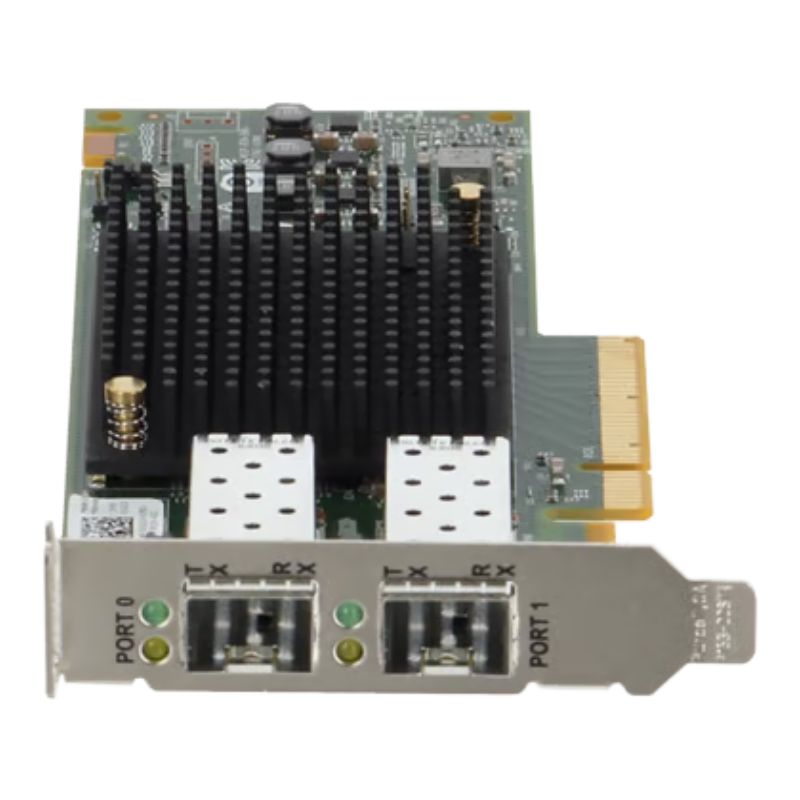


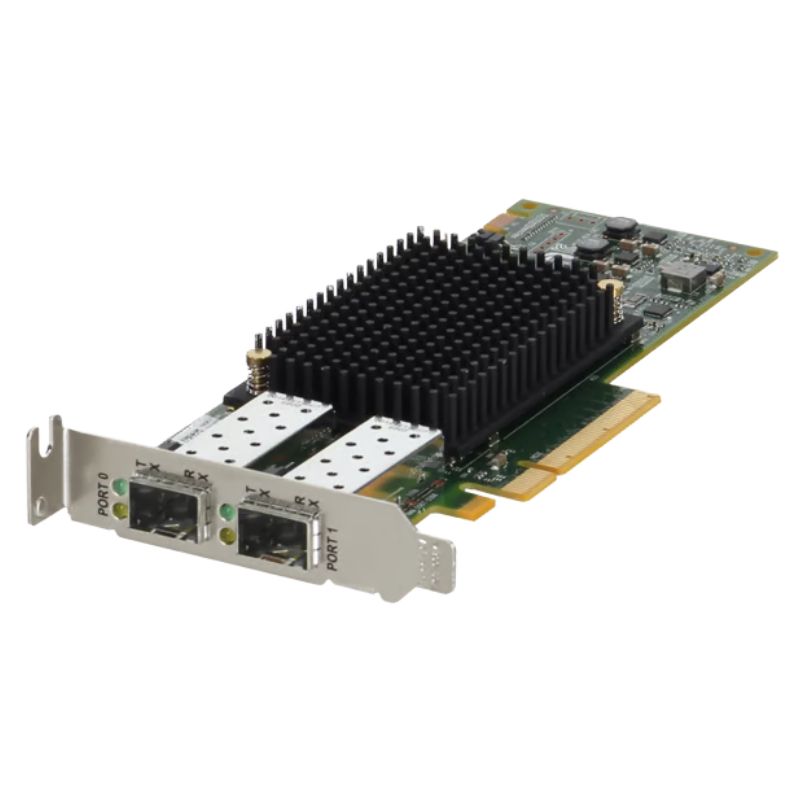
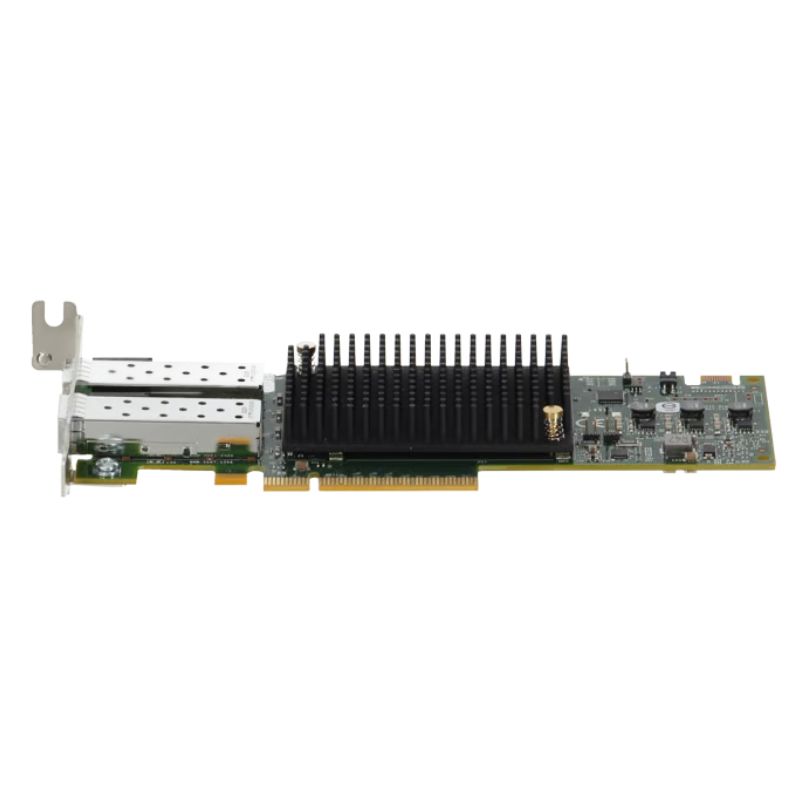
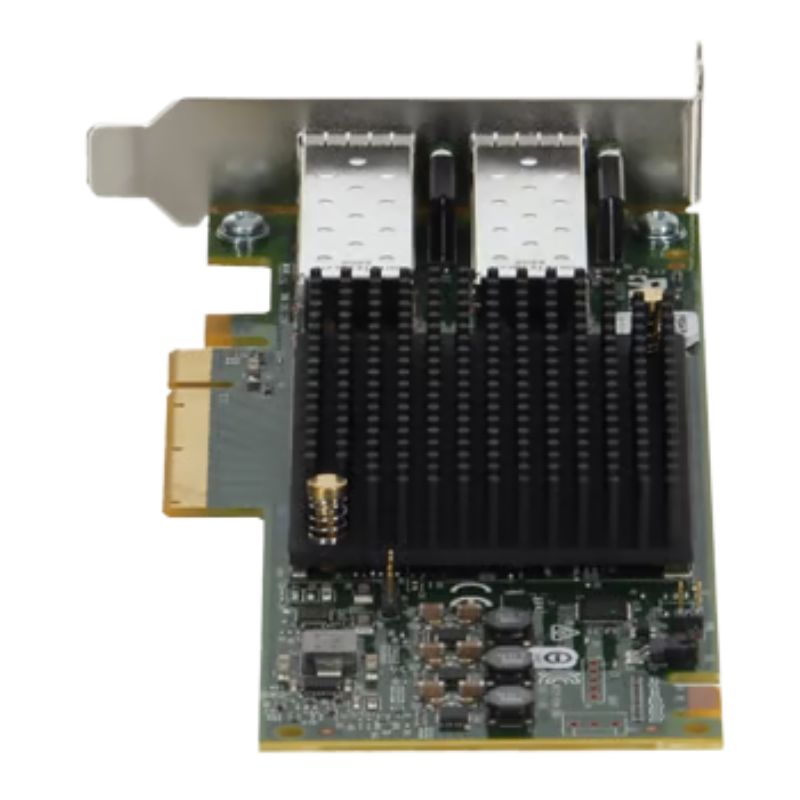
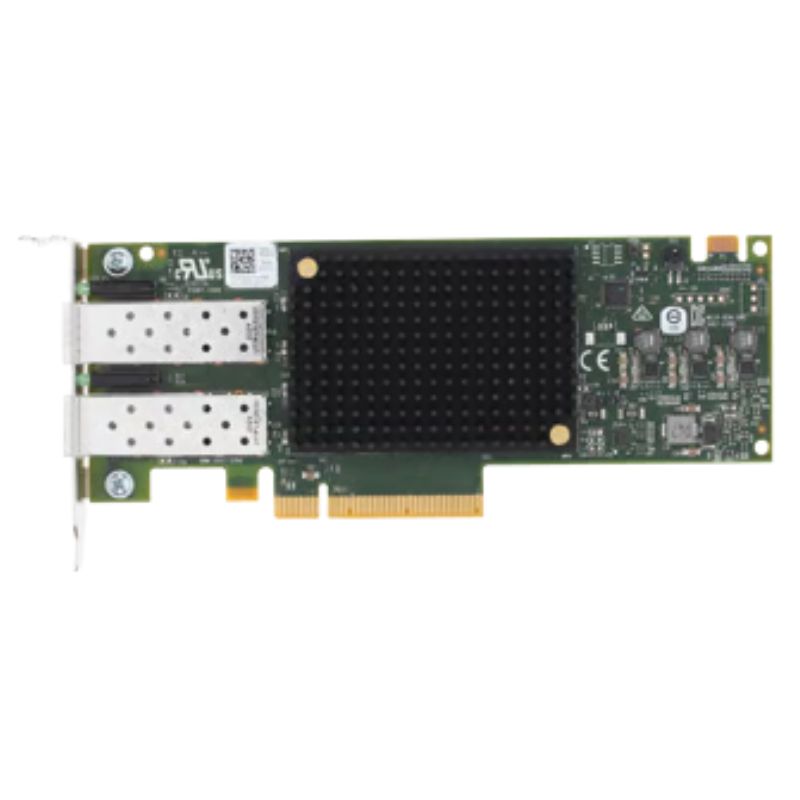
HPE Q8C65B Nimble Storage 2 Ports 16GB Fibre Channel Adapter Field Upgrade. Excellent Refurbished with 1-Year Replacement Warranty
The HPE Q8C65B Nimble Storage 2 Ports 16GB Fibre Channel Adapter Field Upgrade is a powerful and reliable networking solution designed to enhance data transfer speeds, improve connectivity, and ensure seamless scalability in enterprise storage environments. Engineered by Hewlett Packard Enterprise (HPE), this high-performance adapter provides dependable integration for modern business infrastructures requiring fast, secure, and efficient data operations.
This Fibre Channel adapter is designed to offer reliable throughput and optimized storage connectivity. The dual-port configuration ensures resilience and redundancy, allowing enterprises to handle mission-critical workloads without downtime. Its 16GB speed capability supports high-volume data transfers for data centers and cloud deployments.
The HPE Q8C65B adapter is engineered with advanced technologies that improve data efficiency and reliability. It is compatible with enterprise-grade applications where speed, dependability, and low-latency storage access are essential.
The HPE Q8C65B Nimble Storage 2 Ports 16GB Fibre Channel Adapter Field Upgrade represents a focused category of enterprise storage networking upgrades designed for organizations that demand higher throughput, lower latency, and simplified integration with SAN environments. This category centers on field-upgradeable Fibre Channel (FC) adapter modules engineered to extend the lifespan and capabilities of existing HPE Nimble Storage arrays without requiring a full system replacement. In commercial and mission-critical settings, where downtime, data migration complexity, and capital expense are central concerns, this adapter field-upgrade approach gives IT teams a path to modernize connectivity while preserving storage architecture, data integrity, and existing investments.
Adapters in this class typically provide two full-speed Fibre Channel ports rated at 16 gigabits per second, robust oversight for link negotiation and error detection, and compatibility with enterprise-grade zoning, multipathing, and redundancy schemes. They are designed to operate within the Nimble Storage field-upgrade framework, which means firmware compatibility, careful thermal and power profiles, and hardware interlocks that protect against inadvertent mismatches. These adapters prioritize deterministic performance: consistent IOPS under mixed read/write patterns, predictable latency for latency-sensitive applications, and reliable link behavior under heavy utilization. The category also emphasizes maintainability—hot-swappable capability where supported by the array, clear LED and management indicators, and a supported path for firmware updates via HPE/Nimble management tools.
When evaluating this category, system architects must prioritize compatibility matrices. The field upgrade adapter is designed to work with specific Nimble Storage models and chassis revisions; verifying supported array firmware versions and controller hardware is necessary before procurement. Integration considerations also include host HBA compatibility, switch fabric zoning strategies, and multipathing driver support on hosts. Because storage networking often spans vendors, the adapter category is built to adhere to Fibre Channel standards and leverage common best practices such as dedicated storage fabrics, separate SAN management planes, and consistent port naming conventions. Ensuring that the Q8C65B module firmware is coordinated with switch firmware and host multipathing drivers helps avoid interoperability issues and supports smooth cutovers.
In practical terms, upgrading to a 16Gb Fibre Channel adapter typically yields improved throughput for large sequential transfers and better queue handling for concurrent small-block workloads. Databases benefit from lower tail latency during peak transactional bursts, while virtualization infrastructures can consolidate more VMs per array node without overwhelming the I/O channels. However, overall performance gains are a function of the entire stack: array controller performance, host bus adapters, SAN switch capacities, and storage media. The adapter category helps remove the network interface as a bottleneck, but gains are maximized when paired with end-to-end optimization—fast back-end media, tuned host drivers, and proper zoning and QoS rules on the SAN fabric.
Executing a field upgrade with Q8C65B class adapters involves structured planning, validation, and staged deployment. First, an assessment phase must catalog current array models, firmware revisions, host connectivity, and SAN switch configurations. This inventory-driven approach helps identify arrays that are candidates for the adapter upgrade and clarifies which host paths will be impacted. Next comes testing in a non-production environment or using a canary node to validate compatibility, firmware flashing procedures, and failover behavior. During deployment, IT teams follow a carefully scripted change window to replace or install the adapter, update firmware as required, and verify fabric zoning and host path failover. Post-deployment validation confirms that multipathing is functioning correctly, that latency and throughput metrics meet expectations, and that monitoring alerts are adjusted to recognize the new hardware state.
Best practices for this adapter category include maintaining a current backup and snapshot policy before making any hardware changes, ensuring firmware and drivers on hosts and switches are certified in vendor interoperability matrices, and leveraging vendor-provided management utilities to apply firmware updates. Cable management, proper SFP+ or LC connector inspection, and adherence to recommended insertion/removal procedures minimize the risk of physical layer errors. From a software perspective, administrators should validate multipath configuration profiles, configure path weighting and recovery timers suited to the environment, and confirm that storage management tools reflect the adapter’s new ports. Thorough documentation of serial numbers, firmware levels, and change control records facilitates future audits and support interactions.
One of the pivotal advantages of field-upgradeable adapters in this category is lifecycle flexibility. Instead of late-stage replacement of entire arrays, IT organizations can extend their existing platform’s service life by incrementally upgrading connectivity. This staged approach reduces capital expenditure spikes, aligns upgrades with maintenance windows, and offers granular control over when and where performance enhancements are applied. Moreover, because field upgrades are typically supported by vendor maintenance contracts and parts-exchange programs, organizations can plan for predictable operational costs and reduced risk of extended downtime. The adapter category thus supports continuity strategies by enabling high-availability configurations and minimizing single points of failure through redundant porting and multipath design.
This adapter category is particularly well-suited for environments where storage traffic patterns shift toward higher concurrency and where the storage fabric sometimes becomes the performance choke point. Typical scenarios include large-scale virtualization where many VMs saturate host paths, high-performance databases requiring lower latency guarantees, backup and restore windows that must complete within tight SLAs, and analytics workloads that stream large datasets across the SAN. Secondary use cases include replication and disaster recovery replication streams that benefit from higher sustained throughput, and environments where consolidating multiple lower-capacity lanes into fewer higher-speed links simplifies fabric design and management.
Troubleshooting within this category starts at the physical layer and works upward. Common initial checks are verifying port LEDs, link negotiation states, and SFP module seating. Next, administrators should confirm zoning and switch port states to ensure the new adapter ports are visible in the fabric. Host-level troubleshooting includes verifying driver versions, confirming path states reported by multipathing software, and checking for SCSI reservation anomalies. Many issues stem from mismatched firmware or switch mode settings, so cross-vendor compatibility checks are useful. For ongoing maintenance, a regular schedule of firmware reviews, SFP module inspections, and fabric health checks reduces the likelihood of latent failures and helps preserve predictable performance levels over time.
A pragmatic migration strategy for this adapter category often involves phased rollouts that prioritize critical workloads or high-traffic arrays. Coexistence with legacy adapters and lower-speed fabrics is common; administrators can mix link speeds within a fabric provided the SAN design accounts for performance and zoning constraints. Where possible, upgrade paths are planned to avoid double-hops or inefficient routing that could negate the performance gains. Tools that simulate load and measure projected improvements can help determine the optimal adapter deployment sequence and minimize disruption to production workloads.
A successful deployment checklist typically includes verifying the array and chassis model for field-upgrade eligibility, confirming firmware compatibility across array controllers and SAN switches, scheduling a maintenance window with rollback plans, performing a non-production validation, ensuring that spares and SFP modules are on hand, documenting host multipathing configurations, and coordinating with application owners to monitor post-upgrade performance. Ensuring that all steps are recorded and that support contacts are accessible completes a risk-managed rollout that leverages the full benefits of the adapter category.


 Contact Us
 Information
 Catalog
 Solid State Drives (SSD)
 Network Switches
 Hard Disk Drives
 HBA & Controllers
 PC & Servers
 PC & Server Memory
 CPU & Processors
 Network Routers
 Power Supplies
 Tape Drives & Libraries
 Network Devices
 Computer & Network Cables