(7% discount is applied at checkout)
Cart is empty
Your go-to destination for cutting-edge server products
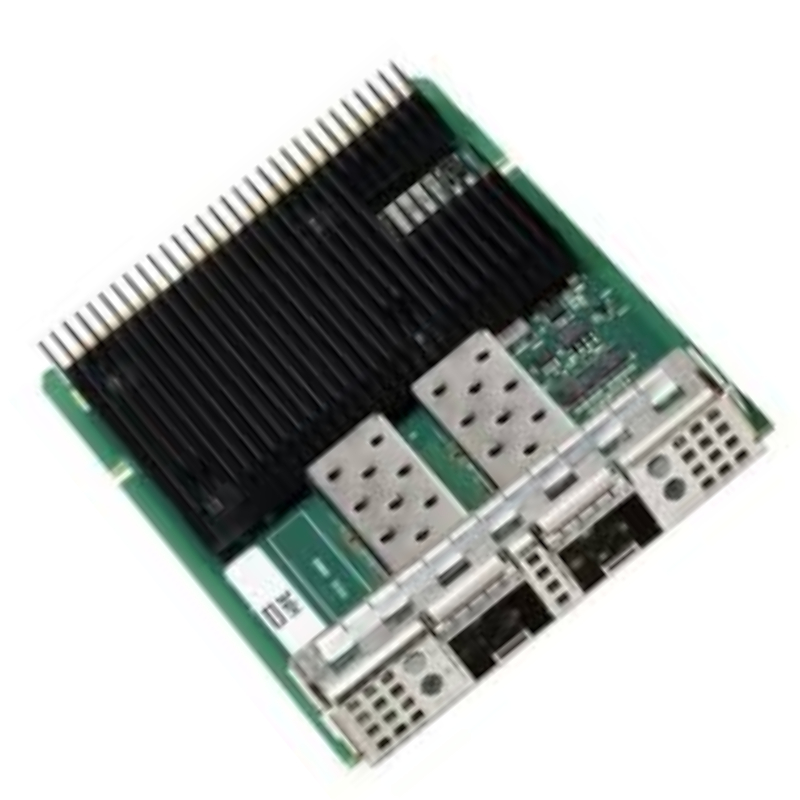


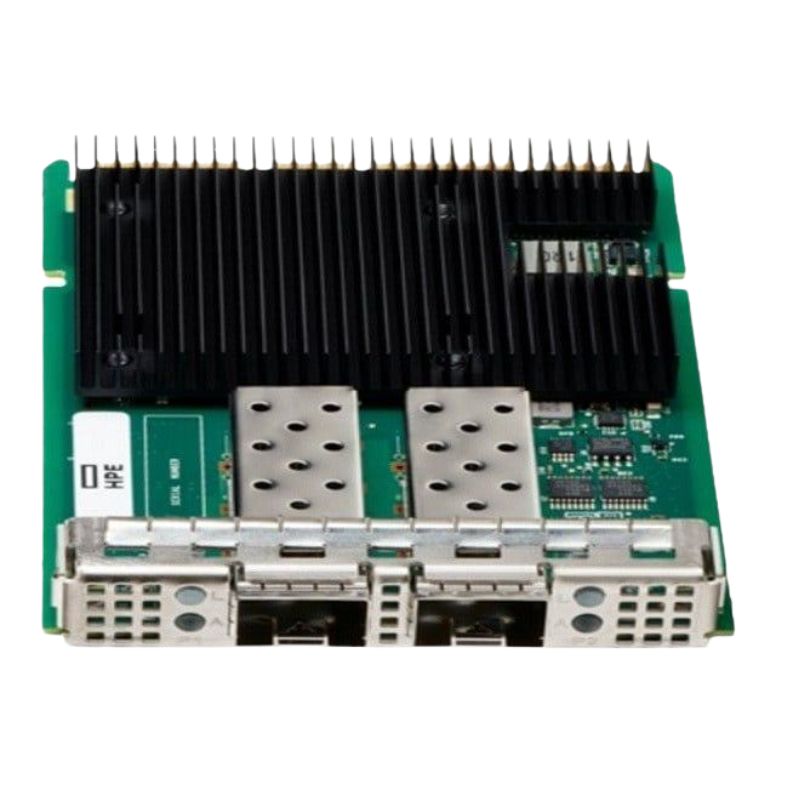
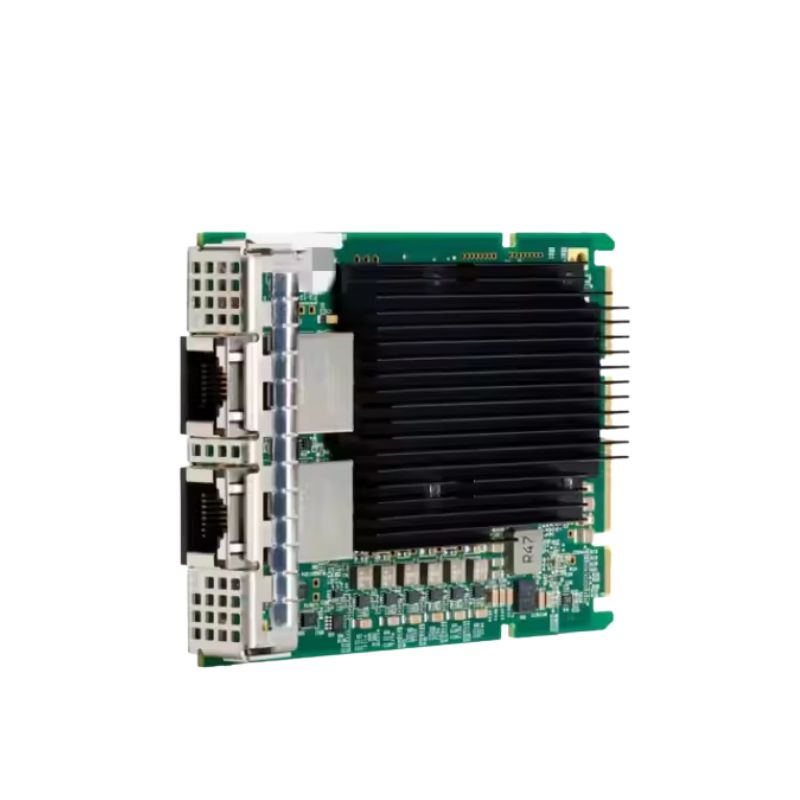
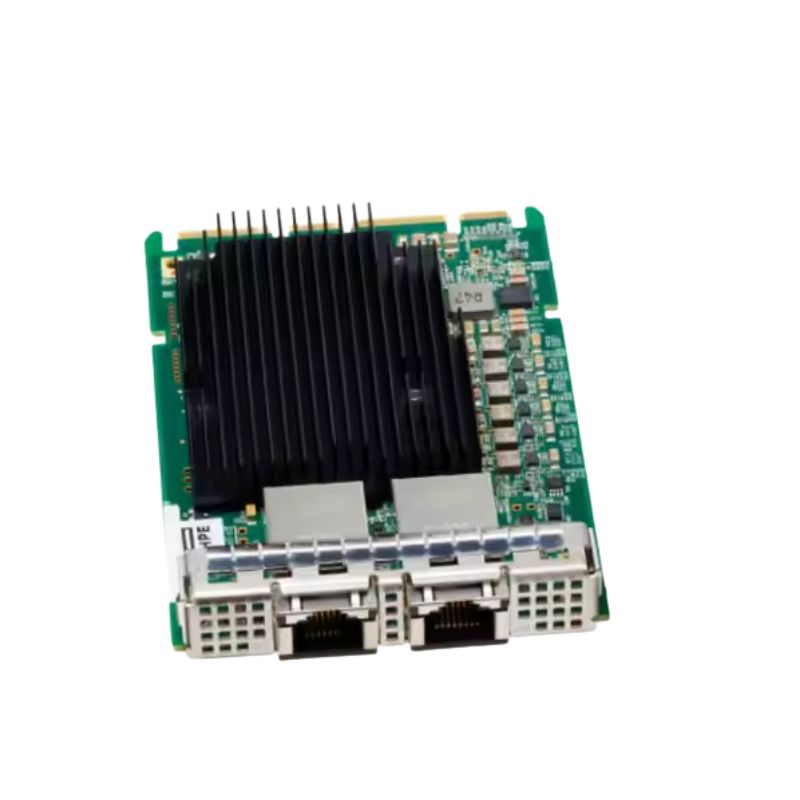
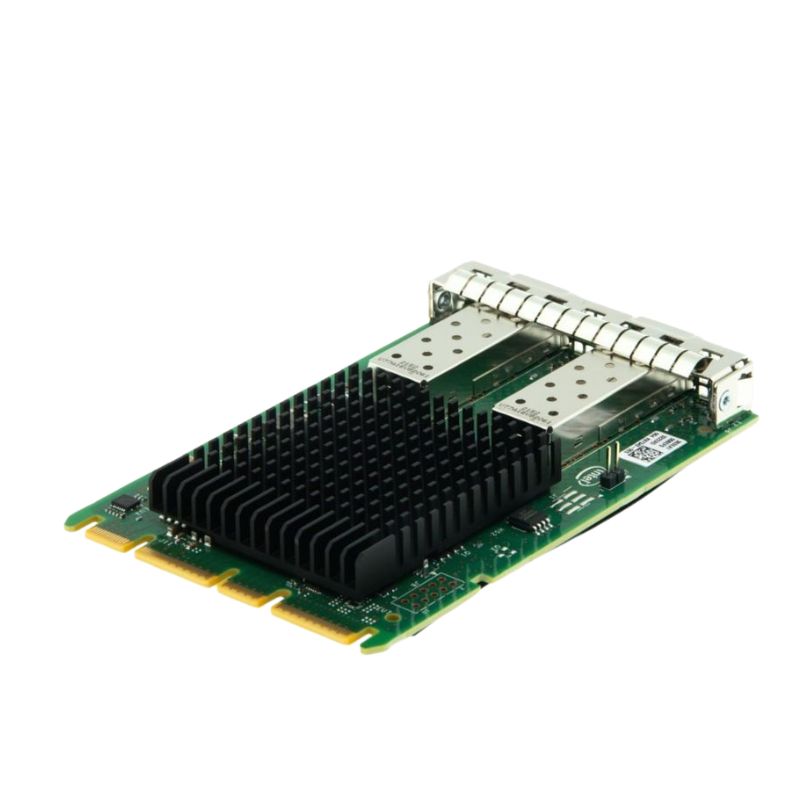
HPE P10116-001 Ql41232hqcu Ethernet 10/25GB 2-Port SFP28 Ocp3 Adapter. Excellent Refurbished with 1 year replacement warranty
The HPE P10116-001 QL41232HQCU is a dual-port 10/25Gb SFP28 OCP3 network interface card designed for enterprise-grade connectivity, offering superior bandwidth scalability, advanced offload features, and seamless integration with HPE ProLiant servers.
The HPE P10116-001 QL41232HQCU Ethernet 10/25GB 2-Port SFP28 OCP3 Adapter is designed to meet the growing networking demands of modern enterprise servers, virtualized infrastructures, cloud computing platforms, and high-performance data centers. As organizations continue to adopt bandwidth-intensive applications, software-defined networking, virtualization, and storage over Ethernet technologies, high-speed network adapters have become an essential component for maintaining exceptional connectivity and operational efficiency. This dual-port OCP 3.0 Ethernet adapter delivers scalable network performance while providing compatibility with HPE server environments that require dependable 10GbE and 25GbE networking capabilities.
Built with enterprise-grade engineering, the adapter enables servers to handle increasing workloads without sacrificing stability or network responsiveness. Its dual SFP28 interfaces provide flexibility for various optical transceivers and direct attach copper cables, allowing organizations to deploy networking solutions that match their existing infrastructure while preparing for future bandwidth expansion. Businesses looking for reliable Ethernet connectivity often select this adapter because it offers a balanced combination of speed, efficiency, low latency, and optimized hardware integration.
Modern workloads generate significantly more network traffic than traditional enterprise applications. Virtual machines, distributed storage, database clusters, artificial intelligence workloads, and large-scale backup operations all require higher bandwidth to maintain smooth performance. The HPE P10116-001 QL41232HQCU adapter supports both 10 Gigabit Ethernet and 25 Gigabit Ethernet connectivity, giving IT administrators the flexibility to deploy the network speed that best aligns with their infrastructure.
Supporting both networking standards enables organizations to transition gradually from existing 10GbE environments to faster 25GbE deployments without replacing every network component simultaneously. This scalability protects existing investments while simplifying future network upgrades.
High-performance Ethernet adapters reduce communication bottlenecks between servers, storage arrays, virtualization hosts, and application platforms. By increasing available bandwidth, the adapter allows critical business applications to transfer larger amounts of information more efficiently. Faster throughput helps reduce synchronization delays, improves backup windows, accelerates database replication, and enhances application responsiveness across enterprise environments.
The dual-port SFP28 design provides multiple deployment options for enterprise networking. Each port can operate independently, allowing servers to communicate with separate network switches, storage networks, or isolated virtual environments. This flexibility simplifies infrastructure planning while supporting redundancy, failover, and increased bandwidth aggregation.
SFP28 interfaces support a wide range of optical networking technologies. Organizations can deploy short-distance multimode fiber, long-distance single-mode fiber, or direct attach copper connections depending on data center architecture. This compatibility enables IT teams to build efficient network environments without unnecessary hardware limitations.
Optical networking continues to dominate enterprise data centers because of its ability to deliver high bandwidth with minimal signal degradation. The adapter integrates seamlessly into fiber-based infrastructures, supporting reliable communication between servers and core networking equipment while maintaining excellent signal integrity.
The OCP 3.0 specification was developed specifically for modern enterprise servers to improve hardware integration, airflow, serviceability, and platform efficiency. The HPE P10116-001 adapter fits compatible OCP 3.0 server slots, allowing organizations to preserve valuable PCI Express expansion slots for additional storage controllers, GPU accelerators, or specialized expansion devices.
Server cooling remains a major consideration in densely populated data centers. OCP adapters are engineered to integrate efficiently within server chassis, supporting optimized airflow patterns that contribute to lower operating temperatures. Better thermal management improves long-term hardware reliability while reducing cooling challenges in enterprise deployments.
Efficient hardware layouts become increasingly important as server density continues to grow. The OCP 3.0 architecture enables cleaner cable routing, simplified maintenance, and streamlined component placement while maximizing available internal expansion resources.
Virtualization platforms require network adapters capable of handling continuous communication among virtual machines, storage systems, backup servers, and management interfaces. The HPE P10116-001 adapter supports demanding virtualization environments by providing consistent network performance across multiple simultaneous workloads.
Enterprise hypervisors depend on high-speed networking to migrate virtual machines, synchronize storage resources, and maintain cluster communications. High-bandwidth Ethernet connectivity minimizes migration times while improving overall virtualization efficiency.
Virtualized infrastructures often separate production traffic, management traffic, storage communication, and backup operations. Dual-port Ethernet adapters allow administrators to assign different workloads to dedicated interfaces, improving security, network organization, and traffic management.
Private cloud and hybrid cloud environments depend on consistent server connectivity. High-speed Ethernet adapters enable cloud orchestration platforms to provision resources efficiently while maintaining reliable communication between compute nodes, storage clusters, and management systems.
Organizations implementing cloud-native applications benefit from higher bandwidth because containerized workloads frequently exchange information across distributed environments. Reliable networking reduces latency while supporting consistent application performance.
Cloud computing environments continuously allocate and reallocate computing resources. Enterprise-grade Ethernet adapters support these dynamic workloads by delivering predictable bandwidth during periods of changing resource utilization.
Storage traffic represents one of the most bandwidth-intensive operations inside enterprise data centers. Whether supporting centralized storage, distributed file systems, or software-defined storage platforms, the adapter provides the network performance necessary for rapid data movement.
Organizations perform scheduled backups, disaster recovery replication, and archive synchronization on a regular basis. Higher network speeds reduce backup completion times while minimizing operational disruptions during maintenance windows.
Large engineering files, multimedia content, machine learning datasets, healthcare imaging, financial records, and scientific research projects all require reliable high-speed networking. The adapter enables efficient access to these resources across enterprise storage environments.
Latency affects application responsiveness, especially in database environments, virtualization clusters, online transaction processing systems, and distributed enterprise software. Enterprise Ethernet adapters are engineered to minimize transmission delays while maintaining consistent communication between servers and network infrastructure.
Advanced packet handling capabilities help reduce processor overhead by efficiently managing network traffic. Hardware optimization allows CPUs to dedicate more resources to application processing rather than communication management.
Enterprise servers often operate twenty-four hours a day throughout the year. Networking hardware must maintain dependable performance under continuous workloads. The HPE P10116-001 adapter is engineered for long-term reliability, making it suitable for production environments where uninterrupted connectivity is essential.
Consistent communication between servers prevents interruptions that could affect business operations, customer services, or mission-critical applications. Reliable Ethernet connectivity contributes to higher infrastructure availability and improved operational continuity.
Redundant networking improves server availability by providing alternate communication paths if one network connection becomes unavailable. Organizations implementing high-availability architectures frequently configure separate switches for each Ethernet interface to eliminate single points of failure.
Administrators may distribute application traffic across both network ports to improve bandwidth utilization while balancing workloads more effectively. This approach increases network efficiency while supporting higher aggregate throughput.
The adapter is intended for compatible HPE server platforms utilizing the OCP 3.0 expansion architecture. Native platform integration simplifies deployment while maintaining enterprise hardware standards expected in professional data centers.
Organizations upgrading aging network adapters benefit from increased bandwidth, improved efficiency, and compatibility with modern switching infrastructure. The adapter supports migration toward faster Ethernet technologies while minimizing deployment complexity.
Software-defined networking continues to transform enterprise infrastructure by separating network control from physical hardware. High-performance Ethernet adapters provide the reliable communication layer necessary for SDN implementations that demand flexible traffic management and scalable resource allocation.
Automated infrastructure provisioning relies on consistent hardware performance across server fleets. Enterprise Ethernet adapters support centralized management strategies that simplify large-scale deployments while maintaining predictable networking behavior.
Data centers continue increasing compute density to maximize available floor space. High-performance networking enables dense server installations without creating communication bottlenecks. The adapter contributes to balanced infrastructure utilization by delivering high-speed connectivity suitable for modern workloads.
As organizations deploy additional servers, networking requirements grow proportionally. Enterprise Ethernet adapters support scalable infrastructure expansion by providing standardized high-speed connectivity across multiple server generations.
Modern network adapters incorporate hardware acceleration technologies that improve communication efficiency while reducing CPU utilization. Lower processor overhead allows applications to access additional computing resources, improving overall server performance.
Efficient networking enables balanced workload allocation across servers within clusters. Improved communication contributes to smoother resource utilization while supporting consistent application availability during peak operational periods.
Organizations frequently separate production, management, storage, and administrative traffic to improve security and simplify network administration. Dual-port configurations provide flexibility for implementing secure network segmentation strategies within enterprise environments.
Secure enterprise operations depend upon predictable network connectivity. Stable Ethernet communication supports authentication services, centralized monitoring platforms, management consoles, backup systems, and business-critical applications.


 Contact Us
 Information
 Catalog
 Solid State Drives (SSD)
 Network Switches
 Hard Disk Drives
 HBA & Controllers
 PC & Servers
 PC & Server Memory
 CPU & Processors
 Network Routers
 Power Supplies
 Tape Drives & Libraries
 Network Devices
 Computer & Network Cables