(7% discount is applied at checkout)
Cart is empty
Your go-to destination for cutting-edge server products


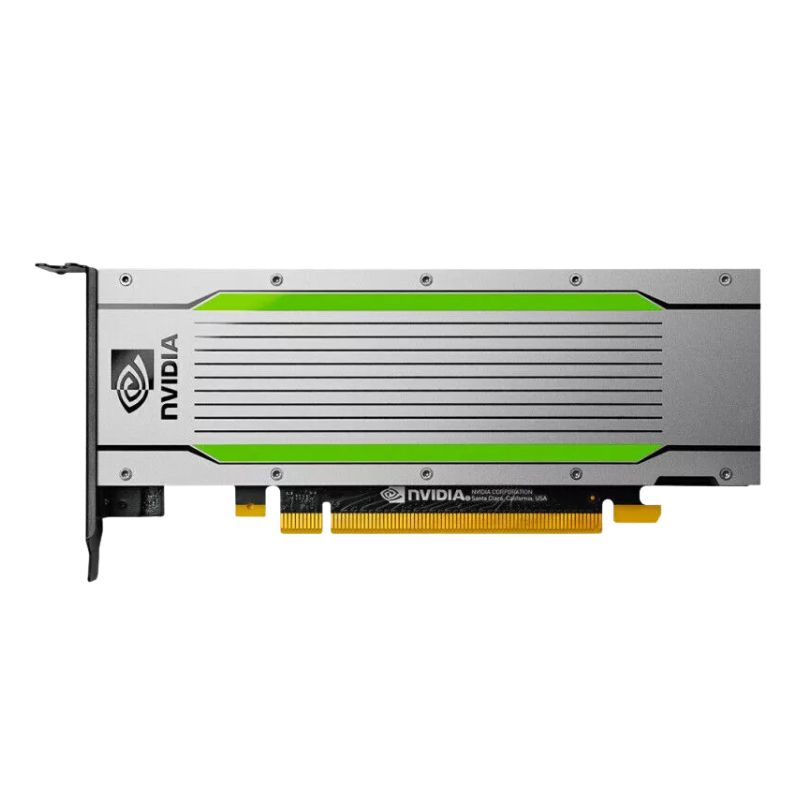
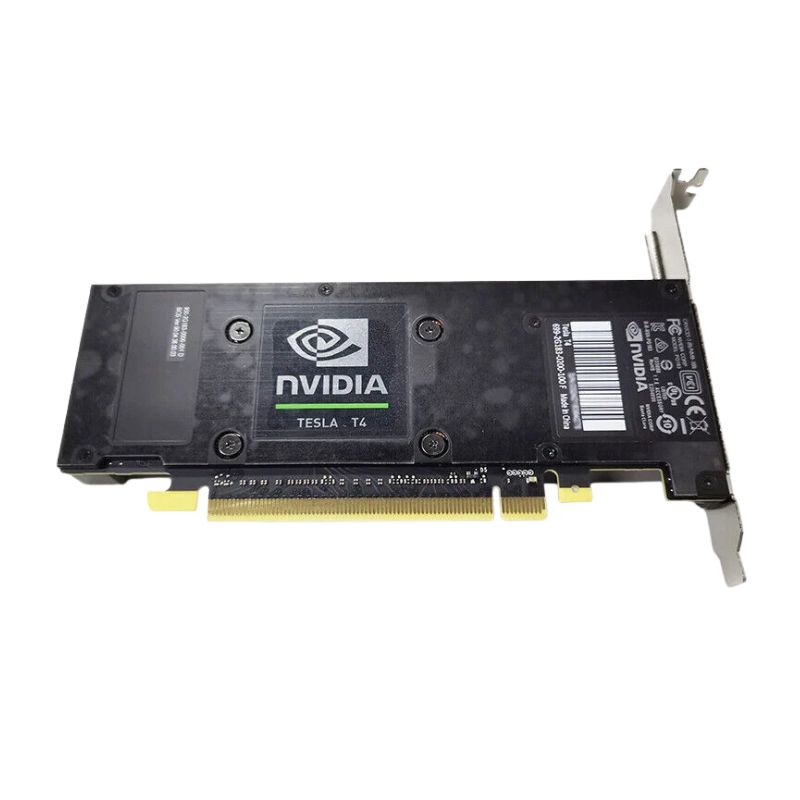
HPE R0Q29C Nvidia 16GB T4 Proliant Dl380 Gen10, And Dl385 Gen10 Computational Accelerator. Excellent Refurbished with 1-Year Replacement Warranty
HPE R0Q29C Nvidia 16GB T4 Accelerator
The HPE R0Q29C Nvidia 16GB T4 Accelerator is engineered to elevate server-side computation, particularly in dense enterprise environments using HPE ProLiant DL360 Gen10, DL380 Gen10, and DL385 Gen10 platforms. Its architecture is optimized for modern machine learning workflows, advanced inferencing, large-scale analytics, and professional visualization workloads where dependable throughput and parallel processing capabilities are crucial. Powered by Nvidia’s proven Turing technology, this accelerator enhances real-time analytics, supports extensive video transcoding, and efficiently manages inference calculations. Its versatile GPU structure enables organizations to build intelligent applications that operate smoothly even in high-density, scalable server clusters.
At the heart of the HPE R0Q29C accelerator lies the Nvidia T4 GPU, built on the revolutionary Nvidia Turing architecture. Unlike pure-play gaming or scientific computing GPUs, the T4 is designed with a unique blend of capabilities that make it exceptionally suited for data center environments.
This R0Q29C accelerator card is widely adopted in industries requiring robust computational assistance, from data science to cloud graphics aggregation. Its ability to handle various GPU-intensive processes positions it as an adaptable solution for engineers, research facilities, streaming platforms, and virtualized server infrastructures.
Turing Tensor Cores and Mixed-Precision Computing
The Nvidia T4 is equipped with 320 Turing Tensor Cores, which are specialized execution units designed to dramatically accelerate matrix operations—the fundamental math behind AI and deep learning. These cores support a wide range of precision formats, including INT4, INT8, FP16, and FP32. This "mixed-precision" capability allows the T4 to dynamically optimize performance and throughput based on the accuracy requirements of the workload. For instance, during AI inference, models can often be processed in INT8 precision with minimal accuracy loss, enabling the T4 to deliver up to 260 TOPS (Trillions of Operations Per Second), a metric crucial for real-time inference scenarios.
Beyond AI, the Nvidia T4 incorporates RT Cores, which accelerate ray tracing operations. While not targeted at cinematic rendering, these cores provide a significant boost to graphics fidelity in professional visualization and virtual desktop (vDI) use cases. This makes the HPE R0Q29C an ideal solution for hosting GPU-accelerated virtual workstations, where users require smooth interaction with CAD, 3D modeling, or simulation software from a thin client.
The card features 16 GB of GDDR6 memory, providing a substantial frame buffer for large models, datasets, and multiple virtual desktop sessions. With a memory bandwidth of 320 GB/s, it ensures data can flow quickly to the GPU cores, reducing bottlenecks and keeping the accelerator fed with information, which is critical for maintaining high utilization and low latency in server applications.
The HPE R0Q29C is not a generic PCIe card; it is an HPE-engineered solution validated and optimized for the ProLiant ecosystem. This ensures seamless compatibility, simplified management, and reliable operation within the server environment.
HPE Nvidia specifically validates this card for the ProLiant DL380 Gen10 (Intel Xeon Scalable) and DL385 Gen10 (AMD EPYC) servers. These are among the most popular and versatile 2U rack servers in the industry. The integration ensures the card is recognized by HPE iLO (Integrated Lights-Out) management, and its health (temperature, status) can be monitored alongside other server components within the HPE One View or iLO interface. This unified management is a key benefit of choosing the HPE-branded R0Q29C over a generic T4 card.
In a DL380 Gen10, administrators can deploy multiple T4 accelerators depending on the server's PCIe lane configuration and riser options. A typical configuration might include 2-3 T4 cards alongside other network or storage adapters, creating a highly dense inference or virtual desktop host. The DL385 Gen10, with the high core counts and PCIe lanes of AMD EPYC processors, offers similar or greater expansion capabilities.
The 16GB of memory is a key factor for vDI density. It allows an administrator to allocate an appropriate amount of vGPU memory (e.g., 1GB, 2GB, 4GB) to each user while still supporting a high number of concurrent sessions on a single server. This balance of performance and user density provides a superior total cost of ownership (TCO) for VDI deployments compared to using higher-wattage professional graphics cards.
The T4 fully supports Nvidia's CUDA parallel computing platform and libraries such as cuBLAS (for linear algebra), cuDNN (for deep neural networks), and NVIDIA RAPIDS. This means existing HPC and data science code can often be ported to leverage the T4 with minimal changes. Workloads involving molecular dynamics simulations, financial modeling, seismic processing, and large-scale data frame manipulations in Apache Spark (via RAPIDS) can see significant speed-ups.
For virtualized environments, R0Q29C Nvidia GPU software enables the partitioning, performance monitoring, and lifecycle management of the GPU resources across virtual machines. It integrates with leading hypervisors like VMware vSphere, Citrix Hypervisor, and Red Hat Virtualization, providing a seamless experience for VDI and AI cloud deployments.
The accelerator is fully discoverable and monitorable through HPE ILO. Administrators can view the card's health, temperature, and firmware version from the same remote management console used for the server's CPU, memory, and storage. In larger environments, HPE One View can manage fleets of servers equipped with T4 accelerators, applying consistent profiles and monitoring for alerts.
The R0Q29C is covered under HPE's global support and services umbrella. This includes firmware updates delivered through HPE's SPP (Service Pack for ProLiant), proactive monitoring options, and a single point of contact for troubleshooting both the server and accelerator hardware. This reduces complexity and risk compared to sourcing and integrating components separately.
The T4 is not designed to compete with flagship data center GPUs on raw performance for training massive AI models or FP64 HPC. Instead, it excels in efficiency, cost-effectiveness, and versatility for mainstream inference, VDI, and medium-scale analytics. An organization would choose the R0Q29C for broad deployment across many servers where power, cost, and form factor are primary constraints, reserving higher-end accelerators for centralized, heavy-duty training clusters.
Compatibility
Ensuring proper compatibility enhances system stability, simplifies GPU provisioning, and enables administrators to leverage HPE’s toolset for monitoring, optimization, and cluster-level orchestration. As a result, IT teams can deploy scalable inference models, run complex virtual workloads, and streamline GPU-accelerated cloud functions with confidence.


 Contact Us
 Information
 Catalog
 Solid State Drives (SSD)
 Network Switches
 Hard Disk Drives
 HBA & Controllers
 PC & Servers
 PC & Server Memory
 CPU & Processors
 Network Routers
 Power Supplies
 Tape Drives & Libraries
 Network Devices
 Computer & Network Cables