(7% discount is applied at checkout)
Cart is empty
Your go-to destination for cutting-edge server products
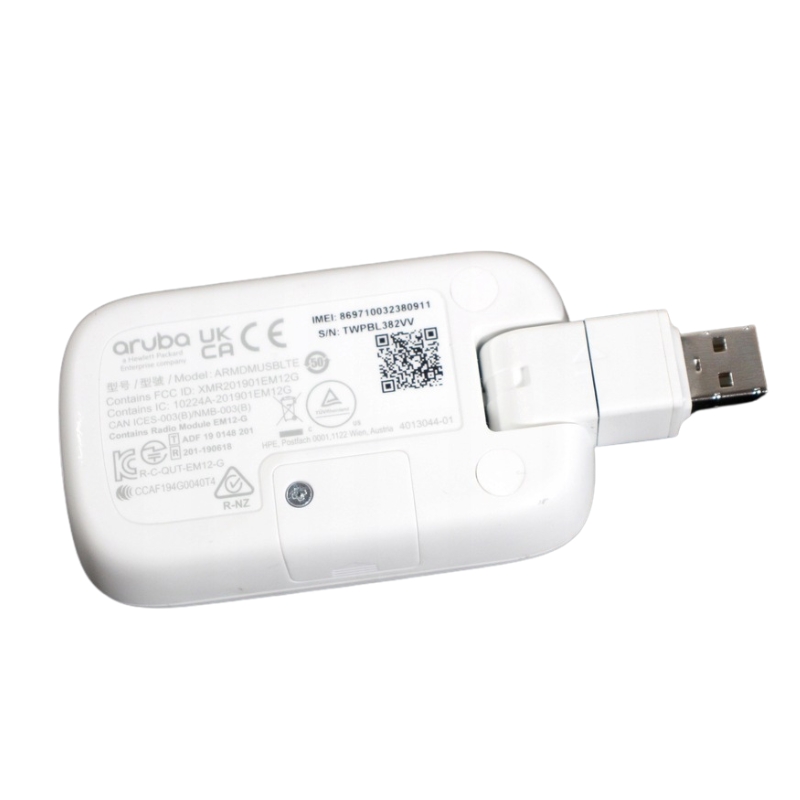


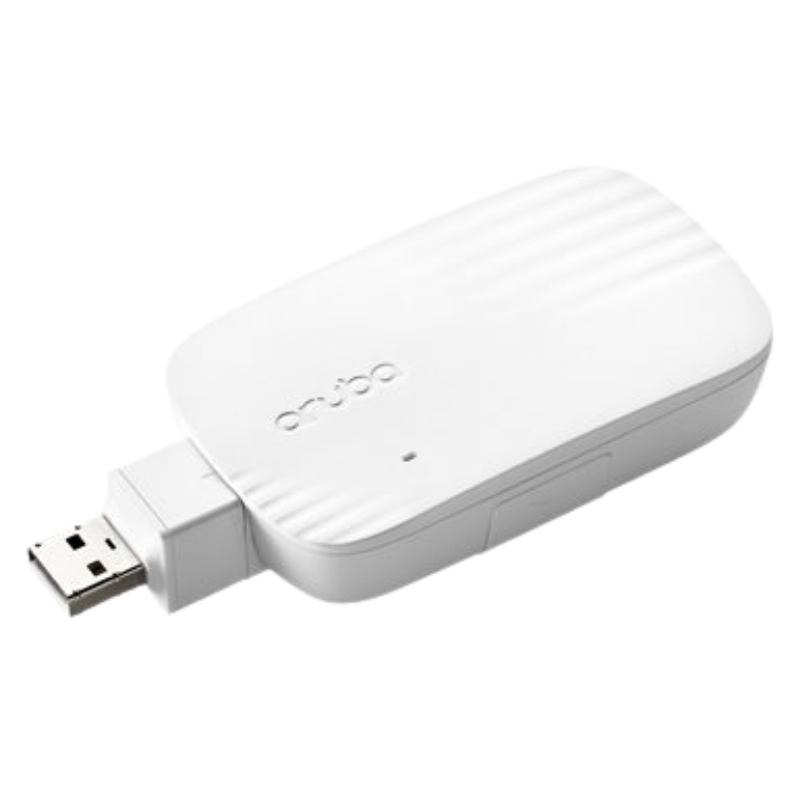
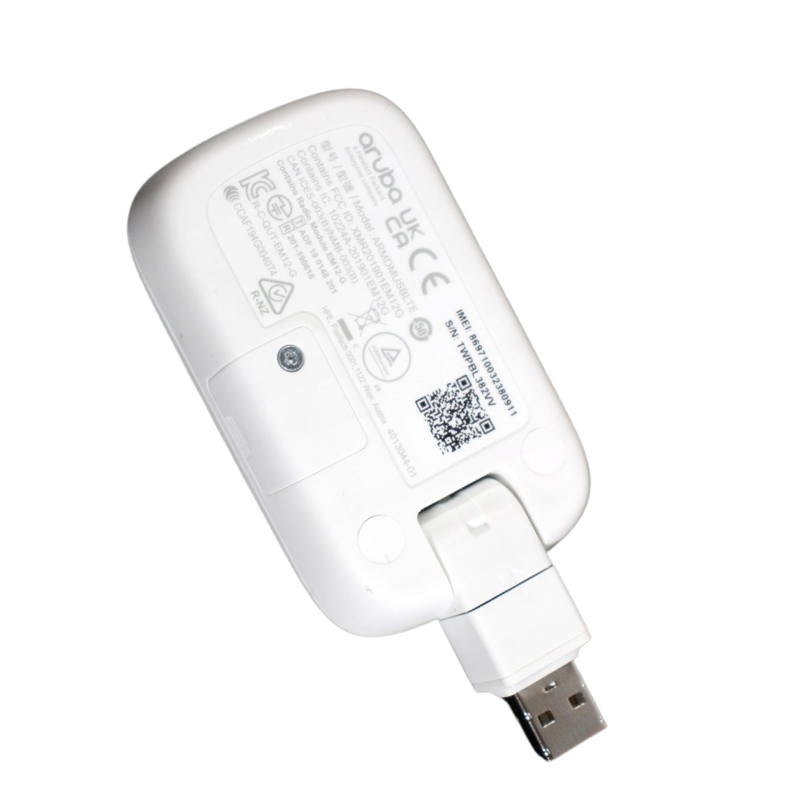
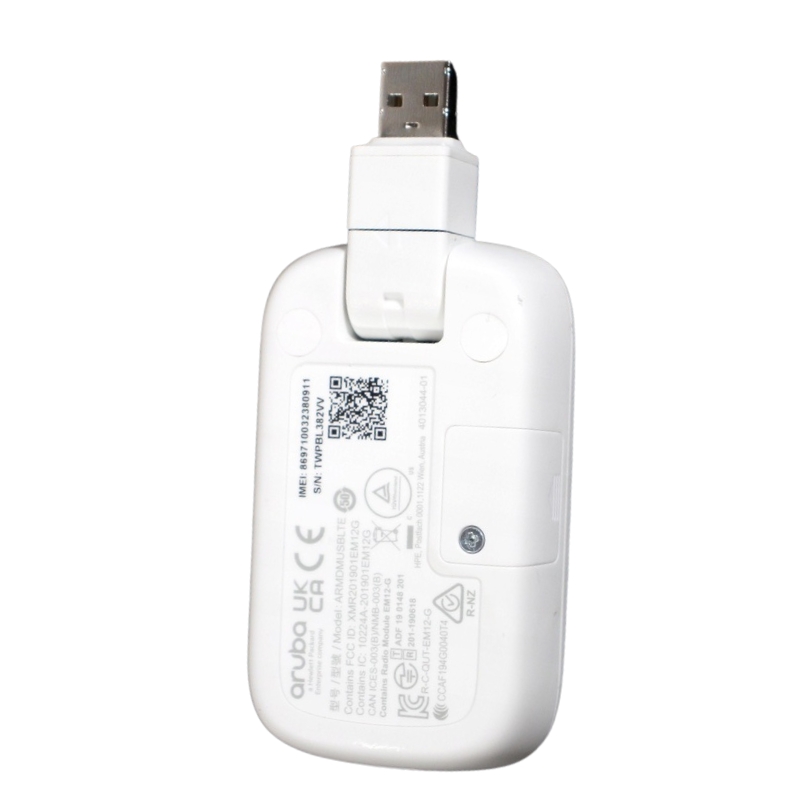
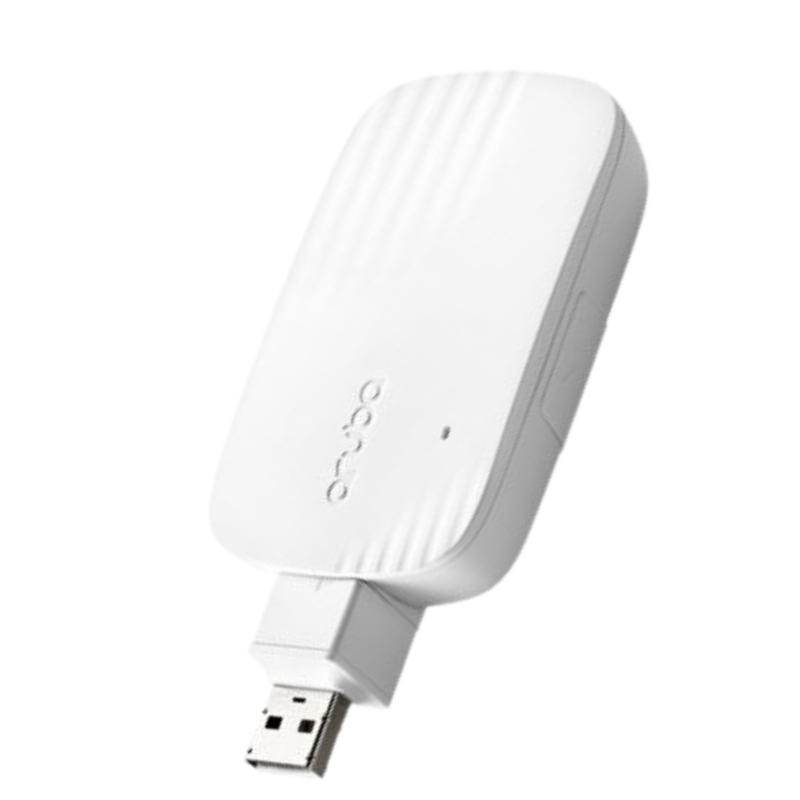
HPE R8F34A Aruba Networking Usb LTE Modem For Gateways And Access Points. New Sealed with 1 year replacement warranty
The HPE R8F34A Aruba Networking USB LTE Modem is an efficient solution designed for gateways and access points that require reliable mobile connectivity. It ensures uninterrupted wireless performance by leveraging advanced LTE cellular technology, enabling smooth data transfer, consistent coverage, and flexible deployment in diverse environments. Compact in size, lightweight, and easy to integrate, this modem is built for modern networking needs.
The HPE Aruba USB LTE modem is tailored to extend network flexibility by providing a dependable mobile broadband option when wired connections are unavailable. With LTE support, this device enhances mobility for remote workers, branch offices, and temporary setups, ensuring secure and consistent internet access. Its GPS capability adds tracking functionality, making it suitable for dynamic networking environments that demand precise location services.
By utilizing LTE cellular technology, the modem ensures high-speed internet access, making it dependable for applications that demand continuous connectivity. Its lightweight structure and portable design offer adaptability for organizations of all sizes. The combination of GPS and LTE functionality delivers both network reliability and real-time tracking.
Measuring just 2 inches in height and weighing about 8 oz, this modem is engineered for efficiency. Its minimal footprint makes it an unobtrusive yet powerful addition to network infrastructures, ensuring ease of integration without compromising performance.
The R8F34A connects via USB to supported Aruba gateways and APs with no complex cabling, delivering an easy-to-deploy cellular option for locations where wired broadband may be unavailable, unreliable, or too costly to provision. This USB interface simplifies installs and reduces deployment time while keeping a small physical footprint for constrained spaces.
Engineered to support LTE Cat-12 speeds, the modem is capable of robust uplink and downlink throughput to support business-grade applications, point-of-sale transactions, guest connectivity, VPN tunnels and cloud services. Many reseller product pages list practical throughput figures (up to ~480 Mbps under ideal conditions), emphasizing its suitability for data-hungry branch use-cases where fast cellular performance is critical.
The R8F34A is validated for use with a range of Aruba access points and HPE Aruba gateways, including on-premises controller architectures, controllerless AP-only deployments, and Aruba cloud-managed platforms — ensuring investment protection even when network architecture evolves over time. This compatibility enables IT teams to deploy a single modem SKU across multiple Aruba families without SKU proliferation.
The modem is validated to operate across major carriers in multiple regions; however, customers should confirm carrier certification and SIM provisioning for target countries. For global or multi-carrier usage, procuring a modem with the correct regional firmware and selecting appropriate carrier plans ensures optimal coverage and throughput.
Certain product variants and firmware support GPS functionality to enable location services, asset tracking, and better situational awareness for mobile or temporary sites. GPS also assists network managers with remote site diagnostics and regulatory location reporting where required.
• Host interface: USB (plug-in) — designed for host devices that accept USB modems.
• Form factor: external USB modem with a swivel/compact footprint suitable for mounting near gateways or APs.
• Typical dimensions: approximately 2" (H) x 5" (W) x 5" (D) — compact for rack, shelf, or wall-mount installs.
• Cellular Category: LTE Cat-12 (supporting carrier aggregation for multi-band performance).
• Maximum theoretical throughput reported by vendors: up to ~480 Mbps under ideal network conditions (actual throughput varies by carrier, signal conditions, and network congestion).
• Supported bands: vendor datasheets list multi-band LTE support — confirm exact supported band set for your region before purchase.
The USB LTE modem is explicitly validated for use with a list of Aruba access points (300, 500, 600 series and hospitality/remote variants) and Aruba SD-Branch and SD-WAN gateway appliances, enabling broad reuse across campus, branch, and remote deployments. Always verify firmware compatibility notes and platform support lists in the official Aruba documentation prior to deployment.
Use the R8F34A as an automatic secondary WAN link for branch offices where fiber or cable may experience intermittent outages. When primary wired broadband fails, the gateway can seamlessly route traffic across the LTE connection to maintain VPN sessions, point-of-sale systems, voice calls, and cloud access — minimizing revenue impact and customer disruption.
Events, trade shows, field sales, and temporary retail locations benefit from quick cellular-based connectivity. The USB LTE modem removes the lead time required for wired circuit installation and provides immediate secure connectivity for transactional and guest Wi-Fi services.
For small branches without reliable wired internet, a cellular-first approach with the R8F34A can provide cost-effective internet access. Combined with Aruba’s SD-Branch features, remote sites can be centrally orchestrated, monitored, and secured while leveraging LTE uplinks for everyday operations.
In vehicles, kiosks, or mobile medical units, the compact USB modem allows secure, PCI-compliant transaction processing and data synchronization while on the move, provided the chosen carrier plan includes adequate data allowances and roaming support where necessary.
When used in SD-Branch or SD-WAN architectures, the USB LTE modem should be part of a multi-path WAN strategy: prioritize critical application traffic via wired circuits where possible and configure dynamic routing, QoS, and failover to the LTE link only when needed. This avoids unnecessary data consumption and provides resilient connectivity during WAN outages.
Cellular links should adhere to the same security posture as wired WAN links. Deploy encrypted VPN tunnels from gateways to central data centers or cloud points of presence, enforce firewall and segmentation policies on branch appliances, and use Aruba’s policy enforcement features to prevent lateral threat movement. SIM and modem access controls should follow organizational device management policies.
Integrate cellular modem telemetry into Aruba’s management dashboards to monitor signal levels, overall link utilization, SIM status, and failover events. Continuous monitoring allows proactive adjustments and faster troubleshooting during carrier or hardware issues.
The USB form factor offers flexibility — it can be moved between hosts and swapped easily during maintenance — while embedded modules require hardware integration and are less portable. However, embedded modules may offer lower latency or integrated external antenna connectors depending on the design. Choose the USB modem when flexibility and easy replacement are priorities.
5G modems offer higher theoretical throughput and lower latency for cutting-edge use cases, but 4G LTE Cat-12 devices like the R8F34A provide broad carrier compatibility, mature roaming behavior, and often lower acquisition costs. For most branch resiliency and temporary-site scenarios, LTE remains cost-effective and reliable; however, organizations with ultra-low latency or very high bandwidth requirements should evaluate 5G gateway alternatives.


 Contact Us
 Information
 Catalog
 Solid State Drives (SSD)
 Network Switches
 Hard Disk Drives
 HBA & Controllers
 PC & Servers
 PC & Server Memory
 CPU & Processors
 Network Routers
 Power Supplies
 Tape Drives & Libraries
 Network Devices
 Computer & Network Cables