(7% discount is applied at checkout)
Cart is empty
Your go-to destination for cutting-edge server products
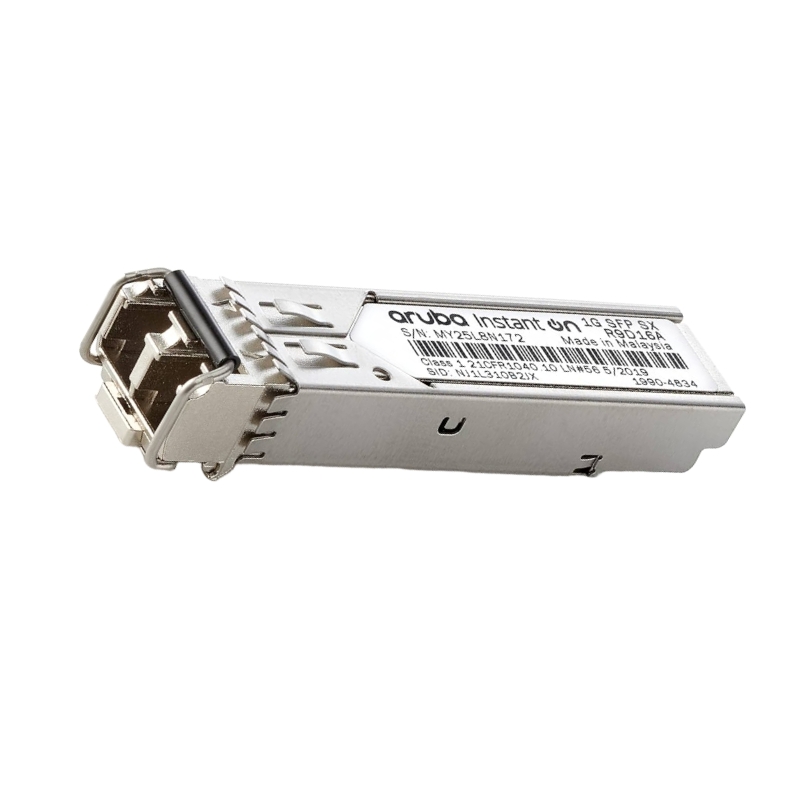


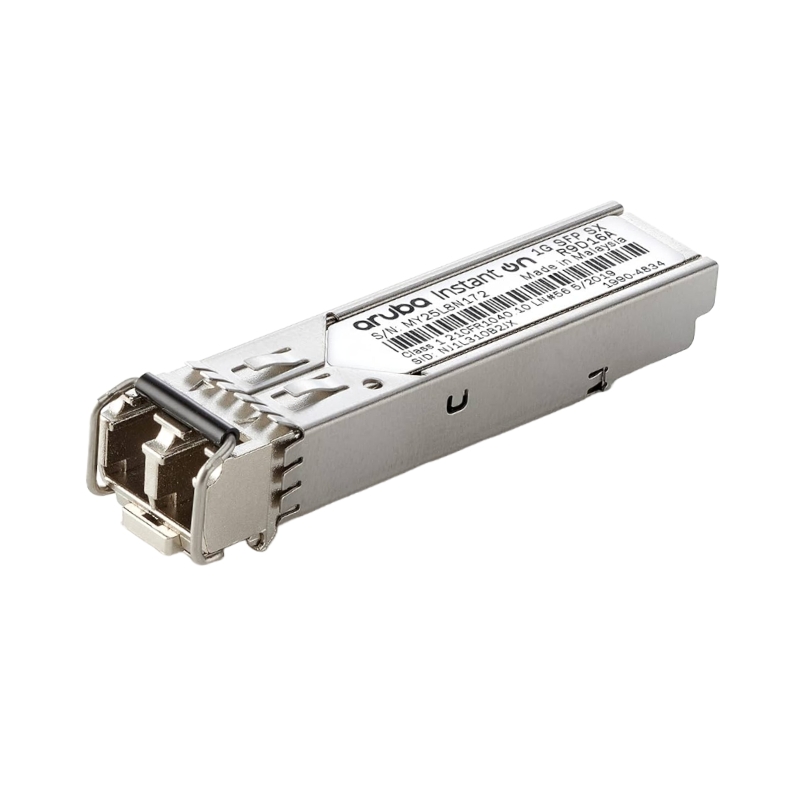
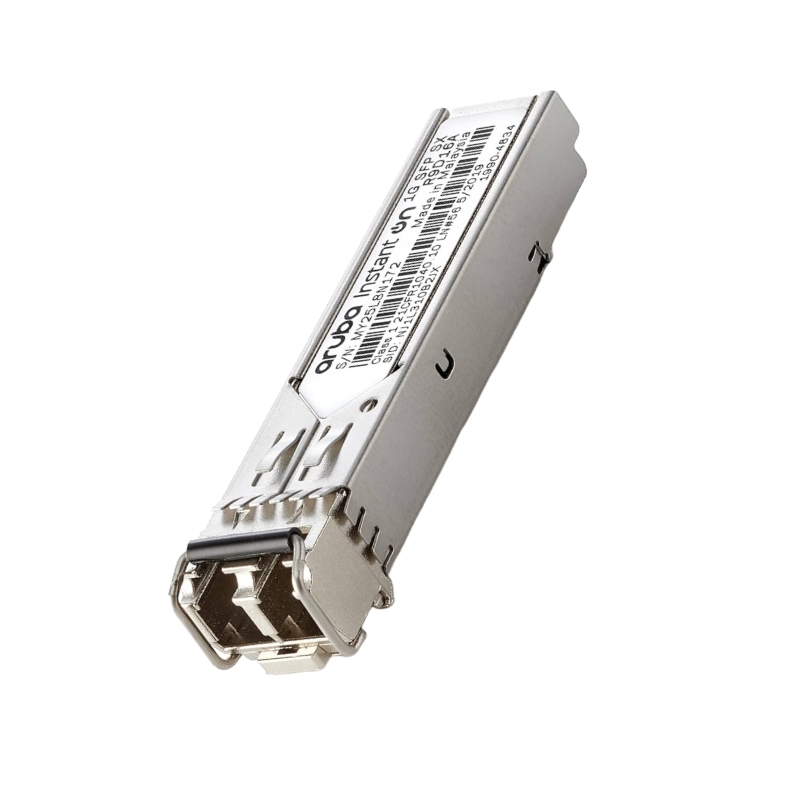
HPE R9D16-61001 1GBPS SFP Mini-Gbic LC Transceiver Module. New Sealed with 1 Year Replacement Warranty
Overview of HPE R9D16-61001 1GBPS SFP Fiber Transceiver
The HPE R9D16-61001 Instant On 1G SFP LC SX Transceiver is engineered to provide dependable fiber-optic connectivity for modern business networks. Designed for seamless integration with compatible switching infrastructure, this Gigabit Small Form-Factor Pluggable (SFP) module delivers stable data transmission, enhanced network efficiency, and reliable communication across multi-mode fiber environments.
The HPE R9D16-61001 Networking Instant On 1G SFP LC SX 500m OM2 MMF Transceiver is designed to deliver reliable Gigabit Ethernet fiber connectivity for modern business networks. As organizations continue to expand their infrastructure requirements, fiber optic networking components play a critical role in ensuring consistent performance, low latency, and dependable data transmission. This Instant On transceiver module enables network administrators to extend connectivity across fiber cabling environments while maintaining compatibility with HPE Instant On switching solutions.
Built for short-range optical networking applications, this 1G SFP transceiver supports multi-mode fiber deployments and utilizes LC optical connectors to provide secure and efficient connections. Its compact Small Form-Factor Pluggable design allows seamless installation in compatible networking equipment, helping organizations maximize switch port flexibility while minimizing infrastructure complexity.
Gigabit Ethernet remains one of the most widely deployed networking standards in commercial, educational, healthcare, and industrial environments. The HPE R9D16-61001 transceiver is engineered to support 1000Base-SX connectivity, making it suitable for applications that require stable and efficient data communication across fiber optic links.
Organizations that rely on high-speed internal communications can leverage this transceiver to connect switches, network cabinets, server rooms, and distributed workspaces. By utilizing optical fiber instead of traditional copper cabling, businesses can achieve improved signal integrity and reduced susceptibility to electromagnetic interference.
The Instant On ecosystem is designed for simplicity, scalability, and business-focused networking performance. This transceiver integrates smoothly into compatible Instant On switches, enabling network administrators to deploy fiber uplinks and backbone connections with confidence.
Whether supporting a growing office network, connecting remote wiring closets, or establishing inter-switch communication, the module provides dependable optical connectivity that aligns with modern networking requirements.
1000Base-SX technology utilizes short-wavelength laser transmission over multi-mode fiber to achieve Gigabit Ethernet communication. The HPE R9D16-61001 transceiver leverages this standard to provide high-performance network links while maintaining cost-effective deployment characteristics.
The SX designation refers to short wavelength transmission, typically operating around 850 nanometers. This wavelength is optimized for multi-mode fiber environments and is commonly used in enterprise LAN deployments where network distances remain within practical campus or building limits.
Short-wavelength optical communication offers several advantages for organizations deploying fiber infrastructure. The technology supports reliable Gigabit Ethernet performance while reducing signal degradation across supported distances. Businesses can establish backbone links between networking devices without experiencing the limitations associated with copper-based cabling.
Optical transmission also helps eliminate concerns related to electromagnetic interference, making it suitable for environments containing industrial equipment, electrical systems, or high-density networking hardware.
Fiber optic communications provide consistent performance characteristics regardless of nearby electrical equipment. This contributes to improved network stability and helps ensure uninterrupted communication between connected devices.
Organizations that require dependable access to applications, servers, and cloud-connected resources benefit from the reliability offered by optical networking solutions.
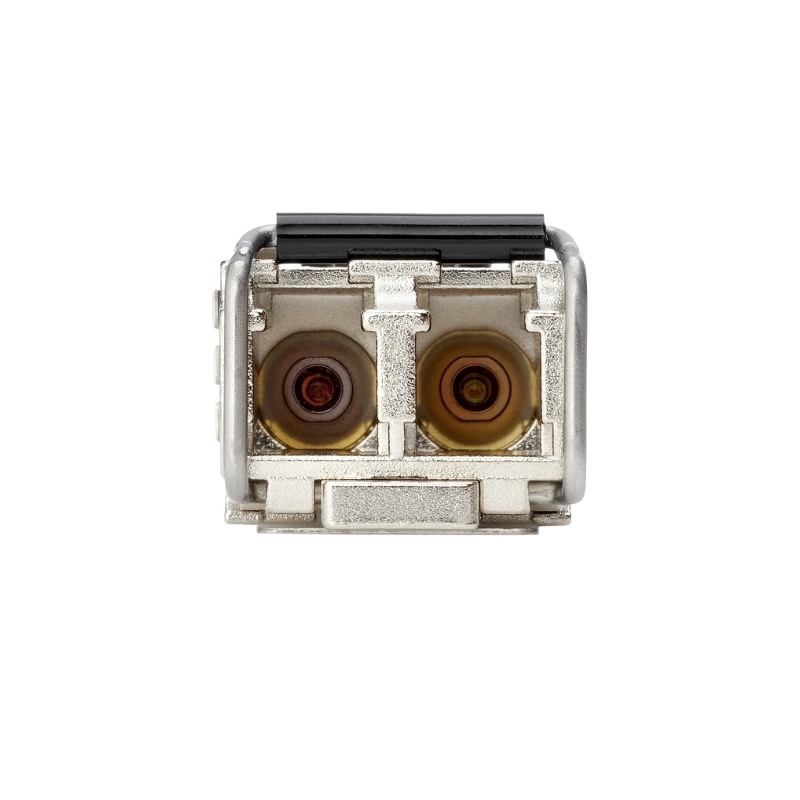
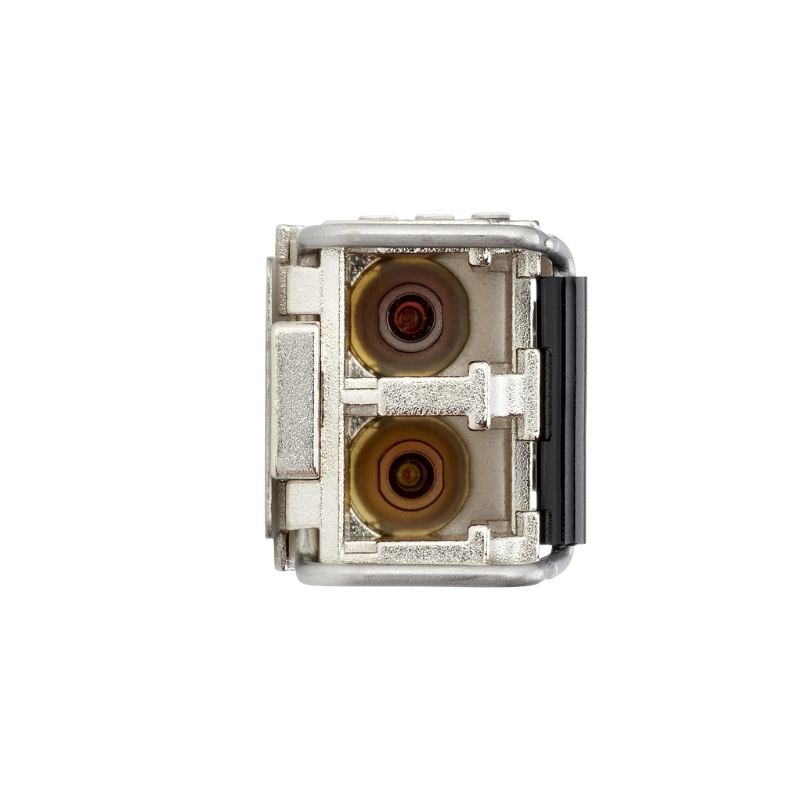
The HPE R9D16-61001 transceiver utilizes LC optical connectors, one of the most widely adopted connector standards in modern networking environments. LC connectors are valued for their compact design, secure latching mechanism, and support for high-density installations.
As network infrastructures continue to evolve toward greater port density, LC connectivity enables organizations to maximize available rack space while maintaining straightforward cable management practices.
LC connectors provide reliable optical alignment that contributes to efficient signal transmission. Their compact form factor supports dense switch configurations and allows network engineers to deploy larger numbers of fiber connections within limited cabinet space.
The connector design also simplifies installation and maintenance activities. Technicians can quickly identify, connect, and manage fiber links while minimizing disruption to operational environments.
High-density networking environments require connector technologies capable of supporting increasing connectivity demands. LC interfaces remain a preferred choice for enterprise networking because they balance performance, reliability, and space efficiency.
The HPE R9D16-61001 transceiver supports communication distances of up to 500 meters when deployed over OM2 multi-mode fiber cabling. This capability makes it suitable for a wide range of enterprise networking applications where extended copper connections may be impractical or insufficient.
Organizations frequently deploy OM2 fiber infrastructure within office buildings, educational campuses, healthcare facilities, warehouses, and manufacturing environments. The transceiver helps maximize the value of existing fiber investments by providing compatible Gigabit Ethernet connectivity.
The 500-meter transmission range allows network administrators to establish links between communication rooms, distribution frames, and network closets throughout a facility. This flexibility supports scalable network architectures while maintaining Gigabit performance.
Businesses can connect multiple floors, adjacent structures, and operational departments without sacrificing bandwidth or introducing excessive latency into network communications.
Many organizations already maintain OM2 fiber cabling as part of their networking environment. The HPE R9D16-61001 provides an efficient method for utilizing these assets while supporting contemporary networking requirements.
By integrating compatible transceivers into existing infrastructure, organizations can extend network capabilities without requiring major cabling overhauls.
The SFP architecture offers a modular approach to network connectivity. Instead of relying on permanently integrated interfaces, network administrators can select transceivers that align with specific deployment requirements. The HPE R9D16-61001 exemplifies this flexibility by enabling Gigabit fiber connectivity through a compact and interchangeable module.
The Small Form-Factor Pluggable design simplifies network planning and allows organizations to adapt infrastructure as operational requirements evolve.
Modular transceivers enable organizations to deploy networking solutions tailored to individual connectivity scenarios. Different switch ports can support different media types, transmission distances, and network segments depending on business requirements.
This adaptability helps organizations optimize infrastructure investments while maintaining operational agility.
Because SFP modules can be replaced independently of switching hardware, organizations benefit from simplified maintenance and upgrade procedures. Network administrators can introduce new connectivity options without replacing entire networking devices.
This modularity contributes to reduced operational disruption and more efficient network lifecycle management.
The HPE R9D16-61001 transceiver serves a broad range of networking applications across various industries. Its Gigabit Ethernet performance, fiber compatibility, and reliable optical transmission make it suitable for numerous deployment scenarios.
Corporate environments frequently require dependable backbone connectivity between network closets, communication rooms, and centralized data resources. The transceiver supports these requirements by enabling stable fiber links capable of handling daily business communications.
Employees benefit from reliable access to applications, collaboration platforms, file systems, and cloud services supported by a resilient networking infrastructure.
Schools, colleges, and universities often maintain extensive campus networking environments. Fiber-based Gigabit connections help support educational applications, digital learning platforms, administrative systems, and research resources.
The HPE R9D16-61001 assists educational organizations in maintaining connectivity across buildings and departments while supporting growing network demands.
Healthcare organizations depend on secure and reliable network communications to support patient care systems, medical imaging platforms, electronic health records, and operational workflows. Fiber connectivity helps ensure dependable communication between critical systems.
The transceiver contributes to a networking environment capable of supporting data-intensive healthcare applications while maintaining network stability.
Industrial facilities often present challenging conditions for traditional copper networking infrastructure. Optical fiber connectivity helps mitigate issues related to electromagnetic interference and environmental complexity.
The HPE R9D16-61001 supports reliable communications between operational systems, monitoring platforms, and network infrastructure throughout industrial environments.
Organizations planning for future growth require networking solutions capable of supporting expansion without unnecessary complexity. The HPE R9D16-61001 provides a scalable connectivity option that can be integrated into evolving network architectures.
As businesses add users, devices, applications, and services, fiber-based backbone connectivity becomes increasingly important. Reliable Gigabit Ethernet links help ensure network infrastructure can accommodate changing operational requirements.
Growing organizations frequently need to connect additional switches, departments, and operational locations. The transceiver facilitates these expansions by providing dependable optical connectivity that integrates seamlessly into existing network designs.
Its compatibility with multi-mode fiber environments enables organizations to scale efficiently while preserving infrastructure investments.
Investment in quality networking components contributes to long-term operational efficiency. By supporting industry-standard fiber technologies and Gigabit Ethernet communication, the HPE R9D16-61001 remains a practical solution for organizations seeking reliable optical connectivity.


 Contact Us
 Information
 Catalog
 Solid State Drives (SSD)
 Network Switches
 Hard Disk Drives
 HBA & Controllers
 PC & Servers
 PC & Server Memory
 CPU & Processors
 Network Routers
 Power Supplies
 Tape Drives & Libraries
 Network Devices
 Computer & Network Cables