(7% discount is applied at checkout)
Cart is empty
Your go-to destination for cutting-edge server products
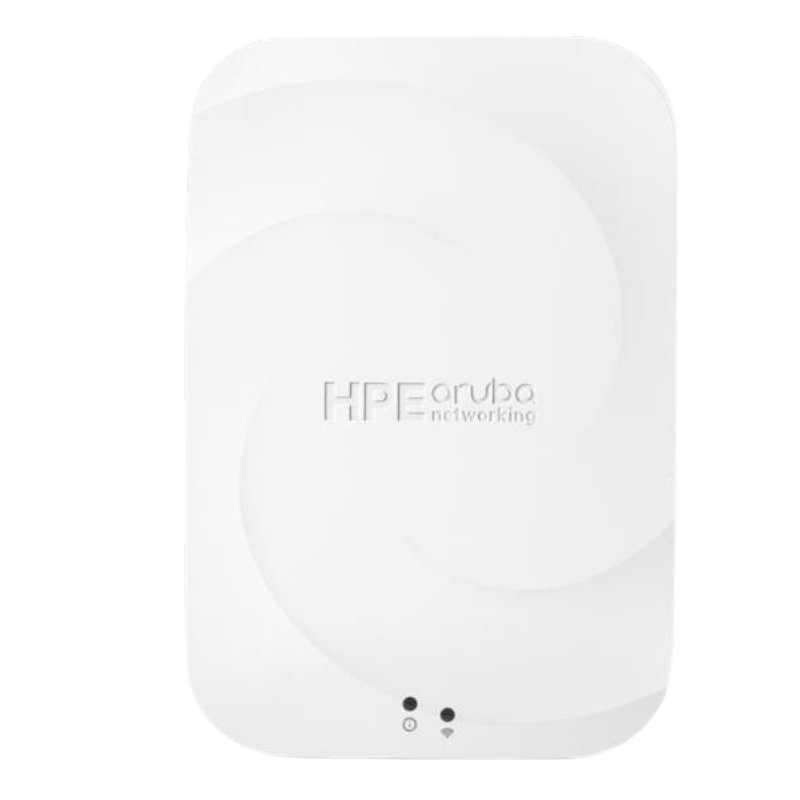


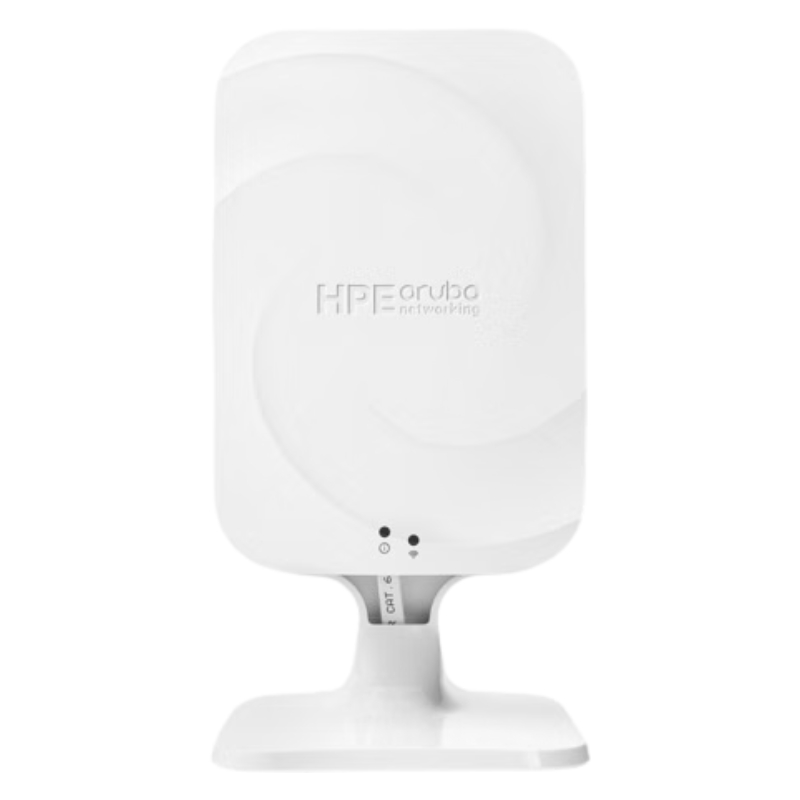
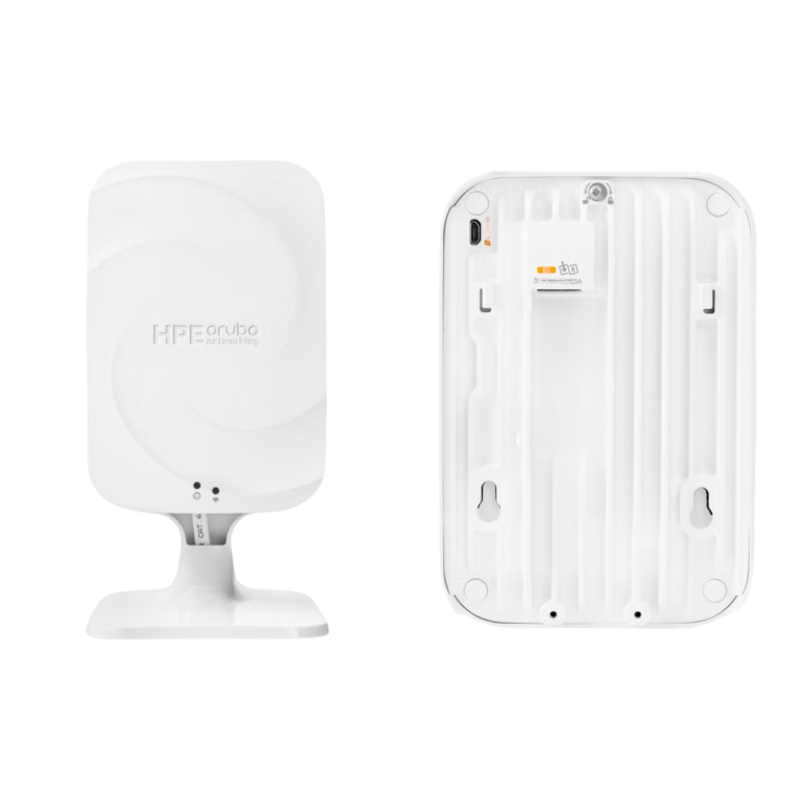
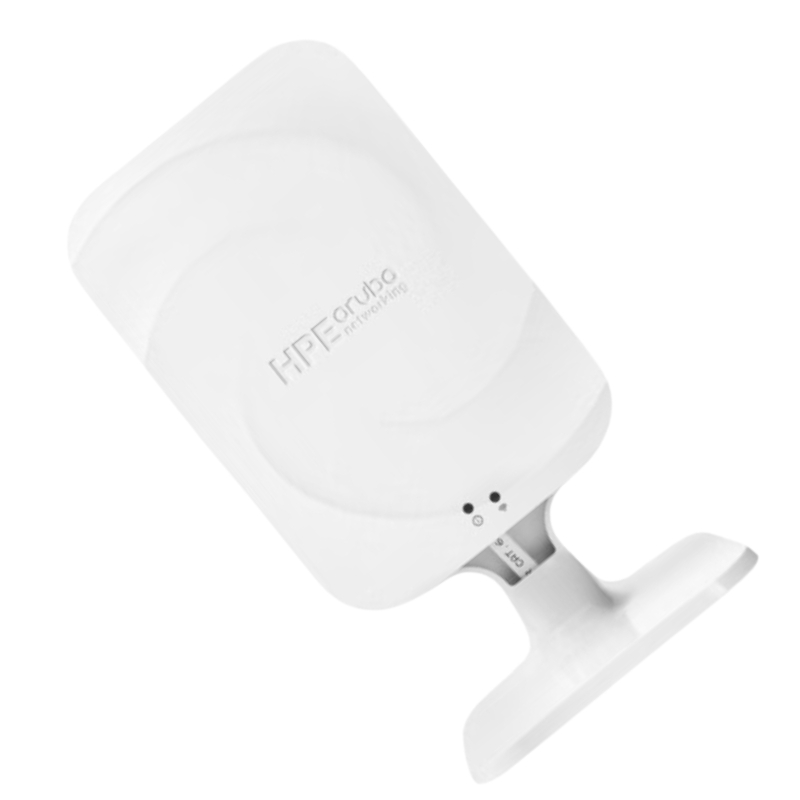
HPE S1F96A Aruba Ap-605H (US) 10PK Dual Radio Tri Band Wi-fi Hospitality AP. Factory-Sealed New in Original Box (FSB) with 3 Years Warranty
The HPE S1F96A Aruba Ap-605h Access Point, packaged in a convenient 10-unit set, represents a significant leap forward in enterprise-grade Wi-Fi technology. Engineered specifically for demanding hospitality settings, this solution delivers unparalleled connectivity to enhance guest experiences and operational efficiency.
Connectivity Specifications
This state-of-the-art access point is built to manage high-density environments with ease, providing robust and reliable wireless coverage.
This access point is uniquely configured to excel in hospitality venues, distributed branch offices, and remote teleworker scenarios. Its design prioritizes ease of management and deployment in varied physical layouts.
Beyond standard Wi-Fi, the unit is future-proofed for the Internet of Things (IoT) evolution. It includes built-in support for Bluetooth 5 and Zigbee wireless protocols, allowing for direct connection and control of a vast ecosystem of smart devices, sensors, and beacons without the need for additional hardware gateways.
The HPE S1F96A Aruba AP-605H (US) 10PK Dual Radio Tri-Band Wi-Fi Hospitality AP category covers bundled packages of Aruba's AP-605H access points designed specifically for demanding hospitality environments. This category emphasizes enterprise-grade wireless performance, optimized RF behavior for hotel rooms and suites, integrated tri-band radios for capacity and client density, and hospitality-specific features such as guest onboarding, captive portals, and advanced QoS. Bundles of ten (10PK) make this category ideal for small to medium hotels, boutique lodging chains, extended-stay properties, and large suites that require consistent in-room connectivity with centralized management and simplified deployment.
Aruba AP-605H is part of Aruba's mid-to-upper tier access point family built on the 802.11ax (Wi-Fi 6) standards and engineered to deliver high throughput, improved multi-client performance, and better spectral efficiency than previous generations. In hospitality deployments where guests expect streaming, video calls, cloud apps, contactless services, and IoT integrations, the AP-605H meets these demands while providing a lower total cost of ownership when deployed and managed correctly. The 10PK bundle in this category reduces per-unit cost, speeds procurement cycles, and simplifies inventory for installers and IT teams.
The AP-605H features dual physical radios with tri-band capability through internal radio design and dynamic band steering. Tri-band allows simultaneous use of 2.4 GHz, 5 GHz low, and 5 GHz high channels (or equivalent US-allowed allocations), spreading client loads across spectrum and increasing effective capacity. The dual-radio, tri-band approach helps isolate high-throughput devices on less congested channels while legacy devices remain on 2.4 GHz. This improves median throughput and reduces latency for streaming and real-time applications.
As an 802.11ax device, the AP-605H supports OFDMA and uplink/downlink MU-MIMO, which increases spectral efficiency in dense client environments such as hotel corridors, meeting rooms, and multi-device guest rooms. Target Wake Time (TWT) improves battery life for guest devices and IoT sensors. Higher modulation and coding schemes (up to 1024-QAM when conditions allow) yield higher per-client peak rates and improve application performance for streaming 4K video or large file transfers.
This category highlights APs optimized for guest onboarding and captive portal flows. Built-in support for customizable captive portals, vouchers, social logins, and RADIUS/third-party integrations ensure compliance with brand standards and local regulations. The AP-605H integrates with Aruba Central and on-premises controllers for cohesive policy enforcement, enabling property teams to present a branded guest experience that automates authentication and elevates perceived service quality.
AP placement and RF tuning are crucial in hospitality: the AP-605H includes features that simplify room-level optimization such as transmit power control, adaptive radio management, and per-SSID RF profiles. These features minimize interference between adjacent rooms and corridors while maximizing coverage inside suites and public areas. The 10PK packaging often matches property rollout plans — one AP per room in standard layouts — enabling consistent coverage and predictable capacity planning.
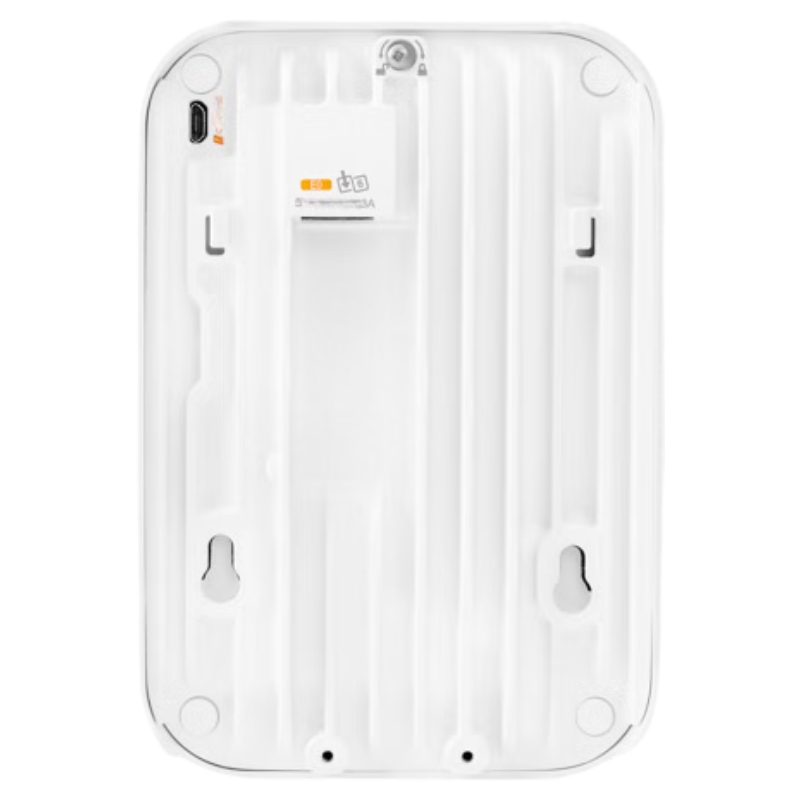
The AP-605H comes in a compact ceiling/flush mount form factor with a standardized mounting bracket that fits drop ceilings, surface mount boxes, and wall brackets. Ceiling mount is common in public areas and corridors; wall or closet mounts are used in guest rooms. The 10PK bundle typically includes mounting options and accessory kits, allowing integrators to standardize installs across multiple rooms. Cat5e/Cat6 infrastructure with PoE simplifies wiring — single cable for power and data.
The AP supports 802.3at (PoE+) and 802.3af where applicable, providing installation flexibility. Proper PoE budgeting is important when provisioning multiple APs per switch; this category stresses the need for PoE+ capable switches in high-density or multi-radio modes to ensure consistent performance. Energy use is optimized with modern hardware design and Aruba's power management features.
These APs are manageable through Aruba Central cloud management or via on-premises controllers (such as Aruba Mobility Controllers). Aruba Central provides centralized monitoring, automated firmware updates, AI-assisted RF optimization, and real-time analytics across multi-property deployments. This category emphasizes the ease of zero-touch provisioning: IT teams can ship 10PK units to remote properties, and technicians can plug them in; devices automatically download their configuration profile and policy from Aruba Central.
Keeping firmware up to date is critical for security and performance. Aruba's update pipelines deliver monitored firmware releases and security patches; the 10PK bundle approach reduces scheduling complexity for mass updates and ensures consistent firmware levels across properties. IT teams should schedule maintenance windows and leverage Aruba Central’s staged update capabilities to minimize guest impact.
Real-world throughput varies by environment, client capabilities, and RF conditions. The AP-605H is designed for high median throughput in mixed client environments. For capacity planning, assume typical concurrent client counts per room (1–5 devices per guest room on average) and higher device counts in conference spaces. The tri-band design helps when many high-bandwidth devices coexist. When modeling performance, consider peak evening usage patterns and the need for backhaul capacity on property WAN connections.
Wireless capacity is only as good as the property’s internet backhaul. For effective guest experience, onsite network architects must match wireless AP counts and provisioning to internet bandwidth per property — e.g., a boutique hotel with 50 rooms and 10PK AP bundles needs proportional WAN bandwidth to prevent bottlenecks. DNS, CDN optimization, and QoS policies also play roles in perceived performance.
Hospitality networks must isolate guest traffic from back-of-house systems (POS, PMS, staff Wi-Fi). The AP-605H supports VLAN tagging, per-SSID firewall rules, and dynamic role-based access control with Aruba ClearPass or controller policy engines. This category includes guidance on creating at least three logically separated SSIDs: guest, staff, and IoT/maintenance, with strict ACLs and monitoring on the IoT segment.
Aruba APs include support for the latest encryption standards (WPA2/WPA3) and integrate with Aruba’s intrusion detection and prevention systems (wireless IDS/IPS) to detect rogue APs, spoofing, and suspicious client behavior. Hospitality properties handling payment card data must adhere to PCI DSS requirements, and network segmentation combined with logging and monitoring helps meet audit requirements. The AP-605H's security feature set supports these compliance goals when configured correctly.
Built-in telemetry and location services enable guest behavior insights and operations analytics. Aruba's location services can track asset tags, measure footfall in public areas, and provide heatmaps to improve operations. These insights can be leveraged to optimize housekeeping, staff allocation, or targeted guest services. The 10PK deployment provides a consistent telemetry fabric across rooms for reliable analytics.
Hospitality properties increasingly deploy IoT sensors (environmental, energy, door locks) that require reliable, segmented wireless connectivity. The AP-605H supports multi-SSID and role-based controls to onboard these devices securely. It also integrates with third-party ecosystems (PMS vendors, building automation systems, streaming content providers) through APIs and partner integrations, making it suitable for modern smart-hotel workflows.
Buying APs in 10PK bundles reduces packaging waste, lowers per-unit pricing, and simplifies procurement paperwork. For franchise groups and multi-property operators, volume SKUs like S1F96A allow predictable rollouts and streamlined warranty tracking. Inventory control benefits include easier spare unit management and simplified asset tagging.
A pre-deployment site survey is recommended to determine optimal AP placement, channel plans, and power requirements. In hospitality, surveys address room materials, elevator shafts, plumbing chases, and metal fixtures that can affect RF propagation. For a 10PK rollout, create a repeatable survey template to ensure consistent coverage and reduce on-site remediation. Predictive planning tools from Aruba or third-party RF design software can accelerate the process.
Physical installation should account for tamper resistance and aesthetics. Use secure mounting brackets, consider tamper screws where appropriate, and label each AP with its location, IP, and asset tag upon installation. For 10PK installations across floors, maintain a clear record of serial numbers and MAC addresses in your centralized inventory system to ease support and warranty claims.
Continuous monitoring with Aruba Central or a similar NMS allows teams to identify trends — increased retransmissions, elevated noise floors, or anomalous client behaviors — before they become service impacting. Maintain logs for security audits and ensure SNMP/NetFlow integration with property NOC tools for correlation with other infrastructure events.
Choose AP-605H when you need a balanced mix of performance, tri-band flexibility, and hospitality features without stepping up to the highest-performance model families reserved for stadium or ultra-dense enterprise spaces. Compare AP-605H against lower tier models when budget is tight but Wi-Fi 6 capabilities remain a priority, and against higher tier models when extreme client density or multi-gig uplinks are required.
The 10PK bundle is ideal for projects with predictable room counts and standardized deployment plans. For smaller properties or pilot projects, single unit purchases may be preferable; for large rollouts, multiple 10PK bundles accelerate logistics. Consider spare parts strategy — keep a small number of single APs in stock for emergency replacements outside the 10PK sets.
A boutique hotel with 60 rooms might deploy six 10PK bundles to cover all rooms and selected public areas. The AP-605H provides consistent in-room performance, and Aruba Central helps the IT manager push consistent captive portals and security policies across the entire property with minimal onsite configuration.
Create separate SSIDs for guest, staff, and IoT with VLAN mapping to separate subnets. Apply guest QoS limits to prevent a single user from consuming excessive bandwidth, while allocating higher priority to staff and POS systems. Default captive portal + voucher options are suitable for hotels but integrate RADIUS for extended or loyalty program logins.
Use a channel plan that prioritizes non-overlapping channels and configure adaptive power control to minimize co-channel interference between adjacent rooms. Start with conservative transmit power in dense room deployments and tune upward in test scenarios where coverage is insufficient. Use Aruba's RF tools to automate tuning when possible.
Confirm the SKU is the US regulatory model (FCC compliant) and supports authorized channels for your jurisdiction. While S1F96A denotes the US variant, verify frequency and power limits if deploying in other countries. Check hotel management systems and third-party integrations for compatibility with Aruba APIs and RADIUS workflows.
Use Aruba’s analytics to measure dwell times, high-usage patterns, and problem areas. These insights can direct housekeeping, concierge services, and marketing strategies to improve both network ROI and guest experience.


 Contact Us
 Information
 Catalog
 Solid State Drives (SSD)
 Network Switches
 Hard Disk Drives
 HBA & Controllers
 PC & Servers
 PC & Server Memory
 CPU & Processors
 Network Routers
 Power Supplies
 Tape Drives & Libraries
 Network Devices
 Computer & Network Cables