(7% discount is applied at checkout)
Cart is empty
Your go-to destination for cutting-edge server products
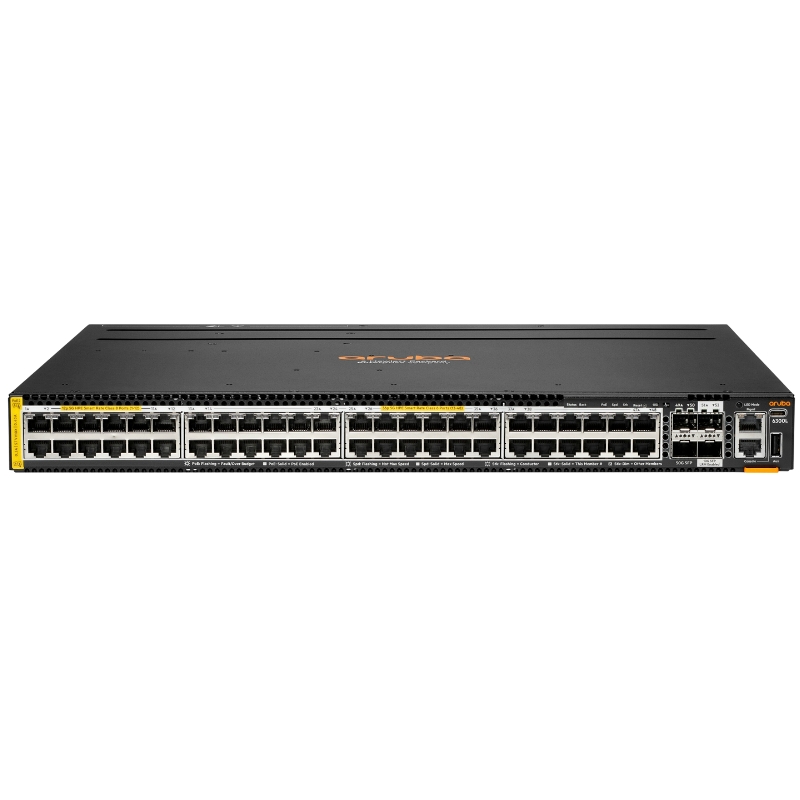


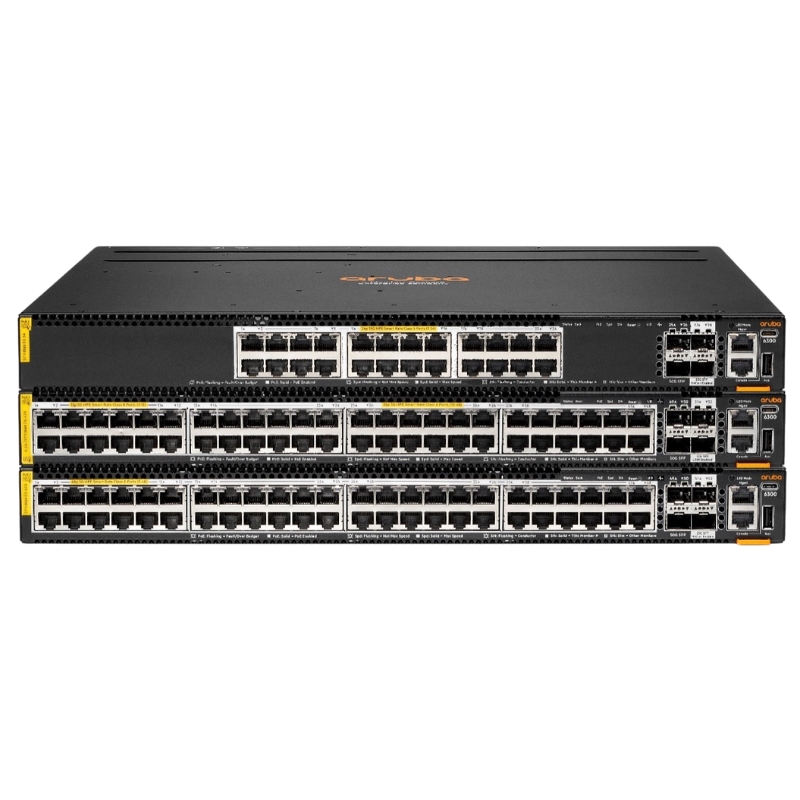
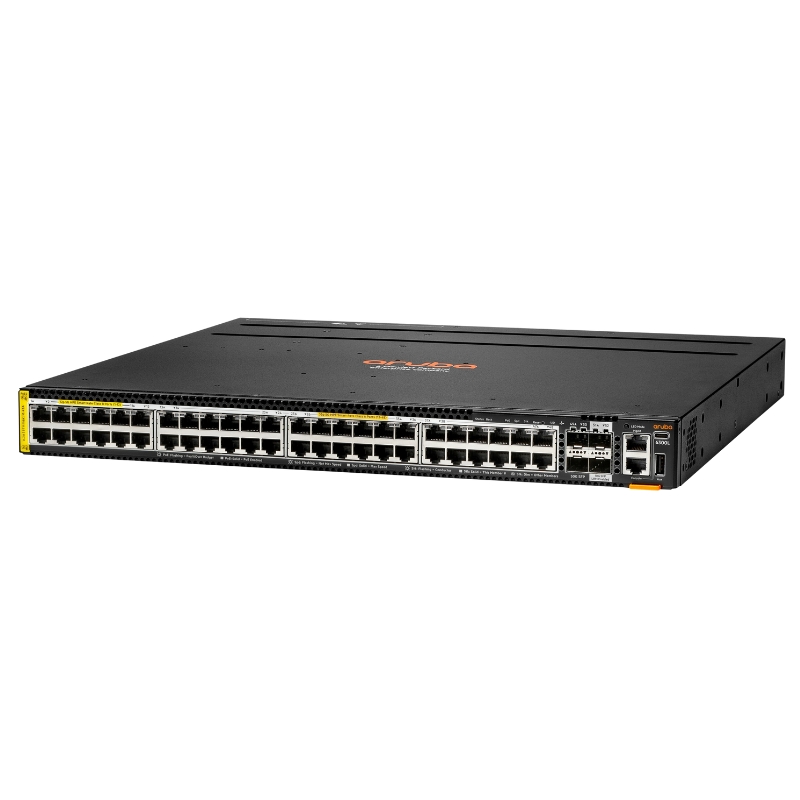
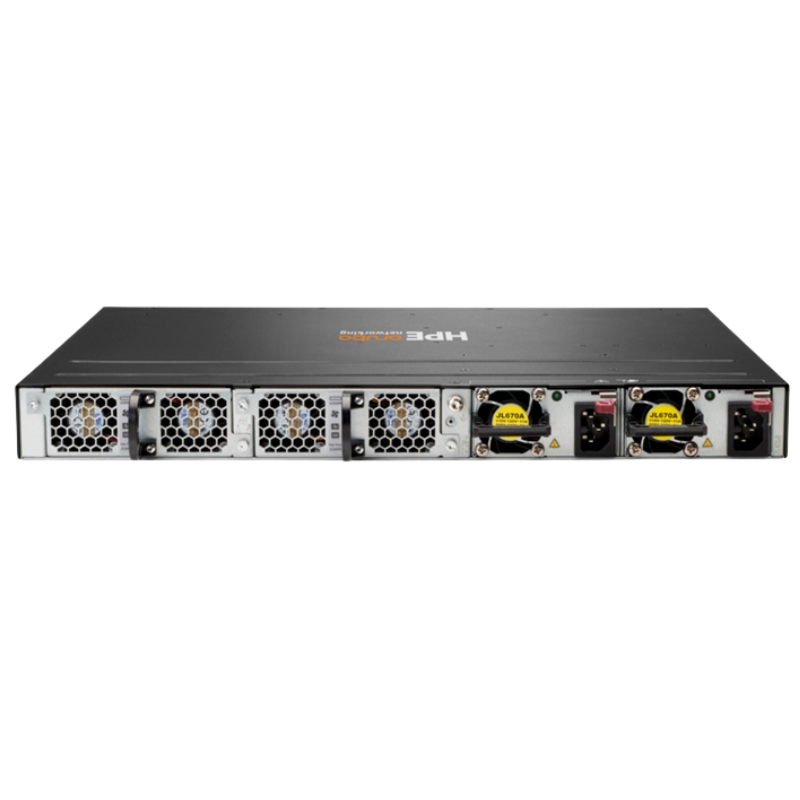
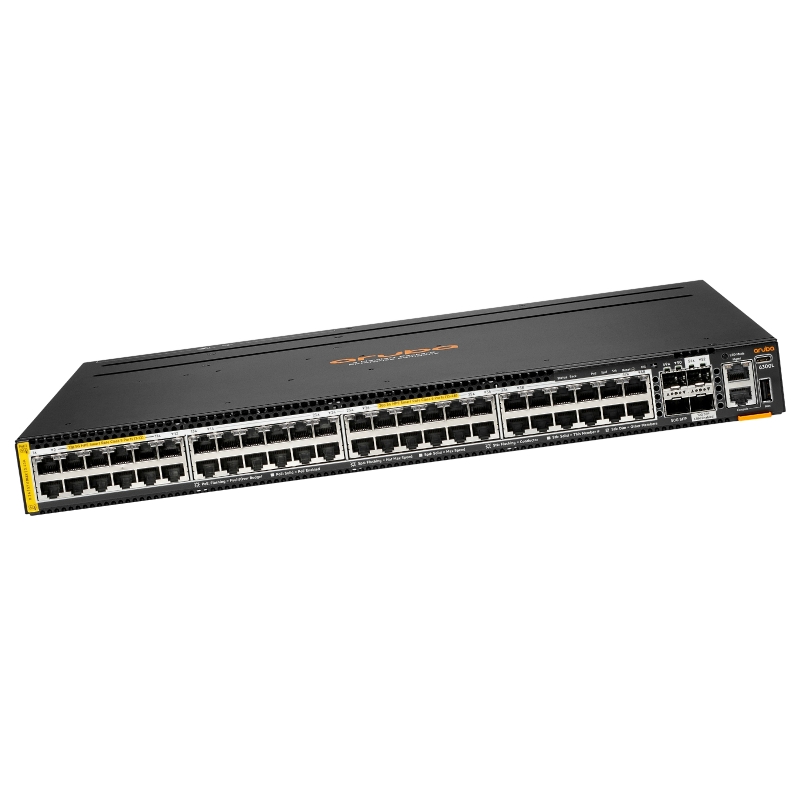
HPE S3L77A Aruba 6300L 48-Port SR5 PoE CL6/8 2P SFP56 50G 2P SFP+ 1G/10G LRM Layer 2 Smart Rate CX Switch. Factory-Sealed New in Original Box (FSB) with 3 Years Warranty
The HPE S3L77A Aruba 6300L CX Switch delivers advanced connectivity with 48 Smart Rate ports, PoE capabilities, and flexible expansion options designed for modern enterprise networks.
The HPE S3L77A Aruba Anw Cx 6300L 48-Port Smart Rate switch occupies a distinct position within the portfolio of campus and branch access switches designed for performance-sensitive, modern enterprise networks. This category description focuses on the Aruba CX 6300L family with the exact configuration described by the S3L77A 48-port Smart Rate access layer switch with multi-speed copper ports capable of 100 Mbps, 1 Gbps, 2.5 Gbps and 5 Gbps operation, traffic class support for Class 6 and Class 8 operation, and an advanced uplink complement including two SFP56 50G-capable slots and two SFP+ ports providing 1G/10G LRM support. The category is all about enabling converged edge environments where higher-than-gigabit access speeds, flexible uplink density, and modern Layer 2 feature sets allow organizations to deploy bandwidth-hungry applications, power-over-ethernet devices, wireless access points, and converged services without immediate forklift upgrades to campus aggregation layers.
The hardware architecture of switches in this category centers on a high-density 48-port RJ45 copper fabric with Smart Rate capability across the access plane. Smart Rate ports are engineered so that the same physical RJ45 interface can negotiate and operate at legacy 100 Mb/s and 1 Gb/s speeds while transparently supporting faster multi-gigabit speeds such as 2.5 Gb/s and 5 Gb/s without requiring specialized cabling beyond standard Category 5e/6 for many deployments. The presence of Class 6 and Class 8 markings in the product name signals support for advanced power delivery and link classification behaviors frequently leveraged by powered devices and next-generation wireless access points that use multi-gigabit links to the edge. For upstream connectivity and stacking style expansion, the S3L77A configuration includes two SFP56 slots capable of 50G optical or DAC modules and two SFP+ ports that accept 1G/10G LRM modules, enabling flexible uplink aggregation, high-capacity spine connections, or direct inter-switch fabric links. This topology allows the access switch to aggregate multiple multi-gigabit endpoints while trunking traffic on high-capacity 50G uplinks to distribution and core layers.
These switches are designed in a standard 1 RU chassis that suits rack-mount deployments in wiring closets and branch data rooms. The physical footprint and air-flow design aim to provide predictable cooling and acoustic characteristics appropriate for office closets. Rack rails, mounting brackets, and a front panel oriented design simplify cable management for tightly packed access deployments. When planning deployments, IT teams consider placement for centralizing multi-gigabyte wireless AP ports and high-density desktop clusters, balancing available uplink throughput to avoid oversubscription at peak loads.
The category focuses on robust Layer 2 capabilities expected of modern campus access switches. Native VLAN support, advanced VLAN tagging and trunking behavior, selective QinQ for carrier or service-provider-like use cases, and link-aggregation groups are core elements. Spanning Tree variants and rapid convergence enhancements are included to maintain loop-free topologies while minimizing downtime during topology changes. The Aruba CX operating environment provides programmatic access to the switch’s L2 features, including granular VLAN management, selective broadcast control, and intelligent multicast handling which are essential when supporting voice, video, and IoT traffic across shared access fabrics. Enterprises rely on these Layer 2 functions to define logical segmentation, secure inter-device communication at the edge, and reduce unnecessary flooding that can degrade multi-gig performance.
Quality of Service (QoS) in this switch category is designed to prioritize latency-sensitive traffic such as voice and video while protecting bulk-transfer flows. The platform supports hierarchical queuing, DSCP-to-queue mapping, and class-based policing and shaping so that administrators can carve up bandwidth according to business intent. By combining QoS with smart-rate ports, organizations can ensure time-sensitive traffic receives priority even when employees or devices utilize higher-than-gigabit access rates. This capacity becomes crucial in environments where video conferencing, unified communications, and surveillance streams coexist with large file transfers and software distribution traffic. The switch’s QoS toolkit gives network engineers the levers to tune behavior per-port, per-VLAN, and per-application to achieve predictable performance across the access layer.
Power over Ethernet strategies are central when access switches serve as the electrical backbone for IP phones, access points, and IoT sensors. While specific power budgets depend on the variant and ordered options, this category of switches typically aligns with enterprise expectations for providing adequate PoE footprint to support a mix of endpoint types. Power allocation strategies are critical when planning device placement because multi-gig APs and PTZ cameras can consume increased power per port. IT planners balance per-port power requirements against available budgets, often deploying a mix of switch models or supplementary midspan injectors in scenarios where PoE demand outstrips a single switch’s supply. The modular uplink architecture ensures that power constraints at the edge do not complicate upstream bandwidth design.
Beyond basic switching, software features in this category are tailored to improve uptime and reduce mean time to repair. Features like granular logging, scheduled backups, redundant image banks, and health monitoring allow administrators to operate at scale with confidence. The Aruba CX operating system frequently includes scripting capabilities, stored procedure-like workflows, and event-triggered actions that can respond automatically to predefined conditions. For organizations that adopt continuous deployment and DevOps-inspired practices for network infrastructure, these software constructs are essential: they enable Infrastructure as Code, continuous validation of configuration drift, and rapid rollback in the event of service impact. The result is a predictable, repeatable operational model where switch provisioning becomes a commodity-level task.
Organizations deploy switches from this category in a variety of use cases where multi-gigabit access, flexible uplinks, and modern L2 features matter. Campus edge deployments use these switches to connect classrooms, office floors, wireless access points, and VoIP telephony. Branch offices favor the small footprint and uplink flexibility when aggregating dozens of users while maintaining a compact wiring closet footprint. Retail and hospitality environments benefit from the category’s combination of port density and secure segmentation, which allows guest networks, POS systems, and back-office devices to coexist on the same physical infrastructure while maintaining strict separation. Specialized verticals, such as healthcare and manufacturing, use these switches as the foundation for converged services where video, data, and control traffic require deterministic network behavior and strict security controls. The consistent theme in each use case is the demand for predictable, scalable access that accommodates emerging endpoint capabilities without a disruptive cable or hardware replacement cycle.
Successful deployment of these switches includes a careful assessment of growth assumptions and headroom at the uplink and aggregation layers. When organizations introduce multi-gig access, aggregate bandwidth requirements to distribution and spine switches increase correspondingly. The presence of 50G-capable SFP56 uplinks in the S3L77A configuration provides a direct path for scaling aggregation bandwidth without redesigning the access network. Capacity planning also considers the possibility of link aggregation between access and distribution to multiply available throughput. Organizations often use a phased approach: deploy multi-gig access in areas with the highest demand and monitor utilization metrics before rolling out additional upgrades. This data-driven expansion model ensures investment aligns with actual growth in traffic demand rather than hypothetical forecasts.
Interoperability remains important when integrating new access switches into heterogeneous environments. The category is engineered to interoperate with standard Ethernet switch features, common network management systems, and existing authentication and policy infrastructures. Integrations with wireless controllers, SD-WAN appliances, and cloud-based management consoles are common requirements for enterprise buyers. Ecosystem integration extends to vendor-provided orchestration and monitoring platforms where administrators can manage firmware updates, security patches, and configuration templates for large fleets from a central console.
Performance metrics for this category focus on per-port throughput, low-latency forwarding, and predictable behavior under concurrent loads. The architecture supports line-rate forwarding on mixed packet sizes enabling consistent performance for both small transactional flows and large media transfers. Hardware offloads and ASIC-based forwarding engines ensure that forwarding decisions occur with minimal CPU involvement, preserving CPU cycles for management and control plane tasks. Reliability features include redundant boot images, non-disruptive firmware upgrades in many deployments, and features that facilitate graceful failover under certain high-availability designs. In enterprise environments, these capabilities translate into longer mean time between failures and faster recovery when incidents do occur.


 Contact Us
 Information
 Catalog
 Solid State Drives (SSD)
 Network Switches
 Hard Disk Drives
 HBA & Controllers
 PC & Servers
 PC & Server Memory
 CPU & Processors
 Network Routers
 Power Supplies
 Tape Drives & Libraries
 Network Devices
 Computer & Network Cables