(7% discount is applied at checkout)
Cart is empty
Your go-to destination for cutting-edge server products


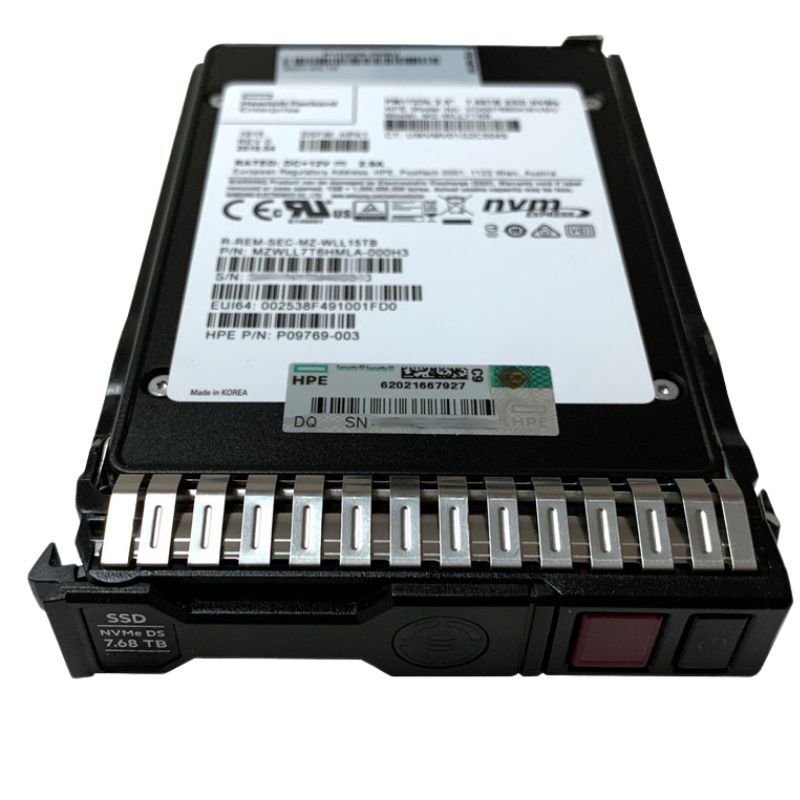
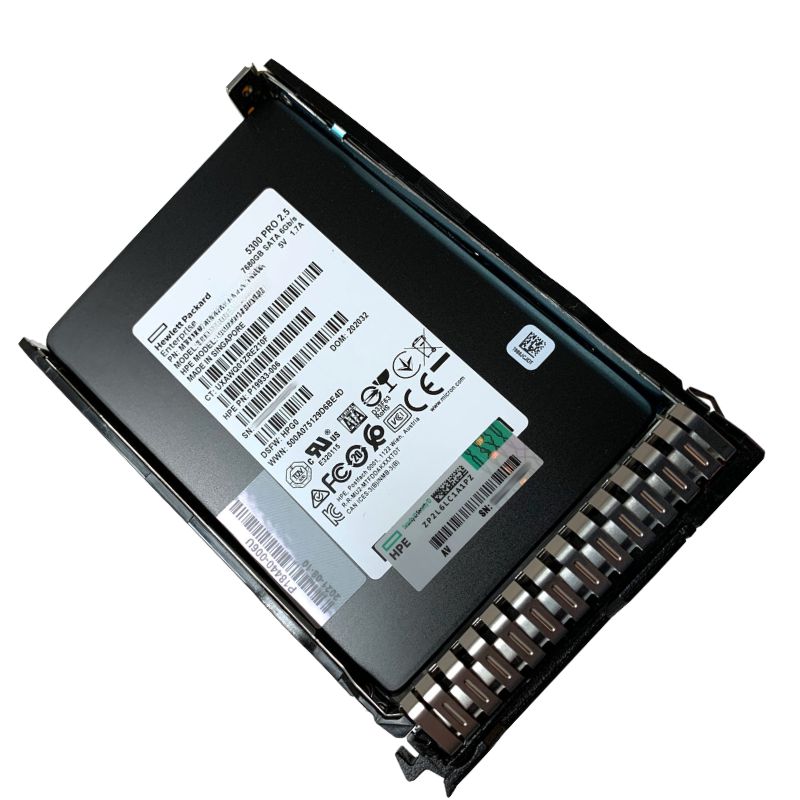
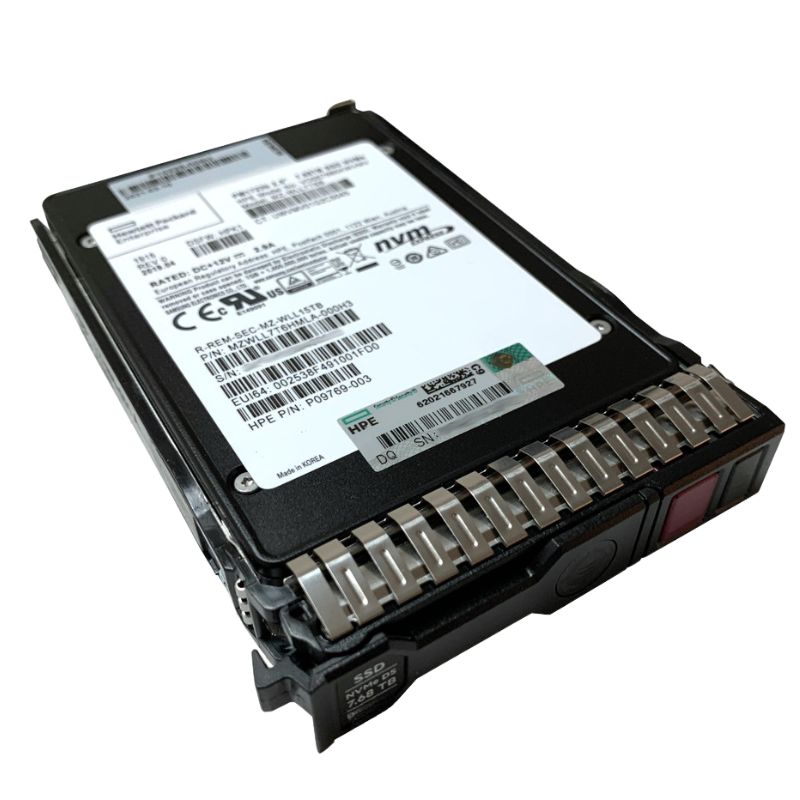
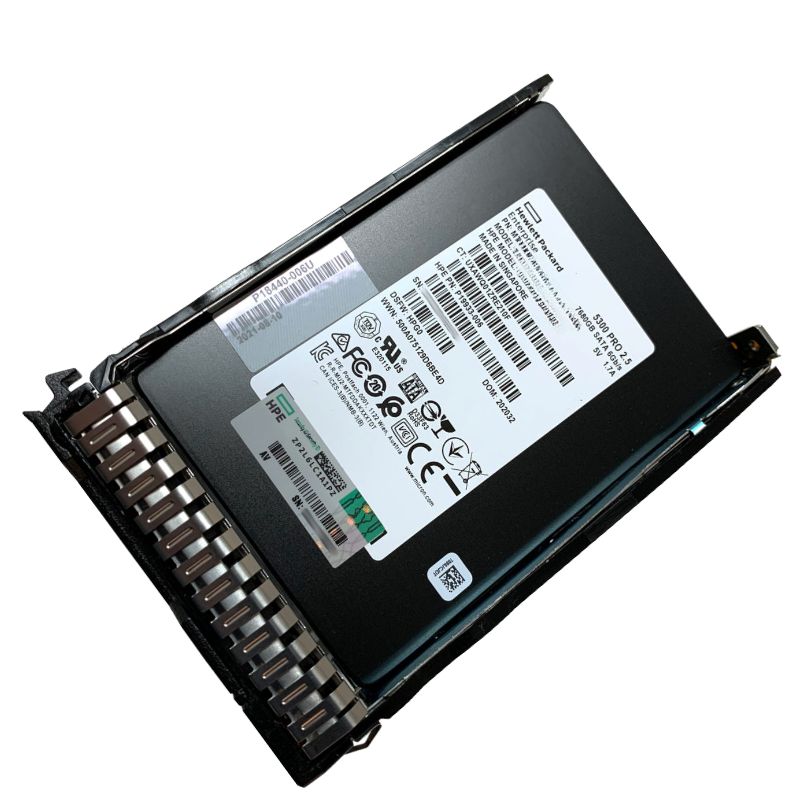
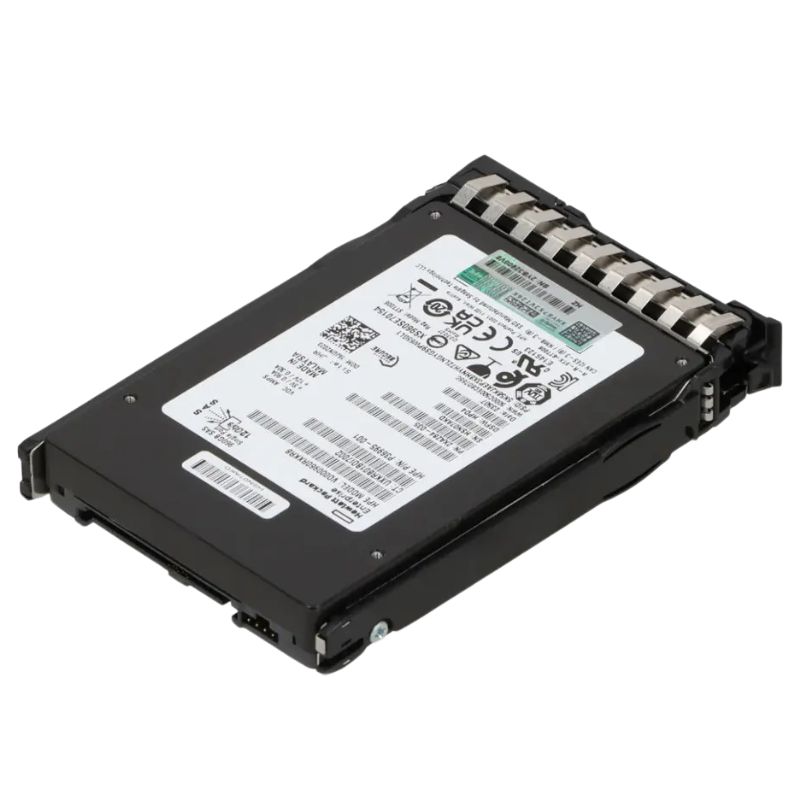
HPE VO007680KXNZT 7.68TB NVMe Gen4 Mainstream Performance Read Intensive SFF BC U.3 Static Multi Vendor Solid State Drive for Gen10 Plus Servers. Excellent Refurbished with 1 year replacement warranty
The HPE VO007680KXNZT represents a high-capacity, mainstream performance solid-state drive engineered for modern data center environments. This 7.68TB NVMe Gen4 SSD is specifically designed for read-intensive applications, delivering exceptional performance and reliability for HPE Gen10 Plus and Gen11 server platforms. As part of HPE's comprehensive storage portfolio, this drive balances performance characteristics with cost-effectiveness for workloads that demand consistent read performance and high endurance.
This SSD utilizes the Small Form Factor (SFF) 2.5-inch design with a U.3 interface, providing compatibility across multiple server generations. The physical dimensions measure 2.75 inches in width, 0.33 inches in height, and 3.94 inches in length, conforming to standard 2.5-inch drive specifications. The compact SFF design enables high-density storage configurations within constrained server chassis space, maximizing storage capacity per rack unit in data center environments.
The drive features a U.3 multi-host interface supporting NVMe 1.4 protocol over PCI Express 4.0 x4 lanes. The U.3 interface provides backward compatibility with U.2 infrastructure while enabling seamless integration into existing data center environments. The PCIe 4.0 interface delivers double the bandwidth of previous PCIe 3.0 implementations, with theoretical transfer speeds reaching up to 64 Gbps across the four lanes, significantly reducing latency and improving overall system responsiveness.
Engineered specifically for read-intensive applications, the HPE VO007680KXNZT delivers optimized performance characteristics tailored toward workloads where read operations dominate the I/O profile. The drive maintains consistent read performance even under sustained workloads, making it ideal for content delivery networks, database query operations, virtual desktop infrastructure, web serving, and data analytics applications where rapid data access is critical to application performance.
The drive delivers exceptional sequential read performance up to 6,800 MB/s, enabling rapid processing of large contiguous data blocks commonly found in media streaming, backup restoration, and data migration scenarios. Sequential write performance reaches up to 3,200 MB/s, providing balanced performance for mixed workload environments. These performance characteristics represent significant improvements over SATA-based SSDs and previous-generation NVMe drives, reducing data transfer times and improving overall system efficiency.
For random access patterns, the drive achieves up to 950,000 read IOPS (Input/Output Operations Per Second) and up to 180,000 write IOPS at queue depths optimized for enterprise workloads. The high random read performance ensures responsive application behavior in virtualized environments and database applications where numerous concurrent users access data simultaneously. The advanced controller architecture efficiently manages mixed read/write workloads while maintaining low latency profiles.
The implementation of NVMe Generation 4 technology represents a significant advancement over previous storage protocols, delivering reduced latency, increased IOPS, and improved power efficiency. The NVMe 1.4 specification includes enhancements such as NVM Sets, which allow for better quality of service isolation, and Persistent Memory Region, which enables faster reboot times and improved data availability following power loss events.
The PCI Express 4.0 interface doubles the bandwidth per lane compared to PCIe 3.0, from 8 GT/s to 16 GT/s, while maintaining backward compatibility with PCIe 3.0 infrastructure. This increased bandwidth enables the full performance potential of the NVMe SSD, reducing bottlenecks in data-intensive applications and allowing for more efficient utilization of server resources. The interface improvements are particularly beneficial for artificial intelligence, machine learning, and high-performance computing workloads.
The drive utilizes high-density 3D TLC NAND flash memory, balancing performance, endurance, and cost-effectiveness for read-intensive applications. The advanced memory architecture incorporates error correction codes, wear leveling algorithms, and advanced read-retry mechanisms to ensure data integrity throughout the drive's operational lifespan. The NAND flash management system optimizes write amplification to extend flash endurance while maintaining consistent performance characteristics.
Enterprise-grade power loss protection circuitry ensures data integrity during unexpected power interruptions. The design includes integrated capacitors that provide sufficient backup power to complete in-progress write operations and flush data from volatile buffers to non-volatile memory. This protection mechanism prevents data corruption and maintains filesystem consistency, making the drive suitable for mission-critical applications where data integrity is paramount.
The drive implements comprehensive end-to-end data protection, maintaining data integrity checks from the host interface through the controller to the NAND flash memory. This protection schema includes cyclic redundancy checks (CRC) for the PCIe interface, error correction codes (ECC) for DRAM buffers, and advanced ECC algorithms for the NAND flash interface. The multi-layered approach ensures detection and correction of data errors throughout the data path.
Security features include 256-bit AES hardware-based encryption compliant with TCG Enterprise and TCG Opal 2.0 standards. The encryption engine operates independently from the host system, providing seamless data-at-rest protection without performance degradation. The cryptographic erase functionality enables rapid drive sanitization by securely deleting encryption keys, rendering data inaccessible while preserving drive usability for redeployment.
The HPE VO007680KXNZT is fully compatible with HPE Gen10 Plus server platforms, including ProLiant DL, ML, and XL series servers. The drive is validated and tested for seamless integration with HPE Smart Array controllers and HPE NVMe backplanes, ensuring optimal performance and reliability. When deployed in Gen10 Plus servers, the drive operates at PCIe 3.0 speeds due to platform limitations while maintaining full functional compatibility and enterprise-grade reliability features.
When deployed in HPE Gen11 server platforms, the drive operates at full PCIe 4.0 performance, leveraging the increased bandwidth for improved application responsiveness and reduced latency. The Gen11 server architecture includes enhancements specifically designed for NVMe storage, including improved thermal management, enhanced power delivery, and optimized firmware integration through the HPE iLO management system.
The Static V2 Multi-Vendor firmware enables broad compatibility across heterogeneous server environments, allowing the drive to be deployed in multi-vendor infrastructure without compatibility concerns. The firmware includes standardized NVMe commands and feature sets that ensure interoperability while maintaining HPE's reliability and performance standards. This flexibility makes the drive suitable for mixed-environment data centers and organizations with diverse server hardware.
The drive implements the NVMe Management Interface (NVMe-MI) specification, providing out-of-band management capabilities through the SMBus or PCIe Vendor Defined Messages. This standardized management interface enables monitoring of critical parameters such as temperature, media health, available spare capacity, and usage statistics. The management interface supports both in-band and out-of-band management paradigms, providing flexibility for different data center management approaches.
Typical power consumption during active operation ranges from 12-15 watts, with peak power not exceeding 25 watts during maximum performance scenarios. During idle states, power consumption drops to approximately 5 watts, improving overall energy efficiency in data center environments.


 Contact Us
 Information
 Catalog
 Solid State Drives (SSD)
 Network Switches
 Hard Disk Drives
 HBA & Controllers
 PC & Servers
 PC & Server Memory
 CPU & Processors
 Network Routers
 Power Supplies
 Tape Drives & Libraries
 Network Devices
 Computer & Network Cables