(7% discount is applied at checkout)
Cart is empty
Your go-to destination for cutting-edge server products
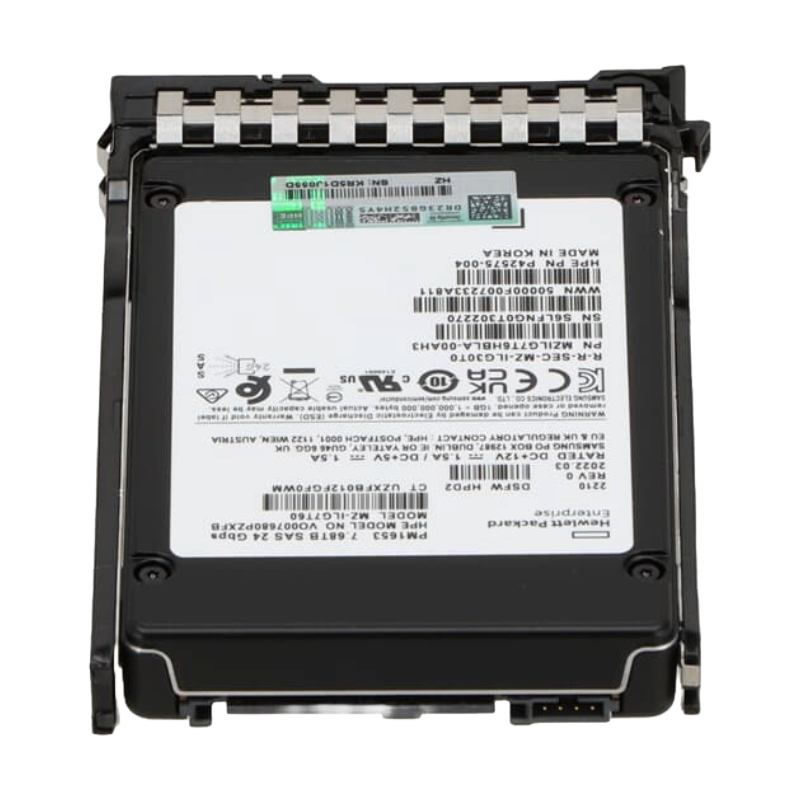


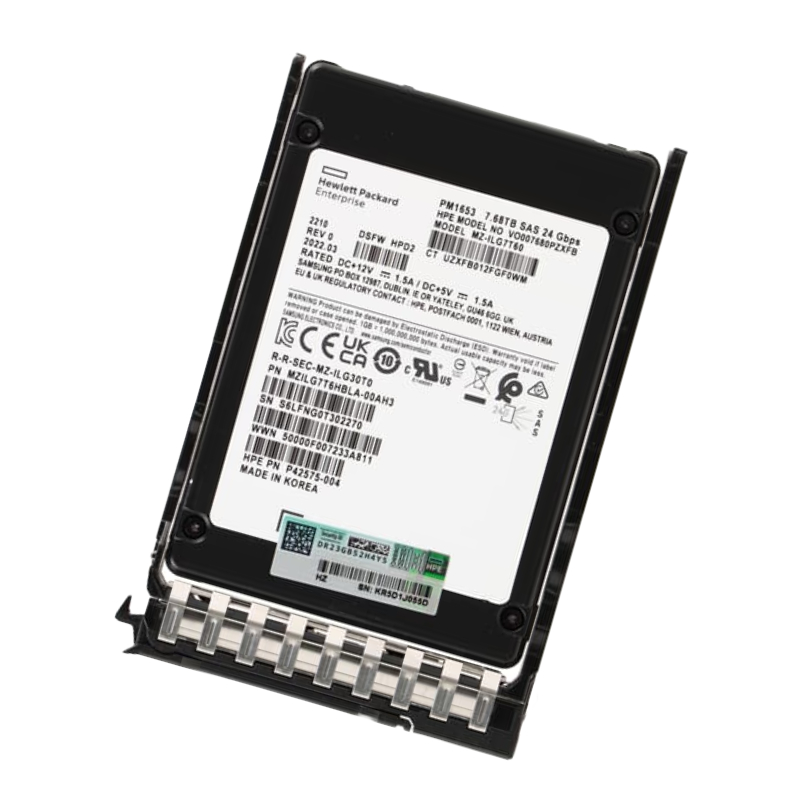
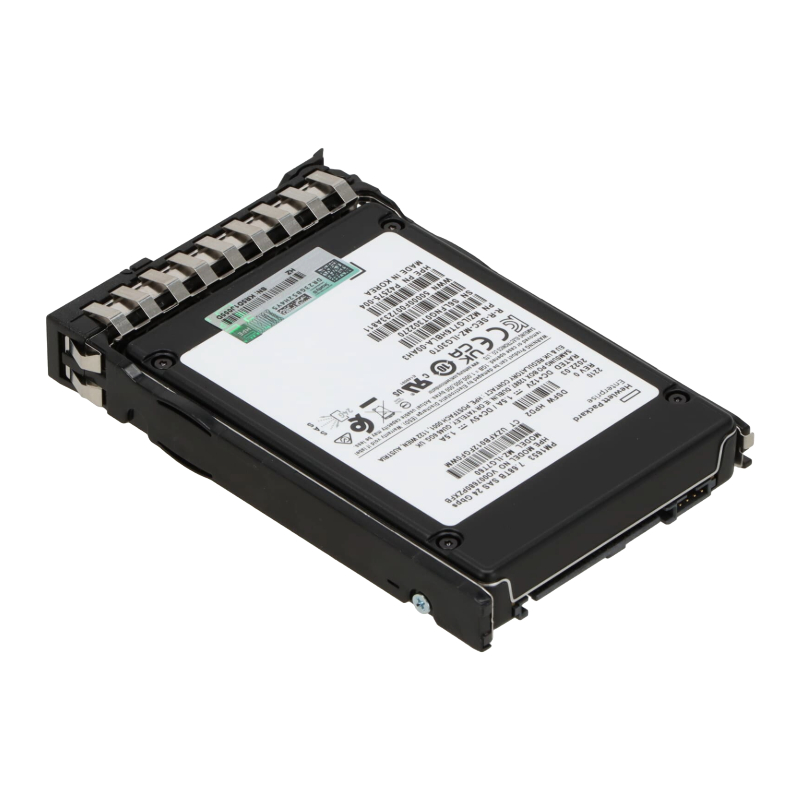
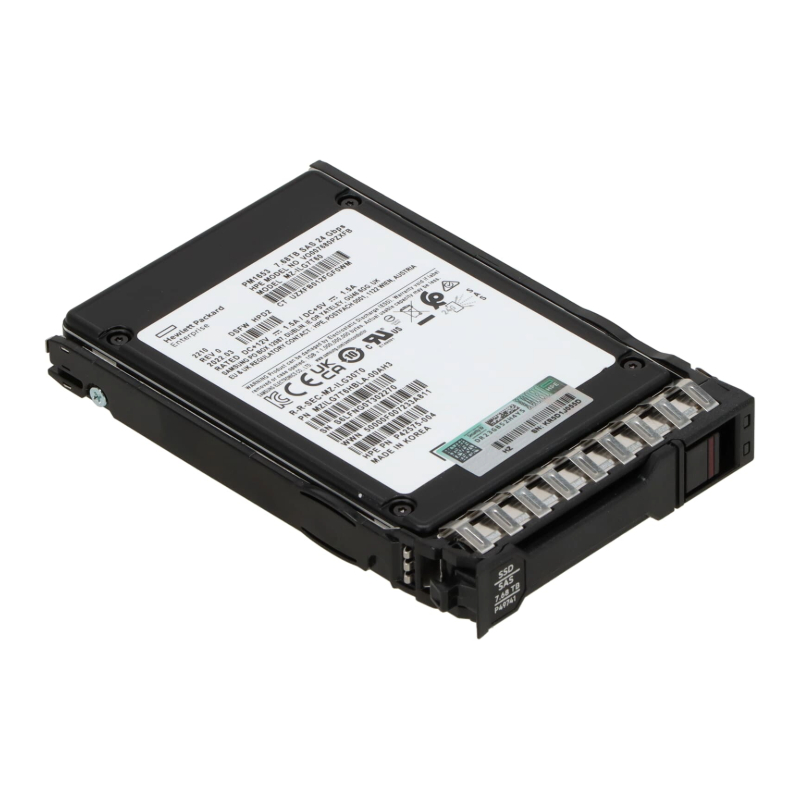
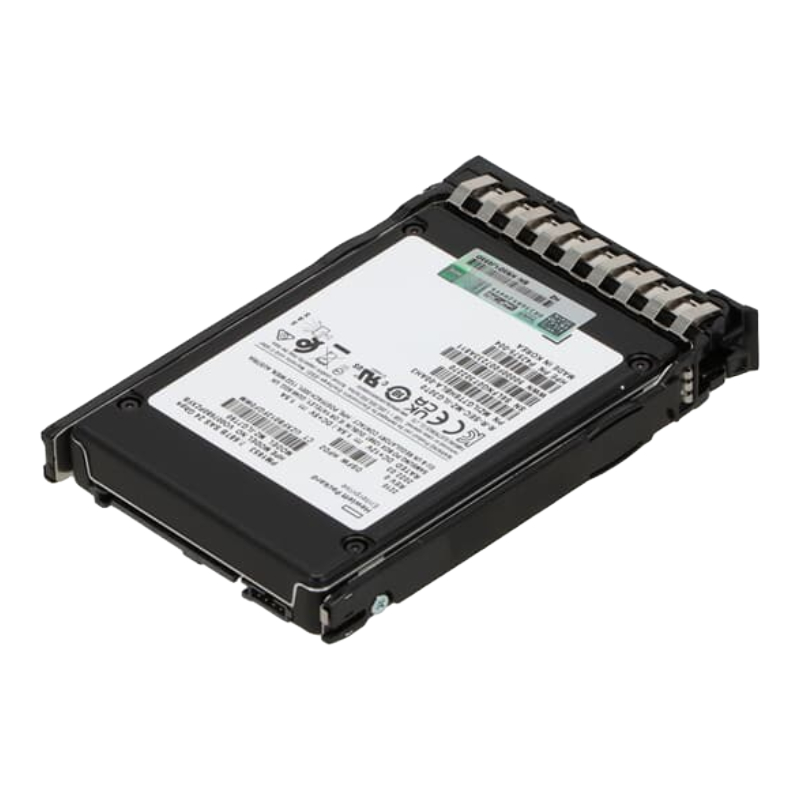
HPE VO007680PZXFB Pm1653 7.68TB SAS 12Gbps SFF Read Intensive SC Multi Vendor Hot Swap Digitally Signed SSD. Factory-Sealed New in Original Box (FSB) with 3 Years Warranty
| SKU/MPN | Warranty | Price | Condition | You save |
|---|---|---|---|---|
| VO007680PZXFB | 1 Year Warranty | $2,375.00 | Excellent Refurbished | You save: $831.25 (26%) |
| VO007680PZXFB | 1 Year Warranty | Contact us for a price | Factory-Sealed New in Original Box (FSB) |
The HPE VO007680PZXFB PM1653 7.68TB SAS 12GBPS SSD is a high-capacity, enterprise-grade storage device designed for exceptional performance and reliability in data centers and server environments. Featuring read-intensive workload optimization, this drive ensures seamless data access and improved I/O operations for demanding applications.
The HPE VO007680PZXFB PM1653 7.68TB SAS 12Gbps Read Intensive Solid State Drive represents Hewlett Packard Enterprise’s innovation in enterprise-grade storage performance and reliability. Designed for data centers, high-performance servers, and mission-critical environments, this SSD leverages the power of SAS 12Gbps interface and advanced TLC NAND flash technology to deliver stable throughput, minimal latency, and optimized read-intensive operation. With its massive 7.68TB storage capacity, it provides an ideal balance between scalability, endurance, and consistent performance across diverse workloads that demand high IOPS and reliability. This drive is part of HPE’s PM1653 SSD family, which is engineered to meet the growing data needs of enterprise applications while reducing the total cost of ownership through superior efficiency and longevity.
The SAS 12Gbps interface is a critical foundation for the HPE VO007680PZXFB PM1653 SSD, offering enterprise-level data transfer speeds that are double those of legacy 6Gbps interfaces. This high-speed connectivity ensures seamless communication between the storage drive and server backplane, providing faster data access for applications requiring constant I/O operations. In large-scale enterprise environments where uptime and consistency are paramount, the dual-port SAS architecture delivers redundancy and failover capabilities that are essential for mission-critical systems. Compared to SATA drives, SAS-based SSDs like this model feature advanced queuing mechanisms, superior error recovery, and continuous data integrity verification, making them indispensable for enterprise workloads that cannot afford downtime or data corruption.
The HPE VO007680PZXFB PM1653 SSD is optimized for read-intensive workloads, where the majority of data transactions are reads rather than writes. This makes it a perfect fit for environments such as database querying, media streaming, virtual desktop infrastructures (VDI), and web hosting. Read-intensive solid state drives utilize NAND flash and controller firmware that prioritize fast read speeds and consistent latency performance, ensuring rapid data retrieval. HPE’s engineering excellence enables this SSD to sustain high random read IOPS, often exceeding hundreds of thousands of input/output operations per second, while maintaining stable throughput under heavy demand. The optimized firmware and intelligent wear-leveling algorithms contribute to extended drive lifespan and consistent quality of service across long-term deployment cycles.
This drive uses Triple-Level Cell (TLC) NAND flash memory, which stores three bits of data per cell to achieve high density and storage efficiency. HPE combines TLC technology with enterprise-grade controllers and custom firmware to deliver predictable performance while maintaining endurance suitable for read-intensive environments. The result is a drive that offers a compelling balance between cost per gigabyte and operational reliability. HPE’s integration of advanced error correction codes (ECC), dynamic overprovisioning, and background garbage collection mechanisms ensures that the drive maintains consistent performance throughout its operational life. These attributes make the HPE VO007680PZXFB PM1653 7.68TB SSD not only efficient but also reliable for continuous enterprise operations.
Thermal stability is a crucial characteristic in dense data center environments, and this HPE solid state drive incorporates thermal monitoring and adaptive thermal throttling features. These technologies protect the drive from overheating during intensive workloads by dynamically adjusting performance to maintain optimal temperature ranges. Additionally, power efficiency is achieved through low idle power consumption and optimized active power states. Enterprises benefit from reduced energy costs, lower cooling requirements, and sustainable long-term operation without sacrificing data performance or integrity. This drive’s energy-efficient design aligns perfectly with HPE’s commitment to environmentally responsible computing and total cost optimization.
Data integrity is a cornerstone of enterprise storage technology, and the HPE VO007680PZXFB PM1653 SAS SSD is engineered with multiple layers of protection. Its end-to-end data path protection ensures that data remains consistent and uncorrupted from the host system through to the NAND cells. The built-in error detection and correction algorithms continuously monitor data transfers, while advanced parity protection safeguards against bit errors and media defects. HPE’s firmware design also includes power-loss protection capacitors that retain in-flight data during unexpected power interruptions. This ensures that mission-critical workloads can continue to rely on accurate and uninterrupted access to vital data, minimizing risks of downtime and potential data loss in high-availability environments.
The HPE VO007680PZXFB PM1653 7.68TB SSD is designed for seamless integration with HPE ProLiant Gen10 and Gen11 servers. HPE rigorously validates this drive for performance, reliability, and interoperability, ensuring that it meets or exceeds the demanding standards of HPE infrastructure. By using genuine HPE-qualified drives, IT administrators can maintain firmware consistency, performance optimization, and hardware-level compatibility. This reduces potential issues with third-party components, providing an all-around cohesive storage solution. The drive is hot-pluggable and supported by HPE Smart Carrier technology, which features intuitive LED indicators for drive status monitoring and predictive failure notifications, simplifying maintenance and drive management in data center environments.
As data volumes continue to grow, scalability has become a primary requirement for enterprises managing large datasets and applications. The 7.68TB capacity of the HPE VO007680PZXFB SSD allows IT teams to expand storage infrastructure without increasing physical footprint. This scalability is enhanced by SAS architecture’s multi-initiator capability, allowing multiple servers to access the same storage device concurrently in clustered or virtualized configurations. The combination of capacity density, robust IOPS performance, and consistent latency ensures that enterprises can handle workloads like AI inference, analytics, and virtualization with ease. Furthermore, HPE’s modular storage design ensures that scaling up or refreshing drives is a seamless process with minimal downtime or reconfiguration required.
In terms of real-world performance, the HPE VO007680PZXFB PM1653 SSD consistently outperforms traditional spinning hard drives and entry-level SSDs by a significant margin. Its 12Gbps SAS interface ensures sustained sequential read and write speeds that enable rapid access to frequently requested datasets. This makes it an excellent choice for applications involving database acceleration, real-time analytics, virtualization caching, and data warehousing. Read-intensive SSDs like this model excel in scenarios where data is retrieved frequently but modified infrequently. For example, enterprise search platforms, ERP systems, and online transaction processing benefit from its ability to deliver high read throughput with predictable latency. The consistent quality of service across mixed workloads enhances user experience, operational speed, and IT agility.
While NVMe drives have become increasingly popular in recent years, SAS SSDs like the HPE VO007680PZXFB PM1653 maintain a critical role in enterprise infrastructure due to their reliability, dual-port redundancy, and backward compatibility with existing SAS ecosystems. NVMe excels in extreme performance scenarios, but SAS SSDs provide balanced performance with superior manageability and scalability in large-scale deployments. Many enterprises favor SAS for mission-critical workloads that demand high availability and data protection. The 12Gbps SAS interface narrows the performance gap between traditional SAS and NVMe, offering near-NVMe performance while retaining the robustness and stability expected from enterprise-grade storage solutions.
Latency is a decisive performance metric in data center applications. The HPE VO007680PZXFB PM1653 7.68TB SSD delivers microsecond-level access latency, enabling faster data responses for latency-sensitive workloads. Combined with exceptional read IOPS, the drive ensures high transaction throughput and predictable performance even under sustained access patterns. In virtualized server environments where multiple virtual machines operate simultaneously, consistent latency and predictable I/O behavior are essential for ensuring stable performance across all hosted services. HPE’s advanced controller technology and queue management algorithms contribute to maintaining consistent throughput, even when the drive operates under mixed workloads with varying read/write ratios.
Enterprise SSDs are rated for endurance measured in Drive Writes Per Day (DWPD), which defines the number of complete drive writes that can be performed daily throughout the warranty period. As a read-intensive drive, the HPE VO007680PZXFB PM1653 offers optimized endurance suitable for applications where reads significantly outnumber writes. The endurance rating ensures years of dependable service, backed by HPE’s rigorous validation and quality assurance processes. This reliability makes it a preferred choice for data centers prioritizing uptime, performance predictability, and low total cost of ownership. Its mean time between failures (MTBF) value reflects HPE’s industry-leading standards for long-term stability and data protection.
The HPE VO007680PZXFB PM1653 7.68TB SAS 12Gbps SSD can be effectively deployed across various enterprise use cases. In virtualized environments, it supports high-density VM consolidation and rapid boot times. For data analytics platforms, it enables faster query execution and data ingestion. In online transaction systems, it enhances responsiveness and minimizes latency. IT administrators can integrate these drives into storage arrays, hybrid infrastructures, or HPE’s own modular storage systems for flexible deployment options. HPE’s Smart Array controllers and HPE Smart Storage Administrator (SSA) software make configuration straightforward, offering features like RAID support, predictive drive management, and performance tuning. This enables IT teams to deploy and scale SSD-based infrastructures efficiently while maintaining complete control over performance parameters and data redundancy configurations.
Downtime in enterprise environments can lead to significant losses, both operationally and financially. HPE integrates advanced predictive maintenance and drive health monitoring features into the VO007680PZXFB PM1653 SSD, enabling proactive management. The drive continuously reports health indicators, wear levels, and error statistics through HPE management software, allowing administrators to anticipate potential issues before they escalate. This predictive analytics capability reduces unplanned outages and supports consistent service delivery. Combined with HPE Smart Carrier’s intuitive LED indicators, drive replacement or upgrades can be performed swiftly without affecting system uptime, ensuring maximum business continuity.
As part of the HPE Smart Storage ecosystem, the PM1653 SSD integrates seamlessly with HPE’s suite of storage management and diagnostic tools. These include HPE Smart Array Controllers, Smart Storage Administrator, and Integrated Lights-Out (iLO) management. The integration allows centralized drive management, real-time health reporting, and firmware synchronization across multiple drives and servers. This tight integration improves IT efficiency and simplifies maintenance in large-scale data centers. Moreover, the firmware alignment between the SSD and HPE server platforms ensures optimal performance consistency and security updates, reducing compatibility risks associated with heterogeneous hardware environments.
As digital transformation accelerates, storage demands evolve rapidly. The HPE VO007680PZXFB PM1653 SSD addresses these evolving requirements with scalability, backward compatibility, and forward-thinking design. The SAS 12Gbps interface ensures that the drive remains relevant and interoperable with next-generation HPE systems, protecting investments made today. Additionally, its firmware architecture allows field updates and feature enhancements, extending the product’s lifecycle within the enterprise ecosystem. Whether used in standalone servers, HPE 3PAR, or HPE Nimble Storage environments, this drive provides a foundation for scalable, reliable, and high-performance data infrastructure capable of supporting future workloads including AI, big data analytics, and hybrid cloud architectures.
Beyond technical performance, HPE emphasizes sustainability in its hardware design. The VO007680PZXFB PM1653 SSD is engineered to consume less power compared to traditional spinning media and legacy storage systems, contributing to reduced carbon footprint. Its efficient design helps enterprises meet energy-saving targets and adhere to environmental compliance regulations. By consolidating storage capacity into fewer high-density drives, organizations can decrease the overall number of devices required, leading to lower e-waste generation and improved operational sustainability. HPE’s ongoing commitment to green computing ensures that enterprises adopting this drive benefit not only from superior performance but also from environmentally responsible technology choices.


 Contact Us
 Information
 Catalog
 Solid State Drives (SSD)
 Network Switches
 Hard Disk Drives
 HBA & Controllers
 PC & Servers
 PC & Server Memory
 CPU & Processors
 Network Routers
 Power Supplies
 Tape Drives & Libraries
 Network Devices
 Computer & Network Cables