(7% discount is applied at checkout)
Cart is empty
Your go-to destination for cutting-edge server products
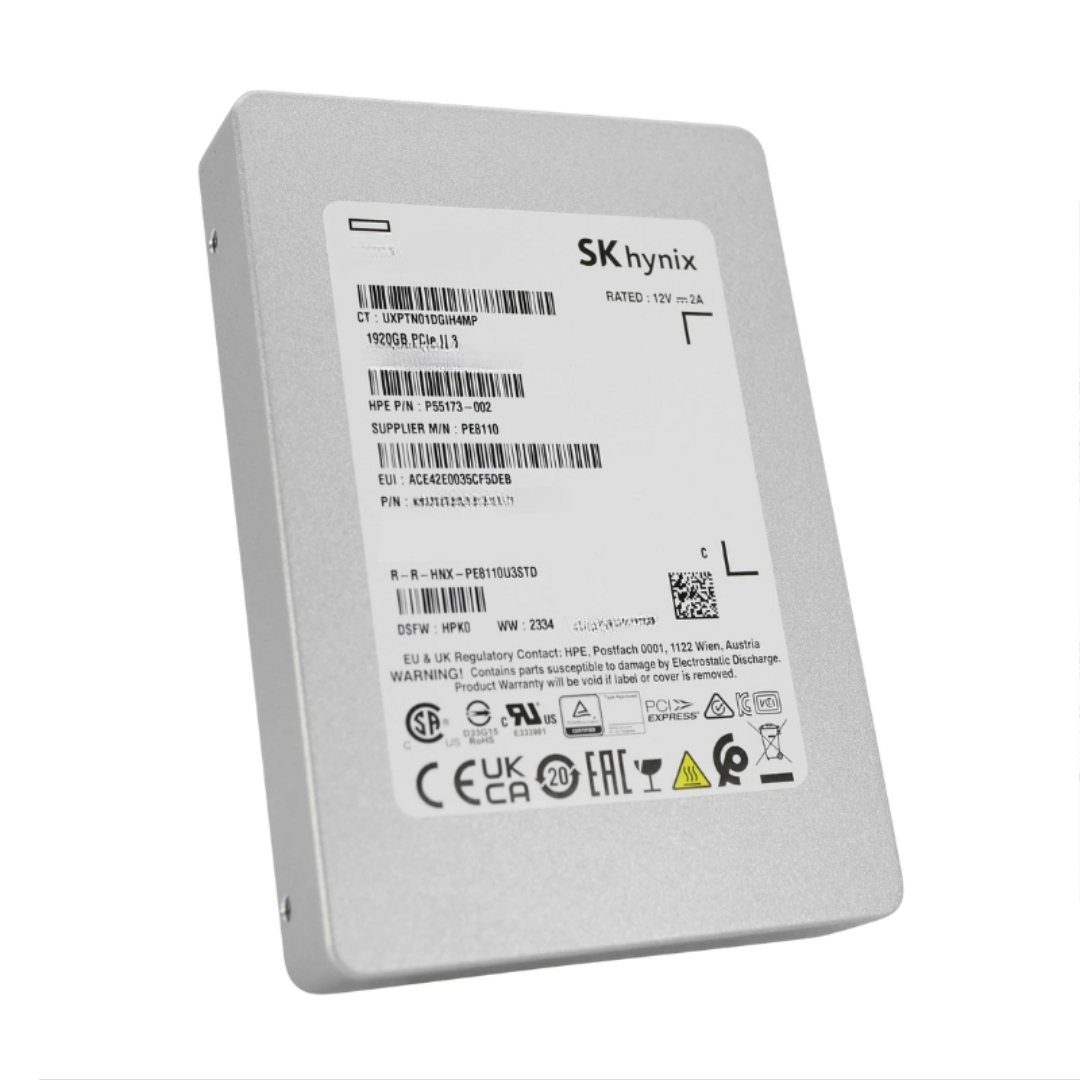


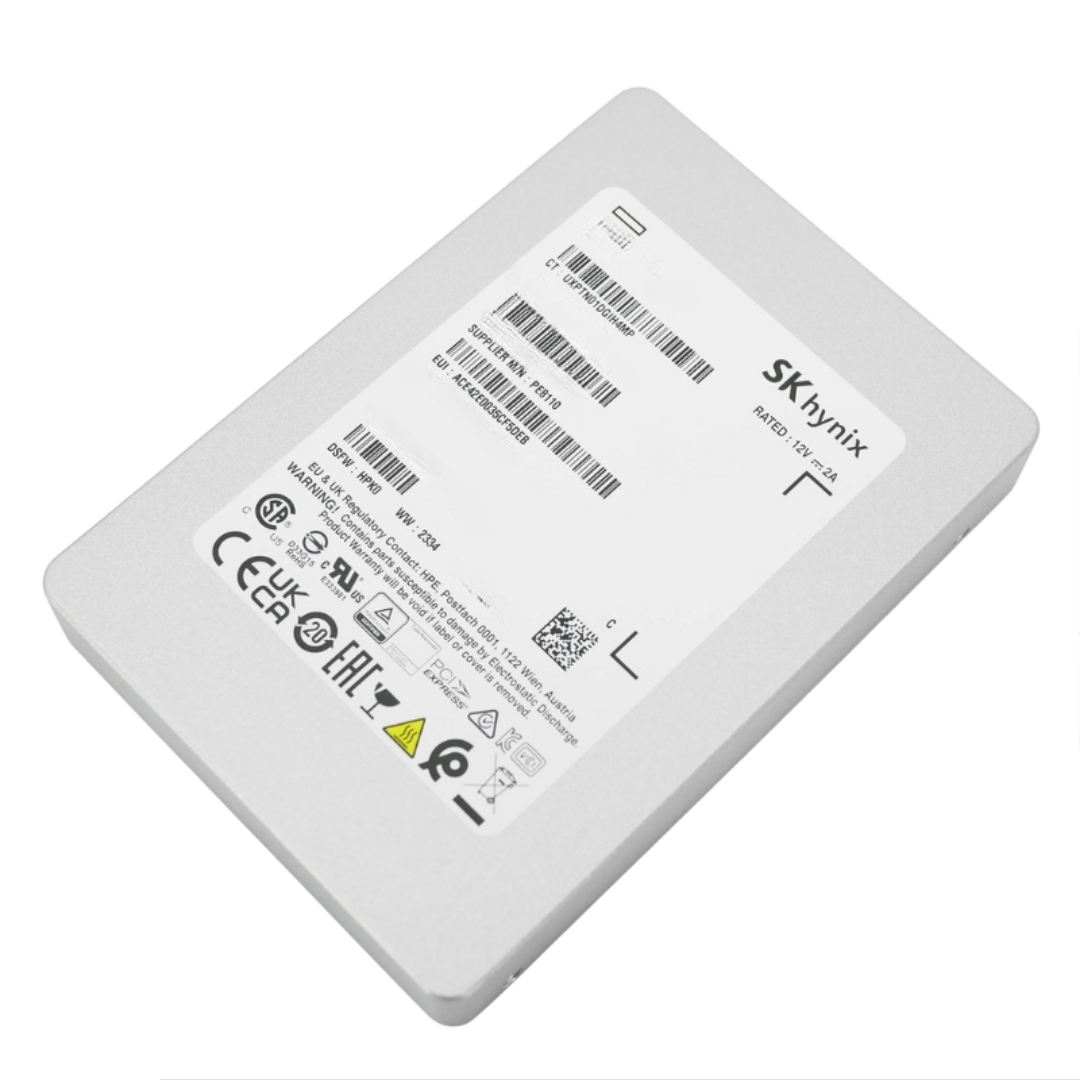
Hynix HFS1T9GECTX088N 1.92TB PCIe Gen4 X4 NVMe Read Intensive TLC U.2 2.5-inch Enterprise Solid State Drive. Excellent Refurbished with 1 year replacement warranty. Dell Version
The Hynix HFS1T9GECTX088N 1.92TB is a high-density, enterprise-grade solid state drive engineered for read-intensive workloads. Built in a U.2 2.5-inch form factor and leveraging PCIe Gen4 x4 NVMe protocol, this drive is designed to deliver consistent low-latency access, strong performance-per-watt, and robust endurance for modern datacenter use cases. This category description explores the technical attributes, deployment scenarios, compatibility considerations, reliability metrics, and purchasing factors that matter to systems architects, storage administrators, and procurement teams.
This SSD is crafted for enterprises requiring consistent throughput and fast responsiveness:
This enterprise-grade SSD integrates seamlessly with Dell servers and storage platforms while supporting next-generation PCIe Gen4 protocols. Its backward compatibility ensures smooth transition from earlier U.2 storage solutions, making it ideal for businesses upgrading their IT infrastructure.
The 1 DWPD rating ensures sustainable write performance for enterprise operations. Its error-correction technology, coupled with endurance-optimized NAND, reduces failure risks, providing consistent uptime for critical infrastructure.
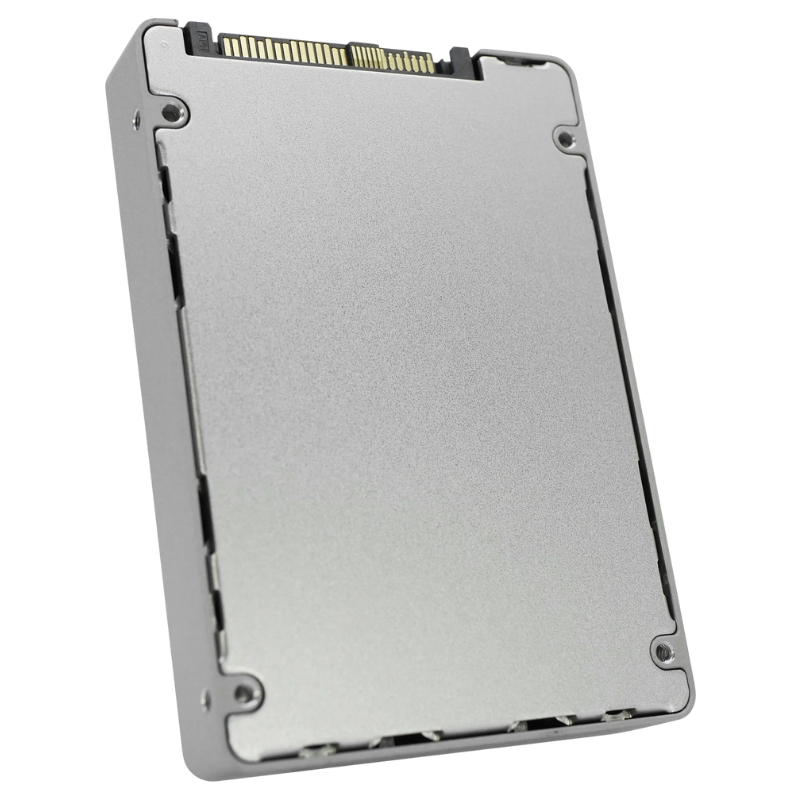
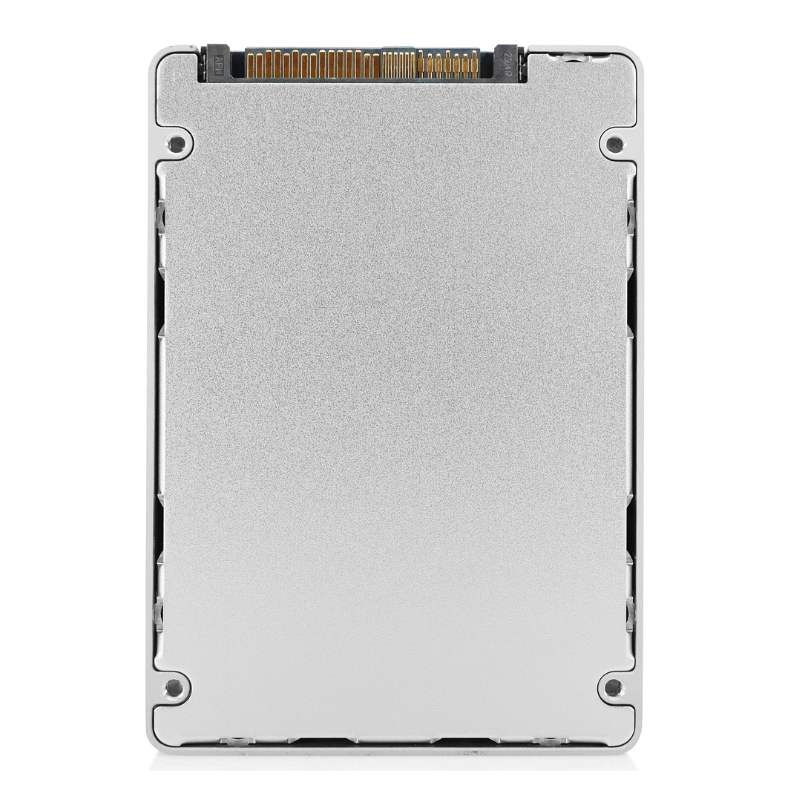
This model is presented in the standardized U.2 2.5-inch enclosure suitable for enterprise servers and storage platforms. The U.2 mechanical footprint provides hot-swap capability and broad interoperability with server backplanes and NVMe drive bays. The NVMe interface over PCIe Gen4 x4 gives the drive four PCIe lanes, enabling higher theoretical throughput and lower protocol overhead compared with legacy SATA or SAS devices.
The drive utilizes Read-Intensive TLC NAND chemistry. TLC (triple-level cell) stores three bits per physical memory cell, and when tuned for read-intensive applications it offers a balanced mix of capacity and endurance for workloads dominated by large and frequent read operations. "Read-intensive" classification indicates firmware and overprovisioning choices that favour sustained read performance and efficient garbage collection rather than extreme write endurance.
With a nominal capacity of 1.92TB, this device is targeted toward arrays and servers where high capacity per drive lowers total system cost while maintaining enterprise reliability. When provisioning logical volumes or storage pools, administrators must account for formatting and reserved areas; the usable capacity seen by the OS will be lower than the raw 1.92TB.
PCIe Gen4 x4 NVMe offers significantly higher bandwidth and lower latency than previous generations. In practical deployments, performance depends on host CPU, platform PCIe topology, firmware, and workload pattern. Drives in this category prioritize steady-state read IOPS and predictable latency under mixed read/write conditions. Avoid expecting desktop SSD burst numbers—enterprise drives focus on consistency, QoS, and deterministic behavior under sustained loads.
At the heart of a high-quality enterprise NVMe drive is the controller that coordinates flash translation layer (FTL), wear-leveling, error correction (ECC), and background maintenance tasks. Hynix drives typically integrate controllers optimized for TLC flash, with adaptive algorithms that balance write amplification and garbage collection to preserve read performance. Effective controller design gives administrators the confidence to deploy drives in RAID groups or disaggregated storage without unexpected latency spikes.
Enterprise firmware adds features not always found in consumer drives: advanced SMART attributes, endurance reporting, thermal throttling policies, power loss protection modes (if present), and secure erase commands. For predictable operation, choose firmware versions validated on your target server model. Integration with monitoring systems (via NVMe SMART logs and vendor-specific telemetry) allows proactive replacement and predictive maintenance.
Read-intensive TLC drives are specified with endurance and total bytes written (TBW) that align with expected usage patterns—high read volumes with moderate writes. Overprovisioning (either factory default or administrator-defined) improves write performance and endurance by providing spare blocks for the controller’s background operations. When designing storage tiers, select endurance classes to match application write patterns and lifetime replacement planning.
For write-heavy workloads — such as logging servers, transactional database primaries, or heavy virtualization hosts with constant writes — consider higher endurance options (e.g., mixed-use or write-intensive drives) or enterprise-class SLC/MLC alternatives. Selecting the correct endurance class prevents early wear-out and reduces the total cost of ownership due to replacements and rebuilds.
U.2 NVMe drives integrate well into software-defined storage stacks and hardware RAID controllers that support NVMe. Note that rebuild times and rebuild impact differ between NAND types and capacities; large-capacity TLC devices can lengthen rebuild windows, so plan redundancy and spare capacity accordingly. Software RAID solutions with parallel rebuild optimizations and erasure coding can mitigate rebuild pressure when using high-capacity NVMe drives.
The U.2 2.5-inch form factor is widely supported across enterprise server vendors. Before procurement, verify your server backplane, drive bay power delivery, and thermal design support U.2 NVMe drives at the specified thermal/power envelope. Some chassis may require a U.2-to-U.3 adapter or a different sled; consult server vendor compatibility lists.
PCIe lane allocation on server motherboards and CPUs matters. To extract the maximum benefit from a PCIe Gen4 x4 drive, ensure that the drive is attached to a slot or backplane with direct CPU lanes or a validated switch fabric. Sharing lanes or routing through non-optimal controllers can reduce available bandwidth and increase latency.
Enterprise NVMe drives can dissipate significant heat under sustained throughput. Use drive sleds and airflow designed for NVMe cooling, monitor drive temperature telemetry, and enable thermal throttling policies when necessary. Power management settings in firmware and host BIOS can improve power efficiency, but verify that any power-saving modes do not conflict with required latency or QoS guarantees.
Check whether the drive supports hardware-accelerated encryption (e.g., TCG Opal or NVMe-native encryption features). Hardware encryption keeps data at rest protected with minimal host overhead. For data lifecycle management, the secure erase and crypto-erase commands allow rapid sanitization compliant with many enterprise policies.
Some enterprise drives include power-loss protection capacitors or firmware features that minimize the risk of data corruption during unexpected power events. Confirm the drive’s guarantees for metadata consistency and write atomicity, especially for transactional systems where partial writes can cause corruption.
When purchasing for regulated industries (finance, healthcare, government), review vendor compliance statements for data protection standards and export regulations. Confirm that the drive’s encryption and wipe methods meet your compliance requirements for secure disposal or redeployment.
Use read-intensive NVMe drives for front-tier read caches, secondary database replicas, and acceleration layers. Pair these with higher-endurance NVMe or SAS/SATA SSDs for write-heavy or archival layers. Effective tiering and caching strategies reduce overall cost while meeting performance SLAs.
U.2 is excellent for hot-swap enterprise trays and standardized backplanes. M.2 is more compact and used in space-constrained nodes but less suitable for hot-swap operations. Emerging EDSFF form factors (short and long sleds) target hyperscale deployments with improved thermal and capacity options. Select the form factor that matches chassis compatibility, maintainability needs, and cooling capabilities.
Follow vendor guidelines for firmware updates. Test firmware upgrades on non-production systems to validate stability. Where possible, coordinate firmware cycles across drives used in the same array to avoid heterogeneous behavior under load.
Integrate SMART metrics, NVMe telemetry, and vendor utilities into your monitoring toolchain. Track critical attributes such as media health, available spare, percentage used, and temperature. Configure alerts for pre-failure indicators and automate replacement workflows to reduce mean time to repair (MTTR).
Optimizing queue depth, IO size, and concurrency can unlock stable throughput while respecting latency budgets. Enterprise NVMe drives commonly perform best at moderate to high queue depths with IO sizes matching the application (e.g., 4K for transactional workloads, larger sequential IOs for media or content delivery).
Maintain QoS by avoiding oversubscription of host PCIe lanes and by ensuring adequate headroom in controller queues. For multi-tenant platforms, adopt scheduling policies that limit noisy-neighbor impact or use dedicated pools for latency-sensitive services.
For search engines and catalog pages, use a concise title incorporating primary keywords: Hynix HFS1T9GECTX088N 1.92TB PCIe Gen4 x4 NVMe U.2 Read-Intensive TLC SSD. The meta description should summarize the use case and highlight differentiators (capacity, interface, endurance class) while remaining under ~160 characters.
Implement JSON-LD Product schema with fields for model number, brand, capacity, interface, form factor, warranty, and aggregate rating if available. For categories and subcategories, use breadcrumb structured data to improve search visibility for shoppers navigating enterprise SSD lists.
Target a set of long-tail keywords relevant to procurement and technical searchers: "1.92TB NVMe U.2 enterprise SSD", "read intensive TLC NVMe drive", "PCIe Gen4 x4 2.5-inch enterprise SSD Hynix", and "HFS1T9GECTX088N datasheet". Include these naturally across headings, bullet lists, and technical spec blocks to maximize discoverability while avoiding keyword stuffing.


 Contact Us
 Information
 Catalog
 Solid State Drives (SSD)
 Network Switches
 Hard Disk Drives
 HBA & Controllers
 PC & Servers
 PC & Server Memory
 CPU & Processors
 Network Routers
 Power Supplies
 Tape Drives & Libraries
 Network Devices
 Computer & Network Cables