(7% discount is applied at checkout)
Cart is empty
Your go-to destination for cutting-edge server products
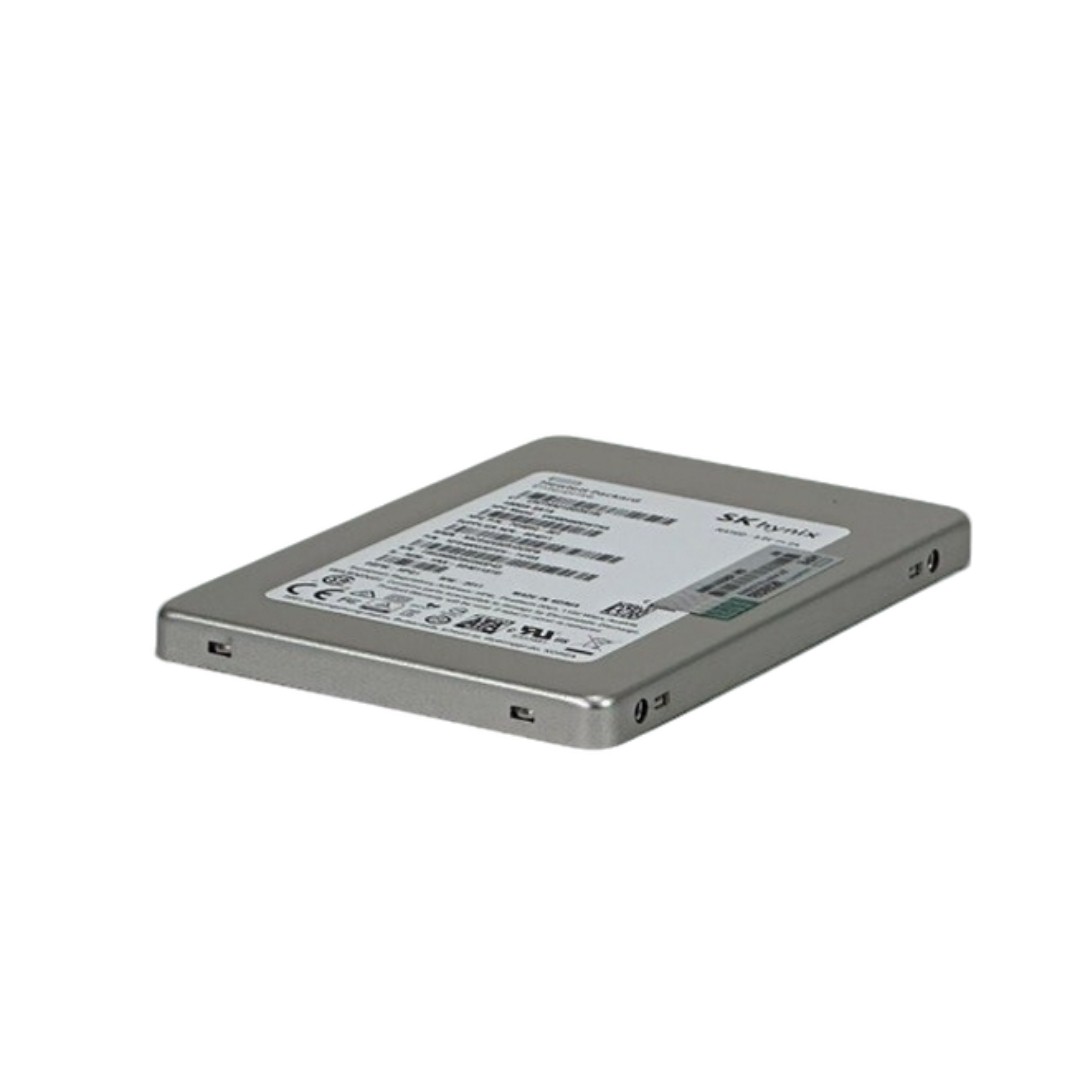


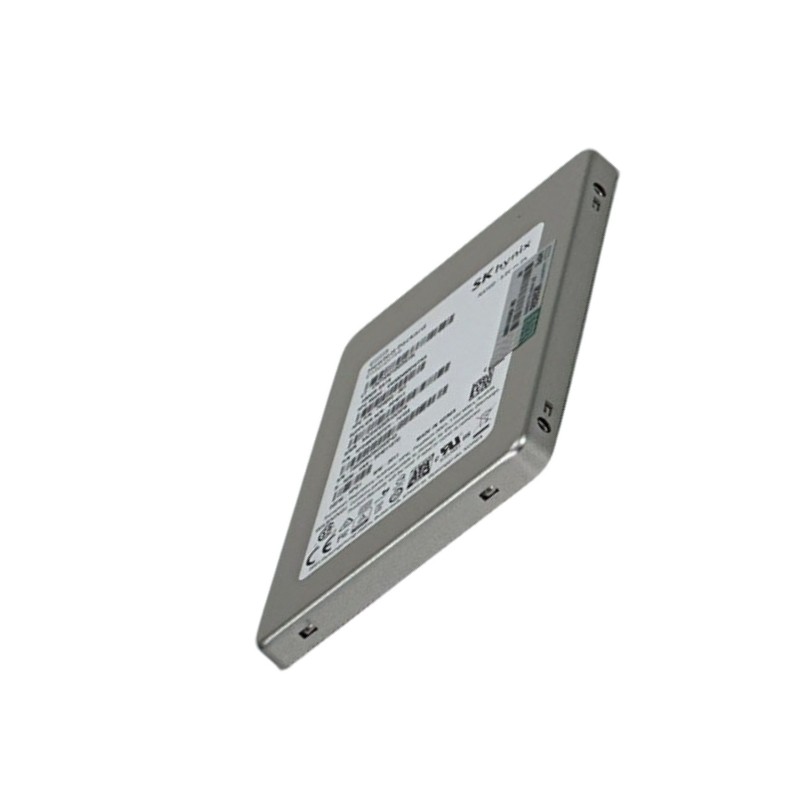
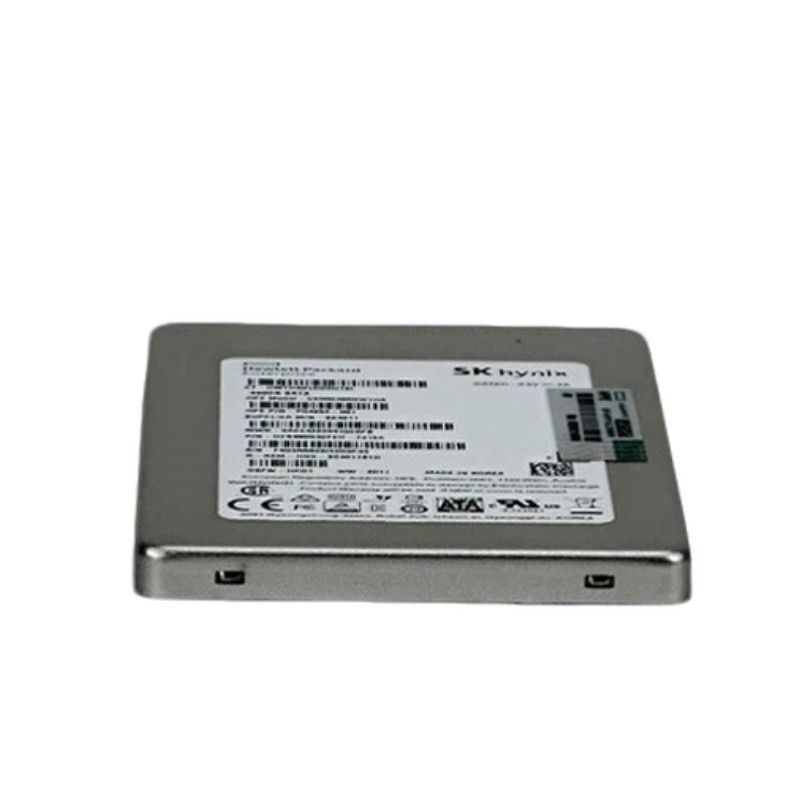
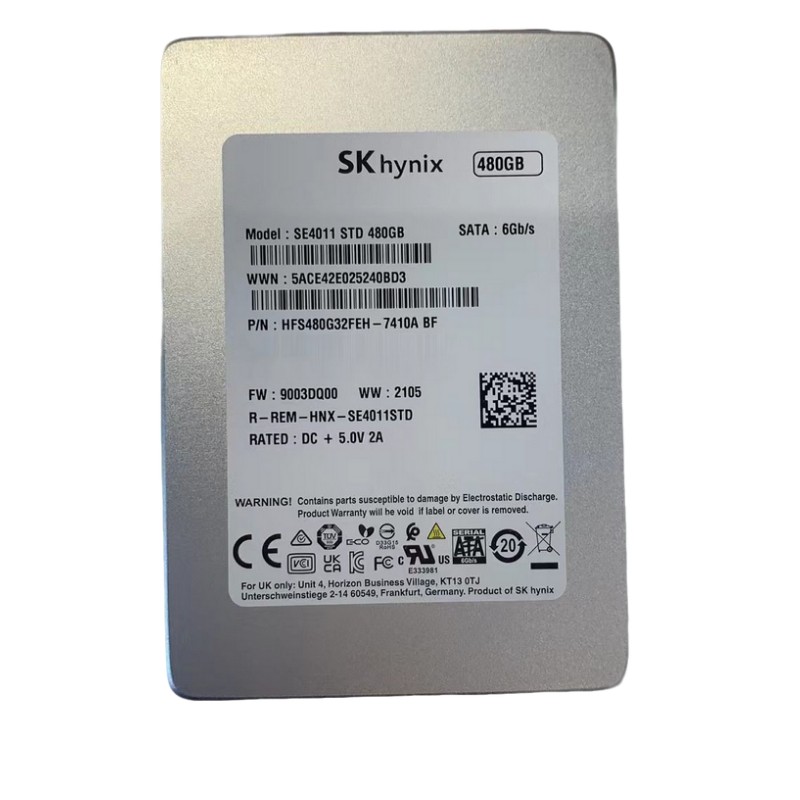
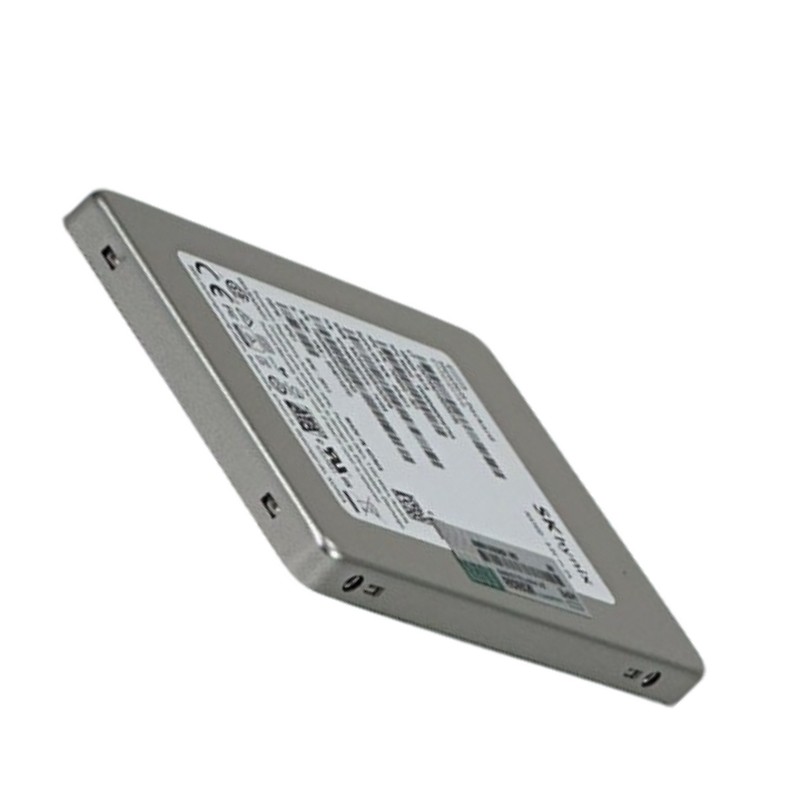
Hynix HFS480G32FEH-7410A SE4011 Series 480GB SATA 6GBPS 2.5inch Internal Enterprise Solid State Drive. Excellent Refurbished with 1 year replacement warranty - Dell Version
Engineered for consistent performance and durability, the SK Hynix HFS480G32FEH-7410A from the SE4011 series is a refurbished HPE OEM solid-state drive tailored for business-grade systems. With a SATA 6Gbps interface and compact 2.5-inch form factor, it’s ideal for high-efficiency storage environments.
INTEL P4326 15.36TB NVMe RULER SSD — high-density NVMe storage for hyperscale and cloud
The INTEL P4326 15.36TB NVMe RULER (SSDPEXNV153T8D) is part of the high-capacity NVMe family engineered to deliver maximum terabytes-per-slot while preserving enterprise reliability, data integrity, and manageable power and thermal characteristics. This class of drives targets storage architects, hyperscalers, and cloud operators who need to consolidate capacity, reduce rack footprint, and accelerate access to large datasets without accepting the high latencies of traditional HDD cold tiers. The Solidigm/Intel D5-P4326 lineage emphasizes large raw capacities (15.36TB typical for initial SKUs) in U.2/ruler-compatible and EDSFF-style form factors to achieve unprecedented per-rack consolidation.
Ruler-class NVMe devices like the P4326 occupy a strategic mid-point between small, high-performance NVMe drives (optimized for IOPS) and the multi-terabyte HDD cold tiers (optimized for $/TB). They are designed for "warm" storage pools — data that is infrequently written but must remain quickly accessible for reads, metadata lookups, analytical queries, or occasional restores. By delivering NVMe protocol benefits (low latency, parallel queues) in very large capacities, this category enables architectures that reduce the number of controllers, cabling, and drive slots required to reach petabyte-scale storage. When properly integrated, the result is lower overall operational complexity and an improved total cost of ownership (TCO) for capacity- and read-oriented workloads.
P4326-class drives are offered in very large raw capacities (commonly 15.36TB in the initial generation) and ship in server-oriented form factors such as U.2 and EDSFF/ruler variants. These form factors enable high-density arrays and sled-based server designs that can pack a very high amount of storage into 1U and 2U chassis. The initial product briefs and datasheets describe 15.36TB SKUs and reference implementations for high-density 1U-optimized chassis.
The drives use the NVMe protocol over PCIe lanes (PCIe Gen3 x4 for the first-generation 15.36TB P4326 SKUs) to provide low-latency, high-throughput access. Controllers in this category are tuned to prioritize capacity efficiency, read throughput, and predictable steady-state behavior—with firmware features such as advanced wear-leveling, background garbage collection, and power-loss protection to preserve data integrity in enterprise environments. Because these modules aim for high TB density, implementation choices often favor QLC or high-density TLC NAND to achieve raw capacity targets while balancing cost and endurance.
P4326-family drives are commonly classified in "value" or "capacity-oriented" endurance tiers rather than the highest DWPD (Drive Writes Per Day) categories. Their expected endurance profile suits read-dominant, cold-to-warm workloads, archival retrievals, and object-store warm pools. Endurance figures and warranty terms vary by SKU and vendor, so planners should review TBW/DWPD and warranty statements before procurement and model rebuild scenarios in erasure-coded clusters to ensure acceptable lifetime wear.
Large object-storage clusters (S3-compatible or similar) often separate object metadata and small-object hot serving from bulk object payloads. P4326-class drives are ideally positioned for dense capacity nodes that serve object payloads with occasional reads and sparse writes. By using erasure coding (for example, 8+2 or 6+3 schemes), operators benefit from fewer devices to manage per-capacity target and more efficient rebuilds when compared with hundreds of small drives. The combined effect is lower per-PB operational overhead.
These drives make excellent nearline backup repositories when recoverability speed matters: restores from a single 15.36TB NVMe module can be significantly faster than restoring from multiple HDD spindles, because NVMe's parallelism and lower latency shorten time-to-first-byte and accelerate sequential reads during restores. Backup appliances using deduplication and compression can further extend effective usable capacity, making ruler NVMe drives efficient targets for hybrid backup topologies.
Data lakes that must perform large-scale analytics (scan-heavy workloads) benefit from the high sequential throughput of these drives. While small-random IOPS are lower compared with high-end mixed-use SSDs, large sequential scans and parallelized map-reduce style workloads achieve excellent throughput on P4326-class devices when the host and software stack exploit high concurrency and multi-threaded reads.
Before procurement, validate backplane and chassis compatibility for the chosen form factor (U.2 vs EDSFF/ruler) and confirm platform BIOS/UEFI and HBA firmware support for high-capacity NVMe namespaces. Solid-state ruler devices sometimes require vendor-specific sleds or backplane adaptors; obtain OEM compatibility lists and validate in staging to avoid unexpected firmware or power-profile issues at scale.
High-density NVMe modules can create thermal hotspots if airflow is insufficient. Stress-test sleds and chassis under sustained sequential loads to verify that drives remain within recommended temperature ranges and do not throttle. Consider intake/exhaust optimization, careful cable routing, and the use of server vendor cooling guides to preserve steady-state performance and media longevity.
Model usable capacity after erasure coding and reserve spare capacity for rebuilds and wear-leveling. Because each drive holds a large proportion of a node’s capacity, plan for hot-spare strategies and parallel rebuild capacity to ensure the cluster can tolerate drive loss without significant performance degradation. When designing erasure-coded topologies, balance stripe width to minimize rebuild time while optimizing storage efficiency.
Beware of interpreting peak SLC-cached burst results as sustainable performance. Real-world workloads, especially those with continuous ingestion or write-back caching, will stress the drive beyond cache capacity—obtain steady-state numbers and observe telemetry for thermal throttling and background maintenance activities that can influence tail latencies during sustained operations.
Select SED-capable SKUs or platform-level encryption to meet compliance requirements. Many enterprise NVMe drives offer hardware AES encryption and secure erase capabilities; integrate with your key management (KMIP/Cloud KMS) to ensure compliance and rapid secure decommissioning.
Collect vendor telemetry and SMART attributes centrally to detect wear, spare capacity, and thermal anomalies. Predictive analysis can improve replacement scheduling and reduce unplanned downtime. Integration into monitoring stacks (Prometheus, SNMP, vendor agents) is recommended for large clusters.
Although unit price per-drive is higher than HDD alternatives, ruler NVMe drives often produce competitive TCO when factoring space savings, lower power-per-TB, reduced controller counts, and faster restore/IO performance. Run scenario-based TCO models including power, cooling, logistics, and operational labor to evaluate true lifecycle costs.
The Hynix HFS480G32FEH-7410A, often surfaced with controller family references such as SE4011 or similar SKUs, is a 480GB 2.5-inch SATA 6Gbps TLC-based solid-state drive targeted at enterprise and near-enterprise use cases where cost-efficiency, reliable read and write performance, and SATA form-factor compatibility matter. These drives are commonly used for boot volumes, caching layers, read-write databases with modest IO intensity, and server/desktop refreshes that need enterprise-grade endurance at affordable price points. Reseller datasheets and technical listings report typical sequential read/write rates in the 500–560 MB/s range and random IOPS figures appropriate for TLC SATA parts (example listings report ~97k random read IOPS and ~30–50k random write IOPS depending on controller/firmware).
While NVMe has become dominant for high-performance storage tiers, SATA SSDs retain strong relevance where platform compatibility, predictable SATA backplane hot-swapability, and cost per GB matter more than the absolute lowest latency. The Hynix SE4011-based 480GB drive covers many practical enterprise needs: boot/OS volumes, edge nodes with constrained budgets, legacy server upgrades, and storage appliances that use SATA bays for metadata or cache because the controller or architecture was built around U.2/SATA backplanes. For many organizations, SATA SSDs remain a pragmatic balance of performance, serviceability, and cost.
The HFS480G32FEH-7410A conforms to the standard 2.5-inch SATA form factor (100×70×7mm typical), supports the SATA III 6Gbps interface, and is available with typical enterprise-grade endurance and SMART telemetry. These drives generally report weights near 70–75g and physical compatibility with standard server trays and laptop bays, making them easy to integrate into existing fleets. Typical product pages list sequential read speeds up to ~560 MB/s and sequential writes up to ~515 MB/s depending on firmware and over-provisioning settings.
TLC-based SATA drives commonly implement dynamic SLC caching to accelerate writes. For bursty or lightly sustained write patterns the SLC cache yields strong perceived performance; however, sustained write workloads that exceed cache capacity will fall back to native TLC performance and should be assessed in steady-state testing. For read-dominant workloads and transactional databases with moderate write amplification, a well-provisioned 480GB TLC SATA drive will often provide predictable performance at a lower capital cost than NVMe alternatives.
Advertised random IOPS for this SKU class vary between vendors and firmware revisions, but representative reseller listings indicate random read IOPS approaching 90–100k and write IOPS in the tens of thousands for optimized queued workloads. Latency is improved over HDDs by orders of magnitude but remains higher than NVMe devices—SATA is best considered when predictable mid-range latency and broad compatibility are priorities.
Enterprise Hynix SATA SSDs expose SMART attributes including media health, spare availability, error counts, and temperature. Integrate monitoring into your existing asset and telemetry systems to trigger predictive replacement before critical failures. Telemetry also enables capacity planning and thermal anomaly detection in dense server arrays.
Depending on the exact SKU variant, Hynix SATA enterprise drives may support hardware AES encryption and secure-erase commands. If data-at-rest encryption is required for compliance, verify SED support and key-management integration at procurement. For lower-risk environments, firmware-level secure erase or platform encryption can still meet many regulatory needs.
Use 480GB SATA SSDs as system/boot volumes to dramatically accelerate OS boot times, provisioning, and system-level metadata operations. The cost-efficiency of the 480GB tier makes it simple to dedicate fast local storage to OS and key services while leaving bulk data on higher-capacity HDDs or larger NVMe pools.
Many storage appliances and hybrid arrays use SATA SSDs as a caching or metadata layer in front of large HDD pools. The Hynix 480GB class is a popular choice for cache that needs to be persistently fast but does not justify the cost of Gen4 NVMe tiers.
For edge locations, branch servers, or legacy chassis where NVMe lanes or U.2 backplanes are absent, a 2.5-inch SATA SSD provides a drop-in upgrade that lowers power draw, increases reliability over spinning disks, and maintains compatibility with existing hot-swap trays and management workflows.
For Linux hosts, select modern filesystems (XFS, ext4 tuned for SSDs) and consider disabling aggressive periodic TRIM for server workloads in favor of scheduled maintenance windows. Ensure AHCI/SATA driver stacks are updated to support NCQ and correct power management for enterprise deployments.
Verify TBW/DWPD ratings and warranty terms for the exact SKU variant—distributor pages often show multiple similar model numbers (SE4011, SE5011, SE5031 series) that may differ in controller firmware or endurance targets. Confirm the TBW and warranty period and align with your expected write rates to determine appropriate refresh cycles.
Because SATA drives are low-cost relative to enterprise NVMe, maintain a hot-spare pool sized to cover expected failure windows and rebuild times. For remote branch deployments, a small pool of pre-staged spares minimizes downtime by allowing rapid on-site replacement without overnight shipping dependencies.
SATA 2.5-inch drives like the Hynix 480GB are typically less costly and simpler to integrate than NVMe options, though they exhibit higher latency and lower maximum IOPS. Choose SATA when platform compatibility and cost matter more than the absolute lowest latency or maximum throughput. If host platforms support NVMe and workloads require very high IOPS, prefer NVMe models instead.
Compared to HDDs, the SATA SSD delivers dramatically lower latency, higher IOPS, and better power efficiency for random workloads. For many mid-tier server workloads, the move from HDD to a SATA SSD results in significant application performance gains and improved user experience at a moderate incremental cost per GB.


 Contact Us
 Information
 Catalog
 Solid State Drives (SSD)
 Network Switches
 Hard Disk Drives
 HBA & Controllers
 PC & Servers
 PC & Server Memory
 CPU & Processors
 Network Routers
 Power Supplies
 Tape Drives & Libraries
 Network Devices
 Computer & Network Cables