(7% discount is applied at checkout)
Cart is empty
Your go-to destination for cutting-edge server products
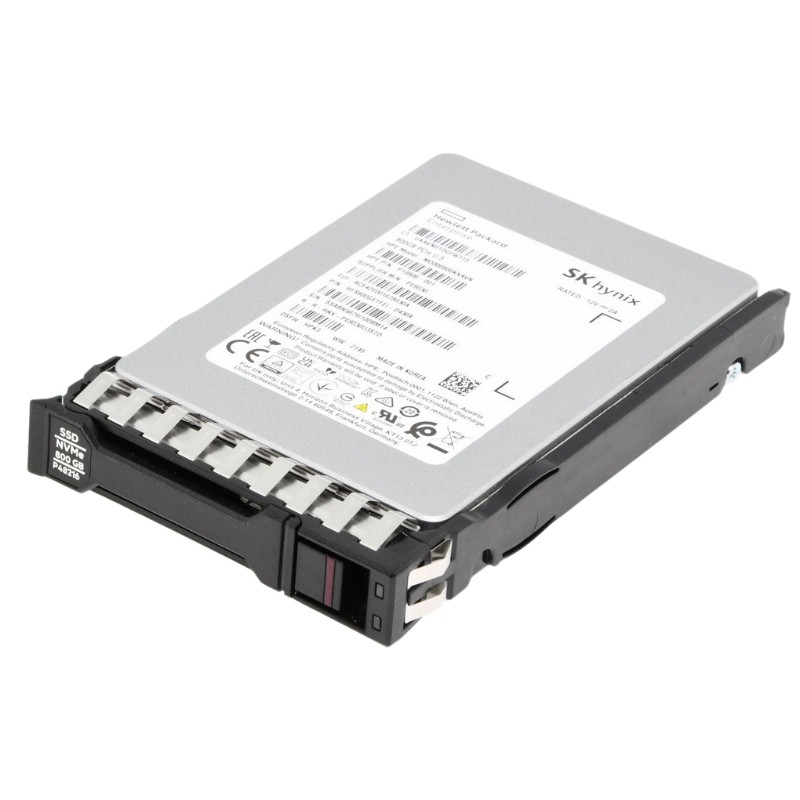


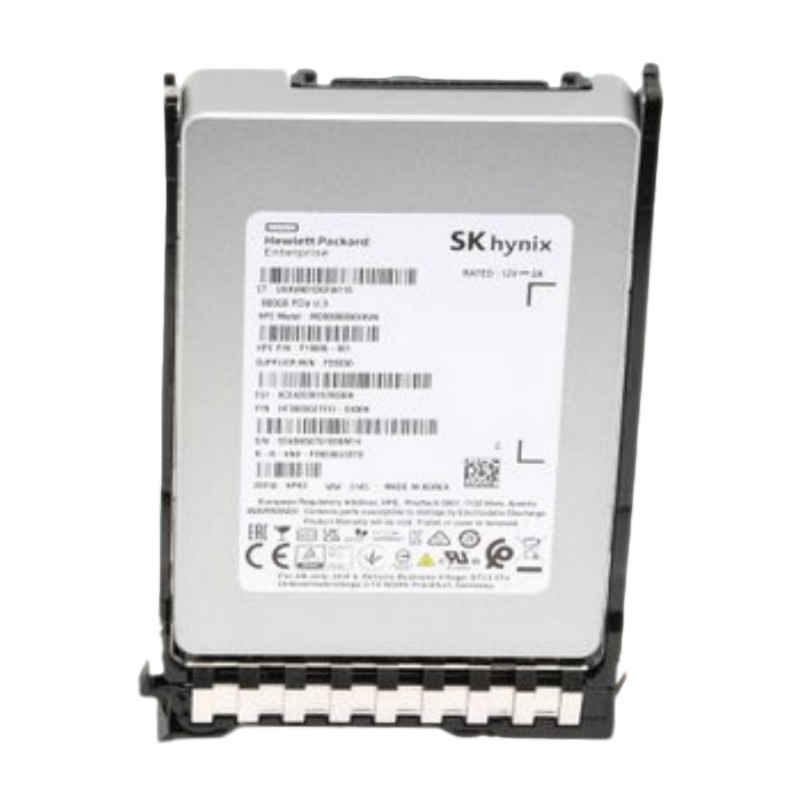
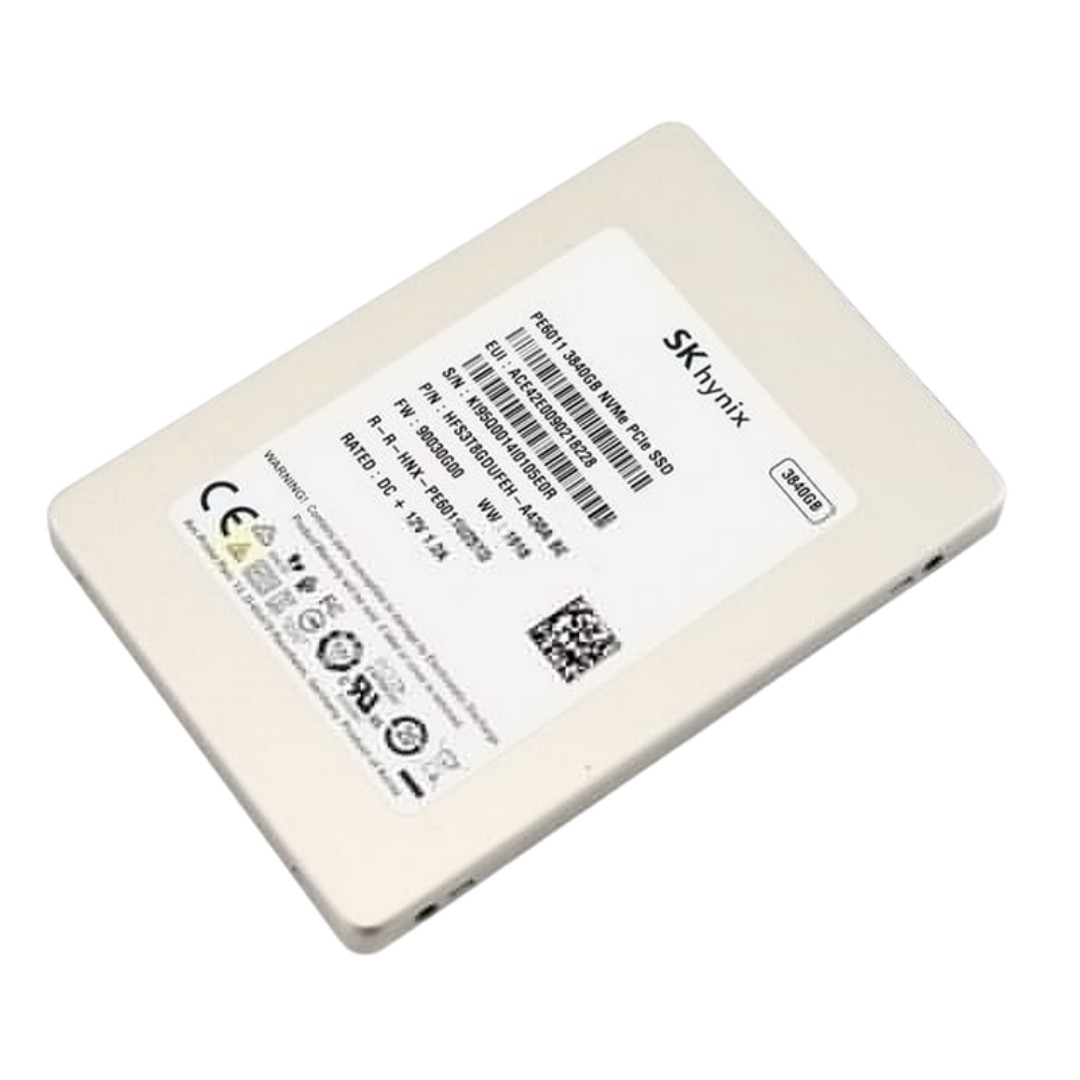
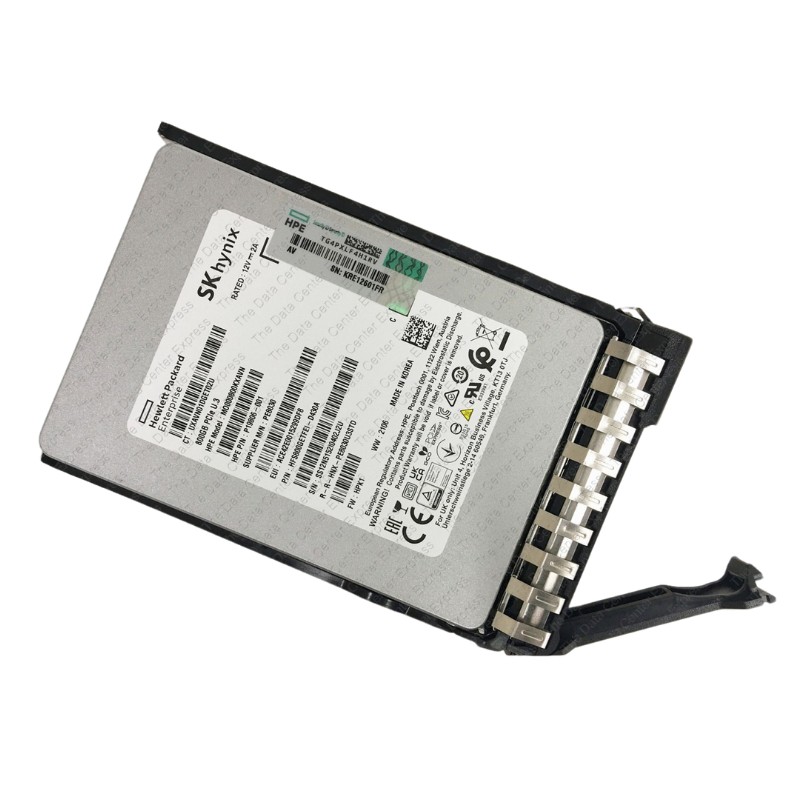
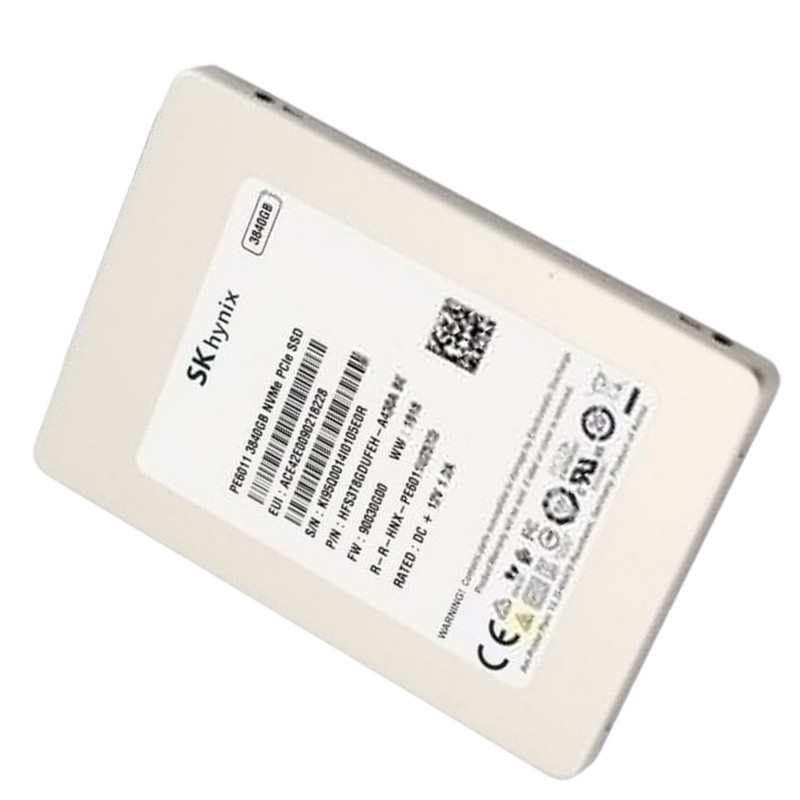
Hynix HFS800GDC8X088N PE8030 800GB M.2 2280 PCI-Express 3.0 X4 NVME Mixed Use TLC Enterprise Internal Solid State Drive. Excellent Refurbished with 1 year replacement warranty. Dell Version
The SK Hynix PE8030 HFS800GDC8X088N is a powerful internal solid-state drive engineered for performance-driven environments. With PCIe 3.0 x4 connectivity and a compact M.2 2280 form factor, this 800GB NVMe SSD delivers exceptional speed and reliability for data-intensive applications.
INTEL P4326 15.36TB NVMe RULER (SSDPEXNV153T8D) — high-density capacity NVMe category
The INTEL P4326 15.36TB NVMe RULER (SSDPEXNV153T8D) represents a class of capacity-optimized enterprise NVMe drives engineered specifically to maximize terabytes per slot while preserving NVMe protocol advantages — low latency, deep queue parallelism, and efficient CPU utilization. This ruler/EDSFF style family targets hyperscale cloud providers, OEMs, system integrators and enterprises building compact storage nodes for warm/nearline tiers: object payload layers, data-lake bodies, backup/rapid-restore targets and any use case that values terabyte density and fast read access more than the highest DWPD figures. The P4326 category trades off some write endurance and random small-block IOPS in favor of exceptional density, predictable steady-state throughput and attractive watts-per-TB at scale.
Ruler NVMe fills the gap between small, high-IOPS NVMe drives used for transactional workloads and large arrays of HDDs used for cold archival. By consolidating many terabytes into a single slot, ruler drives reduce the number of controllers, cables, and physical failure domains required to reach petabyte scale. This consolidation simplifies operations, reduces BOM complexity, and enables faster restore windows because NVMe-level reads avoid HDD seek penalties. Use cases that are read-dominant, scan-heavy, or require rapid restores benefit the most from this category.
“Ruler” is the common parlance, but implementations may be EDSFF (E1.L), vendor sleds, or other elongated PCBs. The elongated layout allows NAND packages to be spread across the board, increasing capacity while improving heat spreading. However, the same layout makes these drives sensitive to non-uniform airflow. Chassis designers must provide laminar flow across the full board length and avoid recirculation hotspots. Sled fitment, connector depth, blind-mate reliability and backplane lane mapping must all be validated against server compatibility matrices before procurement.
Standardize on tool-less sleds where possible, label sleds with human-readable IDs and embed QR codes for quick asset lookup. Maintain a spare pool sized to your erasure-coding and rebuild windows, and define hot-swap procedures that include controller rescans and telemetry verification. These operational details dramatically reduce MTTR and human error in large fleets.
To pack 15.36TB in a single module, manufacturers typically use high-density TLC or QLC layers paired with controllers tuned for capacity and steady throughput. Firmware normally emphasizes robust error correction, wear-leveling, background garbage collection that minimizes latency impact, and power-loss protection to preserve metadata integrity. The resulting endurance profile is appropriate for read-dominant or moderate-write workloads; architects must model TBW/DWPD against write amplification caused by erasure coding and rebuild events before setting refresh cadences.
Many capacity drives employ a dynamic SLC cache to accelerate burst writes. Short synthetic benchmarks that remain inside SLC will overestimate sustained write performance. For procurement and design, run steady-state tests that exceed the SLC window and capture percentile latency metrics (p50/p95/p99/p99.9) to understand real operational behavior.
The ruler NVMe category excels when used as a dense capacity tier with NVMe access semantics. Common architectural patterns split responsibilities across tiers: small, high-DWPD NVMe for short-term ingestion/journals; mixed-use NVMe for metadata and small hot objects; and ruler NVMe for bulk payloads and archival bodies that require occasional fast access.
In S3-style clusters, P4326-class modules typically hold large object payloads while metadata and small objects are retained on faster NVMe tiers. Properly chosen erasure coding (e.g., 8+2 or 6+3) balances usable capacity and rebuild time—wider stripes improve efficiency but increase the impact and duration of rebuilds if resources are constrained. The reduced device count per pod simplifies inventory and shortens rebuild coordination compared to many small drives.
Backup appliances and snapshot repositories that must support rapid restores gain immediate operational benefits from NVMe capacity layers: sequential restores stream at NVMe speeds and time-to-first-byte is dramatically shorter than HDD pools. When combined with deduplication and compression, the effective protected data per TB grows further, improving the overall economics of NVMe targets.
Scan-heavy analytic workloads (parallel reads across large columnar files) benefit from the high sustained sequential throughput of ruler arrays. For interactive workloads requiring low tail latency on small indexes, combine ruler pools with a small latency-optimized NVMe cache to keep user-facing query latencies low while still scanning petabyte datasets efficiently.
Tune NVMe submission/completion queue depths and bind IO processing to local NUMA nodes. High queue depths can increase throughput but also widen tail latencies; monitor CPU cycles per IO and I/O percentile metrics to find the optimal operational point.
Use filesystems tested at scale with NVMe (XFS, tuned ext4) and consider O_DIRECT for applications that manage their own cache to reduce double buffering. Align erasure stripe or RAID chunk sizes to common IO sizes to minimize read amplification during normal access and rebuilds.
For compliance, select SED (self-encrypting drive) variants and integrate device keys with a central KMS (KMIP or cloud KMS). Document secure-erase and RMA workflows so decommissioned drives are guaranteed scrubbed before leaving the site.
Aggregate SMART and vendor telemetry centrally; trend percent-used, spare blocks, ECC corrections, and temperature. Use these signals to schedule proactive replacements before warranty thresholds are reached and to minimize emergency site visits.
When comparing ruler NVMe to HDD arrays or many small SSDs, include chassis/backplane costs, cabling, power and cooling, spare inventory, and operational labor. Ruler NVMe often wins on operational simplicity, lower per-petabyte management effort and faster restores, even when raw $/TB looks higher. Negotiate RMA and firmware support for large purchases and confirm EOL/successor SKUs where applicable.
Plan refresh cycles based on endurance headroom, warranty and improvements in subsequent product generations rather than raw performance alone. Maintain a rolling refresh plan that preserves erasure coding quorums and avoids correlated risk windows during upgrades.
The Hynix HFS800GDC8X088N sits within the mixed-use enterprise NVMe category and is typically offered in PCIe 3.0 x4 (NVMe) form factors such as M.2 2280, U.2 2.5", or OEM caddies depending on the server vendor. At ~800GB, this model targets a broad set of enterprise workloads: VM datastores, database nodes, VDI images, caching layers and application servers that require a balanced combination of sustained throughput, strong random IOPS and meaningful write endurance. Mixed-use TLC drives are engineered to withstand heavier write workloads than read-intensive models, making them appropriate as a general purpose tier in many modern storage stacks.
Mixed-use NVMe is the workhorse tier for many organizations. It balances cost, endurance and performance — delivering far higher IOPS and lower latency than SATA SSDs or HDDs while providing better write endurance and predictable performance for mixed read/write workloads than read-intensive or ultra-cheap QLC devices. At 800GB capacity, the HFS800GDC8X088N is sized to hold operating systems, multiple VMs or medium-sized databases while keeping replacement cost reasonable for spares and remote sites.
Typical mixed-use enterprise NVMe modules like HFS800GDC8X088N combine enterprise firmware, TLC NAND, SLC caching strategies, robust ECC and over-provisioning. PCIe 3.0 x4 remains widely supported across server fleets and offers excellent practical bandwidth for many mixed workloads, while some versions may also support platform-specific features (power management profiles, error reporting and vendor telemetry) to integrate smoothly into datacenter management.
Mixed-use drives use SLC caching to accelerate short bursts; however, because typical mixed workloads include substantial sustained writes, it is critical to perform steady-state tests that exceed the SLC window to obtain realistic write throughput and latency measures. Proper over-provisioning and workload shaping mitigate steady-state slowdowns and extend media life.
At ~800GB per device, these modules are a practical choice for datastore volumes hosting several VMs or VDI image replicas. They deliver sufficient IOPS for mixed guest workloads and keep density reasonable for chassis with many bays. For VDI boot storms, pair mixed-use NVMe with adequate CPU and network resources and tune queue depths and NUMA affinity to preserve tail latencies.
Small-to-medium DB instances (OLTP or mixed OLTP/OLAP) benefit from the drive’s balanced performance and endurance. For write-heavy databases, consider higher DWPD variants or isolate write logs onto a dedicated high-DWPD tier while keeping data files on mixed-use NVMe to balance cost and performance.
Application servers that manage caching, session stores, or artifact registries frequently rely on mixed-use NVMe to deliver good random IOPS and reliable sustained throughput. Use appropriate eviction policies and ensure cache sizes are matched to working set characteristics to avoid frequent sustained writes that can stress endurance.
Hynix mixed-use modules are available in M.2 and U.2 form factors. M.2 offers compact installation and short trace lengths, while U.2 provides hot-swap serviceability in front bays. Confirm platform compatibility, thermal provisions (heatsinks for M.2) and lane sharing rules when populating multiple M.2 slots. For U.2 deployments ensure the backplane and caddies support NVMe and the expected drive height (7mm vs 15mm) for the particular SKU.
Focus on steady-state behavior and tail latencies under realistic loads rather than peak synthetic burst numbers. Monitor SMART metrics during tests to correlate wear and media events with performance changes and to estimate replacement timing under projected loads.
Mixed-use Hynix modules expose SMART attributes including percent used, spare block counts, ECC correction stats and temperature. Integrate these telemetry signals into central monitoring systems to enable predictive replacement workflows and to reduce unexpected failures.
Many enterprise SKUs support AES hardware encryption and TCG Opal or similar standards; verify SED availability on the specific part if you require hardware-backed encryption. Document secure erase and key management procedures for compliance and safe RMA processes.
Check TBW and DWPD on the exact SKU and negotiate enhanced RMA or advanced replacement options for large purchases. Model replacement cadence against projected writes (including write amplification from deduplication or compression features) and plan spares accordingly, especially for remote sites.
Mixed-use NVMe generally yields strong performance per dollar for mid-tier workloads. When modeling TCO, include expected endurance replacements, power consumption, cooling needs, and spare inventory costs. Factor in the labor cost of swapping more drives at scale if you were to choose many small drives rather than fewer higher-capacity modules.


 Contact Us
 Information
 Catalog
 Solid State Drives (SSD)
 Network Switches
 Hard Disk Drives
 HBA & Controllers
 PC & Servers
 PC & Server Memory
 CPU & Processors
 Network Routers
 Power Supplies
 Tape Drives & Libraries
 Network Devices
 Computer & Network Cables