
(7% discount is applied at checkout)
Cart is empty
Your go-to destination for cutting-edge server products
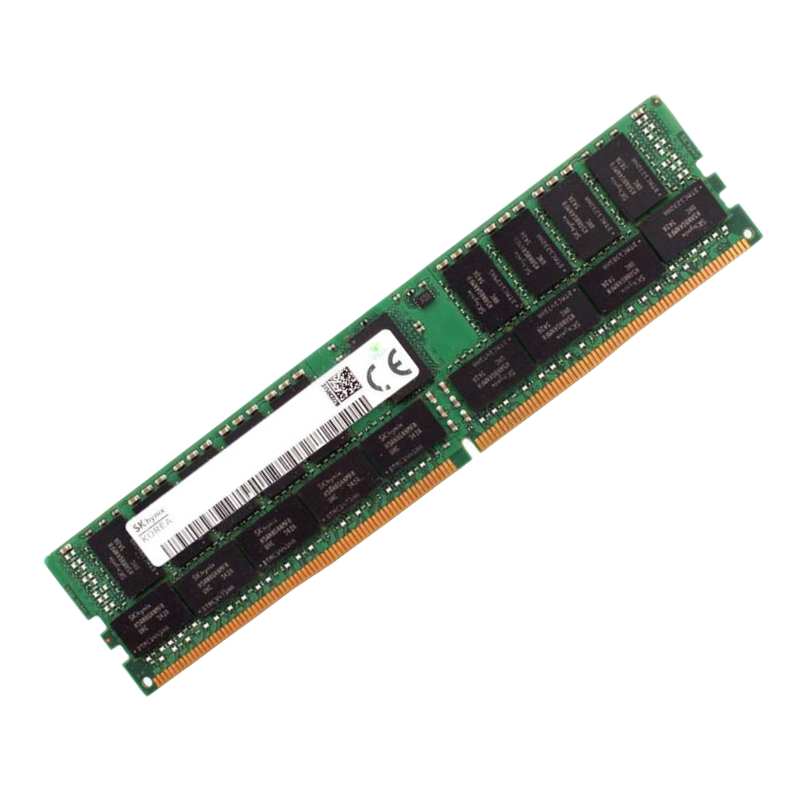
Hynix HMAA4GR8MMR4N-UH 32GB 2400MHz PC4-19200 Cl17 ECC Registered Dual Rank DDR4 SDRAM 288-PIN Rdimm Memory. New (System) Pull with 1 Year Replacement Warranty
The Hynix HMAA4GR8MMR4N-UH is a high-efficiency 32GB DDR4 ECC Registered memory module crafted to deliver dependable performance for enterprise servers, professional workstations, and data-intensive computing environments. Engineered for outstanding reliability and optimized bandwidth, this RDIMM module ensures stable multitasking and enhanced data accuracy.
The Hynix HMAA4GR8MMR4N-UH 32GB 2400MHz PC4-19200 CL17 ECC Registered Dual Rank DDR4 SDRAM module represents a high-performance, enterprise-grade memory solution engineered for servers and mission-critical computing environments. As modern data workloads continue to expand, organizations require memory components capable of supporting efficient multitasking, high-speed data throughput, and continuous system stability. This RDIMM solution from Hynix addresses these demands by integrating advanced DDR4 technology, error correction capabilities, and robust architecture tailored for long-term reliability.This category of server memory focuses on providing scalable, dependable, and energy-efficient performance suitable for database servers, virtualization infrastructures, cloud computing nodes, and advanced enterprise applications. The 32GB capacity paired with its 2400MHz operating frequency offers exceptional data handling capabilities, enabling systems to process complex operations without bottlenecks.
Enterprise-class ECC Registered DDR4 memory modules such as the Hynix HMAA4GR8MMR4N-UH are engineered to meet the demands of data centers and server environments where consistent uptime, system predictability, and fault tolerance are essential. This memory category focuses on components designed with enhanced electrical buffering, error detection and correction, and rigorous quality standards. These characteristics help safeguard sensitive operations against the types of memory faults that could result in system crashes, data corruption, or performance degradation.The DDR4 generation introduces higher bandwidth, reduced voltage requirements, and enhanced scaling capabilities compared to DDR3. ECC technology further strengthens its suitability for servers by automatically detecting and correcting single-bit memory errors. The Registered feature, also referred to as buffering, stabilizes communication between the memory controller and the module, making these components ideal for multi-layered configurations within dense rack-mounted servers.
PC4-19200 indicates a theoretical transfer rate capable of reaching up to 19,200 MB/s. This performance rating aligns with the needs of systems that manage high transaction volumes, virtualization hypervisors, resource-intensive analytics, and large-scale data processing. With a 2400MHz clock speed, this category of memory delivers responsive handling of read and write operations, ensuring reduced latency and improved multitasking efficiency.The CL17 latency value reflects balanced timing performance that supports both reliability and speed. Combined with server-grade architecture, the result is a memory solution that enhances system responsiveness without compromising long-term endurance. This performance level is especially valuable in environments where servers frequently execute simultaneous tasks such as database indexing, virtualization operations, AI model preprocessing, and large-scale resource coordination.
ECC, or Error Correction Code, serves as a crucial component in minimizing risks associated with intermittent memory errors. These errors can occur due to electrical interference, cosmic radiation, manufacturing irregularities, or extreme workloads. While often rare, even a single-bit memory fault can compromise crucial operations in an enterprise server. ECC functionality prevents these issues by constantly checking data integrity at the bit level and correcting minor errors automatically.Within enterprise computing categories, ECC memory significantly enhances system resilience, enabling organizations to depend on uninterrupted operations even under sustained usage. This makes the Hynix HMAA4GR8MMR4N-UH 32GB RDIMM particularly suitable for database servers, scientific computational systems, multi-user platforms, and critical deployment systems where accuracy and uptime cannot be compromised.
Registered DIMM architecture incorporates an additional register chip that buffers control signals before they reach the DRAM modules. This structural feature reduces electrical load on the memory controller, allowing systems to use a larger number of memory modules efficiently. In high-density servers where dozens of memory modules may be installed simultaneously, RDIMM architecture ensures stability and optimal signal management.Dual Rank configuration further enhances performance by enabling the memory module to access two distinct sets of memory chips. This structure allows better data distribution across ranks, optimizing throughput and reducing latency. For enterprise workloads involving multi-threaded computations, virtualization clusters, or distributed databases, this architectural efficiency plays a key role in maintaining system performance consistency.
Dual Rank memory offers significant benefits over single-rank modules in server environments. Systems equipped with Dual Rank modules often experience improved data handling and enhanced bandwidth performance. Servers utilizing memory-speed optimization features can achieve better overall throughput due to the additional rank available for data access. The alternating access patterns between ranks help minimize stalls during data-intensive cycles, thereby supporting sustained high-level computational output.For applications such as virtualization, where numerous virtual machines operate simultaneously, the additional rank provides improved resource distribution. For cloud service providers, the module supports greater allocation efficiency and reduces contention issues commonly experienced in memory-saturated environments.
DDR4 technology is crafted to operate at lower voltages compared to its predecessors, typically using 1.2V. This reduction in power consumption results in cooler operating temperatures and improved energy efficiency. For data centers running numerous servers simultaneously, this translates to significantly reduced power costs and diminished cooling requirements. The Hynix HMAA4GR8MMR4N-UH, engineered with these principles, serves as a sustainable and cost-effective memory option.With smoother power delivery and minimized thermal output, the module helps preserve the longevity of other internal components. This synergy plays an important role in maintaining hardware health across extended operation cycles, especially in facilities functioning 24/7.
RDIMM memory modules such as the HMAA4GR8MMR4N-UH are widely compatible with enterprise server motherboards from major manufacturers. They integrate seamlessly into systems designed for intensive workloads and advanced compute operations. Typical use cases include virtualization hosts, enterprise resource planning servers, online transaction systems, machine learning preprocessing nodes, and cloud-based infrastructure.Compatibility is further enhanced by adherence to JEDEC standards, ensuring predictable behavior across various hardware platforms. This consistency makes deployment easier for IT teams seeking reliable components for both new installations and system upgrades.
Reliability remains one of the most crucial attributes in server memory selection, particularly for enterprises managing large datasets and user-dependent services. The Hynix memory module leverages high-grade semiconductor materials and rigorous testing processes to ensure dependable operation under heavy workloads. ECC capabilities significantly reduce the likelihood of system freezes, unexpected shutdowns, or corrupted transactions, safeguarding mission-critical operations around the clock.In environments such as finance, healthcare, scientific analysis, and AI model deployment, maintaining precise data integrity is mandatory. Even brief system downtime could result in significant disruptions. With Registered ECC DDR4 memory, error prevention becomes an integrated and automated process, reducing the need for manual troubleshooting and enhancing the overall resiliency of server infrastructures.
Memory modules in server systems often operate under consistent heavy loads where sustained thermal efficiency is required. The HMAA4GR8MMR4N-UH module is designed to maintain optimal performance even under elevated temperatures, thanks to its advanced power regulation and heat distribution features. This helps minimize thermal throttling and ensures continuous flow of high-speed data operations.In blade server environments or compact data center configurations where airflow may be restricted, thermal stability becomes even more crucial. Modules engineered to handle these conditions help maintain overall system performance, reduce error rates, and extend the lifespan of surrounding components.
Many enterprise systems benefit from multi-channel memory configurations, where multiple modules operate concurrently to provide increased data bandwidth. The Registered RDIMM design ensures stable operation in these multi-module arrangements by reducing electrical strain on the memory controller. When servers populate all available DIMM slots, this load balancing ensures that signals remain stable and consistent.For memory-intensive workloads, such as running large-scale databases or hosting numerous virtual machines, the performance advantages of a fully optimized memory architecture are substantial. Enhanced memory bandwidth directly translates into quicker application response times, reduced task queueing, and more predictable system performance.
DDR4 memory represents a significant evolution in server performance technology. It introduces higher frequencies, improved efficiency, and increased module capacities, all of which help organizations scale operations smoothly. As new digital transformations continue shaping industries, servers equipped with DDR4 memory remain relevant for long-term computing demands. While DDR5 memory is emerging, DDR4 remains widely used in enterprise systems due to its stability, compatibility, and cost-effectiveness.Organizations investing in DDR4 ECC Registered RDIMM memory benefit from a matured technology ecosystem. With widespread support, predictable performance standards, and strong manufacturing frameworks, DDR4 RDIMM modules offer reliable long-term value for servers not yet transitioning to next-generation hardware.
A 32GB module such as the HMAA4GR8MMR4N-UH allows organizations to scale memory capacity effectively. Servers supporting large quantities of these modules can achieve significant memory footprints, enabling advanced multi-tier applications, high-volume transactional workloads, and extensive virtualization clusters. As system demands grow, the ability to expand total memory capacity becomes a critical factor in operational flexibility.The module’s Registered design supports expansion by maintaining electrical integrity even when the system uses a high number of DIMM slots. This is essential for environments planning future upgrades without requiring complete server replacement.
High data throughput is a defining characteristic of the PC4-19200 specification. When paired with DDR4’s natural ability to handle wide data channels, this creates a strong foundation for applications requiring fast access to memory resources. Reduced latency improves user experience across cloud services, accelerates computation tasks, and ensures smoother database operations.For businesses relying on real-time analytics, intelligent automation, or AI-assisted decision systems, memory responsiveness directly influences operational success. The Hynix module supports these demands with its balanced timing architecture and efficient internal chip layout.
Hynix is recognized globally for producing high-quality semiconductor components engineered with precision and durability. This memory module is crafted using advanced manufacturing processes designed to ensure consistent electrical stability, predictable performance cycles, and robust structural integrity. Server environments impose significant stress on hardware, making it essential that memory components withstand prolonged operation durations.Each module undergoes stringent quality tests evaluating latency performance, signal accuracy, sustained throughput, and operational endurance under simulated server-intensity conditions. This ensures that the module meets the rigorous standards expected of enterprise-tier hardware.
The DDR4 288-PIN design supports improved data transfer rates by enabling stable, high-bandwidth communication channels between the memory module and the server motherboard. The redesigned pin layout accommodates increased functionality, faster bus speeds, and better signal routing compared to earlier DDR interfaces. This contributes to improved module performance, particularly in multi-channel memory setups.The physical interface supports durable connections capable of handling heavy server vibrations, frequent maintenance cycles, and long-term thermal exposure. As part of the server's architecture, the pin configuration also plays a vital role in optimizing system airflow and ensuring consistent cooling.
The internal semiconductor layout of the Hynix HMAA4GR8MMR4N-UH module is optimized to support balanced read and write operations across all memory cells. Engineers carefully calibrate transistor structures to ensure efficient power usage, signal accuracy, and minimal propagation delays. The dual-rank design further improves the module's ability to distribute workloads across memory banks.The combination of advanced chip placement, high-density storage materials, and robust error correction ensures top-tier reliability during intricate computational sequences. By maintaining structural consistency, the module minimizes potential error sources while maximizing operational throughput.
Memory modules in enterprise environments must support extended operation durations without failure. The Hynix module’s build quality ensures resilience for long-term deployments. Enterprises can confidently rely on the module for environments where maintenance windows are limited and uptime is essential.With robust internal architecture and rigorous quality control, this memory solution helps reduce long-term hardware replacement costs and downtime associated with component failure.
Modern server workloads rely heavily on memory performance, making high-quality RDIMM modules critical. This memory category excels in scenarios requiring parallel processing, sustained data flow, and low-latency system responses. The Hynix module enables servers to handle increasing user loads, expanded virtualization sets, and rapidly evolving software demands without performance degradation.Whether facilitating database transactions, powering backend cloud engines, or supporting AI-driven applications, this memory module helps create an environment optimized for speed, stability, and scalability.
High-volume data transaction systems experience significant gains in performance through improved memory speeds and enhanced stability. Virtualized servers see smoother operation when memory resources are abundant and evenly distributed. Real-time analytics platforms require rapid data access, making DDR4 RDIMM an ideal choice. Machine learning preprocessing benefits from predictable data staging and efficient resource allocation supported by this module.Scientific computing frameworks, such as bioinformatics and simulation engines, perform more efficiently when supported by high-bandwidth memory. Each of these enterprise workloads relies on memory infrastructure capable of rapid execution cycles and sustained throughput.
Servers equipped with multiple CPUs depend on memory modules that can handle simultaneous data channels. The Registered nature of the module ensures balanced performance distribution across multiple processors. This strengthens the server’s ability to execute concurrent tasks without bottlenecks, supporting smooth transitions and continuous operational flow.With high-capacity modules like the 32GB HMAA4GR8MMR4N-UH, multi-CPU environments achieve resource-rich conditions optimal for high-intensity workloads, preventing bottlenecks and improving total system output.
Enterprise applications benefit from enhanced memory responsiveness and high data availability. Increased memory bandwidth shortens processing times, improves responsiveness, and enhances scalability for future software upgrades. Businesses implementing advanced solutions such as distributed databases or large-scale ERP systems gain significant operational advantages from this memory category.Faster access to memory ensures that applications run smoothly even when managing large numbers of simultaneous tasks. This contributes to an improved end-user experience and higher overall system performance.


 Contact Us
 Information
 Catalog
 Solid State Drives (SSD)
 Network Switches
 Hard Disk Drives
 HBA & Controllers
 PC & Servers
 PC & Server Memory
 CPU & Processors
 Network Routers
 Power Supplies
 Tape Drives & Libraries
 Network Devices
 Computer & Network Cables