(7% discount is applied at checkout)
Cart is empty
Your go-to destination for cutting-edge server products
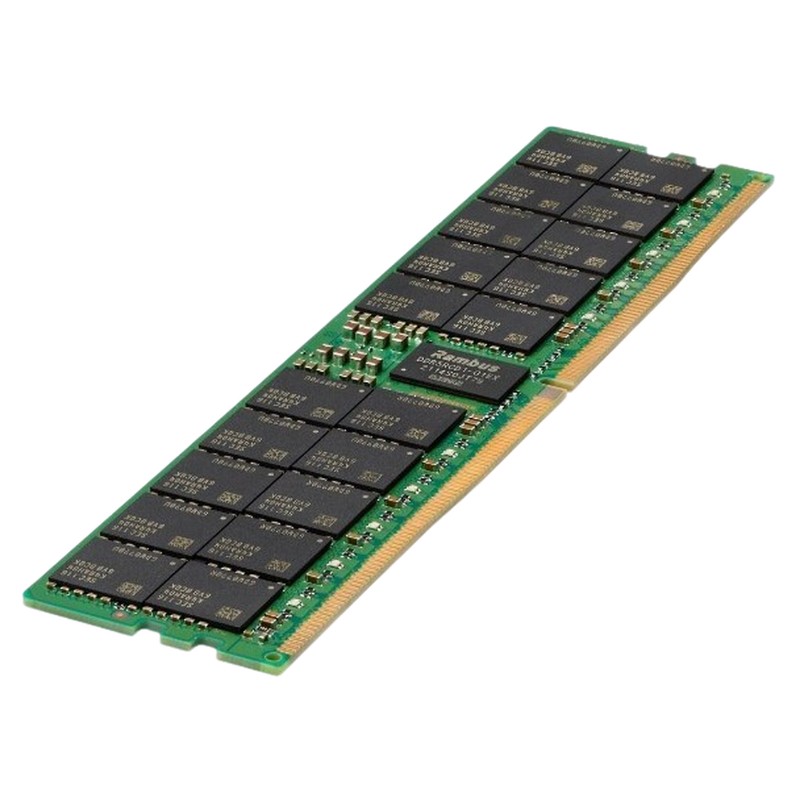


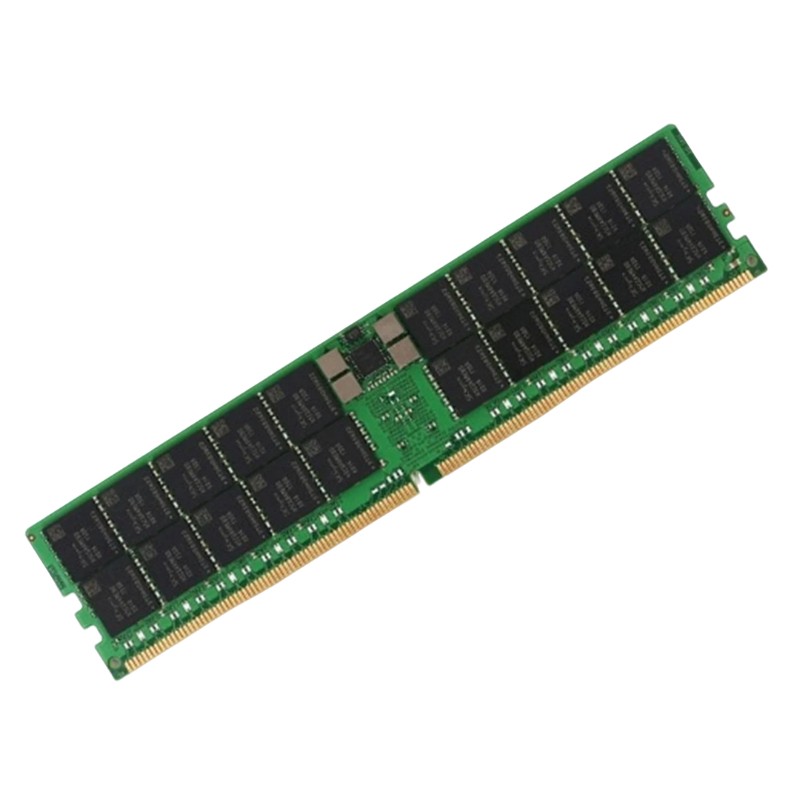
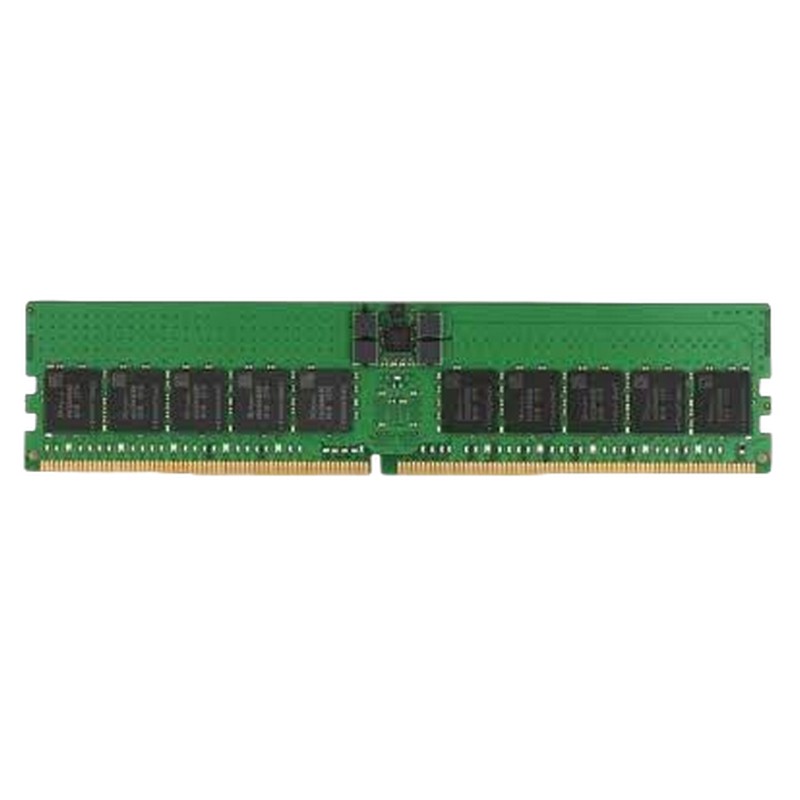
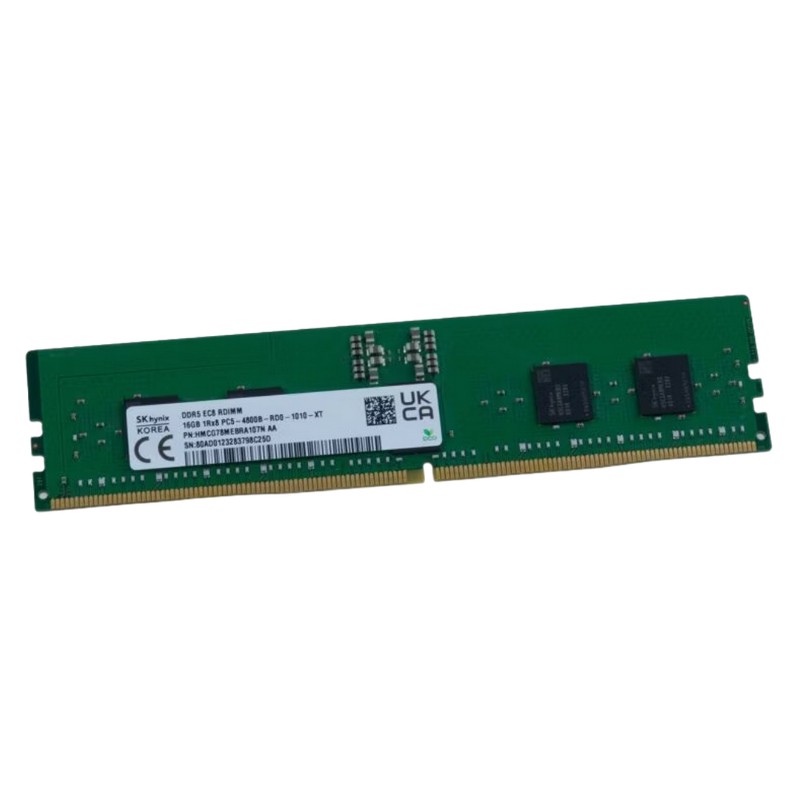
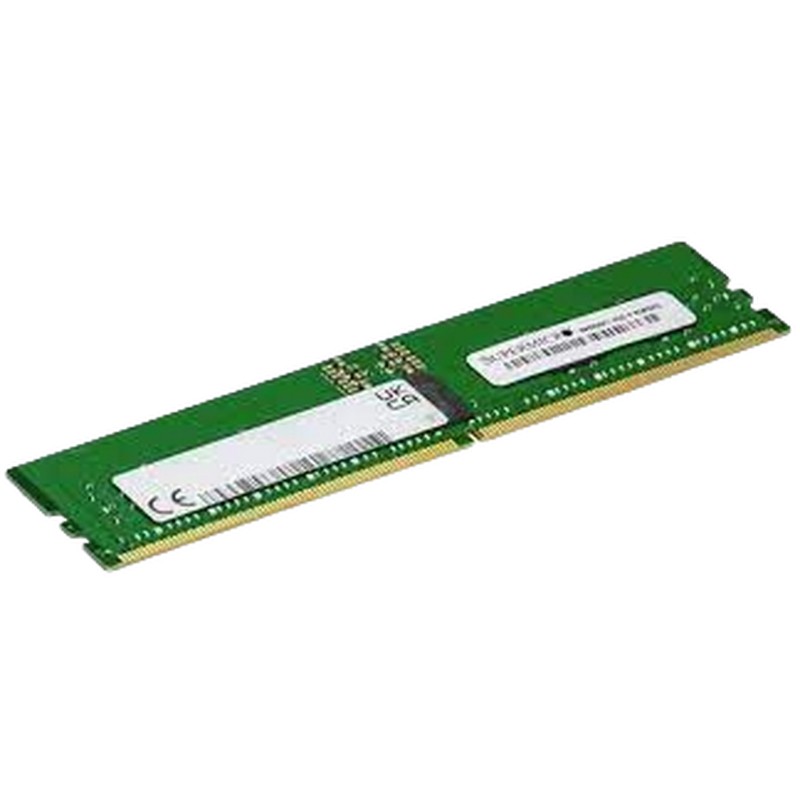
Hynix HMCG78MEBRA105N 16GB (1x16gb) DDR5 4800MHz PC5-38400 1RX8 ECC Registered 1.1v Cl40 Sdram 288-pin Rdimm Memory Module. New Sealed in Box (NIB) with 3 Year Warranty
Discover the SK Hynix HMCG78MEBRA105N — a high-performance 16GB DDR5 RDIMM memory module engineered for reliability and data integrity. Ideal for servers and workstations that require ECC registered RAM with fast 4800MHz throughput.
This registered ECC memory unit is tailored for enterprise servers, database appliances, virtualization hosts, and compute-heavy workstations. Use it to:
The transition to DDR5 memory represents a significant leap forward in server memory technology. Unlike its DDR4 predecessor, DDR5 introduces fundamental architectural changes that dramatically improve performance and efficiency. The Hynix HMCG78MEBRA105N leverages these advancements to deliver superior performance in enterprise environments. DDR5 modules operate at lower voltages while achieving higher data rates, making them ideal for power-conscious data centers seeking to maximize computational throughput.
DDR5 memory incorporates several critical innovations including on-die ECC (Error Correction Code), which corrects errors directly on the memory chip before data transmission. The architecture also features doubled burst length and prefetch compared to DDR4, enabling more efficient data transfer. The power management integrated circuit (PMIC) distributed power management represents another crucial advancement, allowing for better power distribution and reduced noise across the memory module.
With base speeds starting at 4800MHz, DDR5 memory provides a substantial performance uplift over DDR4's maximum typical speeds of 3200MHz. This increased frequency translates directly to higher bandwidth, which is essential for memory-intensive applications and multi-core processors. The Hynix HMCG78MEBRA105N operates at PC5-38400, indicating a peak transfer rate of 38,400 MB/s, significantly outpacing previous generation modules while maintaining stable operation through advanced signal integrity features.
The Hynix HMCG78MEBRA105N follows the standard 288-pin DDR5 RDIMM form factor with a single 16GB capacity module. This 1x16GB configuration provides flexibility for server configurations, allowing IT administrators to populate systems according to specific workload requirements. The module operates at 1.1V, representing a significant power efficiency improvement over DDR4's 1.2V operation, which accumulates to substantial energy savings in large-scale server deployments.
This memory module adheres to JEDEC standard DDR5 dimensions, ensuring compatibility with qualified server platforms. The 288-pin arrangement is specifically designed for server motherboards and is not compatible with desktop DDR5 slots due to different keying. The module's height and component placement conform to standard server specifications, allowing proper clearance in high-density server configurations where multiple modules are installed in close proximity.
The Hynix HMCG78MEBRA105N operates with CAS Latency (CL) timing of 40 cycles at 4800MHz. While this latency figure appears higher than typical DDR4 modules, it's important to consider that the significantly faster clock speed means the actual time delay in nanoseconds is comparable or better. The module's timing configuration is optimized for server workloads where consistency and reliability are prioritized alongside raw bandwidth performance.
Beyond primary timings, this DDR5 module features carefully engineered secondary and tertiary timings that contribute to overall system performance and stability. These include tRCD (RAS to CAS Delay), tRP (RAS Precharge Time), and tRAS (Active to Precharge Delay), all calibrated to ensure optimal performance in enterprise environments. The memory controller automatically configures these parameters based on the module's programmed profile.
The Hynix HMCG78MEBRA105N incorporates advanced ECC technology that detects and corrects single-bit errors while detecting multi-bit errors. This capability is crucial for server environments where data integrity is paramount. ECC functionality operates transparently to the operating system and applications, providing continuous protection against memory errors that could lead to system crashes, data corruption, or computational inaccuracies in critical applications.
DDR5 introduces on-die ECC, a feature that corrects errors within the memory chip itself before data is transmitted to the memory controller. This additional layer of error correction complements traditional ECC functionality and helps maintain data integrity at the component level. The combination of on-die ECC and conventional ECC provides comprehensive protection against various types of memory errors, significantly enhancing system reliability.
As an RDIMM (Registered Dual In-line Memory Module), the Hynix HMCG78MEBRA105N incorporates memory registers (or buffers) that sit between the memory controller and the DRAM chips. These registers buffer command, address, and control signals, reducing the electrical load on the memory controller. This architecture enables support for higher memory capacities and more memory modules per channel, which is essential for scalable server configurations requiring large memory footprints.
Registered memory provides several critical advantages in server environments. By reducing the electrical load on the memory controller, RDIMMs enable more stable operation with higher memory densities. This stability is particularly important in mission-critical systems where uptime is essential. Additionally, the registered architecture allows for better signal integrity at higher speeds and with more modules installed, ensuring reliable performance in fully-populated memory configurations.
The Hynix HMCG78MEBRA105N is engineered for deployment in various enterprise server platforms, including rack servers, tower servers, and blade systems. Its compatibility with modern server processors from leading manufacturers makes it suitable for general-purpose computing, file serving, and infrastructure applications. The module's reliability characteristics ensure consistent performance in 24/7 operational environments where system availability is critical to business operations.
In data center environments, this memory module supports a wide range of workloads including virtualization, database management, and web hosting. The combination of DDR5 bandwidth and ECC reliability makes it particularly well-suited for virtualized environments where multiple virtual machines share physical memory resources. The module's power efficiency also contributes to reducing overall data center power consumption and thermal output.
For technical computing, scientific research, and engineering applications, the Hynix HMCG78MEBRA105N provides the necessary memory performance and reliability. These workloads often involve large datasets and complex calculations where memory bandwidth and integrity directly impact results and completion times. The module's specifications make it appropriate for computational fluid dynamics, finite element analysis, weather modeling, and other memory-intensive scientific applications.
Enterprise resource planning (ERP) systems, customer relationship management (CRM) platforms, and large-scale database systems benefit from the performance and reliability characteristics of this DDR5 memory. These applications typically require consistent memory performance and high availability, making the ECC protection and stable operation of registered DDR5 memory particularly valuable. The module's specifications align with the requirements of tier-1 business applications where downtime has significant financial implications.
The Hynix HMCG78MEBRA105N incorporates multiple features to enhance reliability in continuous operation environments. These include advanced signal integrity engineering, temperature-controlled refresh, and parity protection for command and address signals. The module supports various reliability features specified in the DDR5 standard, including post-package repair and connectivity tests that can be performed during system maintenance windows.
Each Hynix memory module undergoes rigorous testing during manufacturing to ensure compliance with specifications and reliability standards. This testing includes full functional testing at operating speed and temperature extremes, signal integrity validation, and compatibility testing with target platforms. The manufacturing process incorporates quality control measures that exceed industry standards for server-grade memory components.
As a field-replaceable unit, the Hynix HMCG78MEBRA105N supports hot-plug capabilities in systems designed with this feature, allowing memory modules to be replaced without shutting down the entire server. The module includes integrated FRU (Field Replaceable Unit) information that system management controllers can read to identify memory configuration and assist in maintenance procedures. This serviceability is essential for maintaining high availability in enterprise environments.
Compared to DDR4 memory, the Hynix HMCG78MEBRA105N DDR5 module offers significantly higher data rates, improved power efficiency, and enhanced reliability features. The architectural improvements in DDR5 translate to better performance for bandwidth-sensitive applications, while the reduced operating voltage contributes to lower power consumption. The adoption of DDR5 represents a substantial step forward in server memory technology that aligns with evolving computational requirements.
Within the DDR5 ecosystem, registered DIMMs like the Hynix HMCG78MEBRA105N are specifically designed for server applications where capacity, reliability, and scalability are prioritized. Compared to unbuffered DIMMs typically used in desktop systems, RDIMMs support higher memory capacities and more stable operation in multi-DIMM configurations. The registered architecture introduces minimal latency impact while providing significant benefits for server-scale memory subsystems.
Organizations considering migration from DDR4 to DDR5 technology should evaluate both performance benefits and platform requirements. DDR5 memory requires compatible server platforms with DDR5 memory controllers, meaning a platform upgrade is typically necessary. The performance advantages of DDR5 become increasingly significant as workloads evolve to leverage higher memory bandwidth, making the technology particularly relevant for new server deployments.


 Contact Us
 Information
 Catalog
 Solid State Drives (SSD)
 Network Switches
 Hard Disk Drives
 HBA & Controllers
 PC & Servers
 PC & Server Memory
 CPU & Processors
 Network Routers
 Power Supplies
 Tape Drives & Libraries
 Network Devices
 Computer & Network Cables