(7% discount is applied at checkout)
Cart is empty
Your go-to destination for cutting-edge server products
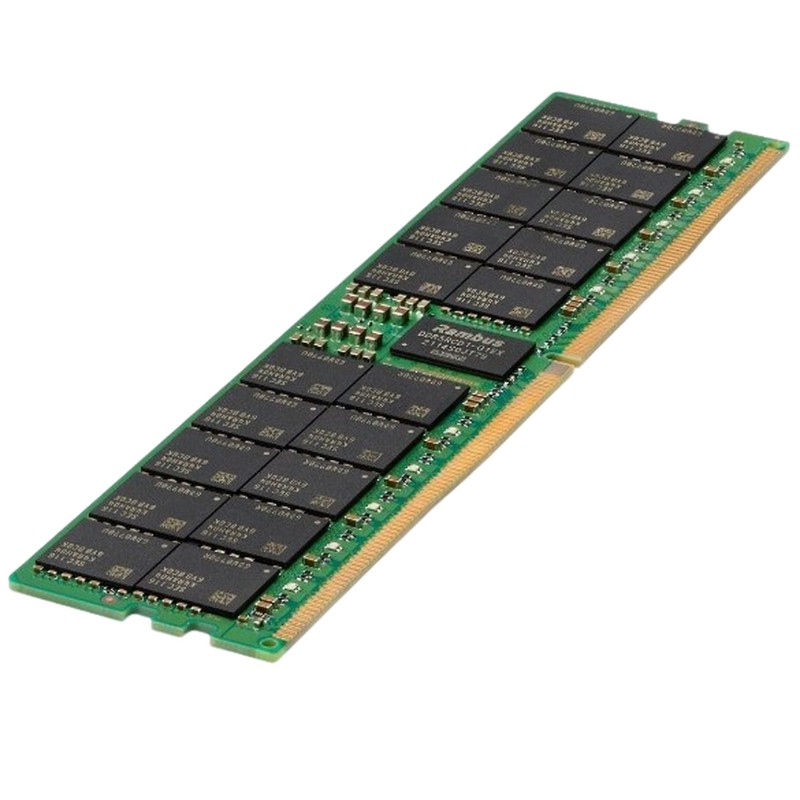


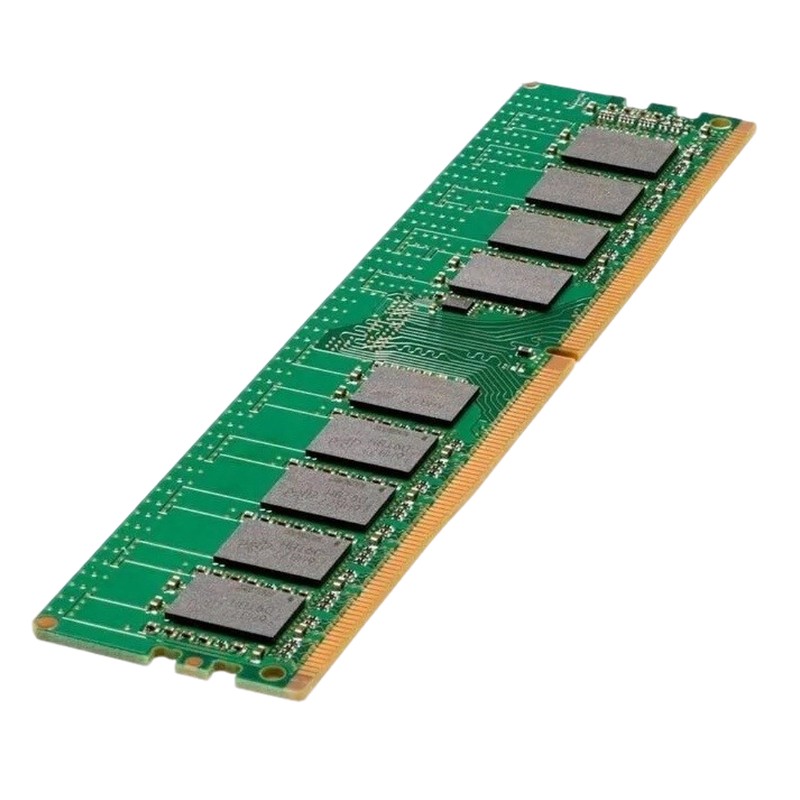
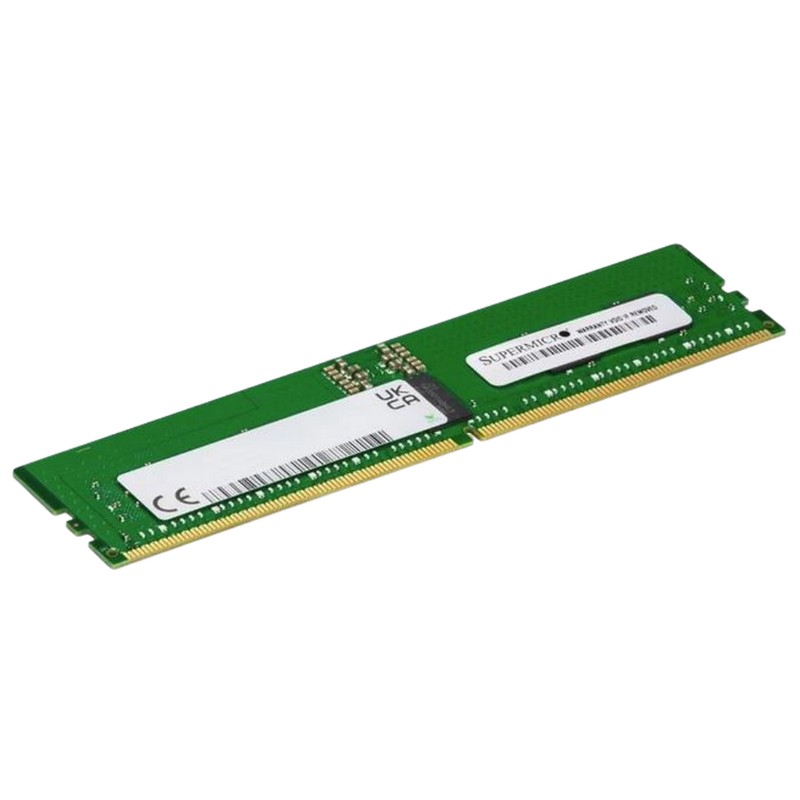
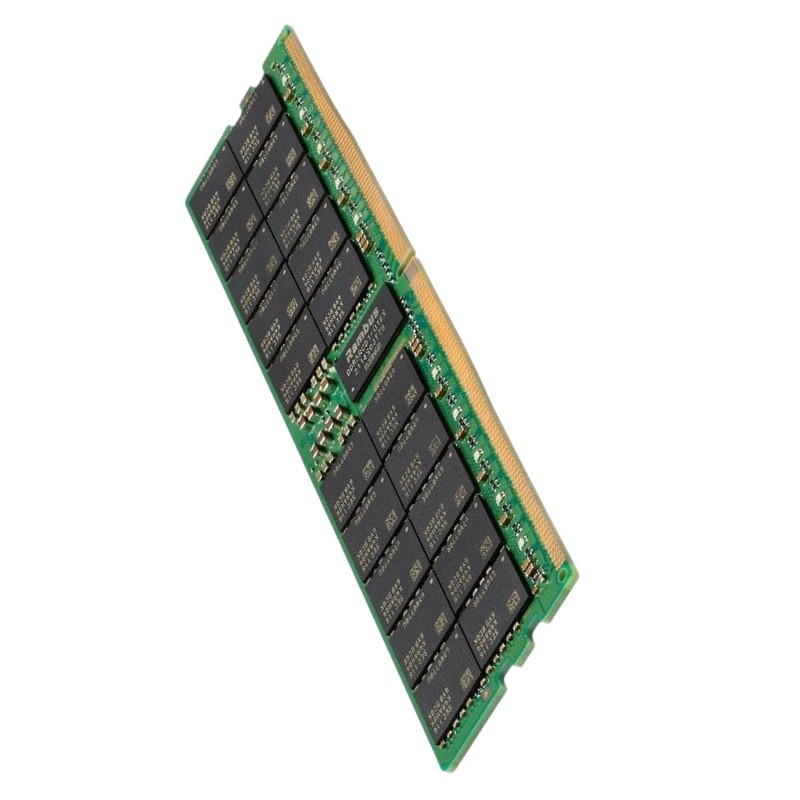
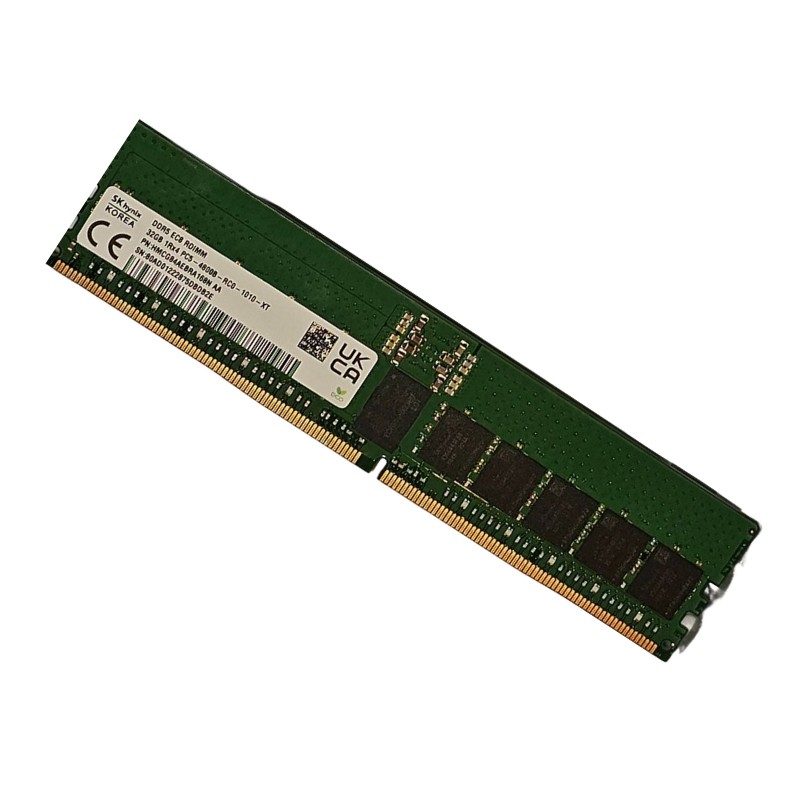
Hynix HMCG84AEBRA 32GB (1x32gb) 4800mt/s PC5-38400 Cl40 Ec8 ECC Registered 1rx4 1.1v Ddr5 Sdram 288-pin Rdimm Memory Module. New (System) Pull with 1 Year Replacement Warranty - Call
Discover the Hynix HMCG84AEBRA — a high-performance 32GB DDR5 SDRAM memory module engineered for servers and workstations. This ECC registered RDIMM delivers reliable error-correcting performance, industry-grade stability, and fast throughput at 4800MT/s (PC5-38400).
DDR5 represents the latest evolution in server memory technology, offering significant improvements over previous DDR4 modules. The Hynix HMCG84AEBRA 32GB module exemplifies these advancements with enhanced performance characteristics specifically designed for enterprise and data center environments. With higher bandwidth, improved power efficiency, and advanced error correction capabilities, DDR5 memory is engineered to meet the demanding requirements of modern server infrastructure, high-performance computing, and enterprise applications.
The Hynix HMCG84AEBRA features a 32GB capacity in a single module configuration, utilizing a 1Rx4 (single rank, four bank groups) architecture. This design optimizes memory access patterns and improves overall system performance by reducing latency between memory operations. The 288-pin RDIMM form factor ensures compatibility with modern server platforms while providing the physical stability required in enterprise environments.
The 1Rx4 configuration indicates this module has a single rank with four bank groups. This architecture allows for more efficient memory access by enabling simultaneous operations across different bank groups, reducing contention and improving overall memory bandwidth utilization. The single-rank design simplifies memory population rules while still delivering excellent performance for most server workloads.
Operating at 4800MT/s (MegaTransfers per second) with a PC5-38400 designation, this DDR5 module delivers substantially higher data transfer rates compared to previous generation DDR4 memory. The increased transfer rate directly translates to improved application performance, particularly in memory-intensive workloads such as database operations, virtualization, and scientific computing. The CL40 (CAS Latency 40) timing represents an optimized balance between speed and responsiveness for server applications.
DDR5's 4800MT/s data rate represents a significant jump from DDR4's maximum common speeds of 3200MT/s. This is achieved through architectural improvements including separate address and command buses, doubled burst length, and two independent 40-bit data channels (32 data bits with 8 ECC bits each) per module. These innovations allow for more efficient data movement and reduced contention, resulting in higher effective bandwidth for memory-intensive applications.
Operating at just 1.1V, the Hynix HMCG84AEBRA demonstrates DDR5's improved power efficiency compared to DDR4's typical 1.2V operation. This reduced voltage contributes to lower overall power consumption in data center environments, where energy efficiency directly impacts operational costs. The module incorporates advanced power management features, including a dedicated power management IC (PMIC) on the DIMM itself, which enables more precise voltage regulation and power distribution.
The integrated PMIC represents a fundamental shift in memory power delivery for DDR5. By moving voltage regulation from the motherboard to the memory module itself, DDR5 enables more stable power delivery, better signal integrity, and improved scalability. This distributed power architecture allows for more precise voltage control tailored to each specific module, resulting in better power efficiency and reliability, particularly important in multi-DIMM server configurations.
The Hynix HMCG84AEBRA incorporates both ECC (Error Correcting Code) and Registered (buffered) technologies, making it ideal for mission-critical applications where data integrity is paramount. The ECC functionality detects and corrects single-bit memory errors in real-time, preventing data corruption and potential system crashes. The registered design includes address and command buffers that reduce electrical load on the memory controller, enabling support for higher memory capacities and more DIMMs per channel.
Beyond traditional ECC that protects data in transit, DDR5 introduces on-die ECC that corrects errors within the DRAM chips themselves before data is sent to the memory controller. This additional layer of error correction addresses the increasing susceptibility to bit errors as memory cell sizes shrink, providing enhanced reliability for enterprise workloads. The combination of on-die ECC and traditional ECC creates a comprehensive error protection scheme unmatched by previous memory technologies.
Server memory modules like the Hynix HMCG84AEBRA are engineered for continuous operation in demanding environments. With features such as enhanced temperature sensors, improved signal integrity, and robust component selection, these modules deliver the reliability expected in 24/7 data center operations. The EC8 designation indicates specific engineering characteristics optimized for enterprise use cases, including extended temperature tolerance and enhanced compatibility with server platforms.
The Hynix HMCG84AEBRA is particularly well-suited for data center environments where reliability, performance, and power efficiency are critical. Its ECC and registered features make it ideal for database servers, application servers, and virtualized environments where data integrity and stable operation are non-negotiable. The 32GB capacity per module provides flexibility in configuring systems with optimal memory capacity without excessive DIMM count.
In virtualized environments, memory capacity and performance directly impact the number of virtual machines that can be efficiently hosted on a physical server. The Hynix HMCG84AEBRA's 32GB capacity allows for substantial memory configurations that support dense virtualization deployments. The improved bandwidth of DDR5 benefits memory-intensive virtualization workloads, while ECC protection ensures the integrity of multiple guest operating systems and applications running concurrently.
For HPC workloads, scientific computing, and big data analytics, memory bandwidth often becomes a critical performance factor. The Hynix HMCG84AEBRA's 4800MT/s data rate provides the necessary bandwidth for computationally intensive tasks, while the large 32GB capacity per module enables working with substantial datasets in memory. The reliability features ensure long-running computations complete without interruption due to memory errors.
DDR5 memory offers substantial improvements over DDR4 across multiple dimensions. The increased data rate (4800MT/s vs. DDR4's typical 3200MT/s) provides approximately 50% higher theoretical bandwidth. Architectural changes, including the dual sub-channel design, improve actual utilization of this bandwidth for real-world workloads. Power efficiency improvements reduce operational costs in large-scale deployments, while enhanced error correction addresses the reliability challenges of shrinking process geometries.
While DDR5 offers significantly higher bandwidth than DDR4, the absolute latency (as measured in nanoseconds) may be similar or slightly higher due to the increased CAS latency (CL40 for this module). However, for most server workloads, the bandwidth advantage outweighs the latency consideration, as these applications typically benefit more from moving large amounts of data than from ultra-low latency access to small amounts of data. The improved bank group architecture also helps mitigate latency impacts through better parallelism.
Organizations considering migration from DDR4 to DDR5-based server platforms should evaluate both the performance benefits and the ecosystem readiness. DDR5 requires compatible server platforms with appropriate memory controllers, representing a platform refresh rather than a simple memory upgrade. The Hynix HMCG84AEBRA's specifications represent a solid foundation for new server deployments, offering a balance of performance, capacity, and reliability for the current generation of server hardware.


 Contact Us
 Information
 Catalog
 Solid State Drives (SSD)
 Network Switches
 Hard Disk Drives
 HBA & Controllers
 PC & Servers
 PC & Server Memory
 CPU & Processors
 Network Routers
 Power Supplies
 Tape Drives & Libraries
 Network Devices
 Computer & Network Cables