(7% discount is applied at checkout)
Cart is empty
Your go-to destination for cutting-edge server products
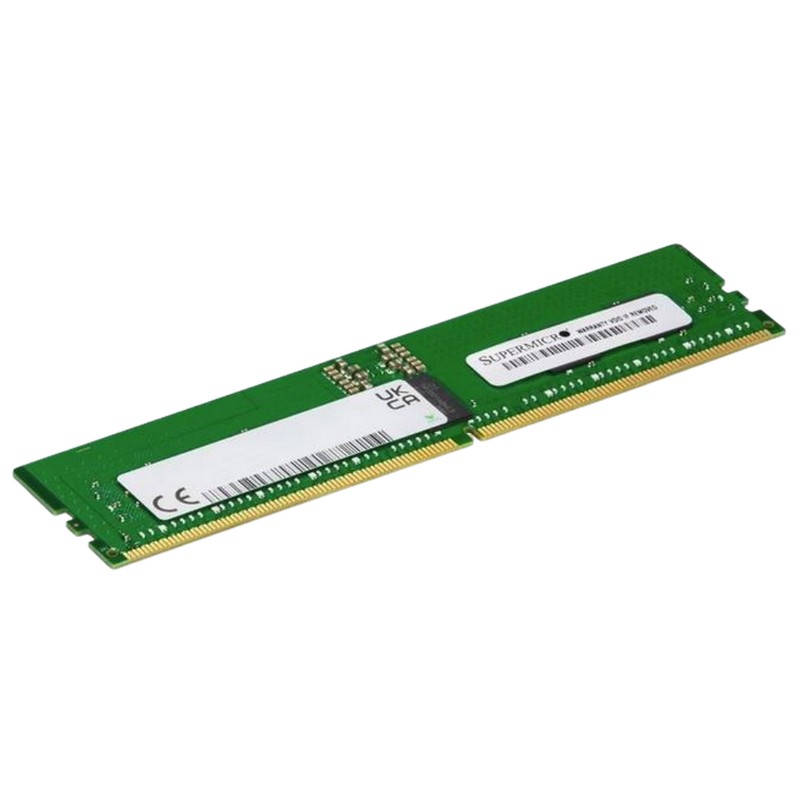


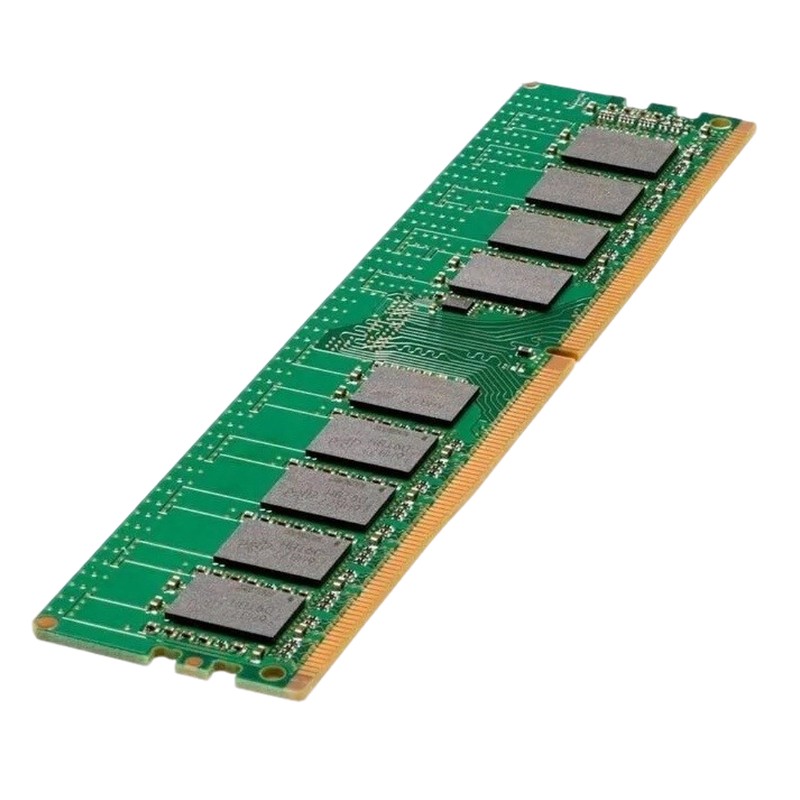
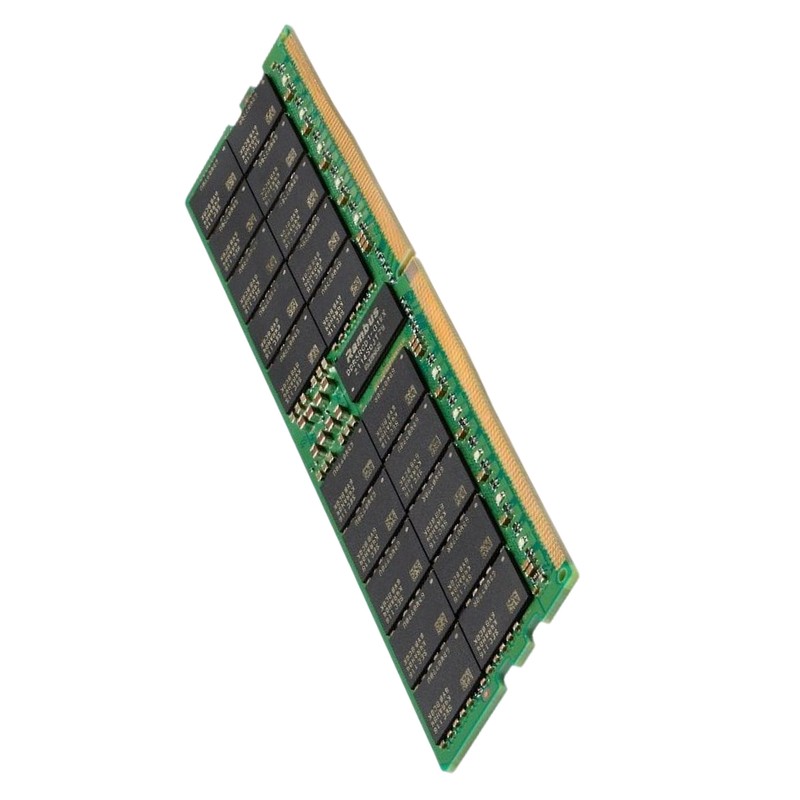
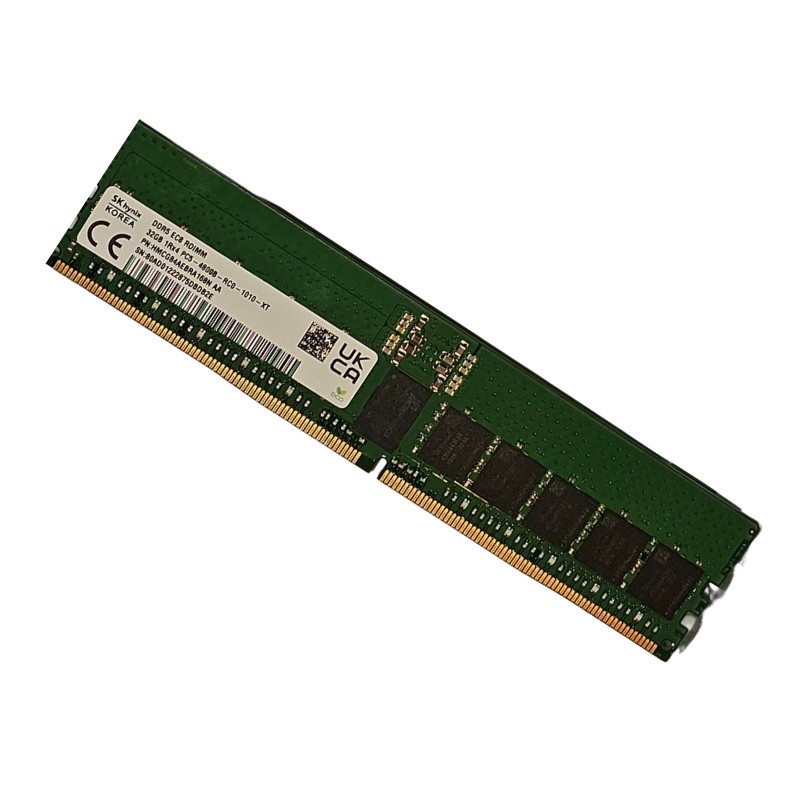
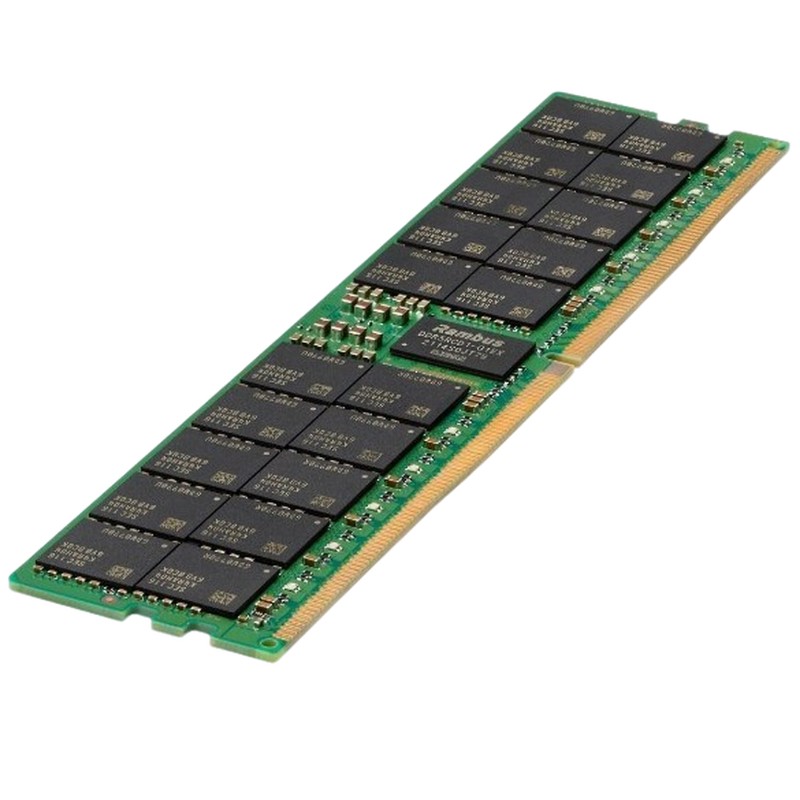
Hynix HMCG84AGBRA192N 32GB 5600MHz PC5-44800 Single Rank X4 ECC Registered 1.1v Cl46 DDR5 Sdram 288-pin Rdimm Memory Module. New Sealed in Box (NIB) with 3 Year Warranty
| SKU/MPN | Warranty | Price | Condition | You save |
|---|---|---|---|---|
| HMCG84AGBRA192N | 1 Year Warranty | $1,464.00 | New (System) Pull | You save: $512.40 (26%) |
| HMCG84AGBRA192N | 1 Year Warranty | $1,943.00 | New Sealed in Box (NIB) | You save: $680.05 (26%) |
Discover the SK Hynix HMCG84AGBRA192N, a high-performance 32GB DDR5 registered memory module engineered for servers and workstations. This RDIMM offers error-correcting reliability, fast throughput and low-voltage efficiency for demanding computing environments.
The Hynix HMCG84AGBRA192N represents a significant leap forward in server memory technology, embodying the cutting-edge specifications of DDR5 architecture tailored for enterprise-level computing. This 32GB module operates at 5600MHz (PC5-44800) with advanced ECC Registered functionality, delivering unprecedented bandwidth, reliability, and power efficiency for next-generation servers, workstations, and data center applications.
DDR5 memory represents a fundamental architectural shift from previous generations, introducing innovations specifically designed to address the escalating demands of modern computational workloads. The Hynix HMCG84AGBRA192N leverages these advancements to provide superior performance in memory-intensive environments.
Unlike DDR4's single 64-bit data channel, DDR5 implements two independent 32-bit sub-channels per module. This architectural innovation effectively doubles the concurrent access capabilities, reducing latency and improving overall memory controller efficiency. For the Hynix 32GB module, this means significantly improved handling of multiple simultaneous memory requests common in virtualized environments and database operations.
DDR5 introduces built-in error correction at the chip level, complementing the traditional module-level ECC. This on-die ECC corrects bit errors within the DRAM chips themselves before they can propagate to the system bus, enhancing data integrity and reliability for mission-critical applications where data corruption is unacceptable.
The integration of Power Management ICs (PMICs) directly on the memory module represents a paradigm shift in memory power delivery. This distributed power architecture enables more precise voltage regulation, reduces noise, and improves power efficiency—critical factors in large-scale server deployments where energy consumption directly impacts operational costs.
The combination of Error Correcting Code (ECC) and Registered (buffered) technology establishes the foundation for enterprise-level memory reliability and scalability that distinguishes server-grade memory from consumer variants.
The ECC functionality in the Hynix HMCG84AGBRA192N can automatically correct single-bit errors and detect double-bit errors within each 64-bit data word. This capability is crucial for maintaining data integrity in applications where continuous operation and data accuracy are paramount, such as financial transactions, scientific computing, and database management systems.
Beyond basic error correction, this module supports sophisticated error logging and reporting mechanisms compatible with industry-standard platforms like IPMI and BMC. System administrators can monitor error rates over time, enabling proactive maintenance and replacement of modules before accumulated errors impact system stability.
The registered design incorporates buffers on the address and command lines, reducing the electrical load presented to the memory controller. This buffering enables support for higher module densities and greater numbers of DIMMs per channel while maintaining signal integrity at high frequencies—essential for scalable server configurations.
While registered modules introduce minimal additional latency (typically one clock cycle) due to the buffering process, this trade-off is necessary for achieving the high-capacity, multi-DIMM configurations required in enterprise environments. The performance impact is generally negligible compared to the scalability benefits in real-world server workloads.
The specific technical attributes of the Hynix HMCG84AGBRA192N translate directly into measurable performance benefits across various computing domains, from traditional enterprise applications to emerging computational workloads.
In virtualized environments running multiple virtual machines, the high bandwidth and advanced multi-channel capabilities of DDR5 RDIMMs significantly improve memory contention handling. The 5600MHz speed enables faster VM migration, better consolidation ratios, and improved response times for memory-intensive applications running within virtual instances.
For in-memory database platforms like SAP HANA, Redis, or Oracle TimesTen, the combination of high bandwidth and large capacity per module enables faster query processing and real-time analytics. The ECC functionality ensures data integrity for critical business intelligence and transactional processing systems.
In financial trading systems, banking applications, and payment processing platforms, the ECC protection and registered stability of these modules provide the foundation for uninterrupted operation. The high-speed interface ensures low-latency transaction processing while maintaining data accuracy through continuous error correction.
For computational fluid dynamics, finite element analysis, genomic sequencing, and other scientific workloads, the high bandwidth enables faster computation cycles, while ECC protection ensures the mathematical integrity of complex calculations that may run for days or weeks without interruption.
While GPUs typically handle the core computation for AI training, DDR5 memory plays a crucial role in feeding data to processing units and handling inference workloads. The high bandwidth of 5600MHz modules reduces potential bottlenecks in data movement, improving overall training throughput and inference response times.
In HPC environments where applications scale across multiple nodes, consistent memory performance and reliability are critical. The Hynix DDR5 RDIMMs provide the necessary bandwidth, capacity, and error protection for demanding parallel computing applications in research institutions and government laboratories.
The introduction of DDR5 technology represents the latest step in the ongoing evolution of memory standards, building upon decades of innovation while addressing the unique challenges of modern computing workloads.
DDR5 provides approximately a 50% increase in bandwidth over comparably priced DDR4 modules while operating at lower voltages. The architectural improvements in channel organization, power management, and error correction represent significant advancements beyond the incremental speed increases typical of previous generational transitions.
The DDR5 standard supports higher per-module capacities than DDR4, with roadmap projections extending to 128GB and beyond per RDIMM. This density improvement, combined with better signal integrity at high speeds, enables more memory capacity per system—critical for memory-intensive applications and large-scale virtualization.
The DDR5 standard includes a clear roadmap extending to 8400MT/s and beyond, ensuring long-term scalability for future server platforms. The Hynix 5600MHz module represents an optimal balance of performance, availability, and cost in the current generation, with clear upgrade paths as faster implementations become available.
While new memory technologies like CXL (Compute Express Link) and persistent memory offer alternative approaches to specific workload requirements, DDR5 remains the foundational main memory technology for general-purpose servers. These technologies will likely coexist, with DDR5 serving as high-performance working memory while specialized technologies address specific use cases.


 Contact Us
 Information
 Catalog
 Solid State Drives (SSD)
 Network Switches
 Hard Disk Drives
 HBA & Controllers
 PC & Servers
 PC & Server Memory
 CPU & Processors
 Network Routers
 Power Supplies
 Tape Drives & Libraries
 Network Devices
 Computer & Network Cables