(7% discount is applied at checkout)
Cart is empty
Your go-to destination for cutting-edge server products
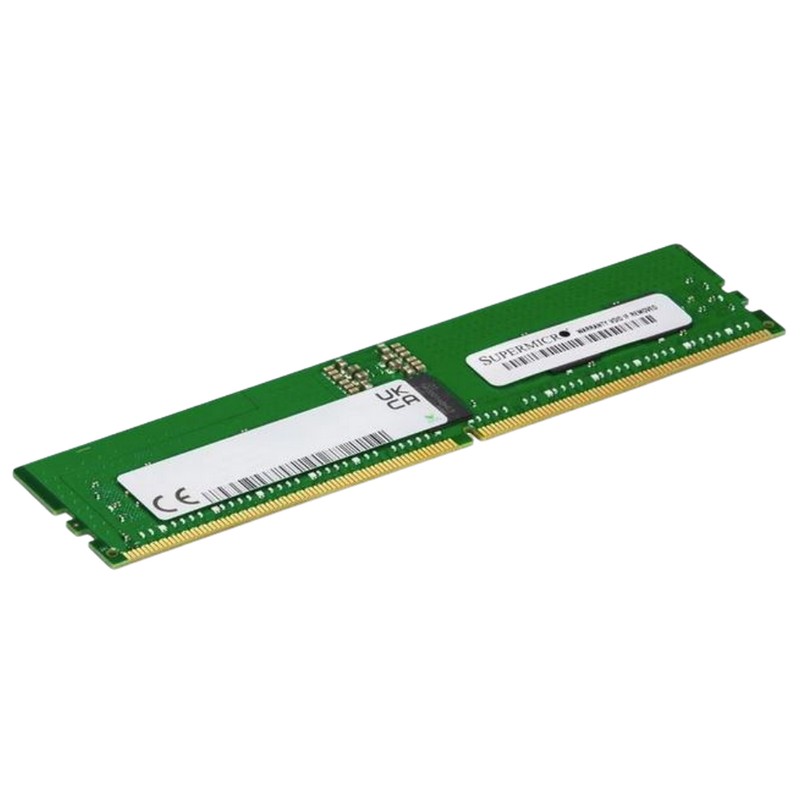


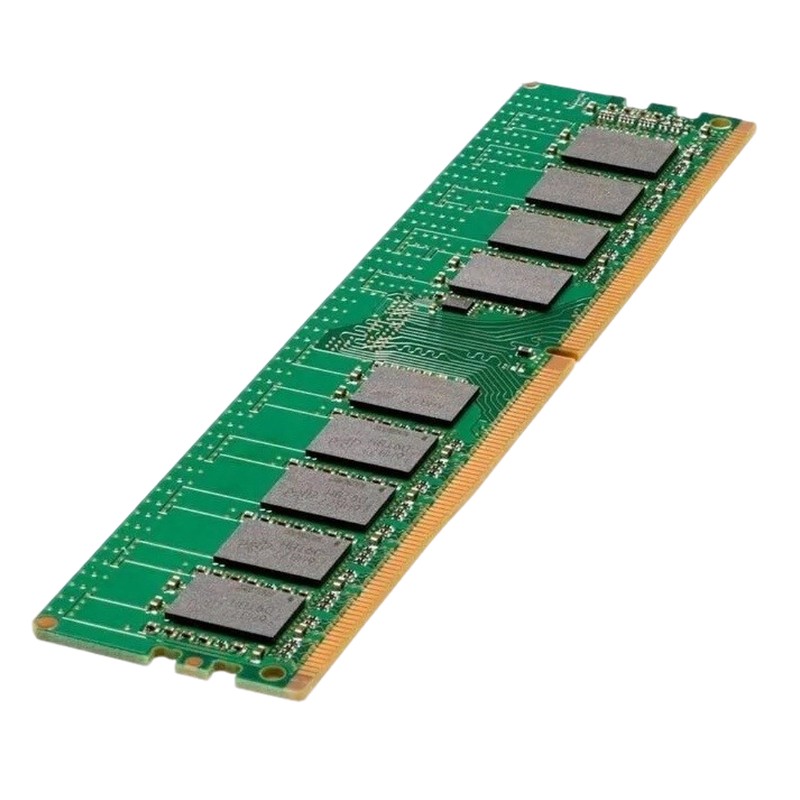
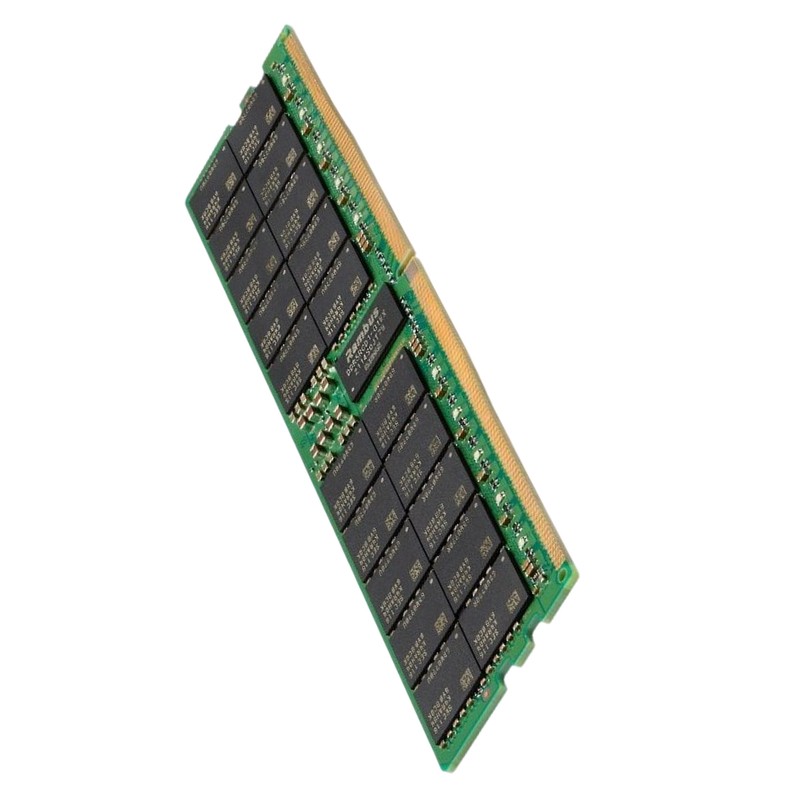
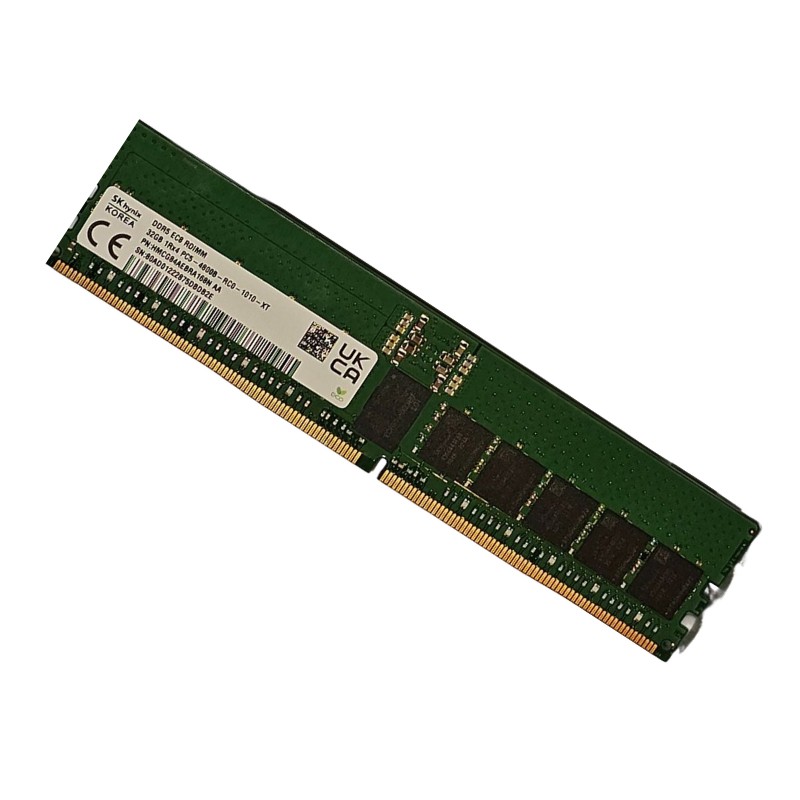
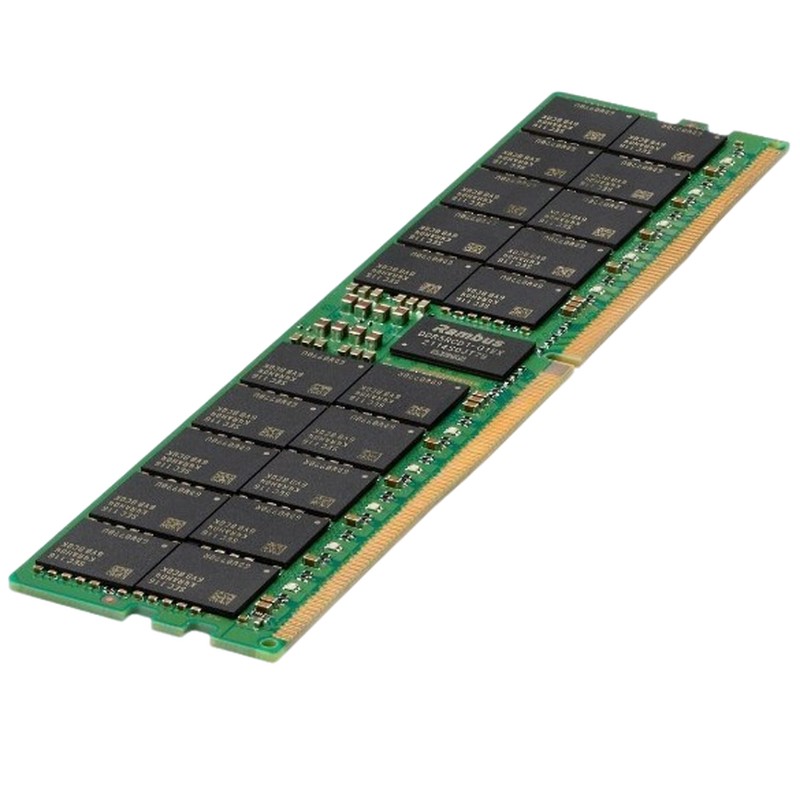
Hynix HMCG84AGBRA192N 32GB 5600MHz PC5-44800 Single Rank X4 ECC Registered 1.1v Cl46 DDR5 Sdram 288-pin Rdimm Memory Module. New (System) Pull with 1 year replacement warranty
| SKU/MPN | Warranty | Price | Condition | You save |
|---|---|---|---|---|
| HMCG84AGBRA192N | 1 Year Warranty | $1,464.00 | New (System) Pull | You save: $512.40 (26%) |
| HMCG84AGBRA192N | 1 Year Warranty | $1,943.00 | New Sealed in Box (NIB) | You save: $680.05 (26%) |
Premium server-grade RAM from SK Hynix: a 32GB DDR5 RDIMM designed for enterprise servers, workstations and high-performance computing. Optimized for stability, low-voltage efficiency and error-correcting reliability.
The transition from DDR4 to DDR5 represents one of the most significant advancements in memory technology in recent years. DDR5 memory modules, such as the Hynix HMCG84AGBRA192N, deliver substantial improvements in performance, power efficiency, and reliability compared to their DDR4 predecessors. With data rates starting at 4800MT/s and scaling beyond 5600MT/s, DDR5 provides nearly double the bandwidth of equivalent DDR4 modules while operating at lower voltages.
DDR5 introduces several fundamental architectural changes that differentiate it from previous generations. The most notable innovation is the implementation of two independent 40-bit data channels (32 data bits with 8 ECC bits) per module, effectively doubling the burst length to 16 while maintaining the same BL8 operation per channel. This dual-channel architecture on a single DIMM allows for significantly improved concurrent access patterns and reduces latency in memory-intensive applications.
DDR5 modules incorporate a revolutionary approach to power management by moving the power management IC (PMIC) from the motherboard to the memory module itself. This architectural shift enables more precise voltage regulation and better power distribution, resulting in improved signal integrity and stability. The PMIC allows for granular power control and enhances the module's ability to handle power spikes and fluctuations, which is critical in enterprise environments where system stability is paramount.
The Hynix HMCG84AGBRA192N operates at a data rate of 5600 megabits per second (MT/s), which translates to an effective speed of 5600MHz. With a module organization of 2G x8 using x4 DRAM architecture, this 32GB RDIMM delivers exceptional bandwidth of PC5-44800, providing ample performance for data-intensive enterprise applications. The module's CAS latency of 46 cycles represents an optimized balance between speed and stability for server environments.
The timing configuration of the HMCG84AGBRA192N follows the JEDEC standard for DDR5-5600 modules with CL46 timing. The complete timing parameters include tRCD (Row Address to Column Address Delay) and tRP (Row Precharge Time) typically set to 46 cycles, with tRAS (Row Active Time) configured for optimal performance. These carefully calibrated timings ensure reliable operation while maximizing data throughput in enterprise server configurations.
This DDR5 RDIMM utilizes a standard 288-pin design with a unique notch position that prevents incorrect installation in incompatible slots. The module operates at a nominal voltage of 1.1V, representing a significant reduction from DDR4's 1.2V operation, contributing to improved power efficiency in data center environments. The reduced operating voltage directly translates to lower power consumption and reduced heat generation, critical factors in high-density server deployments.
The Hynix HMCG84AGBRA192N features a standard server RDIMM profile with optional thermal sensors for temperature monitoring. The mechanical design ensures proper airflow across the module surface in server chassis configurations, while the PCB construction provides optimal signal integrity at high data rates. The module's construction meets enterprise reliability standards with rigorous testing for vibration, shock, and long-term operational stability.
The Hynix HMCG84AGBRA192N incorporates sophisticated Error Correcting Code capabilities that represent a significant evolution from previous ECC implementations. DDR5 ECC operates with two distinct layers: traditional sideband ECC that protects data in transit between the memory controller and DRAM, and innovative on-die ECC that corrects errors within the DRAM chips themselves before data leaves the memory device. This dual-layer approach substantially improves reliability and reduces uncorrectable error rates.
The ECC implementation in this DDR5 RDIMM can detect and correct single-bit errors automatically, while also detecting multi-bit errors within the same ECC word. The module utilizes a sophisticated algorithm that can correct any single symbol error (4-bit nibble) and detect any two symbol errors within a 64-byte data block. This advanced error correction capability is essential for mission-critical applications where data integrity cannot be compromised.
As a Registered DDR5 DIMM, the HMCG84AGBRA192N incorporates a Registering Clock Driver (RCD) that buffers command, address, and clock signals between the memory controller and the DRAM chips. This buffering reduces the electrical load on the memory controller, enabling support for higher module densities and more DIMMs per channel. The RCD in DDR5 RDIMMs has been enhanced to support the higher data rates and improved signal integrity requirements of the DDR5 specification.
The registered architecture provides several critical advantages in enterprise server configurations. By reducing the electrical load on the memory controller, RDIMMs enable more stable operation with higher numbers of modules per channel and support for greater total memory capacity. This makes registered DDR5 modules ideal for servers requiring large memory configurations, such as database servers, virtualization hosts, and high-performance computing applications where maximum memory capacity and stability are essential.
With a peak theoretical bandwidth of 44.8 GB/s (PC5-44800) at 5600MT/s, the Hynix HMCG84AGBRA192N delivers substantial performance improvements over previous generation memory. In real-world server applications, this translates to significantly improved performance in memory-bandwidth-sensitive workloads such as in-memory databases, scientific computing, and virtualized environments. The module's single-rank x4 design optimizes signal integrity, allowing consistent performance even in fully populated memory configurations.
When compared to DDR4-3200 RDIMMs, the Hynix DDR5-5600 module provides approximately 75% greater theoretical bandwidth while operating at lower voltage. In latency-sensitive applications, the higher base clock speed of DDR5 can compensate for the slightly higher CAS latency, resulting in comparable or improved real-world latency for many workloads. The improved bank grouping and same-bank refresh features further enhance actual performance in enterprise applications.
The Hynix HMCG84AGBRA192N is ideally suited for a wide range of enterprise server applications. Its combination of high bandwidth, large capacity, and robust ECC protection makes it particularly valuable for database servers running SQL Server, Oracle, or MySQL, where both performance and data integrity are critical. The module's reliability characteristics also make it suitable for 24/7 operation in business-critical applications where system uptime is paramount.
In virtualized environments and cloud infrastructure, the HMCG84AGBRA192N's 32GB capacity and high bandwidth enable higher virtual machine density and improved performance for memory-intensive workloads. The module's registered architecture ensures stability in fully populated configurations, allowing maximum memory capacity for hyper-converged infrastructure and software-defined data center deployments. The power efficiency of DDR5 technology also contributes to reduced operational costs in large-scale deployments.
For technical computing, artificial intelligence, and machine learning applications, the Hynix DDR5 RDIMM provides the bandwidth necessary to feed data-hungry processors efficiently. The module's high transfer rate helps minimize bottlenecks in data movement between memory and processors, improving overall system performance for computational fluid dynamics, financial modeling, genomic sequencing, and AI training workloads that process massive datasets.
DDR5 technology incorporates several enhancements to improve signal integrity and long-term reliability. The Hynix HMCG84AGBRA192N implements Decision Feedback Equalization (DFE) in the data receivers, which helps compensate for channel losses and inter-symbol interference at high data rates. This sophisticated signal processing capability enables reliable operation at 5600MT/s while maintaining timing margins that ensure data integrity over the module's operational lifetime.
The HMCG84AGBRA192N is engineered for extended operational life in demanding 24/7 server environments. The module's components are selected and qualified for continuous operation at elevated temperatures typical of server conditions. With robust PCB design, high-quality materials, and comprehensive testing, Hynix DDR5 RDIMMs provide the durability necessary for mission-critical applications where memory reliability directly impacts business operations and service delivery.
Within the DDR5 ecosystem, the Hynix HMCG84AGBRA192N as an RDIMM must be understood in context with other available form factors. Compared to Unbuffered DIMMs (UDIMMs), RDIMMs offer greater capacity and stability in multi-DIMM configurations but with slightly higher latency due to the registering process. Load Reduced DIMMs (LRDIMMs) provide even greater capacity potential but at higher cost and power consumption. The RDIMM represents the optimal balance for most enterprise applications.
While DDR5 represents the current mainstream standard for server memory, it exists alongside emerging technologies such as Compute Express Link (CXL) which enables memory expansion and pooling. In the foreseeable future, DDR5 will continue to serve as the primary main memory technology, with CXL and other technologies complementing rather than replacing DDR5 for most server workloads. The Hynix HMCG84AGBRA192N provides a solid foundation for current server platforms while maintaining compatibility with future technological developments.


 Contact Us
 Information
 Catalog
 Solid State Drives (SSD)
 Network Switches
 Hard Disk Drives
 HBA & Controllers
 PC & Servers
 PC & Server Memory
 CPU & Processors
 Network Routers
 Power Supplies
 Tape Drives & Libraries
 Network Devices
 Computer & Network Cables