
(7% discount is applied at checkout)
Cart is empty
Your go-to destination for cutting-edge server products
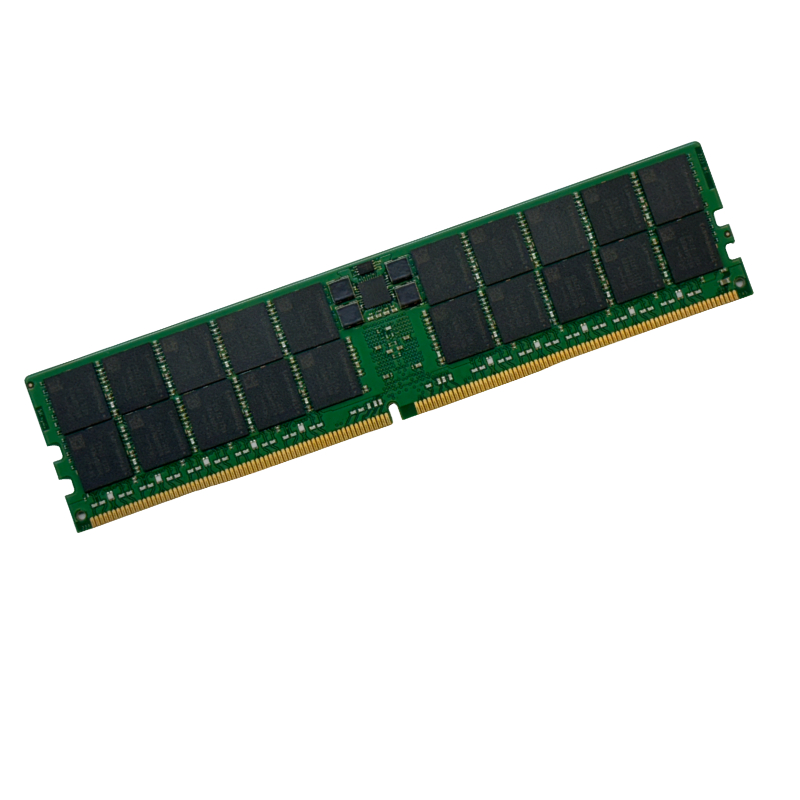
Hynix HMCG84AHBRA 32GB DDR5 6400MHz PC5-51200 ECC Registered RDIMM CL52 288-Pin Memory. New Sealed in Box (NIB)
| SKU/MPN | Warranty | Price | Condition | You save |
|---|---|---|---|---|
| HMCG84AHBRA | 1 Year Warranty | $2,064.00 | New (System) Pull | You save: $722.40 (26%) |
| HMCG84AHBRA | 1 Year Warranty | $2,688.00 | New Sealed in Box (NIB) | You save: $940.80 (26%) |
High-performance 32GB DDR5 server memory module engineered for enterprise systems, featuring ECC error correction, registered buffering (RDIMM) and a blazing 6400 MT/s data rate (PC5-51200). Ideal for datacenter servers, virtualization hosts and professional workstations demanding reliability and throughput.
With 32GB of memory capacity, this module strikes an ideal balance between density and performance. Built using advanced DDR5 architecture, it features improved bank groups and burst architecture that significantly enhances data transfer efficiency compared to previous DDR4 generations.
The 6400MHz data rate represents one of the highest standard speeds available in the DDR5 ecosystem. This translates to a peak bandwidth of PC5-51200 (51.2 GB/s per module), enabling faster data processing and reduced latency across memory-intensive operations.
The 288-pin RDIMM design ensures compatibility with modern server platforms while providing robust physical connectivity. The registered design includes a register between the DRAM modules and memory controller, enhancing signal integrity and enabling higher module capacities.
DDR5 modules generate significant heat during operation, and the HMCG84AHBRA incorporates advanced thermal management features. The module includes integrated temperature sensors and is designed to work efficiently within server cooling environments.
DDR5 technology represents a fundamental shift from previous memory generations. The Hynix HMCG84AHBRA leverages these advancements to deliver substantially improved performance characteristics.
Unlike DDR4's single 64-bit data channel, DDR5 implements two independent 32-bit sub-channels. This architectural change allows for more efficient memory access patterns and reduces contention, resulting in better overall system performance.
DDR5 introduces on-die ECC (Error Correction Code) that corrects errors within the DRAM chip itself before data leaves the module. This complements the traditional ECC functionality and provides an additional layer of data integrity.
The HMCG84AHBRA utilizes DDR5's Power Management IC (PMIC) architecture, which moves voltage regulation from the motherboard to the memory module itself. This provides more stable power delivery and enables finer control over power consumption.
Operating at 1.1V, DDR5 provides improved power efficiency compared to DDR4's 1.2V operation. This reduction in voltage, combined with architectural efficiencies, results in better performance per watt – a critical consideration in data center environments.
The ECC functionality in the Hynix HMCG84AHBRA provides critical data protection for enterprise environments where data integrity is paramount.
ECC technology can detect and correct single-bit errors automatically, preventing data corruption and system crashes. This capability is essential for maintaining system stability during extended operation periods.
While single-bit errors are correctable, the ECC implementation can detect multi-bit errors, allowing the system to take appropriate action before corrupted data affects operations.
The registered buffer (or register) on RDIMMs reduces electrical load on the memory controller by buffering command and address signals. This enables support for higher memory capacities and more modules per channel.
By reducing the electrical load on the memory controller, registered modules improve signal quality and system stability, particularly important in multi-processor systems with large memory configurations.
The CL52 timing specification represents the column address strobe latency in clock cycles. While this number appears higher than DDR4 timings, the significantly faster clock speed of DDR5 results in lower absolute latency.
With a CAS latency of 52 cycles at 6400MHz, the absolute latency can be calculated as CL/(frequency/2) = 52/(6400/2) = 16.25 nanoseconds, providing competitive real-world performance.
Registered modules typically operate at 2T (two clock cycles) command rate in high-density configurations, which provides additional timing margin for stable operation in demanding server environments.
The PC5-51200 designation indicates a theoretical peak bandwidth of 51.2 GB/s per module. This substantial bandwidth enables support for memory-intensive applications including virtualization, database operations, and high-performance computing.
In practical applications, the combination of high bandwidth and improved efficiency of DDR5 architecture delivers significant performance improvements over previous generation memory in server workloads.
The Hynix HMCG84AHBRA is ideally suited for enterprise server applications where reliability, capacity, and performance are critical requirements.
In data center environments, these modules provide the foundation for reliable operation of business-critical applications, database servers, and virtualization platforms.
The high density and reliability characteristics make these modules well-suited for cloud infrastructure where consistent performance and minimal downtime are essential.
The transition from DDR4 to DDR5 represents one of the most significant advancements in memory technology in recent years, with substantial improvements across multiple performance metrics.
DDR5 provides approximately 1.5x to 2x the bandwidth of equivalent DDR4 modules, with the HMCG84AHBRA's 6400MHz operation delivering substantially higher data transfer rates.
Architectural improvements including better bank grouping, increased burst length, and more efficient command bus utilization contribute to better overall efficiency.


 Contact Us
 Information
 Catalog
 Solid State Drives (SSD)
 Network Switches
 Hard Disk Drives
 HBA & Controllers
 PC & Servers
 PC & Server Memory
 CPU & Processors
 Network Routers
 Power Supplies
 Tape Drives & Libraries
 Network Devices
 Computer & Network Cables