
(7% discount is applied at checkout)
Cart is empty
Your go-to destination for cutting-edge server products
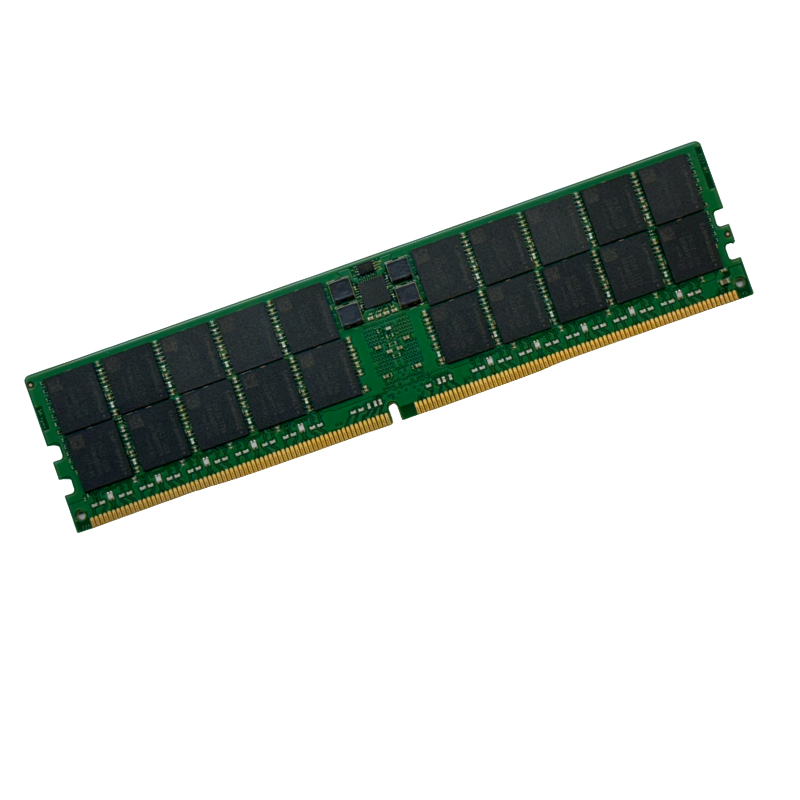
Hynix HMCG84AHBRA290N 32GB DDR5 6400MHz PC5-51200 ECC RDIMM CL52 288-Pin Server Memory. New Sealed in Box (NIB)
| SKU/MPN | Warranty | Price | Condition | You save |
|---|---|---|---|---|
| HMCG84AHBRA290N | 1 Year Warranty | $2,064.00 | New (System) Pull | You save: $722.40 (26%) |
| HMCG84AHBRA290N | 1 Year Warranty | $2,688.00 | New Sealed in Box (NIB) | You save: $940.80 (26%) |
Sk Hynix HMCG84AHBRA290N is an enterprise-grade 32GB DDR5 registered memory module engineered for servers and high-performance workstations. This high-speed PC5-51200 RDIMM delivers low power draw, robust error correction, and consistent throughput for mission-critical environments.
Designed for data centers, virtualization hosts, and enterprise database servers, this module provides:
The Hynix HMCG84AHBRA290N represents the cutting edge of server memory technology, delivering exceptional performance, reliability, and efficiency for modern data center environments. This 32GB DDR5 module operates at 6400MHz with ECC RDIMM architecture, specifically engineered to meet the demanding requirements of enterprise servers, high-performance computing clusters, and cloud infrastructure.
The transition from DDR4 to DDR5 represents one of the most significant advancements in memory technology in recent years. The Hynix HMCG84AHBRA290N leverages this architectural evolution to deliver substantial improvements across multiple performance dimensions.
With a data rate of 6400MT/s, this module provides approximately 1.6x the bandwidth of comparable DDR4-3200 modules. This increased throughput is critical for data-intensive applications, virtualization environments, and high-transaction databases where memory bandwidth often represents a performance bottleneck.
DDR5 architecture introduces several key innovations that contribute to its performance advantages:
Unlike DDR4's single 64-bit data channel, DDR5 implements two independent 32-bit data channels (sub-channels) per module. This architectural change increases concurrent access opportunities and reduces latency for memory operations.
DDR5 doubles the number of bank groups compared to DDR4 (8 vs 4 in equivalent density modules), enabling more simultaneous operations and reducing contention between memory accesses.
This signal integrity enhancement allows for higher data rates while maintaining signal quality, enabling stable operation at 6400MT/s and beyond.
The Hynix HMCG84AHBRA290N operates at 1.1V, representing a significant reduction from DDR4's 1.2V operating voltage. While this may seem like a modest improvement, when multiplied across dozens or hundreds of modules in a data center environment, the cumulative power savings become substantial.
DDR5 introduces an on-module PMIC that distributes power management from the motherboard to the memory module itself. This architectural shift provides several advantages:
The PMIC enables more precise voltage regulation, reducing power noise and improving signal integrity, which contributes to the module's ability to maintain stable operation at high speeds.
By localizing power management, DDR5 modules can optimize power delivery specific to their requirements, reducing conversion losses and improving overall power efficiency.
The Hynix HMCG84AHBRA290N implements ECC (Error Correcting Code) technology in an RDIMM (Registered DIMM) form factor, delivering the reliability and capacity scaling required for enterprise server deployments.
ECC technology is essential for mission-critical applications where data integrity is paramount. This module can detect and correct single-bit memory errors automatically, preventing data corruption and system crashes that could result from soft errors.
The ECC implementation in this module provides protection against various types of memory errors:
Automatically detects and corrects single-bit errors without impacting performance or requiring operating system intervention.
Identifies multi-bit errors that exceed the correction capability, allowing the system to take appropriate action before data corruption spreads.
Advanced ECC implementations similar to what this module provides can survive complete DRAM chip failures, maintaining system operation even when an entire memory chip becomes non-functional.
The registered architecture of this module incorporates a register between the memory controller and DRAM chips, providing important benefits for server environments:
By reducing the electrical load on the memory controller, RDIMMs maintain better signal integrity, enabling support for higher memory capacities and more modules per channel.
RDIMM architecture allows servers to support significantly larger memory configurations compared to unbuffered modules, making this 32GB module ideal for memory-intensive applications.
The buffering provided by the register reduces electrical stress on the memory controller, potentially extending the lifespan of both the memory subsystem and the server motherboard.
The combination of DDR5 technology, 6400MHz speed, and ECC RDIMM architecture makes the Hynix HMCG84AHBRA290N suitable for a wide range of demanding server applications.
While the CL52 latency specification might appear higher than DDR4 modules (typically CL16-CL22), it's important to consider this in the context of the significantly higher clock speed. The absolute latency in nanoseconds is competitive with or better than previous generation modules while providing substantially higher bandwidth.
To understand the actual performance characteristics:
At 6400MT/s, the clock cycle time is 0.3125ns (1/6400MHz × 1000). With CAS Latency of 52 cycles, the absolute latency is approximately 16.25ns (52 × 0.3125ns).
A DDR4-3200 module with CL22 has a cycle time of 0.625ns and absolute latency of 13.75ns. While the DDR4 module has slightly lower absolute latency, the DDR5 module provides approximately double the bandwidth, making it more suitable for bandwidth-constrained applications.
The combination of high bandwidth and large 32GB module size enables higher virtual machine density per host, improving consolidation ratios and reducing total cost of ownership.
Database systems that reside primarily in memory, such as SAP HANA, Redis, or other in-memory data grids, benefit significantly from the increased bandwidth provided by DDR5 technology.
Higher memory bandwidth enables faster transaction processing and reduced query response times in memory-constrained database workloads.
Scientific computing, financial modeling, and engineering simulations often involve memory-bandwidth-bound algorithms that benefit directly from DDR5's increased throughput.
In clustered computing environments, reduced memory latency and increased bandwidth improve parallel processing efficiency, accelerating time-to-solution for complex computations.
While GPUs typically handle the core computation for AI workloads, CPU memory performance remains critical for data preprocessing, model management, and inference serving.
Faster memory enables more efficient feeding of training data to computational units, reducing overall model training time for machine learning applications.
Enterprise server memory must deliver not only performance but also exceptional reliability and serviceability characteristics.
Beyond basic ECC protection, the Hynix HMCG84AHBRA290N incorporates additional features to enhance data integrity and module longevity:
DDR5 architecture includes on-die ECC that corrects errors within individual DRAM chips before data is transmitted to the memory bus, providing an additional layer of protection.
On-die ECC addresses manufacturing variations and cell-to-cell interference within the DRAM die itself, preventing errors from propagating to the system level.


 Contact Us
 Information
 Catalog
 Solid State Drives (SSD)
 Network Switches
 Hard Disk Drives
 HBA & Controllers
 PC & Servers
 PC & Server Memory
 CPU & Processors
 Network Routers
 Power Supplies
 Tape Drives & Libraries
 Network Devices
 Computer & Network Cables