(7% discount is applied at checkout)
Cart is empty
Your go-to destination for cutting-edge server products
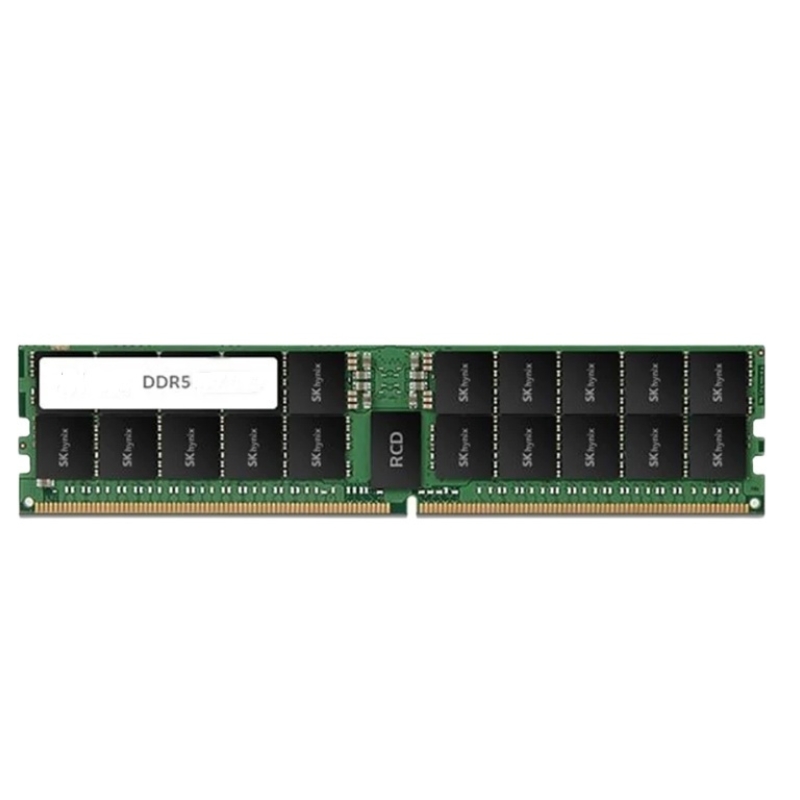


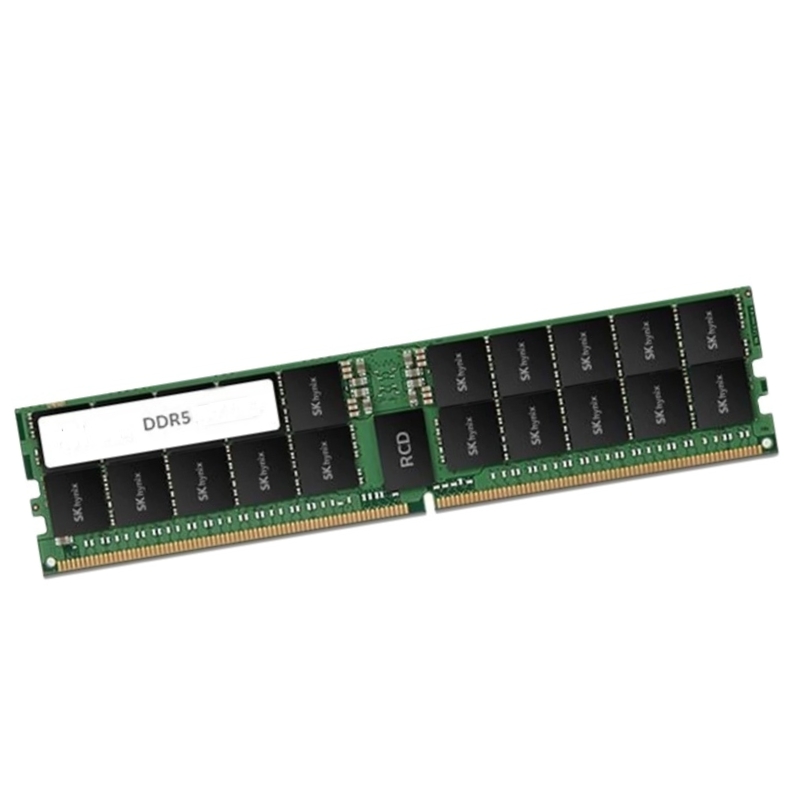
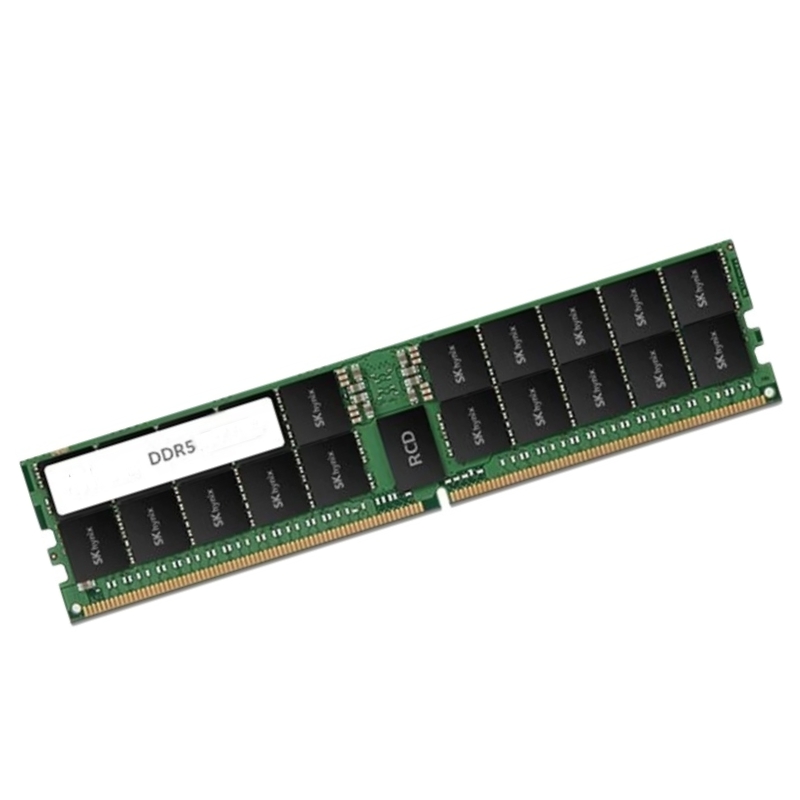
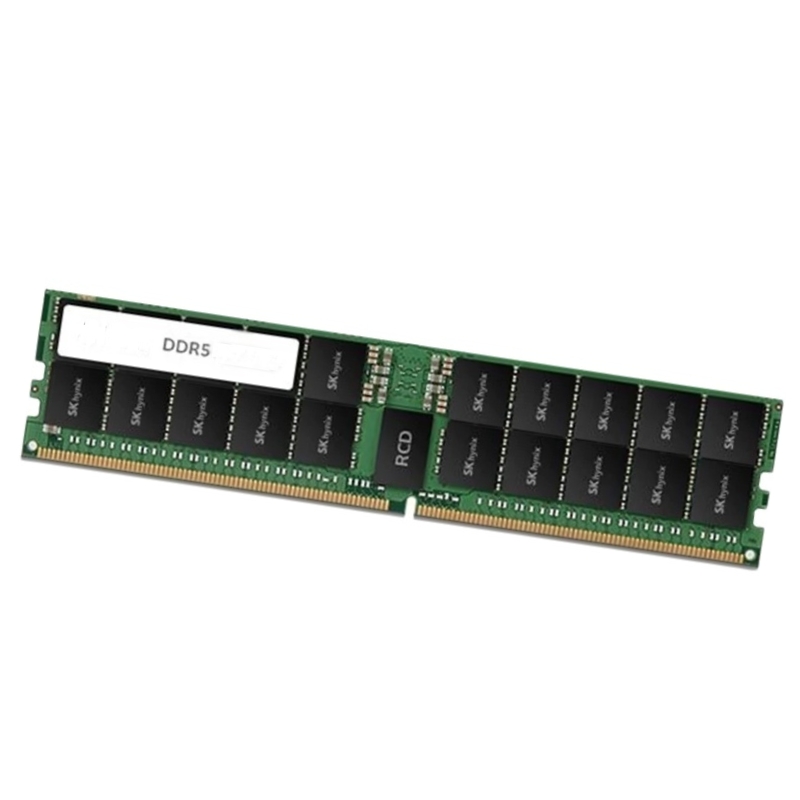
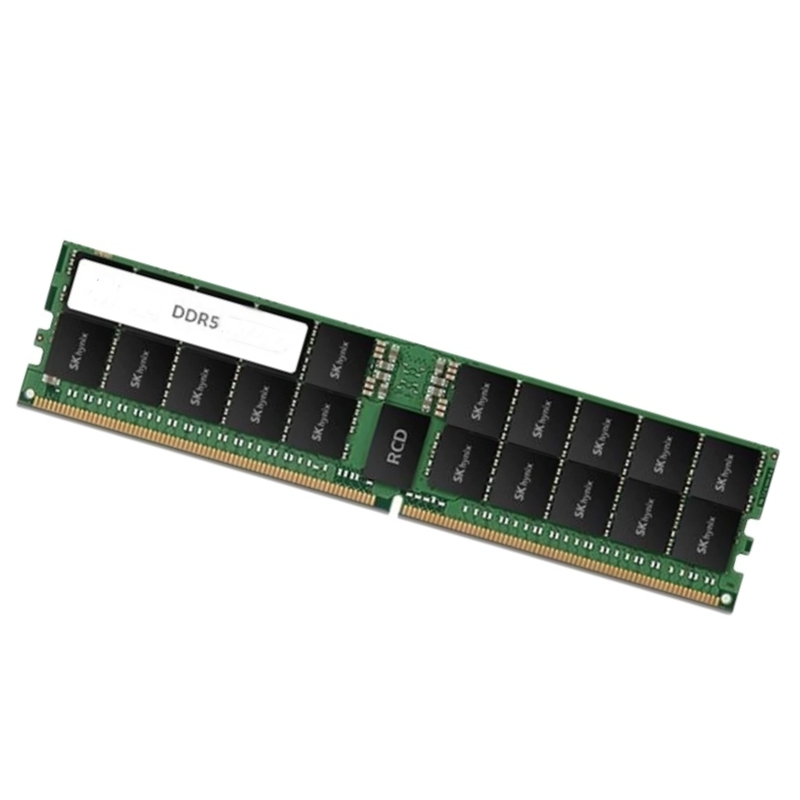
Hynix HMCG84AHBRA476N 32GB DDR5 6400MTS PC5-51200 ECC CL52 SDRAM RDIMM RAM. New Sealed in Box (NIB) with 3 Year Warranty
Hynix HMCG84AHBRA476N 32GB DDR5 SDRAM memory module is a high-performance server-grade RAM solution designed for modern computing environments that demand stability, speed, and efficiency. Operating at 6400MT/s (PC5-51200), this ECC Registered RDIMM module delivers enhanced data reliability and reduced system errors, making it suitable for enterprise workloads, data centers, and professional-grade servers. Built with advanced DDR5 architecture and a 288-pin configuration, it ensures improved bandwidth, lower power consumption at 1.1V, and optimized multitasking performance for intensive applications.
The Hynix HMCG84AHBRA476N 32GB 6400MT/s PC5-51200 CL42 ECC Registered 1Rx4 1.2V DDR5 SDRAM 288-pin RDIMM Memory Module represents a high-performance server-grade memory solution engineered for modern data center workloads. This class of memory is designed to deliver stability, bandwidth efficiency, and error resilience in environments where continuous uptime and predictable performance are critical. Unlike consumer desktop memory, this module is part of the registered dual inline memory module category, meaning it incorporates buffering mechanisms that reduce electrical load on the memory controller and improve scalability across multi-module server configurations.
This memory module is optimized for enterprise platforms that require high-density memory population while maintaining signal integrity at very high data transfer rates. With DDR5 architecture at its core, it provides a substantial leap in bandwidth, power efficiency, and internal bank structure compared to previous generations such as DDR4. The integration of ECC and registered buffering further enhances its suitability for mission-critical workloads including virtualization, cloud computing, artificial intelligence training systems, distributed databases, and large-scale enterprise applications.
DDR5 SDRAM introduces a significantly improved internal architecture designed to double the effective bandwidth potential compared to DDR4. Operating at 6400MT/s, the Hynix HMCG84AHBRA476N module delivers extremely high data throughput, making it suitable for servers that handle massive parallel workloads. The PC5-51200 designation reflects the theoretical peak bandwidth of approximately 51,200 MB/s per module, which is achieved through improved prefetch architecture and higher burst lengths.
The internal design of DDR5 memory increases bank groups and enhances channel efficiency within each module. This enables simultaneous access to more memory segments, reducing latency bottlenecks in heavily threaded workloads. These architectural improvements are particularly valuable in environments where multiple CPU cores access memory concurrently, such as cloud orchestration systems and virtualization clusters.
One of the most important enhancements in DDR5 technology is the shift toward on-module power management. The Hynix RDIMM operates at 1.2V, but unlike DDR4 modules, DDR5 integrates a Power Management Integrated Circuit directly on the module. This allows more stable voltage regulation and reduces noise interference across high-speed data lines. As a result, power delivery becomes more efficient and predictable, especially in densely populated server racks where thermal and electrical constraints are critical considerations.
This improvement also contributes to better thermal behavior under sustained workloads. Servers running continuous database queries or AI inference pipelines benefit from reduced power fluctuations, ensuring stable operation even under maximum memory utilization.
The registered architecture in the Hynix HMCG84AHBRA476N module plays a critical role in buffering command and address signals between the memory controller and DRAM chips. This register acts as an intermediary that reduces electrical loading on the CPU’s memory controller, enabling the system to support more memory modules per channel without compromising stability.
In high-density server configurations, where multiple RDIMMs are installed across several memory channels, signal integrity becomes a major challenge. The registered design ensures that signal timing remains consistent, reducing the risk of data corruption or system instability under heavy computational loads.
Modern enterprise servers often utilize multi-socket CPU architectures where each processor manages its own memory channels. RDIMM technology is essential in such systems because it allows memory expansion without overwhelming the electrical limits of the memory controller. The Hynix DDR5 RDIMM supports large memory capacities per channel, enabling data centers to scale memory resources efficiently as computational demand increases.
This scalability is particularly important for virtualization platforms where multiple virtual machines share physical memory resources. Registered modules ensure that memory access remains stable even when hundreds of virtual instances are running simultaneously on the same hardware platform.
Error Correction Code (ECC) is a fundamental feature of this memory module that ensures data integrity by detecting and correcting single-bit memory errors in real time. In enterprise environments, even minor memory errors can lead to system crashes, data corruption, or security vulnerabilities. ECC technology significantly reduces these risks by continuously verifying stored data and correcting discrepancies before they propagate into system-level failures.
The implementation of ECC in DDR5 modules is more advanced than previous generations, offering improved error detection granularity and faster correction cycles. This makes the Hynix RDIMM particularly suitable for mission-critical applications such as financial transaction systems, scientific computing, and cloud storage infrastructure.
Data centers and enterprise servers are designed for continuous operation, often running workloads without interruption for months or even years. In such environments, memory reliability is not optional but essential. ECC memory ensures that transient errors caused by electrical interference, cosmic radiation, or thermal fluctuations do not compromise system integrity.
The combination of ECC and registered buffering provides a dual-layer protection mechanism that enhances system uptime and reduces maintenance-related downtime. This is particularly valuable in industries where operational continuity is directly tied to revenue generation and service availability.
The 6400MT/s transfer rate of this module represents one of the highest performance tiers in DDR5 RDIMM technology. This speed enables rapid data movement between CPU and memory, reducing latency in compute-heavy workloads. Applications such as real-time analytics, high-frequency trading systems, and AI model training benefit significantly from this level of bandwidth.
High memory bandwidth ensures that multi-core processors can maintain consistent data flow without waiting for memory access bottlenecks. This is particularly important in modern server CPUs that may contain dozens of cores operating simultaneously.
The CAS latency value of CL42 reflects the number of clock cycles required for memory to respond to a data request. While higher frequency memory often exhibits higher latency values, the overall performance is balanced by increased bandwidth. In DDR5 systems, this trade-off is optimized to deliver superior real-world performance compared to previous generation memory technologies.
In practical workloads, such as virtualization or database querying, the improved throughput compensates for latency characteristics, resulting in faster overall system responsiveness and improved workload handling efficiency.
The 1Rx4 configuration indicates that the memory module is single rank and uses x4 data width DRAM chips. This structure provides a balance between performance and density, making it suitable for high-capacity server environments where memory efficiency is critical. The x4 architecture enhances error correction capability, allowing ECC systems to more effectively isolate and correct faults at the chip level.
Single rank modules like this one are often preferred in systems where predictable latency and consistent access patterns are required. They also simplify memory controller scheduling, which can improve stability in heavily loaded server environments.
The 288-pin design of this RDIMM module ensures compatibility with modern DDR5 server motherboards. The physical layout is engineered to support high-speed signal transmission while maintaining mechanical stability under thermal expansion conditions common in server environments.
The connector design also supports improved signal routing efficiency, reducing cross-talk and electromagnetic interference. This is essential for maintaining stable operation at high frequencies such as 6400MT/s.
Modern server processors utilize multi-channel memory architectures to maximize data throughput. This RDIMM is designed to integrate seamlessly into such systems, allowing multiple modules to operate in parallel across different memory channels. This parallelism significantly increases aggregate memory bandwidth available to the CPU.
The module is intended for use in enterprise-grade server platforms that support DDR5 RDIMM configurations. Compatibility depends on motherboard support, CPU memory controller generation, and firmware optimization. When properly integrated, it contributes to a highly stable and scalable memory subsystem suitable for long-term deployment.
The registered design ensures synchronization between memory modules and the CPU memory controller. This coordination is essential in maintaining timing accuracy at high data rates. Without such synchronization, signal degradation and timing errors could significantly impact system reliability.
Enterprise memory modules are expected to operate continuously under high utilization. The Hynix DDR5 RDIMM is designed for long-term durability, ensuring consistent performance even under sustained workloads that last for extended periods. This reliability reduces the need for frequent hardware replacement and minimizes operational disruptions.
In mission-critical systems, unpredictability is unacceptable. This memory module provides consistent performance characteristics, ensuring that system behavior remains stable over time. Combined with ECC protection and registered buffering, it forms a reliable foundation for enterprise computing infrastructure.


 Contact Us
 Information
 Catalog
 Solid State Drives (SSD)
 Network Switches
 Hard Disk Drives
 HBA & Controllers
 PC & Servers
 PC & Server Memory
 CPU & Processors
 Network Routers
 Power Supplies
 Tape Drives & Libraries
 Network Devices
 Computer & Network Cables