
(7% discount is applied at checkout)
Cart is empty
Your go-to destination for cutting-edge server products
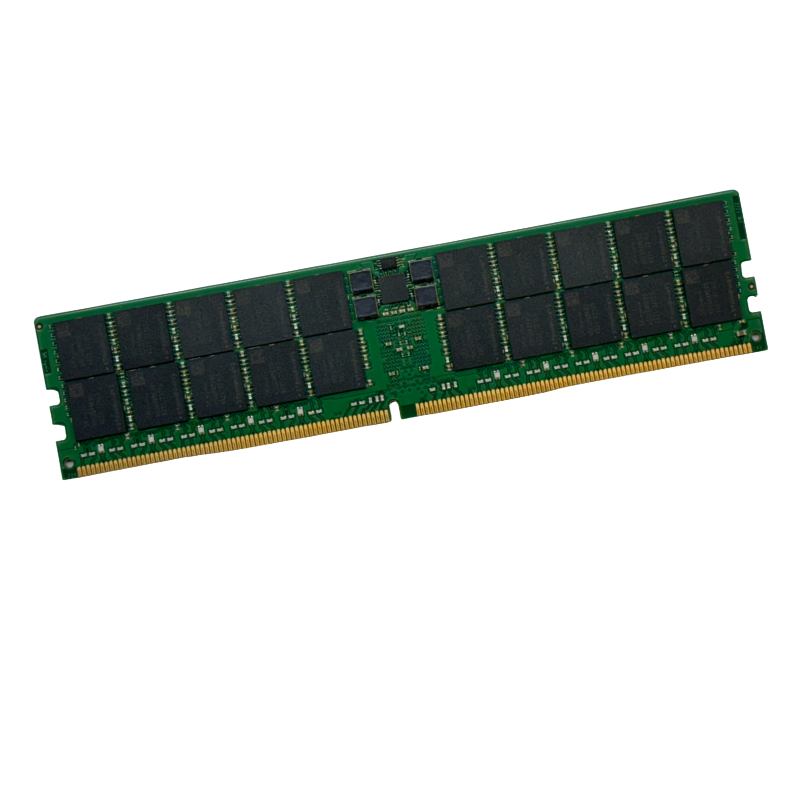
Hynix HMCG84AHBRA477N 32GB PC5-51200 DDR5-6400MTs 1Rx4 ECC Memory. New Sealed in Box (NIB) with 3 Years Warranty
| SKU/MPN | Warranty | Price | Condition | You save |
|---|---|---|---|---|
| HMCG84AHBRA477N | 1 Year Warranty | $2,064.00 | New (System) Pull | You save: $722.40 (26%) |
| HMCG84AHBRA477N | 1 Year Warranty | $2,688.00 | New Sealed in Box (NIB) | You save: $940.80 (26%) |
Discover the Hynix HMCG84AHBRA477N: a high-performance 32GB DDR5 memory module designed for servers and workstations. This single-stick RDIMM (1x32GB) operates at 6400 MT/s (PC5-51200), features ECC for data integrity, and uses a 288-pin form factor with a low 1.2V operating voltage.
The Hynix HMCG84AHBRA477N represents the pinnacle of DDR5 server memory technology, engineered specifically for demanding data center, workstation, and enterprise computing environments. This 32GB module isn't just memory; it's a critical infrastructure component designed to deliver unparalleled reliability, performance, and data integrity where system uptime and accuracy are non-negotiable.
At its heart, this module operates at a swift 6400 MT/s (MegaTransfers per second), formally classified under the PC5-51200 standard. This translates to a peak theoretical bandwidth of 51.2 GB/s per module, a significant leap over previous DDR4 generations. Operating at a low 1.2V, it achieves this high performance with improved power efficiency, a crucial factor in densely populated servers where power and thermal budgets are constrained.
Hynix's part numbering system reveals key attributes of the module. Breaking it down: HMC identifies it as a Hynix Memory Module. G84 often relates to the specific component and technology generation (DDR5). AH can indicate a registered DIMM (RDIMM). BRA typically specifies the density, organization, and speed bin. 477N often refers to the specific revision and timing profile. Understanding this nomenclature helps IT professionals quickly identify compatibility and key features.
DDR5 memory architecture is not merely an incremental speed boost; it's a fundamental redesign that addresses the bottlenecks of its predecessor, DDR4.
DDR5 introduces a paradigm shift with its decision to move the voltage regulator from the motherboard directly onto the memory module itself. This On-Module PMIC (Power Management Integrated Circuit) allows for more granular and efficient power delivery, reducing noise and improving signal integrity, which is essential for achieving and maintaining high data rates like 6400 MT/s.
While DDR4 operated with a Burst Length of 8, DDR5 doubles this to 16 (BL16). This means that for every column access command, 64 bytes of data are transferred—a perfect match for modern CPU cache line sizes. Furthermore, DDR5 doubles the number of bank groups compared to DDR4. This architectural enhancement allows for a greater number of concurrent operations, drastically reducing latency by minimizing conflicts and keeping the data bus saturated.
DDR5 is architected from the ground up to support much higher module densities. The Hynix 32GB module is a testament to this, utilizing advanced semiconductor processes to pack more memory cells into a compact form factor. This scalability is vital for modern servers that may need to support terabytes of RAM in a single system, enabling larger in-memory databases and more extensive virtualized environments.
For any mission-critical application, raw speed is meaningless without unwavering reliability. The Hynix HMCG84AHBRA477N incorporates two foundational technologies to ensure this: Error Correcting Code (ECC) and a Registered (Buffered) design.
ECC is a non-negotiable feature for servers and workstations. It works by adding extra bits (check bits) to the data stored in memory. When data is read, the memory controller recalculates these check bits and compares them to the stored values.
Single-bit errors, which are the most common type of memory error caused by cosmic rays, electrical interference, or minor cell degradation, are detected and corrected instantly and transparently without any operating system or application involvement. This prevents silent data corruption, a scenario where corrupted data is processed and leads to incorrect results, crashed applications, or corrupted databases, all without any obvious warning. Multi-bit errors, while rarer, are detected and reported to the system, which can then trigger an alert for preventative maintenance.
In financial trading, a single flipped bit could represent a million-dollar error. In scientific computing, it could invalidate weeks of simulation. In database servers, it could corrupt customer records. ECC is the first and most critical line of defense against these catastrophic scenarios, making the Hynix HMCG84AHBRA477N an essential component for data integrity.
As memory speeds increase and densities grow, the electrical load placed on the memory controller becomes immense. An unbuffered DIMM (UDIMM) presents a direct electrical connection, which limits the number of modules that can be reliably installed on a single channel, especially at high speeds.
An RDIMM, like this Hynix module, incorporates a register (or buffer) between the memory controller and the DRAM chips. This register handles all command and address signals, presenting a single, stable electrical load to the memory controller regardless of how many DRAM chips are on the module.
This architecture provides two major benefits: 1. Superior Signal Integrity: By buffering the signals, RDIMMs can achieve higher operating frequencies and support more modules per channel without signal degradation. This is why the 6400 MT/s speed is achievable in multi-DIMM server configurations. 2. Increased Maximum Capacity: Servers can support a much larger total memory capacity with RDIMMs, as the memory controller is no longer the limiting factor. This makes 32GB modules ideal for populating systems with 512GB, 1TB, or even more memory.
The trade-off is a slight increase in latency (typically one clock cycle) due to the buffering process, but this is overwhelmingly offset by the gains in stability, capacity, and overall system performance in a server context.
The "x4" refers to the data width of the individual DRAM chips used on the module. Each chip has a 4-bit wide data interface. To form a 64-bit data bus, the module uses 16 chips (16 chips * 4 bits = 64 bits). An additional 4 chips (4 chips * 4 bits = 16 bits) are used for the ECC, making a total of 20 chips for the full 72-bit width. x4 organization is preferred in servers as it provides stronger Chipkill or SDDC (Single Device Data Correction) capabilities, a more advanced form of error correction that can survive the complete failure of a single DRAM chip.
The physical interface for DDR5 is a 288-pin edge connector. It is mechanically keyed differently from DDR4's 288-pin design to prevent accidental insertion into an incompatible motherboard. The RDIMM form factor is standardized to ensure interoperability with server platforms from major OEMs like Dell, HPE, Cisco, and Supermicro, as well as motherboard manufacturers like Asus, Gigabyte, and ASRock for their server/workstation lines.
The combination of high bandwidth, large capacity, and robust reliability makes the Hynix HMCG84AHBRA477N suitable for a wide array of demanding computational tasks.
In virtualized environments and cloud platforms, memory is a shared resource. High-density, high-speed RDIMMs allow for greater virtual machine density and improved performance for each VM. This is crucial for Infrastructure-as-a-Service (IaaS) providers and large-scale private cloud deployments.
Systems like SAP HANA, Oracle TimesTen, and Redis thrive on fast, abundant memory. Storing the entire database in RAM eliminates disk I/O bottlenecks, enabling real-time analytics and transaction processing. The 32GB capacity and 6400 MT/s speed of this Hynix module directly contribute to faster query times and higher transaction throughput.
CFD (Computational Fluid Dynamics), finite element analysis, weather modeling, and genomic sequencing workloads involve manipulating massive datasets in RAM. The bandwidth provided by DDR5-6400 accelerates the movement of data to and from the CPU cores, significantly reducing computation time and enabling more complex models to be solved.
Workstations used for 4K/8K video editing, 3D animation, and CAD/CAM design require large memory capacities to hold complex scenes, high-resolution textures, and lengthy timelines. The ECC feature ensures that a single memory error doesn't crash a render that has been running for days, protecting valuable creative work and deadlines.
While GPUs handle the core model training, the CPU and system memory are critical for data preprocessing, transformation, and feeding the data pipelines at high speed. Faster memory like the Hynix DDR5-6400 module helps prevent the CPU from becoming a bottleneck, keeping the GPUs fully utilized and accelerating the overall AI workflow.


 Contact Us
 Information
 Catalog
 Solid State Drives (SSD)
 Network Switches
 Hard Disk Drives
 HBA & Controllers
 PC & Servers
 PC & Server Memory
 CPU & Processors
 Network Routers
 Power Supplies
 Tape Drives & Libraries
 Network Devices
 Computer & Network Cables