(7% discount is applied at checkout)
Cart is empty
Your go-to destination for cutting-edge server products
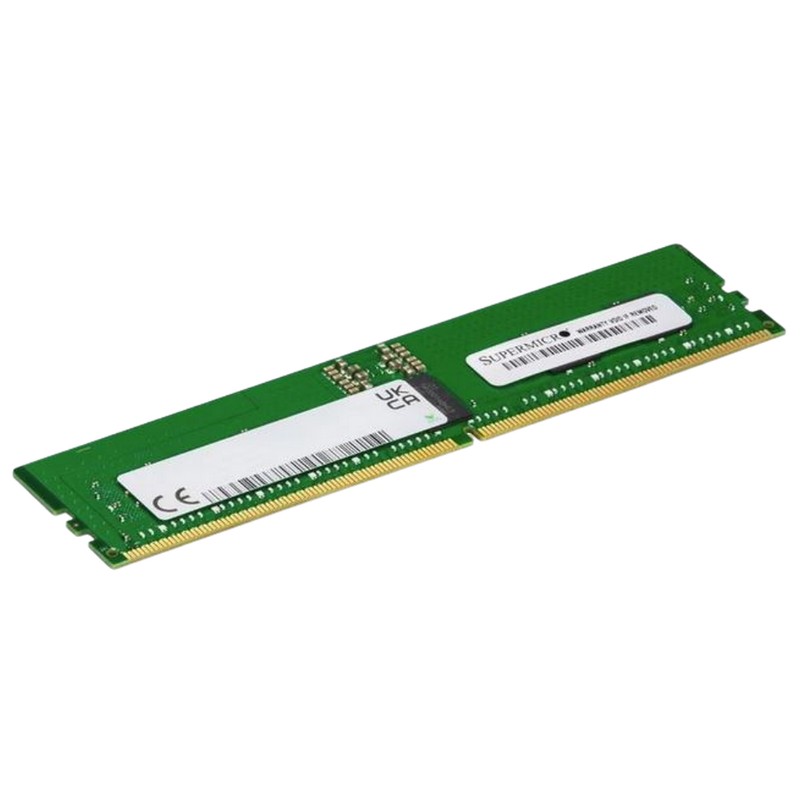


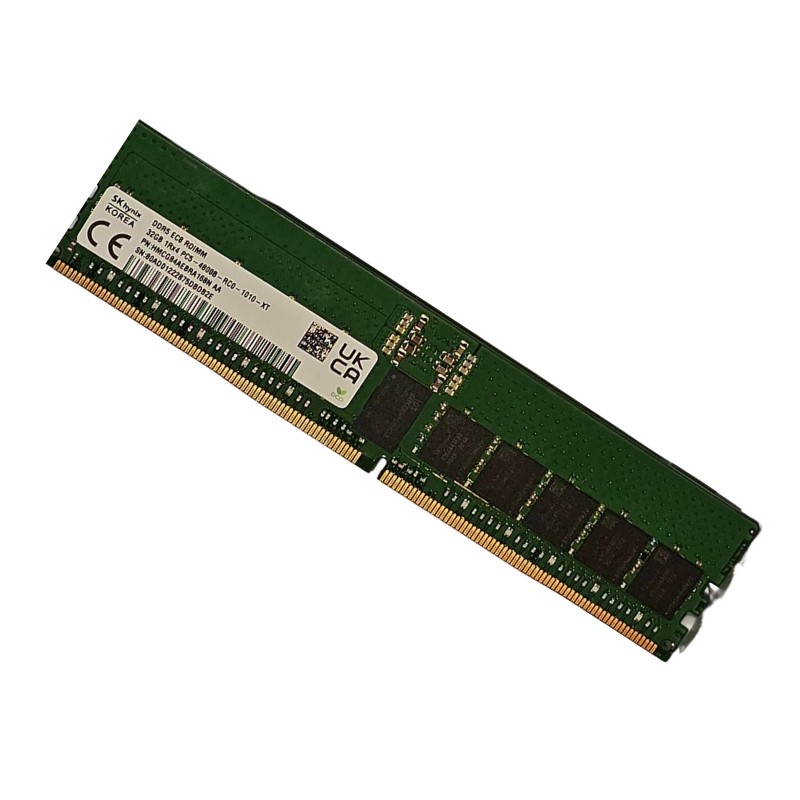
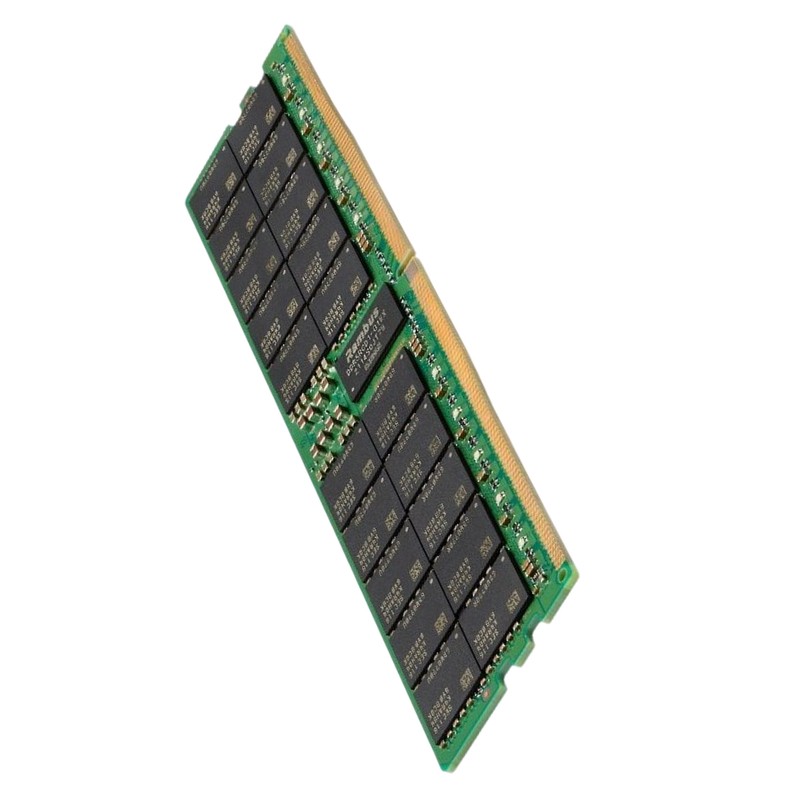
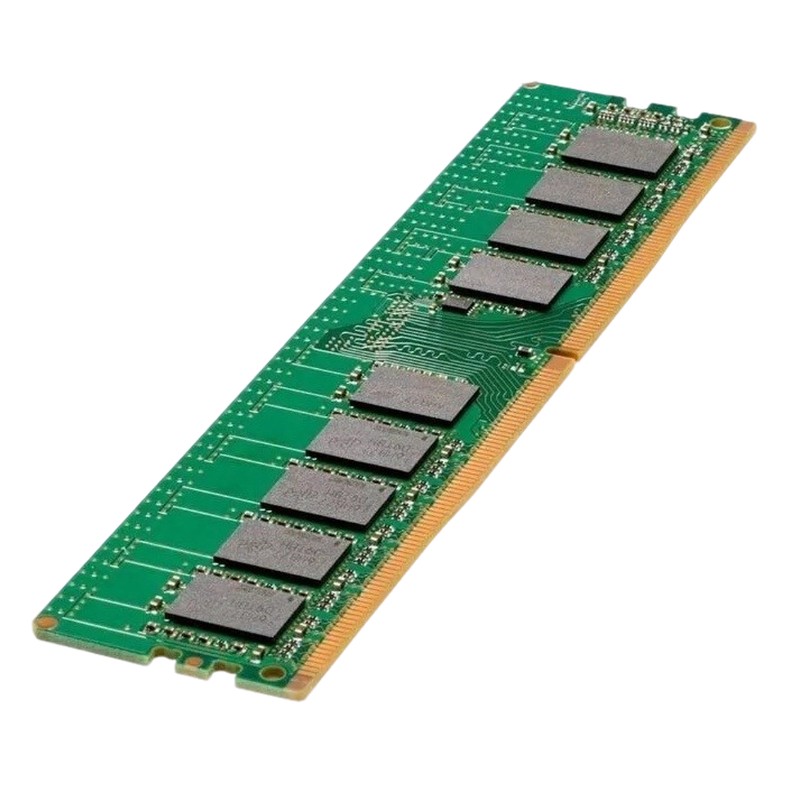
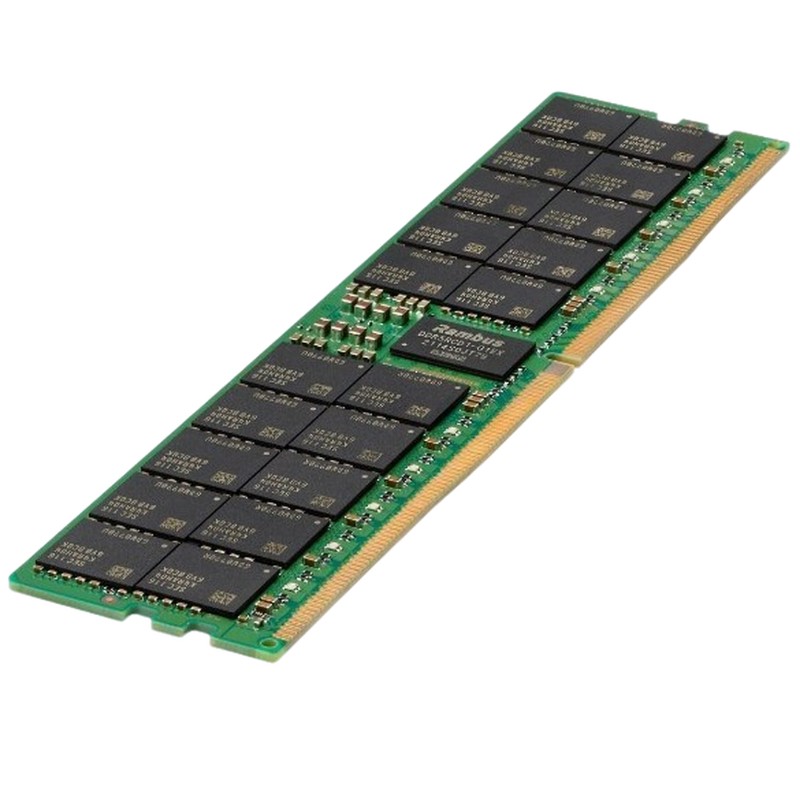
Hynix HMCG84MEBRA173N 32GB 4800MHz PC5-38400 1RX4 ECC Registered 1.1v CL40 DDR5 288-pin Rdimm Memory Module. New Sealed in Box (NIB) with 3 Year Warranty
The Hynix HMCG84MEBRA173N 32GB 4800MHz PC5-38400 1Rx4 ECC Registered DDR5 288-pin RDIMM is a high-performance server memory solution engineered for stability, accelerated workflows, and next-generation enterprise computing.
Understanding the part number and key specifications is crucial for compatibility and performance planning. Each segment of "HMCG84MEBRA173N" and its accompanying string denotes a critical attribute of the module.
The alphanumeric code follows SK Hynix's internal classification system, identifying it as a registered ECC DDR5 module with specific characteristics for enterprise integration.
The 32GB capacity is achieved using high-density DRAM chips. The data rate of 4800 Megatransfers per second (MT/s), marketed as 4800MHz, defines the speed at which data is clocked. The corresponding bandwidth is calculated as (4800 MT/s * 64 bits / 8) = 38.4 GB/s per channel. In a typical dual-channel server platform, this aggregates to 76.8 GB/s of theoretical peak memory bandwidth.
The "PC5-38400" designation is the module's standardized industry name. "PC5" indicates it is a DDR5 module, while "38400" refers to the total bandwidth in MB/s (approximately 38.4 GB/s), confirming its 4800MT/s operational speed.
This defines the physical and electrical interface. The 288-pin design is exclusive to DDR5 and is not backward compatible with DDR4's 288-pin layout due to keying differences. "RDIMM" (Registered DIMM) signifies the inclusion of a Register Clock Driver (RDR) buffer on the module. This buffer reduces electrical load on the server's memory controller, enabling support for more DIMMs per channel (higher total capacity) at high speeds while improving signal integrity. "ECC" (Error-Correcting Code) is an essential feature that detects and corrects single-bit errors and detects multi-bit errors, preventing silent data corruption and ensuring data reliability—a non-negotiable requirement for server stability.
DDR5's operating voltage of 1.1v represents a significant reduction from DDR4's 1.2v, translating directly to lower power consumption and heat generation at the module and system level. The CAS Latency (CL40) denotes a cycle count of 40 clock cycles between a read command and data availability. While numerically higher than some DDR4 latencies, the significantly faster clock cycles of DDR5 mean absolute latency in nanoseconds can be competitive or improved. The "1Rx4" indicates a single-rank module with an internal organization of four bits per DRAM device accessed simultaneously. This rank structure influences population rules and can impact performance in multi-socket systems.
The Hynix HMCG84MEBRA173N leverages the foundational innovations of the DDR5 standard, which are magnified in the registered ECC form factor for enterprise benefit.
DDR5 introduces two groundbreaking features. First, On-Die ECC is a self-correcting mechanism within each DRAM chip that manages bit errors at the silicon level, improving chip yield and reliability before data even reaches the module's main ECC engine. Second, the Power Management IC (PMIC) moves voltage regulation from the motherboard to the module itself. This allows for finer-grained power control, reduced noise, and more stable voltage delivery, which is critical for maintaining signal integrity at high data rates, especially in fully populated server configurations.
DDR5 doubles the burst length from 8 (DDR4) to 16, meaning more data is transferred with each column access command, improving efficiency for sequential data access patterns. Furthermore, it doubles the number of bank groups, which allows for more concurrent activates and accesses across different banks, significantly boosting parallelism and reducing contention. This is particularly beneficial for multi-threaded server applications that access memory in a non-linear fashion.
Perhaps the most significant architectural shift is the move from a single 64-bit data channel per DIMM to two independent 32-bit sub-channels. Each sub-channel operates with its own command and address lines. This effectively doubles the command efficiency and reduces latency by allowing two simultaneous, independent memory accesses within a single module. For the Hynix 32GB RDIMM, this architecture translates into more efficient utilization of memory bandwidth by the CPU.
This specific memory category is not designed for consumer PCs but is optimized for targeted, mission-critical computing environments.
In virtualization hosts (e.g., VMware vSphere, Microsoft Hyper-V) and cloud server nodes, memory density, bandwidth, and reliability are paramount. The 32GB capacity allows for hosting numerous virtual machines (VMs) per physical server, while the high 4800MHz bandwidth ensures responsive performance for consolidated workloads. ECC protection is essential to safeguard the integrity of diverse VMs running simultaneously.
Platforms like SAP HANA, Oracle Database In-Memory, and Redis thrive on fast, large memory pools. The combination of high capacity (32GB per module, scaling to terabytes per system) and the increased bandwidth of DDR5 dramatically reduces query times and enables real-time analysis of massive datasets residing in RAM. The sub-channel architecture further accelerates parallel data access patterns common in these applications.
Scientific simulations, computational modeling, and AI/ML training/inference workloads are often bottlenecked by memory bandwidth. The 38.4 GB/s per channel bandwidth of these modules feeds data-hungry CPUs (like Intel Xeon Scalable or AMD EPYC processors) more efficiently, reducing compute idle time and accelerating time-to-solution. The reliability afforded by dual ECC layers (on-die and module) is critical for long-running, complex calculations where an uncorrected error could invalidate days of computation.
This module is designed for next-generation servers based on Intel's Xeon Scalable "Sapphire Rapids" and newer, or AMD's EPYC "Genoa" and newer platforms. It is imperative to always consult the server manufacturer's Qualified Vendor List (QVL) to ensure the HMCG84MEBRA173N or its equivalent is validated for a specific motherboard model, as BIOS and firmware dependencies are strict at these speeds.
Selecting the right memory involves understanding its position within the DDR5 ecosystem and system design rules.
vs. UDIMM (Unbuffered DIMM): UDIMMs lack a register and are for consumer desktops/laptops. They support lower capacities per module and fewer modules per channel. RDIMMs are mandatory for most multi-socket and high-capacity server configurations.
vs. LRDIMM (Load-Reduced DIMM): LRDIMMs use a different buffer (iMB) to further reduce electrical load, enabling the highest possible capacities and ranks per channel, often at a slight latency or cost premium. The 1Rx4 32GB RDIMM offers an excellent balance of performance, density, and cost for the majority of deployments.
vs. DDR4 RDIMM: DDR5 provides a substantial generational uplift in bandwidth, efficiency, and feature set (PMIC, on-die ECC). Migration requires a compatible platform (CPU and motherboard).
Enterprise memory is built and validated to a different standard than consumer components, with an emphasis on continuous operation and mean time between failures (MTBF).
Beyond standard single-bit correction, server platforms utilizing these modules often support advanced RAS (Reliability, Availability, Serviceability) features. These include patrol scrubbing (proactively searching for and correcting errors), post-package repair (PPR) for addressing failing cells, and support for memory mirroring or sparing in mission-critical configurations. The module's SPD (Serial Presence Detect) chip contains detailed timing and manufacturer data that the BIOS uses to configure these advanced features correctly.
While DDR5 operates at a lower voltage, high-density modules in constrained server airflow environments can still generate significant heat. The Hynix HMCG84MEBRA173N is designed with robust thermal components, often featuring a high-quality thermal sensor integrated into the PMIC and a designed-for-purpose heatsink or thermal spreader label. This ensures predictable performance under sustained load and allows the system's management controller to monitor memory temperature and adjust cooling proactively.


 Contact Us
 Information
 Catalog
 Solid State Drives (SSD)
 Network Switches
 Hard Disk Drives
 HBA & Controllers
 PC & Servers
 PC & Server Memory
 CPU & Processors
 Network Routers
 Power Supplies
 Tape Drives & Libraries
 Network Devices
 Computer & Network Cables