(7% discount is applied at checkout)
Cart is empty
Your go-to destination for cutting-edge server products
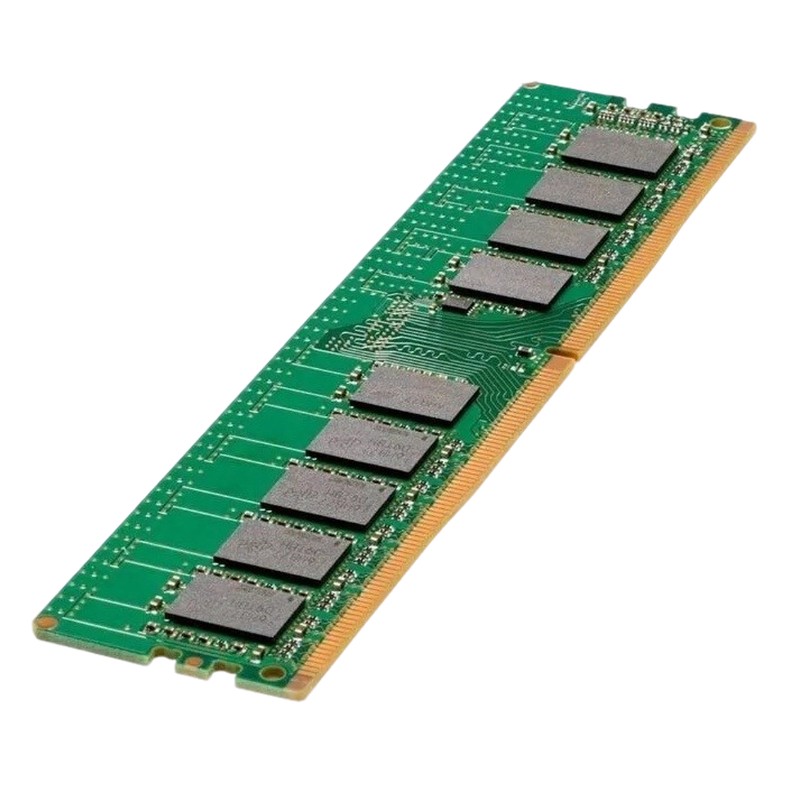


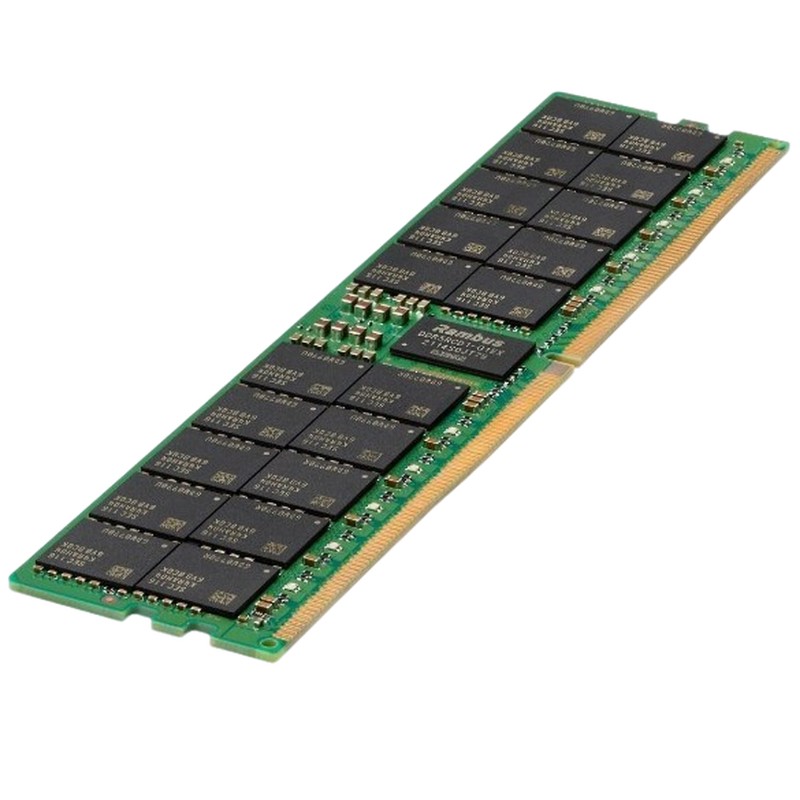
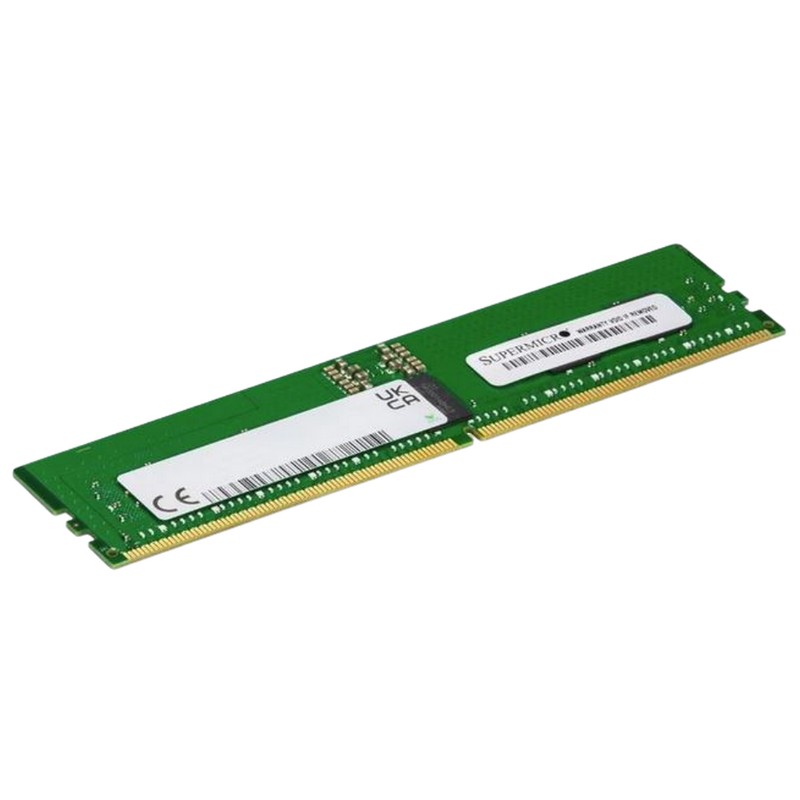
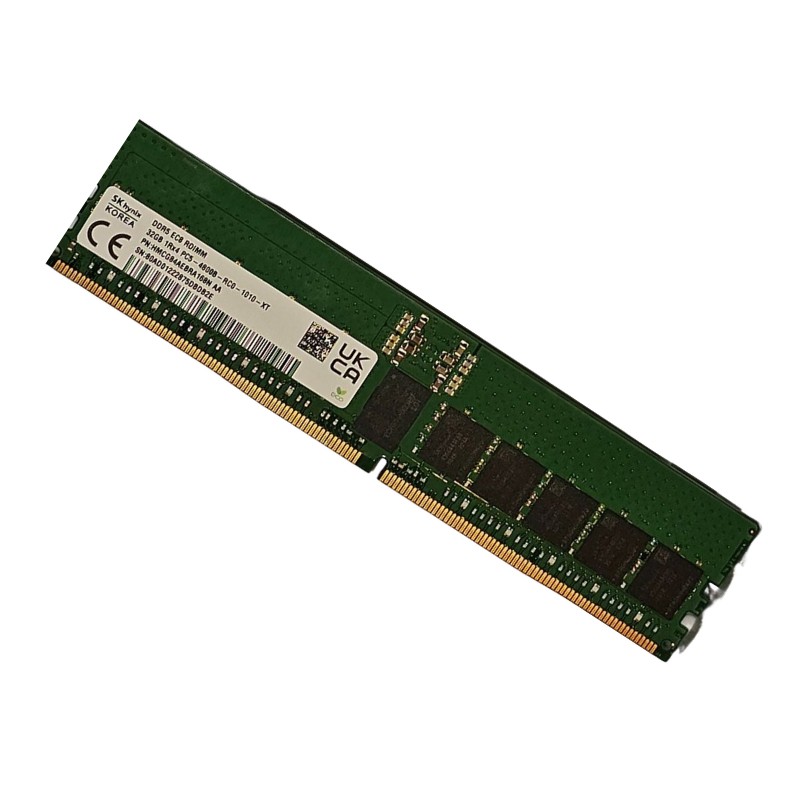
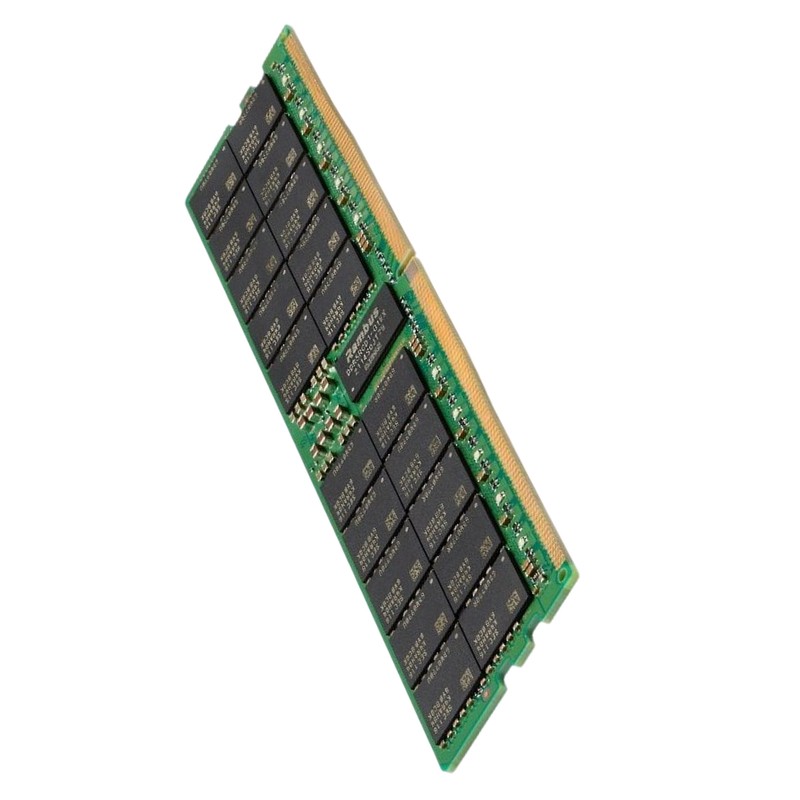
Hynix HMCG84MEBRA174N 32GB 4800MHz PC5-38400 1RX4 ECC Registered 1.1v CL40 DDR5 288-pin Rdimm Memory Module. New (System) Pull with 1 year replacement warranty
The Hynix HMCG84MEBRA174N 32GB 4800MHz PC5-38400 1RX4 ECC Registered DDR5 RDIMM is a high-performance server memory module engineered to deliver exceptional speed, enhanced reliability, and outstanding multitasking efficiency for enterprise-grade systems.
Understanding the part number and its associated specifications is key to comprehending this module's capabilities. Each segment of the alphanumeric code denotes a critical attribute, defining its place in the server ecosystem.
The part number HMCG84MEBRA174N follows Hynix's internal classification, signaling its adherence to the highest standards of DRAM manufacturing. More importantly, its publicly listed specifications tell the complete story:
The 32GB capacity per module represents the current sweet spot for balancing performance, density, and cost in mainstream server deployments. This capacity allows for substantial total system memory (e.g., 512GB across 16 DIMM slots) to handle large in-memory databases, virtualization hosts, and complex computational workloads. This density is achieved using advanced semiconductor processes from Hynix, packing billions of memory cells reliably onto a single module.
The 1RX4 designation is a crucial, often overlooked detail. "1R" means the module is single-ranked—it presents one set of memory banks to the memory controller per access cycle. "x4" refers to the physical organization of the DRAM chips, indicating they have a 4-bit wide data interface each. This x4 configuration is intrinsically linked to the module's support for ECC (Error Correction Code), as it provides the necessary extra bit lane for storing error-correcting metadata. Compared to x8 organization, x4 can offer advantages in certain access patterns and is standard for high-reliability server memory.
The 4800 Megatransfers per second (MT/s) data rate is a baseline speed for first-generation DDR5 server modules. In terms of peak theoretical bandwidth, this is calculated as (4800 MT/s * 64 bits/8 bits per byte) = 38,400 MB/s or 38.4 GB/s, hence the PC5-38400 classification. This represents a >50% increase over the common DDR4-3200 (PC4-25600, 25.6 GB/s) standard, dramatically reducing data transfer latencies at the channel level and feeding CPUs with data more efficiently.
This module category's true value lies in its enterprise-grade features: ECC and Registered buffering. These are not optional extras but non-negotiable requirements for mission-critical stability.
In server environments, even a single-bit memory error can cause application crashes, data corruption, or silent computational errors. ECC memory like the HMCG84MEBRA174N actively detects and corrects the most common types of bit flips (single-bit errors) and detects multi-bit errors. It adds extra bits to each data word (using the aforementioned x4 DRAM organization) to create a code that can identify and rectify errors on-the-fly, without interrupting system operation. This dramatically reduces the risk of system crashes and data corruption caused by cosmic rays, electrical noise, or cell degradation, ensuring data integrity over years of continuous operation.
As memory speeds increase and densities grow, the electrical load on the CPU's memory controller becomes a limiting factor. A Registered DIMM (RDIMM) incorporates a Register (or buffer) on the module itself. This register sits between the memory controller and the DRAM chips, buffering the command and address signals. This reduces the electrical load on the memory controller, allowing it to drive more memory modules per channel reliably. This is essential for populating all DIMM slots on a multi-socket server motherboard with high-capacity modules without suffering signal integrity issues, enabling maximum memory configurations.
UDIMM (Unbuffered): Used in desktops and entry-level servers. Offers lower latency but does not scale beyond a few modules per channel.
RDIMM (Registered): The standard for mainstream enterprise servers. Optimal balance of performance, capacity, scalability, and cost. The Hynix HMCG84MEBRA174N falls into this ideal category.
LRDIMM (Load Reduced): Uses an additional buffer for data signals as well, enabling even higher capacities but with slightly higher latency and cost. Used for maximum-capacity configurations.
DDR5 is a ground-up redesign. The Hynix HMCG84MEBRA174N embodies several key architectural innovations that collectively redefine memory performance.
Unlike DDR4's single 64-bit channel per DIMM, each DDR5 module like this Hynix RDIMM features two independent 32-bit subchannels. This effectively allows the memory controller to handle two concurrent memory access operations per module, improving overall efficiency and reducing contention. This is particularly beneficial for modern multi-core processors, as different cores can access different subchannels more efficiently, reducing queuing delays and improving effective bandwidth for real-world, multi-threaded workloads.
Beyond the module-level ECC, DDR5 chips themselves incorporate On-Die ECC. This is an additional layer of error correction that operates inside the DRAM chip, correcting minor bit errors before data is even sent to the module's ECC logic. This improves chip yield, reliability, and data retention. Furthermore, DDR5 includes BIST (Built-In Self-Test) capabilities, allowing for more robust initialization and testing procedures at boot, enhancing platform reliability.
A pivotal change in DDR5 is the migration of voltage regulation from the motherboard to the module itself. The Hynix module includes an onboard PMIC. This provides more stable and cleaner power delivery to the DRAM chips, improving signal integrity at high speeds. It also enables finer-grained power management and offers better support for advanced power-saving states, contributing to the overall energy efficiency of the platform.
To achieve higher data rates, DDR5 interfaces utilize advanced signaling techniques like Decision Feedback Equalization (DFE). This helps to compensate for signal degradation on the channel, allowing for clean data transmission at 4800 MT/s and beyond, ensuring robust operation even in electrically noisy server environments.
The Hynix HMCG84MEBRA174N 32GB DDR5 RDIMM is engineered for specific server and workstation platforms where its combination of performance, reliability, and capacity shines.
This module is a perfect match for modern server platforms based on Intel's Xeon Scalable "Sapphire Rapids" and AMD's EPYC "Genoa" processors. These CPUs feature memory controllers explicitly designed for DDR5's enhanced capabilities.
Hypervisors like VMware vSphere, Microsoft Hyper-V, and KVM require ample, fast, and reliable memory to host dozens of virtual machines. The high bandwidth and large 32GB capacity per module allow for greater VM density and improved performance for I/O-intensive virtualized applications.
Platforms such as SAP HANA, Oracle Database In-Memory, and Redis thrive on massive pools of low-latency memory. The bandwidth of DDR5-4800 accelerates data access and analytics, while ECC ensures the integrity of critical, real-time business data.
Computational simulations, financial modeling, and AI training involve massive datasets shuttling between CPU and memory. The increased bandwidth of DDR5 alleviates a key bottleneck, reducing computation time. ECC is often mandatory in scientific computing to ensure the validity of results over weeks-long calculations.
High-end workstations for CAD/CAM (e.g., SOLIDWORKS, AutoCAD), 3D animation and rendering (e.g., Maya, V-Ray), and 4K/8K video editing demand both high memory capacity and throughput. DDR5 RDIMMs in workstation platforms provide the stable, high-bandwidth foundation required for manipulating complex models and large media files.


 Contact Us
 Information
 Catalog
 Solid State Drives (SSD)
 Network Switches
 Hard Disk Drives
 HBA & Controllers
 PC & Servers
 PC & Server Memory
 CPU & Processors
 Network Routers
 Power Supplies
 Tape Drives & Libraries
 Network Devices
 Computer & Network Cables