(7% discount is applied at checkout)
Cart is empty
Your go-to destination for cutting-edge server products
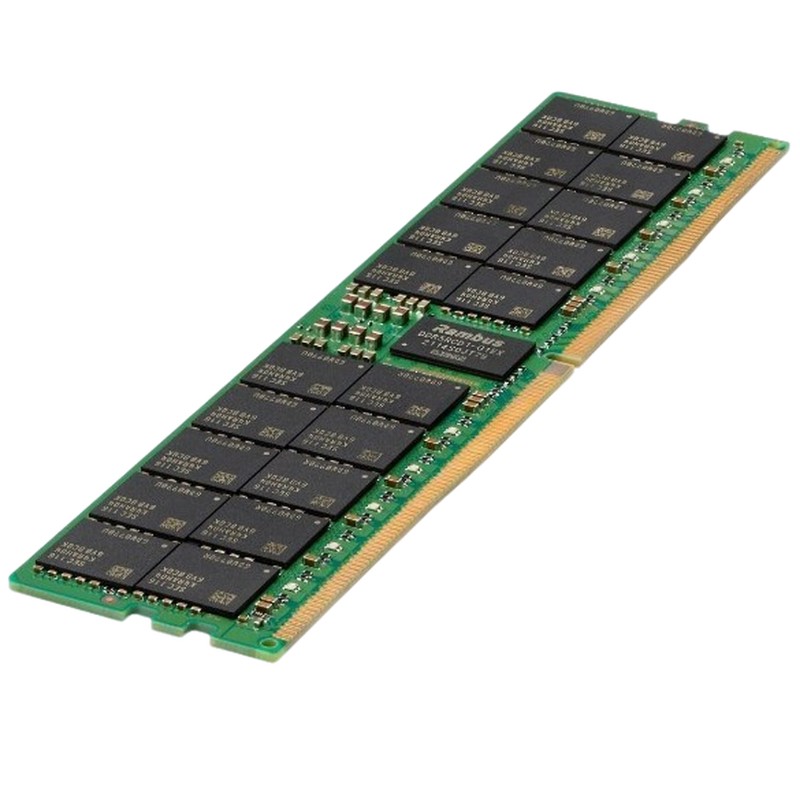


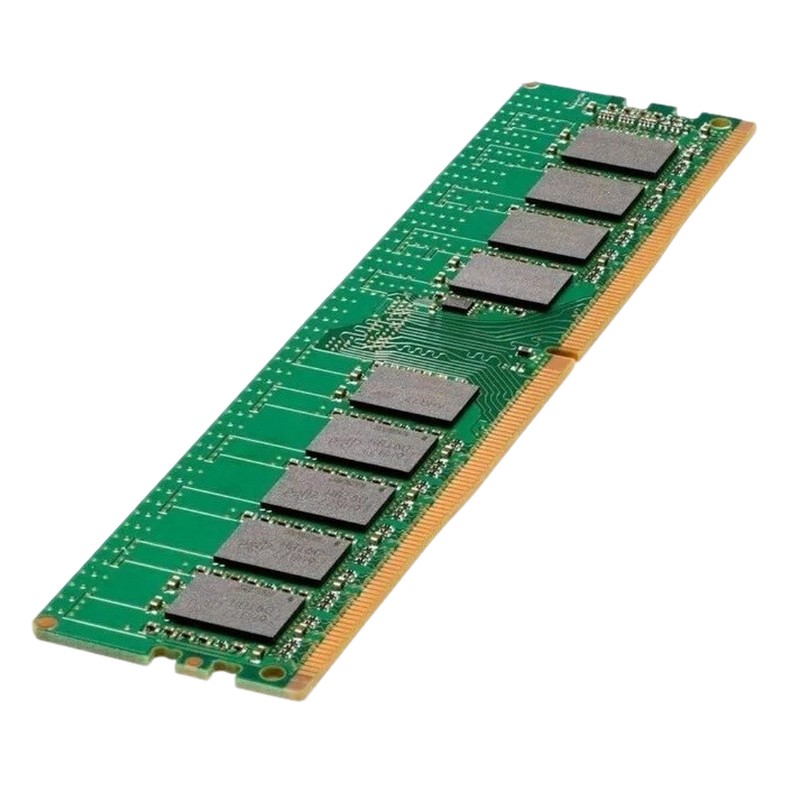
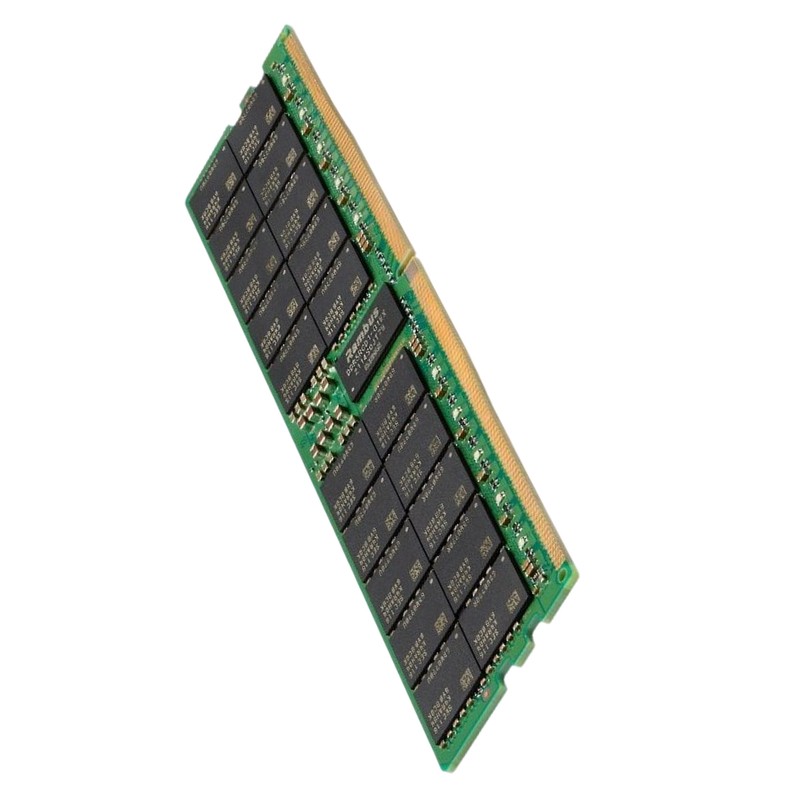
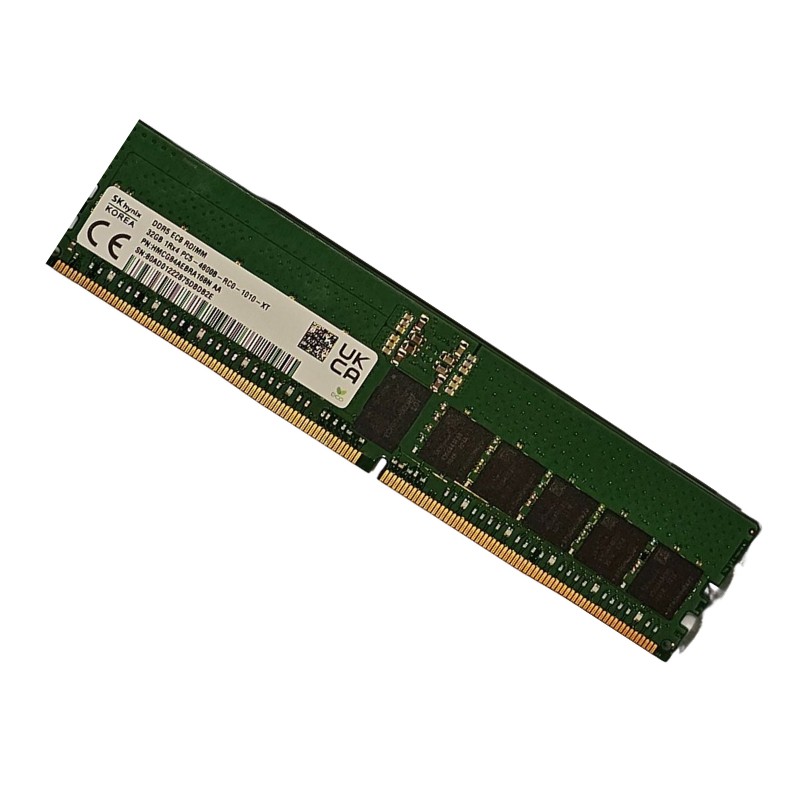
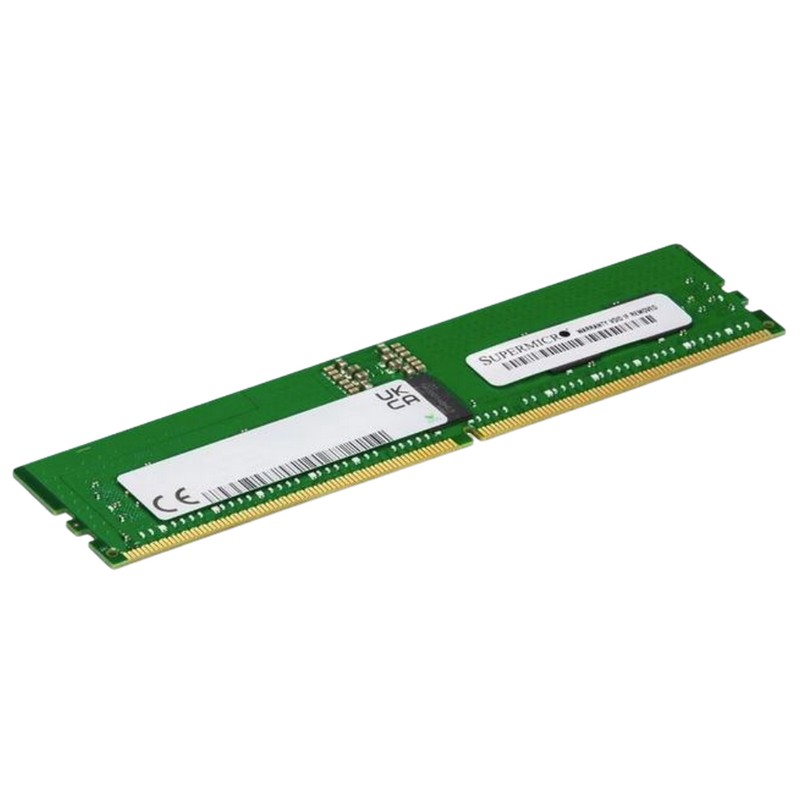
Hynix HMCG88AEBRA110N 32GB 4800MHz PC5-38400 1RX4 ECC Registered 1.1v CL40 DDR5 288-pin Rdimm Memory Module. New (System) Pull with 1 year replacement warranty
Premium server memory: the Hynix HMCG88AEBRA110N / HMCT04MEERA140N 32GB DDR5 RDIMM is a high-performance, error-correcting RAM module built for reliability and sustained throughput. Ideal for enterprise servers and workstations that require ECC registered memory, low-voltage operation, and stable multi-rank configurations.
Moving beyond specifications, the Hynix HMCG88AEBRA110N leverages the core innovations of the DDR5 standard to provide tangible system-level improvements.
A hallmark of DDR5 is the relocation of the Power Management Integrated Circuit (PMIC) from the motherboard to the memory module itself. This provides superior voltage regulation and noise isolation for the sensitive DRAM components. For server deployments, this translates to more stable power delivery across a vast array of configurations, improved signal integrity at high speeds, and enhanced capabilities for platform-level power monitoring and optimization.
DDR5 doubles the burst length from 8 (DDR4) to 16, meaning a single read or write command accesses 64 bytes of data—the size of a typical CPU cache line—in a more efficient operation. Furthermore, it increases the number of bank groups. This architectural change dramatically improves parallelism within the memory chip itself, allowing the memory controller to interleave more operations simultaneously, which is crucial for keeping multi-core CPUs fed with data and minimizing idle cycles.
Perhaps the most significant architectural shift is the division of each DDR5 module's 64-bit data bus into two independent 32-bit sub-channels. While the Hynix HMCG88AEBRA110N is a 1RX4 (1 Rank, x4 organization) module, it still benefits from this sub-channel design. This allows the memory controller to handle two separate 32-bit access commands per clock cycle, increasing effective concurrency and reducing latency for smaller, random access patterns common in server applications like database queries and virtual machine operations.
Understanding the part number is the first step to appreciating its engineering. Each segment of "HMCG88AEBRA110N" communicates a key attribute, defining its place in the server ecosystem.
This 32GB capacity per module represents the sweet spot for balancing high-density system configurations with cost-effectiveness. It allows for substantial total memory pools (e.g., 512GB in a 16-slot system) without requiring the premium associated with higher-density 64GB or 128GB modules, making it ideal for a wide range of enterprise workloads.
The "4800MHz" refers to the data transfer rate, executing 4.8 billion transfers per second. The "PC5-38400" designation is the module's bandwidth rating, calculated as 4800MHz x 8 bytes (64-bit bus) = 38,400 MB/s (or approximately 38.4 GB/s) per module. This substantial bandwidth alleviates data bottlenecks for CPU-intensive tasks.
The combination of Error-Correcting Code (ECC) and a Registered design is non-negotiable for server stability. ECC detects and corrects single-bit memory errors in real-time, preventing data corruption and system crashes. The Registered buffer (the "R" in RDIMM) reduces electrical load on the memory controller by managing signal integrity, enabling support for more modules per channel and higher capacities with greater stability compared to Unbuffered (UDIMM) memory.
Operating at just 1.1 volts, this DDR5 module achieves higher performance at a lower power envelope than DDR4, contributing to improved system power efficiency and thermal management. The CAS Latency (CL) of 40, while numerically higher than typical DDR4, operates on a different clocking architecture (burst length doubled). When considering the significantly higher clock speed, the absolute latency in nanoseconds is competitive, while the bandwidth gains are transformative.
The 288-pin physical interface is specific to DDR5 modules and is not backward compatible with DDR4's 288-pin design due to a different key notch position. This ensures proper installation in supported DDR5 server platforms only.
The specific characteristics of this Hynix module make it exceptionally suited for particular computing environments where its blend of speed, capacity, and reliability delivers maximum return on investment.
Modern hypervisors and containerized environments are profoundly memory-sensitive. The high bandwidth of 4800MHz DDR5 allows for faster live migrations of virtual machines (VMs) and reduces I/O wait times for VMs contending for host resources. The 32GB density enables administrators to allocate substantial memory to numerous VMs or high-demand instances without over-provisioning physical slots, while ECC ensures the long-term integrity of critical guest OS data.
For businesses looking to consolidate physical servers, populating a dual-processor platform with these 32GB RDIMMs creates a massive, high-performance memory pool. This allows for the safe and efficient running of dozens of workloads on a single host, maximizing hardware utilization and reducing data center footprint, power, and cooling costs.
Computational fluid dynamics, genetic sequencing, and financial modeling applications often involve operations on vast matrices. These tasks are often memory-bandwidth-bound. The PC5-38400 bandwidth per module, when scaled across multiple channels in a multi-socket server or compute node, provides the necessary data throughput to minimize processor stall time and reduce time-to-solution for complex simulations.
Deploying server memory requires careful planning beyond performance metrics. Ensuring compatibility and optimal configuration is critical.
The Hynix HMCG88AEBRA110N is designed for servers and workstations based on Intel Xeon Scalable Processors (Sapphire Rapids, Emerald Rapids, and later) and AMD EPYC 9004 "Genoa" (and later) platforms that support DDR5-4800 Registered ECC memory. It is imperative to consult the motherboard or system manufacturer's Qualified Vendor List (QVL) to confirm this specific part number has been tested and validated for a given model. Using QVL-listed memory ensures compatibility, stability, and access to supported JEDEC speeds.
Server CPUs feature multiple memory channels (typically 8 or 12). For best performance, memory should be installed in a balanced configuration across all channels. A "1RX4" rank/organization module like this one indicates it uses x4 DRAM chips. Systems often have specific guidelines for populating slots with different rank organizations to maintain signal integrity. Always follow the server manual's population sequence (e.g., installing modules in slots A1, B1, C1, D1 first) to achieve the multi-channel bandwidth the platform is designed for.
While it may be technically possible, mixing memory modules of different speeds, capacities, timings, or even manufacturers within a system is strongly discouraged. Doing so can cause the system to run all memory at the slowest common denominator (speed and timings) and may lead to instability. For guaranteed performance and reliability, use identical part numbers from the same manufacturer across the entire system.


 Contact Us
 Information
 Catalog
 Solid State Drives (SSD)
 Network Switches
 Hard Disk Drives
 HBA & Controllers
 PC & Servers
 PC & Server Memory
 CPU & Processors
 Network Routers
 Power Supplies
 Tape Drives & Libraries
 Network Devices
 Computer & Network Cables