(7% discount is applied at checkout)
Cart is empty
Your go-to destination for cutting-edge server products
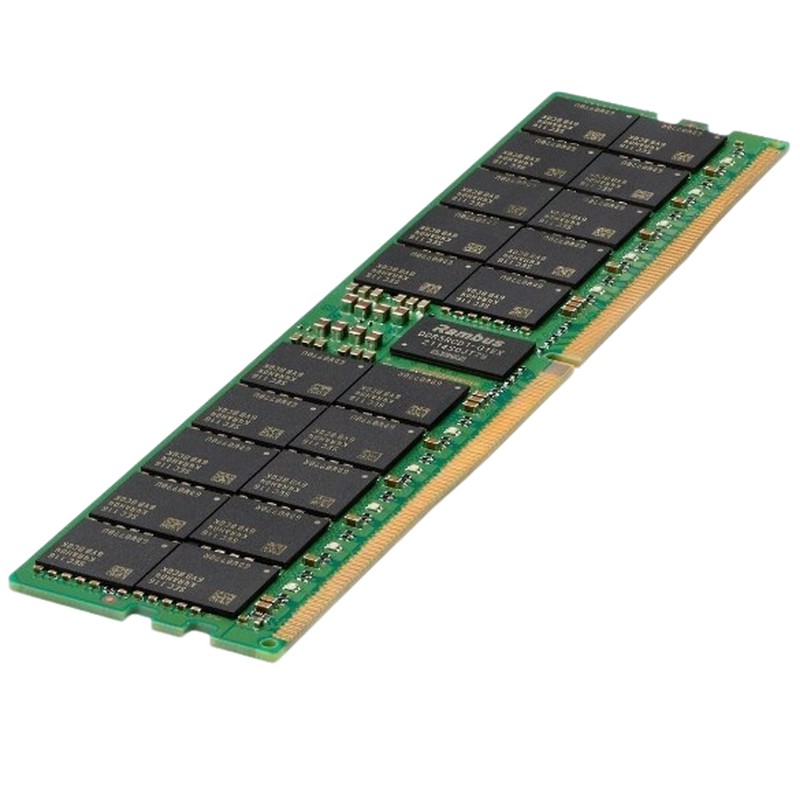


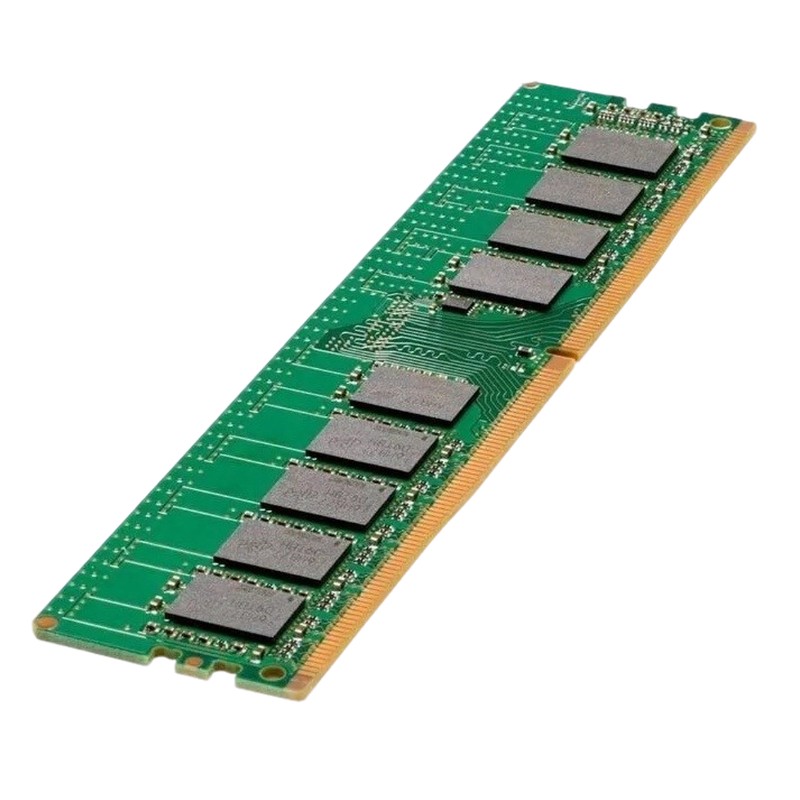
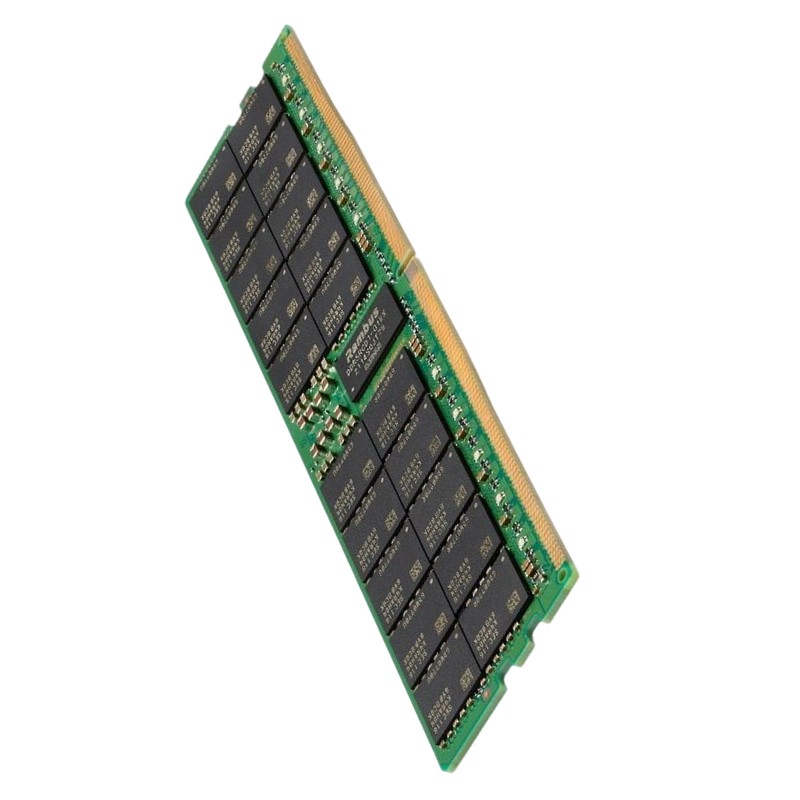
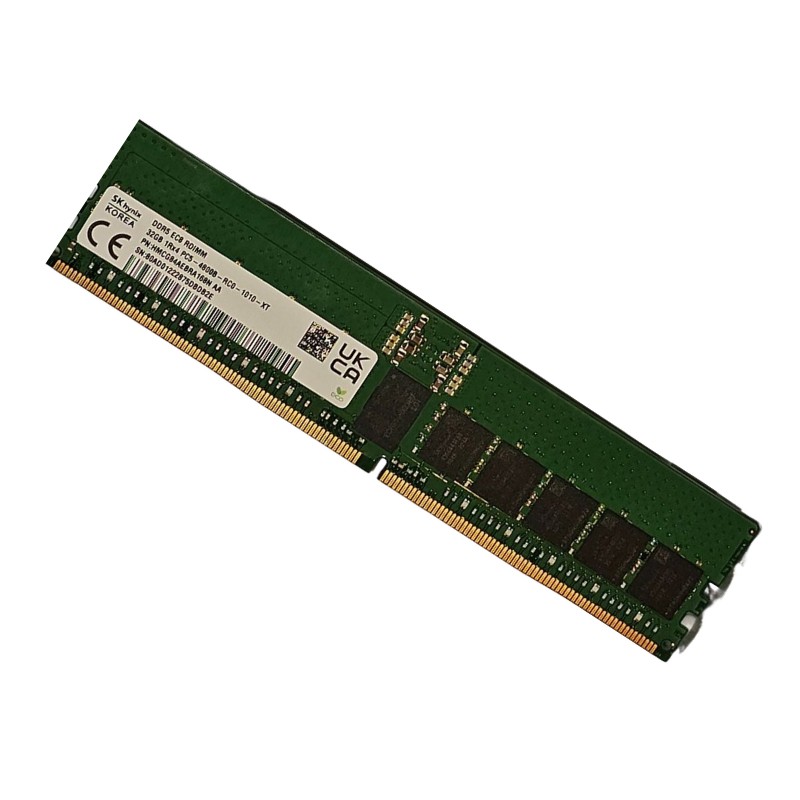
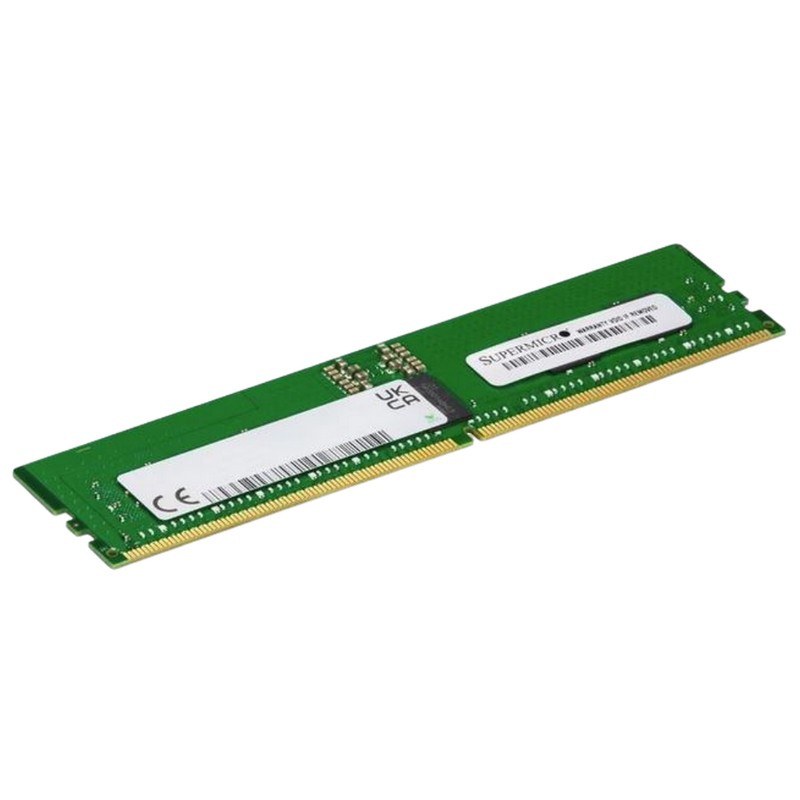
Hynix HMCG88AEBRA168N 32GB 4800MHz PC5-38400 1RX4 ECC Registered 1.1v CL40 DDR5 288-pin Rdimm Memory Module. New Sealed in Box (NIB) with 3 Year Warranty
Discover the Sk Hynix HMCG88AEBRA168N, a high-performance 32GB DDR5 registered memory module engineered for servers and professional workstations. Designed for reliability and throughput, this RDIMM supports 4800MT/s (PC5-38400) and includes ECC (error-correcting code) for enhanced data integrity.
The HMCG88AEBRA168N blends enterprise-grade dependability with modern DDR5 performance characteristics. Use it to increase memory capacity, improve fault tolerance with ECC, and take advantage of next-gen memory speeds in data centers, virtualization hosts, and compute-intensive servers.
In the realm of enterprise computing, data center stability, server responsiveness, and overall system integrity are non-negotiable. The transition to DDR5 memory architecture marks a pivotal leap forward, offering unprecedented bandwidth, efficiency, and scalability. At the forefront of this evolution is the SK hynix HMCG88AEBRA168N, a 32GB DDR5 Registered ECC RDIMM engineered specifically for the demanding environments of servers, high-performance workstations, and robust data center infrastructure. This module isn't merely an upgrade; it's a foundational component designed to ensure data fidelity, maximize throughput, and provide the reliability that modern enterprise workloads require.
This detailed exploration delves into the intricate specifications, advanced technologies, and ideal application scenarios for this specific memory category. We will dissect what makes DDR5 RDIMMs with ECC essential for critical systems, why SK hynix is a trusted leader in memory fabrication, and how the precise combination of features in the HMCG88AEBRA168N translates into real-world performance and stability benefits.
The part number "HMCG88AEBRA168N 32GB 4800MHz PC5-38400 1RX4 ECC Registered 1.1v CL40 DDR5 288-pin RDIMM" is a concise data sheet in itself. Each segment holds critical information about the module's capabilities and compatibility.
With a substantial 32-gigabyte capacity per module, this RDIMM enables high-density memory configurations. In a typical dual-processor server platform supporting multiple channels per CPU, populating all DIMM slots with 32GB modules can lead to total system memory capacities reaching 1TB or more. This is essential for memory-intensive applications like in-memory databases (e.g., SAP HANA), large-scale virtualization (hosting dozens of VMs), scientific simulations, and big data analytics where massive datasets must reside in RAM for rapid processing.
DDR5 represents a fundamental architectural shift from DDR4. Key innovations include doubled burst length (BL16), allowing for more efficient data transfer per command, and a dual sub-channel design within each 64-bit channel. While the sub-channels are 32-bit each (and interleaved for efficiency), this internal restructuring reduces latency and improves concurrency. The integration of Power Management ICs (PMICs) on the module itself, rather than on the motherboard, allows for finer-grained, more stable voltage regulation and improved power efficiency—a critical factor in dense server racks.
The module operates at a data rate of 4800 Megatransfers per second (MT/s), commonly referred to as 4800MHz. The designation PC5-38400 indicates the theoretical peak transfer rate. Calculated as (4800 MT/s * 8 bytes per transfer) = 38,400 MB/s, or approximately 38.4 GB/s per module. This represents a significant bandwidth increase over mainstream DDR4-3200 (PC4-25600, ~25.6 GB/s), directly translating to faster data feeding to CPUs, reduced bottlenecks for multi-threaded workloads, and accelerated application response times.
The CAS Latency (CL) of 40, at this high data rate, represents a balanced performance profile. While latency in nanoseconds is comparable to or better than DDR4 modules due to the much faster cycle time, the primary benefit of DDR5 is massive bandwidth. Operating at a nominal voltage of 1.1V, this DDR5 module achieves its higher performance while consuming less power than a standard DDR4 module (typically 1.2V), contributing to lower operating temperatures and improved energy efficiency at scale.
For any mission-critical system, error prevention and signal integrity are paramount. The "ECC Registered" portion of the module's description highlights its two most critical enterprise features.
ECC is an absolute necessity for servers and workstations processing valuable or sensitive data. It goes beyond simple parity checking. ECC memory can detect and automatically correct single-bit errors (the most common type of memory error) on-the-fly, without any operating system or application intervention. It can also detect multi-bit errors, alerting the system to a more serious fault. This prevents silent data corruption, system crashes, and computational errors that could lead to corrupted financial records, flawed scientific results, or database integrity issues. The HMCG88AEBRA168N includes this vital protective technology.
The "R" in RDIMM stands for Registered. These modules incorporate a register (or buffer) for the address and command signals between the system's memory controller and the DRAM chips. This buffer reduces the electrical load on the memory controller. The primary benefit? It allows a system to support a much larger number of memory modules per channel without overloading the controller, enabling those high-density memory configurations essential for enterprise applications. While it adds a minimal one-cycle latency penalty, the trade-off for vastly improved signal integrity and scalability is essential for multi-DIMM, multi-CPU platforms.
Understanding the physical form factor and internal organization is key for compatibility and performance planning.
The DDR5 288-pin edge connector is physically different from DDR4's 288-pin design (the notch is in a different location), preventing accidental insertion into an incompatible slot. The RDIMM (Registered DIMM) form factor is the standard for enterprise servers. It is crucial to verify that your server or workstation motherboard explicitly supports DDR5 RDIMMs and not UDIMMs (Unbuffered) or LRDIMMs (Load Reduced), as they are not interchangeable.
The "1RX4" designation indicates this is a Single-Rank module composed of DRAM chips with an x4 data width. A "rank" is a set of DRAM chips that work together to fill the module's 64-bit data bus. A single-rank module uses one set of chips. x4 organization refers to the internal architecture of the individual memory chips. This configuration is common for higher-capacity modules and offers benefits in terms of rank interleaving (when using multiple modules) and can be more power-efficient than x8-based modules in certain scenarios. It is the optimal configuration for balancing performance, capacity, and compatibility in modern server memory controllers.
Not all memory modules are created equal, and the manufacturer plays a decisive role in quality, compatibility, and longevity.
SK hynix is one of the world's leading semiconductor fabricators, designing and manufacturing its own DRAM silicon. This vertical integration allows for stringent quality control from the wafer level through to the final assembled module. The HMCG88AEBRA168N utilizes first-party, A-grade DRAM chips, ensuring consistent performance characteristics and high reliability. Modules are subjected to rigorous testing under extreme environmental conditions to meet enterprise standards.
Enterprise memory must be guaranteed to work in complex, often proprietary, server platforms. Reputable manufacturers like SK hynix invest significant resources in platform compatibility testing. While this specific part number is a standard JEDEC specification module, its components and design are proven for stability. For the highest assurance, it is always recommended to consult your system manufacturer's (Dell, HPE, Lenovo, etc.) qualified vendor list (QVL), but modules built to exacting JEDEC standards by a top-tier manufacturer like SK hynix provide a strong foundation for compatibility.
The specific blend of capacity, speed, and reliability features makes the SK hynix HMCG88AEBRA168N suited for a wide array of professional and data center workloads.
Modern hypervisors (VMware vSphere, Microsoft Hyper-V, KVM) thrive on abundant, fast, and reliable memory. High memory density allows for greater virtual machine (VM) consolidation ratios, meaning more VMs can run reliably on a single physical host. The bandwidth of DDR5-4800 ensures that VMs with varying workloads do not contend excessively for memory resources, while ECC safeguards the integrity of data within each VM, from file servers to critical application databases.
In computational fluid dynamics, genomic sequencing, financial risk modeling, and climate research, calculations often involve manipulating massive matrices in RAM. The high bandwidth of DDR5 accelerates the flow of data to and from the CPU cores, reducing idle time and speeding up time-to-solution. ECC is frequently a mandatory requirement in HPC clusters to ensure the absolute accuracy of trillions of calculations over days or weeks of runtime.
Database servers for platforms like Microsoft SQL Server, Oracle Database, and MySQL heavily utilize memory for caching (buffer pools), storing frequently accessed data to minimize slow disk I/O. Larger, faster memory pools directly correlate to higher transaction throughput and lower query latency. The combination of high capacity (32GB per module), ECC protection (to prevent database corruption), and registered stability makes this memory category ideal for these I/O-intensive, mission-critical applications.
Workstations used for 3D rendering, 8K video editing, and developing machine learning models require a blend of high CPU/GPU performance and ample, fast system memory. Large scenes, high-resolution video frames, and training datasets are loaded into RAM. DDR5's bandwidth significantly speeds up data shuffling between storage, memory, and processors, while the 32GB capacity provides ample headroom for complex projects without constant paging to slower storage.
Successfully deploying this memory requires attention to platform specifics and configuration best practices.
Confirm your system motherboard or server chassis supports DDR5 memory and, more specifically, Registered (RDIMM) modules. Check the manufacturer's documentation for supported speeds (4800MHz may be a base or overclock speed), capacities per slot, and total memory capacity. Mixing different memory speeds, capacities, or brands in the same system is not recommended and can lead to instability or down-clocking to the slowest module's specifications.
For optimal performance, memory should be installed in matching sets across the CPU's memory channels. Most modern server and workstation platforms utilize multi-channel architectures (e.g., 8-channel per CPU). Populating channels symmetrically (e.g., two or four modules per CPU) is crucial to unlock the full memory bandwidth. Consult your system's user manual for the recommended DIMM population order, which is designed to maintain signal integrity across all slots.


 Contact Us
 Information
 Catalog
 Solid State Drives (SSD)
 Network Switches
 Hard Disk Drives
 HBA & Controllers
 PC & Servers
 PC & Server Memory
 CPU & Processors
 Network Routers
 Power Supplies
 Tape Drives & Libraries
 Network Devices
 Computer & Network Cables