
(7% discount is applied at checkout)
Cart is empty
Your go-to destination for cutting-edge server products
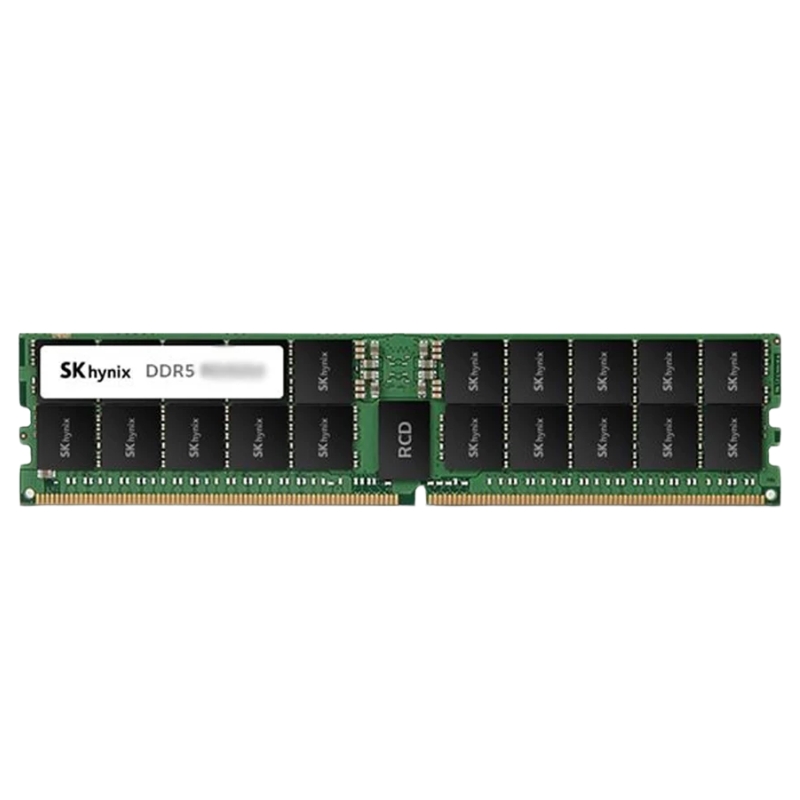
Hynix HMCG88MEBRA110N 32GB 2RX8 PC5-38400 4800MT/s ECC Memory. New Sealed in Box (NIB) with 3 Year Warranty
| SKU/MPN | Warranty | Price | Condition | You save |
|---|---|---|---|---|
| HMCG88MEBRA110N | 1 Year Warranty | $1,190.00 | New (System) Pull | You save: $416.50 (26%) |
| HMCG88MEBRA110N | 1 Year Warranty | $2,179.00 | New Sealed in Box (NIB) | You save: $762.65 (26%) |
The Hynix HMCG88MEBRA110N is a robust 32GB DDR5 4800MT/s ECC Registered memory module designed to enhance data throughput, stability, and performance in enterprise-grade servers. Built on next-generation DDR5 technology, it improves efficiency across data-intensive workloads.
The Hynix HMCG88MEBRA110N 32GB DDR5 4800MT/s PC5-38400 2Rx8 ECC RDIMM Memory Module represents a breakthrough in next-generation server memory design. Built to support high-density computing environments, this module enhances performance in ways that significantly surpass DDR4 technology. Its DDR5 architecture delivers improved bandwidth, superior power efficiency, enhanced channel architecture, and greater reliability, serving advanced workloads such as HPC simulations, virtualized systems, AI processing, cloud platforms, and data-intensive enterprise applications.
DDR5 technology transforms server memory performance with a dual-channel DIMM structure, increased burst lengths, improved power management, and significantly higher data transfer rates. The HMCG88MEBRA110N module operates at 4800MT/s, offering a substantial leap over typical DDR4 server memory. The doubling of bank groups and enhanced memory array architecture minimizes access latency and enables smoother parallel processing. For businesses handling virtualization, AI model inference, and containerized workloads, DDR5 capacity and speed improvements deliver measurable productivity gains.
The Hynix DDR5 RDIMM uses a dual-channel memory DIMM configuration to reduce bottlenecks and enable more granular memory operations. Each DIMM features two independent 32-bit channels that improve concurrency and reduce queuing delays. This architectural improvement becomes especially valuable in servers executing simultaneous data streams, distributed applications, or multi-tenant environments. By distributing load across two channels, the HMCG88MEBRA110N module accelerates request handling, enabling smoother execution of parallel workloads and improving the responsiveness of applications reliant on large memory footprints.
The DDR5 design allows for increased component density on each memory stick, resulting in better scalability for modern servers. The HMCG88MEBRA110N 32GB RDIMM takes advantage of this enhanced density by utilizing advanced 2Rx8 architecture that improves data handling efficiency. As enterprise platforms expand toward multi-socket, high-core-count processors, the ability to allocate large memory resources per node becomes essential. This module supports configurations requiring extensive RAM to prevent paging, reduce latency, and ensure continuous real-time performance across large datasets.
Enterprise servers depend on error-correcting capabilities to protect critical workloads. The Hynix HMCG88MEBRA110N module integrates ECC architecture to guard against bit corruption, silent data errors, and multi-bit failures that may arise in intensive computational environments. With workloads running for many hours or days, ECC ensures long-term stability and prevents system crashes or data loss. This memory module also incorporates advanced on-die ECC capabilities introduced with DDR5, which independently corrects internal DRAM errors, enhancing resilience and reducing the likelihood of uncorrectable failures.
On-die ECC technology inside the DRAM protects internal data paths, making the memory module more resilient to voltage fluctuations, thermal variance, and extended operational loads. Servers running analytics engines or large neural models depend heavily on uninterrupted data flow, and on-die error correction ensures that memory corruption does not propagate upward into the operating system or applications.
The HMCG88MEBRA110N implements module-level ECC to detect and correct multi-bit errors across the data path. This layer of protection proves invaluable for database engines, virtualization hosts, and financial systems where uptime and data consistency remain top priorities. As data centers seek to eliminate vulnerabilities and maintain 24/7 operations, integrating ECC memory helps reduce operational risks while enhancing overall workload availability.
The 2Rx8 rank configuration of the Hynix 4800MT/s RDIMM improves the capability of the memory subsystem to handle large-scale operations. Multi-rank modules enable better interleaving and memory scheduling, providing measurable improvements in throughput across environments requiring substantial memory bandwidth.
Multi-rank interleaving reduces read/write delays by distributing memory access across multiple ranks. In servers where parallel processes continuously request data, rank interleaving helps maintain smooth performance. This is valuable for hypervisors, multi-threaded applications, and high-core-count CPUs that benefit from quicker transitions between memory operations.
Large virtual desktop infrastructures, Kubernetes clusters, financial modeling applications, and enterprise resource planning services often rely on advanced memory modules capable of sustaining simultaneous operations. The HMCG88MEBRA110N module ensures that memory responsiveness remains consistent even during peak demand periods, protecting performance levels under heavy server loads.
The dual-rank layout improves signal integrity and reduces data path noise. In server motherboards with higher DIMM counts, maintaining signal clarity is critical. The design minimizes interference, ensures clean transitions, and supports long-cycle uptime without degradation. Administrators benefit from reduced maintenance requirements and improved long-term component reliability.
The move to DDR5 introduces a more efficient power delivery system. With the Power Management IC (PMIC) relocated onto the DIMM itself, power distribution becomes more stable and precise. The Hynix HMCG88MEBRA110N 32GB RDIMM incorporates PMIC to regulate memory power usage and reduce conversion losses. Enterprises deploying thousands of DIMMs see measurable decreases in energy consumption, lowering total cost of ownership while improving thermal performance inside server racks.
DDR5 memory modules operate at 1.1V, compared to the 1.2V requirement of DDR4. Although the difference appears small on paper, the cumulative energy savings in large-scale data centers are substantial. The HMCG88MEBRA110N module helps organizations meet sustainability goals, reduce cooling requirements, and extend server longevity by lowering heat output. When deployed with efficient airflow management, these modules maintain optimal thermal states during extended computational workloads.
The onboard PMIC allows the DIMM to control power regulation internally, resulting in greater efficiency and stability. This shift reduces noise on the motherboard power rails and allows each module to manage its own power path. This improvement is crucial when operating large banks of memory where consistent voltage regulation affects overall performance stability and long-term reliability.
The Hynix HMCG88MEBRA110N module adheres to DDR5 RDIMM standards, enabling compatibility with next-generation server platforms from industry-leading manufacturers. As AMD and Intel release new CPU generations supporting DDR5 memory, enterprises upgrading to these platforms require RDIMMs capable of matching the throughput and latency requirements of modern processor architectures. The module supports servers designed for high-speed data operations, scalable memory installations, and advanced computational workloads.
With server CPUs now featuring dozens of cores, memory bandwidth becomes a limiting factor without high-speed RDIMM modules. The 4800MT/s performance offered by this Hynix module ensures that each CPU core receives adequate memory throughput, preventing bottlenecks and maintaining balanced system performance. In multi-socket servers where memory channels multiply, these DIMMs provide scalable performance across dense memory arrays, supporting high-performance computing and enterprise-level data tasks.
Virtual machines require large amounts of memory to maintain responsiveness and prevent resource contention. This module supports virtualization by enabling higher VM density on each host. Cloud providers deploying container orchestration or distributed applications benefit from the low-latency access and higher memory overhead provided by this DDR5 RDIMM module.
Cloud-based databases, caching engines, microservices, and distributed compute environments rely heavily on memory consistency. The HMCG88MEBRA110N ensures reduced access times and improved concurrency, making it ideal for deployment in enterprise cloud stacks, SaaS infrastructure, and large-scale load-balanced environments.
The memory clock speed of 4800MT/s delivers superior throughput, supplying performance gains across bandwidth-dependent tasks such as real-time analytics, financial modeling, rendering, data indexing, genomic sequencing, and machine learning workloads. Applications that utilize parallel compute threads or large in-memory datasets particularly benefit from the increased data transfer capabilities.
DDR5 memory doubles burst length from 8 to 16, enabling more data to be transferred during each memory operation. This enhancement allows the HMCG88MEBRA110N module to handle higher-volume data bursts without delay, improving the efficiency of continuous data streams and significantly benefiting workloads reliant on high-frequency memory calls.
High-performance workloads often require low latency and sustained bandwidth. Video processing engines, AI inference systems, scientific modeling tools, and business intelligence platforms all see improvements due to this extended burst capability. Performance increases translate into shorter processing cycles, smoother operations, and improved computing throughput.
Servers deployed in enterprise environments rarely power down, operating continuously to meet service-level agreements. Memory stability becomes a mission-critical requirement. The Hynix HMCG88MEBRA110N is engineered for durability, ensuring that over time the module can handle constant data cycles without failure. Its robust ECC architecture and thermal efficiency improve resilience across extended workloads and peak usage periods.
Server memory modules must maintain stable operation under variable thermal conditions. The design of this Hynix RDIMM includes optimized heat dissipation pathways to maintain safe operating temperatures. Combined with efficient power management, the module ensures that long-term performance remains consistent regardless of load intensity.
The reliability advantages of ECC, multi-rank architecture, and DDR5 internal corrections collectively reduce failure rates. This ensures predictable operation, lower maintenance costs, and fewer unexpected service interruptions. For enterprises with mission-critical infrastructure, this translates directly into improved business continuity.
As organizations grow, memory scalability becomes essential. DDR5 technology and RDIMM design allow for significant expansion across server motherboards. The HMCG88MEBRA110N 32GB module can be deployed in large quantities, supporting multi-terabyte memory configurations. Whether used for database clustering, virtualization, or AI model hosting, scalable memory enables long-term growth without requiring frequent hardware swaps.
The module is compatible with servers designed to hold several dozen DIMMs, allowing enterprises to build memory-dense nodes. These configurations benefit data lakes, analytics clusters, and memory-first applications where traditional disk-based performance is insufficient.


 Contact Us
 Information
 Catalog
 Solid State Drives (SSD)
 Network Switches
 Hard Disk Drives
 HBA & Controllers
 PC & Servers
 PC & Server Memory
 CPU & Processors
 Network Routers
 Power Supplies
 Tape Drives & Libraries
 Network Devices
 Computer & Network Cables