
(7% discount is applied at checkout)
Cart is empty
Your go-to destination for cutting-edge server products
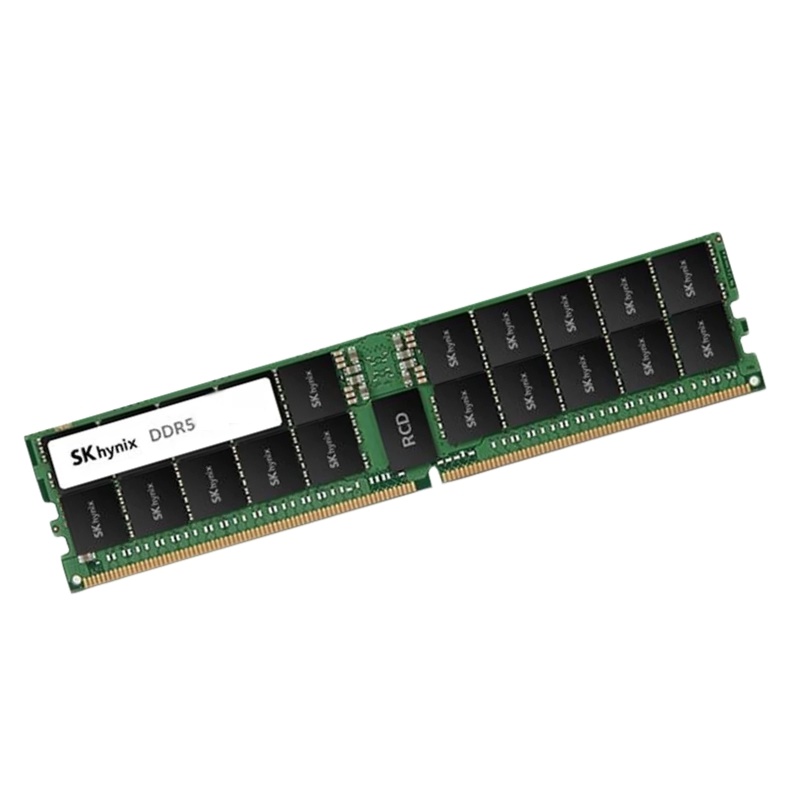
Hynix HMCG94MEBQA103N 64GB PC5-38400 DDR5-4800MHz ECC Registered CL40 288-Pin RDIMM Dual Rank Memory Module. New (System) Pull with 1 year replacement warranty
The Hynix HMCG94MEBQA103N 64GB PC5-38400 DDR5-4800MHz ECC Registered CL40 RDIMM represents a high-efficiency enterprise-class memory solution designed for servers and data-heavy infrastructures requiring robust performance, trustworthy stability, and optimized multitasking. This dual-rank module delivers next-generation bandwidth, advanced error correction, and enhanced signal reliability to ensure dependable operation in mission-critical environments.
DDR5 architecture introduces significant improvements enabling data centers to manage heavier loads, faster transactions, and enhanced virtualization. With higher transfer speeds and improved power efficiency, the Hynix 64GB RDIMM allows servers to operate with more consistent throughput and reduced latency issues.
The combination of ECC and registered buffering provides immense benefits to servers and enterprise platforms where data accuracy and uptime are essential.
The physical engineering of the HMCG94MEBQA103N ensures compatibility with a wide array of modern server boards supporting DDR5 RDIMM architecture. The 288-pin layout provides secure connectivity, while its professional construction enhances overall durability.
The Hynix HMCG94MEBQA103N is built to align with server-grade motherboards that support DDR5 RDIMM slots. Its efficiency is optimized when paired with the latest CPU platforms designed to harness DDR5 technology, providing enhanced throughput and improved system responsiveness.
The Hynix HMCG94MEBQA103N 64GB PC5-38400 DDR5-4800MHz ECC Registered CL40 288-Pin RDIMM Dual Rank Memory Module represents a sophisticated component engineered for modern enterprise platforms that demand exceptional throughput, enhanced multi-thread workloads, and reliable data integrity. This DDR5 RDIMM solution is part of a broader category of advanced Registered DIMM technologies crafted to optimize resource-intensive scenarios such as virtualization, hybrid cloud workloads, real-time analytics, high-performance computing frameworks, and complex database infrastructures. As servers transition from DDR4 to DDR5, modules such as the Hynix HMCG94MEBQA103N set a foundation for superior scalability, refined efficiency, and improved architecture that aligns with next-generation system requirements.
This memory category reflects a transformative leap in system design where DDR5 architecture doubles bandwidth potential while significantly improving data access reliability. The PC5-38400 speed rating provides powerful data-handling capabilities that elevate throughput-critical operations, ensuring servers maintain consistent flow even under demanding transactional environments. The DDR5-4800MHz frequency enhances multi-thread application responsiveness and minimizes latency bottlenecks generated by concurrent workloads. These attributes collectively form a robust resource pool suited for virtual machines, AI-driven workloads, GPU-heavy processes, distributed computing programs, and multi-user enterprise systems. The enhanced memory bank configuration and optimized signal integrity of DDR5 modules reinforce predictable performance outcomes across diverse operational landscapes.
ECC technology integrated into the Hynix HMCG94MEBQA103N ensures continuous error checking and correction, reducing the probability of data corruption that can compromise mission-critical tasks. The Registered design further enhances electrical load stability, allowing servers to support larger memory densities without encountering signal degradation. This classification of modules benefits data centers, server administrators, and organizations requiring predictable uptime. The ECC Registered architecture assists with maintaining coherent data pipelines across large-scale deployments, facilitating improved fault tolerance that supports uninterrupted innovation cycles and operational continuity. With these capabilities, the module becomes a key element in redundancy strategies and workload optimization routines that are pivotal for secure digital infrastructure.
The 288-Pin Registered DIMM interface allows straightforward integration into modern server boards engineered for DDR5 standards. This unified connector specification delivers precise signal routing, efficient grounding, and enhanced communication between the memory controller and module. The consistent alignment ensures hardware-level bonding necessary for maintaining signal clarity during heavy workloads. System builders benefit from this standardization because it ensures seamless interaction with next-generation server chipsets. Engineers who deploy modular data center expansions gain predictable results when configuring machines that require uniformity across hardware components. This memory category maintains high compatibility with server ecosystems designed for DDR5 RDIMMs, enabling organizations to future-proof their infrastructures while meeting growing computational needs.
The CL40 CAS latency specification defines timing performance essential in determining how quickly memory responds to CPU requests. This timing profile enhances efficiency in CPU-memory interactions, reducing the time required to access stored instructions. The latency characteristics contribute to smoother multitasking environments where large workloads accelerate data retrieval cycles. Analytical platforms experience faster query processing, AI engines benefit from reduced inference delays, and content-generation servers improve response predictability. The CL40 latency balance makes this module effective for a broad spectrum of enterprise functions requiring optimized synchronization between system components.
Virtual machines often demand isolated, independent memory pathways to function with precision. The 64GB configuration supports numerous VM instances that require balanced memory shares while maintaining full operational integrity. Enterprise customers relying on hypervisors, container services, and distributed cloud systems gain predictable performance from DDR5 RDIMMs in this category. Workflows including Docker containers, Kubernetes clusters, application sandboxing, and multi-user integrations benefit significantly from memory density enhancements that ensure resource isolation. The attribute of efficient data segmentation supports environments where numerous applications operate simultaneously. This module sustains multi-instance workflows while enhancing CPU operational bandwidth, enabling smooth transitions between data pools and reducing disruptive latency spikes.
As organizations expand their infrastructure, memory capacity becomes a pivotal aspect of system planning. The Hynix HMCG94MEBQA103N sits within a category of high-density DDR5 RDIMMs that allow data center operators to scale efficiently without excessive hardware overhead. By incorporating high-capacity modules, administrators reduce the physical number of DIMMs required while increasing operational performance. The thermal characteristics of this module and improved power delivery structure contribute to sustained longevity in environments where rack servers operate nonstop. High-traffic content delivery networks, load-balancing clusters, and enterprise mesh architectures benefit significantly from memory categories that deliver high output without performance degradation over time. This module is crafted to support demanding uptime commitments required by enterprise-scale clients.
The On-Die ECC included with DDR5 architecture supplements traditional ECC mechanisms by providing internal error resolution. This design helps reduce the impact of minor bit errors before they propagate to system-level processes. Combined with refined power management circuitry, the result is improved thermal control and predictable power utilization. For environments running heavy batch processing, machine-learning training cycles, or continuous data ingestion, this level of memory stability plays a vital role. Servers become more energy efficient while maintaining accuracy in data manipulation routines. This memory category often supports organizations seeking energy-conscious deployment without sacrificing enterprise-grade reliability.
Scientific computing frameworks depend heavily on bandwidth for simulation cycles, modeling operations, and advanced rendering. The PC5-38400 rating of this module provides the foundation for rapid data transfer essential in research environments. Engineering firms conducting CAD rendering processes, simulation workloads, and algorithmic analysis routines experience smoother transitions between computational stages. Data scientists working with vast datasets in machine learning pipelines gain faster preprocessing times and improved real-time aggregation efficiency. In these conditions, the memory category that includes the Hynix HMCG94MEBQA103N becomes crucial for minimizing slowdowns that impede output precision.
DDR5 memory introduces foundational shifts in design architecture that impact server performance universally. This category includes upgraded channel structures, enhanced independent subchannels, and expanded bandwidth mechanisms that optimize workload distribution. The Hynix HMCG94MEBQA103N benefits from these architectural advances by providing improved resilience to interference and more efficient data communication. Data pipelines within the module are structured for consistency, ensuring smooth communication between the CPU and memory across sustained workloads. Independent channel enhancements also support better isolation for concurrent tasks, preventing performance overlap and enabling consistent delivery in diverse enterprise environments.
Power Management IC (PMIC) integration distinguishes DDR5 memory by decentralizing voltage regulation. On-module power control reduces strain on motherboard components while improving voltage accuracy. This leads to expanded overclocking tolerance in supported systems and more reliable performance when workloads intensify. For organizations running demanding applications such as enterprise security scanning, continuous monitoring engines, and automated process management, precise power regulation is essential to minimize fluctuations that disrupt data integrity. PMIC implementation ensures stable module operation across a wide range of temperature and voltage conditions, supporting long-term system health and predictable performance output.
Burst length improvements in DDR5 modules accelerate data packet handling, delivering more information per cycle between memory and CPU. Prefetch algorithms assist processors in receiving the right data at the right moment, reducing stalling patterns and maximizing CPU utilization. These features allow the Hynix HMCG94MEBQA103N to play a vital role in fast-paced enterprise infrastructures. Financial modeling applications, real-time forecasting engines, and business intelligence platforms see measurable improvements when burst length optimization accelerates data retrieval. This module category reinforces continuity for platforms that rely heavily on sustained data throughput.
The Hynix HMCG94MEBQA103N integrates into DDR5-enabled server architectures, providing administrators with flexible deployment options. Compatible with modern server boards supporting Registered DDR5 modules, this memory category ensures smooth installation processes. Hardware specialists appreciate predictable initialization sequences enabled by RDIMM register buffers. Enterprise deployment scenarios range from small business hosting environments to large-scale cloud compute installations. The module’s robust architecture supports both single-socket and dual-socket platforms, ensuring scalability across diverse hardware ecosystems. With its high-density configuration, organizations can reduce memory footprint while maximizing performance.
Industry sectors including healthcare analytics, financial processing, AI research, government data operations, software development, and industrial automation utilize DDR5 RDIMM modules to enhance computing infrastructure. High-speed memory accelerates medical imaging analysis, streamlines banking transaction systems, boosts AI data training models, and supports real-time monitoring systems in industrial networks. Software developers experience faster build times, improved test automation cycles, and smoother package deployment operations. Each of these industries benefits from advanced memory categories capable of supporting high throughput, reliable error correction, and refined timing balance.
Security is integral to modern enterprise architecture. ECC mechanisms minimize the probability of memory-induced vulnerabilities by correcting bit errors that occur during data transfers. For organizations handling classified data, secure financial information, sensitive communications, or proprietary algorithms, ECC optimization enhances protection at the hardware level. The Registered DIMM format improves controlled signal distribution, helping maintain secure data-handling frameworks even under heavy system load. Enterprise-grade security relies heavily on accurate computation, making memory categories featuring ECC essential for risk mitigation.


 Contact Us
 Information
 Catalog
 Solid State Drives (SSD)
 Network Switches
 Hard Disk Drives
 HBA & Controllers
 PC & Servers
 PC & Server Memory
 CPU & Processors
 Network Routers
 Power Supplies
 Tape Drives & Libraries
 Network Devices
 Computer & Network Cables