
(7% discount is applied at checkout)
Cart is empty
Your go-to destination for cutting-edge server products
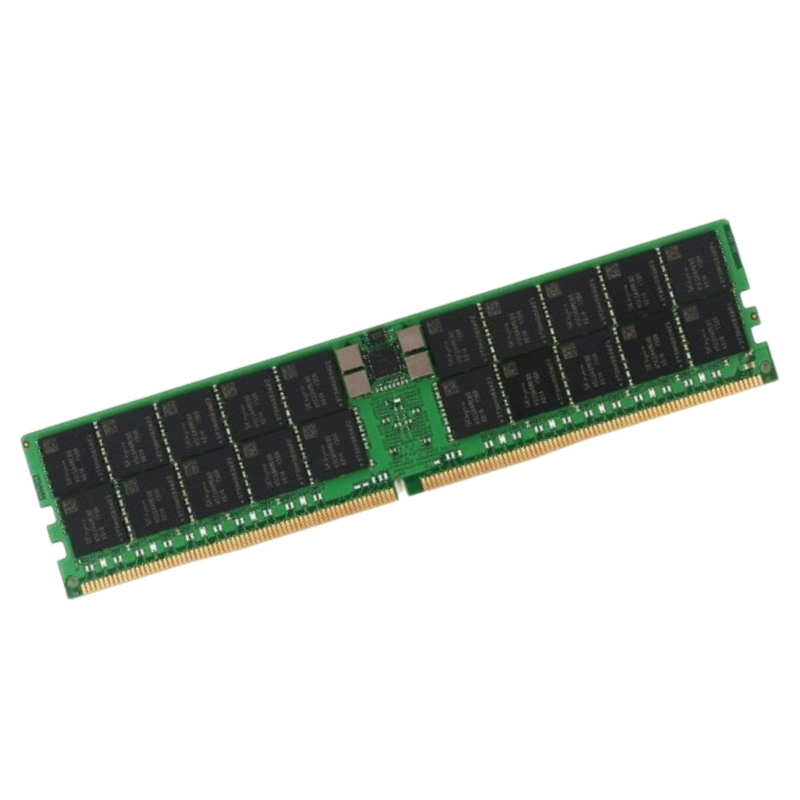
Hynix HMCG94MEBQA123N 64GB PC5-38400 DDR5-4800MHz ECC Registered CL40 288-Pin RDIMM 1.1V Dual Rank Memory Module. New (System) Pull with 1 year replacement warranty
The Hynix HMCG94MEBQA123N 64GB PC5-38400 DDR5-4800MHz ECC Registered CL40 module is engineered to deliver exceptional memory performance for advanced data centers, virtualized workloads, and intensive enterprise server environments. This dual-rank 288-pin RDIMM provides robust bandwidth, reinforced signal stability, and energy-efficient operation for mission-critical computing.
ECC-enabled DDR5 modules like this one minimize system crashes and safeguard mission-critical operations. The refined 1.1V power profile reduces thermal output and power consumption, supporting longer component lifecycles and improved efficiency across the entire server ecosystem.
The Hynix HMCG94MEBQA123N 64GB PC5-38400 DDR5-4800MHz ECC Registered CL40 288-Pin RDIMM 1.1V Dual Rank Memory Module represents a new generation of high-efficiency server memory engineered to sustain demanding workloads in modern data-driven environments. This category of DDR5 RDIMM solutions is built to produce elevated throughput, improved channel efficiency, and superior command handling, which collectively enhance the operational stability of servers and workstations. Within this category, organizations benefit from modules designed to maintain consistent bandwidth even under continuous multi-threaded processing, rendering this type of memory ideal for virtualization, cloud computing, AI-driven analytics, and mission-critical enterprise applications.
The architecture of DDR5 Registered DIMMs provides substantial improvements over classic DDR4, delivering higher-density chips, enhanced error correction capabilities, and a refined electrical design capable of minimizing latency while optimizing load management. Each module in this class is structured with advanced power management, refined signaling channels, and greater burst lengths to support reliable execution under intensive computing pressure. As workloads scale, the system benefits from increased reliability, predictable data flow, and reduced overhead, allowing servers to address greater task concurrency with sustained stability.
The HMCG94MEBQA123N series belongs to a specialized grouping of DDR5 ECC Registered memory units introduced to maximize efficiency across high-end server infrastructures. The technical specifications of this module reflect a sophisticated build that takes full advantage of the DDR5 generation’s enhanced signal pathways, double the banks, and broadened channel architecture. Operating at 4800MHz, the module supports a PC5-38400 bandwidth rating, granting exceptional read and write performance during continuous data streaming and parallel task execution. Its 1.1V power requirement further contributes to power-optimized systems capable of maintaining energy efficiency without sacrificing computational output.
The 288-pin configuration provides seamless integration into DDR5-compatible server boards that rely on Registered DIMMs for enhanced electrical clarity. With RDIMM buffering, the command and address signals remain stable even when multiple modules are installed, reducing the burden on the memory controller while simultaneously heightening reliability. The integration of ECC (Error-Correcting Code) within this memory classification guarantees immediate identification and mitigation of single-bit faults, safeguarding sensitive workloads from corruption and ensuring long-term data integrity.
The dual-rank structural design of this category of Hynix server memory allows data to be arranged across two ranks, facilitating improved data availability during read and write cycles. Servers equipped with dual-rank DDR5 RDIMMs enjoy better utilization of memory banks, leading to reduced wait times and optimized memory channel throughput. This is particularly valuable for database management systems, virtual machine clusters, and engineering simulations where constant access to extensive data repositories is required. The increased data paths within dual-rank modules can boost overall responsiveness when scaling application instances or processing multiple workloads simultaneously.
When evaluated within enterprise configurations, dual-rank memory consistently enhances multitasking efficiency due to the ability to switch ranks during heavy I/O operations. This helps prevent bottlenecks associated with single-rank systems, making it advantageous in infrastructures that must maintain predictable performance across fluctuating operational loads. Memory controllers benefit from this architecture by distributing access operations more evenly, reducing strain and offering greater headroom for intensive applications.
ECC Registered DDR5 memory such as the Hynix HMCG94MEBQA123N is engineered for servers that demand continuous uptime and fault-resistant performance. ECC capabilities form a critical safeguard against data instability by detecting inconsistencies and automatically correcting them before they propagate through system processes. This category of memory supports environments requiring stringent reliability thresholds, such as financial institutions, medical data infrastructures, government computing environments, and high-capacity data centers. Registered buffering enhances signal integrity by reducing electrical noise, ensuring that the server’s CPU receives clean, stable inputs across all channels.
The Registered architecture contributes to maintaining compatibility across multi-module configurations where signal load increases substantially. By isolating and managing command signals, RDIMMs reduce the burden on the CPU’s memory controller. As server infrastructures scale to include large quantities of memory, this becomes vital for ensuring that performance does not degrade when capacity expansions occur. The ECC mechanism embedded in this module category works with the registered buffer to mitigate failures arising from electrical interference, voltage fluctuations, or transient faults that commonly appear in industrial-grade computing environments.
Modules like the HMCG94MEBQA123N incorporate advanced reliability features essential for sustained enterprise operations. On-die ECC corrects errors at the chip level, significantly reducing the frequency of data-related anomalies. A redesigned power management architecture integrates PMIC (Power Management IC) functionality directly on the module, enabling precise regulation of power flow and reducing dependency on the motherboard for power adjustments. This prevents voltage spikes or irregular currents from compromising the memory’s stability or accelerating wear.
The thermal efficiency of this category is another key specification, as DDR5 increases data density within each chip. Hynix implements refined thermal distribution through improved module PCB layering and heat-tolerant component selection, enabling the memory to maintain consistent temperatures during peak operations. Environments with 24/7 workloads such as cloud orchestration or large-scale analytics require this level of endurance, ensuring reliability under constant computational strain.
With a bandwidth rating of PC5-38400, the HMCG94MEBQA123N category is designed for servers that prioritize extreme data throughput. The 4800MHz frequency ensures rapid access to memory banks, minimizing delays during frequent data queries. Workloads that rely on parallel processing can experience improved stability and heightened performance compared to previous DDR generations. DDR5’s improved burst lengths and expanded bank grouping enable data to stream more effectively, supporting memory-intensive operations with fewer bottlenecks.
Memory-intensive applications such as virtualization platforms, distributed computing environments, AI model processing, and high-resolution content rendering gain exceptional benefit from the increased speed and architecture enhancements. DDR5 RDIMMs reduce cycle times while improving the efficiency of background refresh operations, maintaining a predictable performance baseline even as application demands escalate. The frequency of 4800MHz provides significant improvements for workloads requiring consistent data access patterns.
The CL40 latency specification is optimized for DDR5 infrastructures where bandwidth rather than minimal timing is prioritized. DDR5’s double banking and dual channel architecture per DIMM allow for improved queueing of memory operations. As a result, memory modules like the HMCG94MEBQA123N can sustain lower real-world latency during high concurrency tasks compared to older memory classifications with narrower data channels. This enhances the server’s ability to respond quickly to task requests, reducing idle cycles and supporting higher transaction throughput.
As the volume of operations increases, the memory’s ability to manage multiple queues simultaneously allows servers to maintain performance without sacrificing responsiveness. Industrial data pipelines, scientific computations, and virtualized workloads rely on this effectiveness to reduce overall processing time and streamline repeated operations. DDR5’s improved timing mechanisms ensure that even under full load, latency remains predictable.
The Hynix HMCG94MEBQA123N series integrates seamlessly with DDR5-compatible server motherboards designed for next-generation data handling. RDIMM support ensures that systems requiring high memory density can function with full stability and compliance. The 288-pin physical format aligns with modern server architectures, ensuring firm installation and reliable electrical conductivity across channels. This category of memory is particularly beneficial for server models that implement advanced memory mapping technologies or multi-socket configurations that depend on predictable signal distribution.
With its standardized form factor and voltage rating, the memory aligns with manufacturers' specifications for enterprise-grade systems used in large businesses, research facilities, cloud service providers, and content distribution networks. Compatibility extends across networking servers, data analysis clusters, storage-oriented platforms, and infrastructure designed for container orchestration. This module type offers long-term scalability, allowing organizations to expand memory capacity as future requirements evolve without sacrificing performance or stability.
Multi-module server environments pose challenges related to signal integrity, voltage regulation, and command distribution. DDR5 RDIMM technology mitigates these challenges with enhanced electrical design, reduced resistance pathways, and integrated power management. This memory category performs effectively in high-density configurations where precise timing and reliable command execution are mandatory. The registered buffer ensures that each module receives clean, organized data signals, preventing delays or inconsistencies that could otherwise limit scalability.
Systems requiring multi-terabyte memory capacities benefit from the construction of this category, which is specifically engineered to handle the demands of multi-layered computational frameworks. The memory controller maintains optimum efficiency due to the reduced load, ensuring seamless communication between processing cores and memory banks.
DDR5 memory modules generate more heat than earlier generations due to increased density and faster speeds. Hynix employs advanced thermal management techniques to maintain stability during high performance. This includes improved PCB design, finer material selection, and enhanced internal airflow compatibility. The structural composition supports sustained operation even during elevated processing cycles, making this module class essential for machines operating continuously in large-scale computational infrastructures.
The rigidity and durability of the module enable consistent performance across a broad thermal envelope, ensuring compatibility with server racks that experience fluctuating environmental conditions. Data centers operating in geographically diverse climates also gain reliability benefits from these design improvements.
This module excels in server roles requiring extensive memory throughput, low-voltage efficiency, and resilience under prolonged operational demands. It supports infrastructures tasked with rendering, simulations, real-time analytics, and cloud hosting services. The DDR5 enhancements provide immediate advantages for large database engines and scientific applications dependent on real-time response cycles. Environments seeking improved multi-tenant management performance also benefit from the structure of this memory category.
Business operations depending on continuous uptime and uninterrupted service delivery can rely on this type of ECC Registered memory to protect against data corruption and maintain system integrity. Workflows such as machine learning model training, operational analytics, software containerization, and distributed data processing achieve measurable improvements in task completion efficiency.
Cloud environments rely on memory modules capable of supporting massive parallelism. The HMCG94MEBQA123N’s advanced throughput capabilities allow virtual machines to load faster, process requests more efficiently, and maintain reliable performance during peak utilization periods. The improved channel architecture supports multiple simultaneous queries, reducing latency issues in multi-user cloud platforms or multi-tiered application infrastructures.
Companies migrating toward hybrid or fully cloud-based architectures can depend on DDR5 RDIMMs to offer future-proof capacity, improved data integrity, and long-term operational reliability. The energy-efficient voltage rating also ensures cloud operators can control power consumption without sacrificing speed or stability.
AI algorithms and large data pipelines require uninterrupted data streams. The memory’s ability to process large volumes of data within short cycles allows AI models to train faster and perform inference operations more smoothly. DDR5’s advanced burst features improve sequential and random access operations, reducing bottlenecks that historically hindered big data throughput. Hynix engineering ensures consistent data flow, vital for data mining, predictive analytics, and machine intelligence workloads.
HPC systems demand scalability and sustained throughput at extreme levels. The dual-rank architecture and 4800MHz performance rating ensure that this memory module class aligns with the processing intensity of scientific modeling, fluid dynamics simulations, genomic analysis, and advanced research computations. Stability under pressure forms the cornerstone of HPC reliability, and this DDR5 RDIMM category delivers that through efficient thermal control, voltage regulation, and optimized bank structure.
Operating at 1.1V, the Hynix HMCG94MEBQA123N memory module emphasizes reduced energy consumption while sustaining high-speed operations. The integrated power management IC ensures that voltage distribution remains precise, preventing unnecessary fluctuations and improving component lifespan. Energy-efficient hardware contributes directly to lowered data center operational costs, providing substantial benefits for organizations operating hundreds of server nodes simultaneously.
Power consumption improvements in DDR5 architectures help cooling systems operate more effectively, reducing the environmental load and contributing to eco-friendly data center practices. For companies focusing on sustainability, this memory category presents a compelling option that aligns with carbon reduction and energy optimization goals.
As computing demands evolve, server infrastructures must be capable of adapting to larger data sets and more advanced applications. The Hynix HMCG94MEBQA123N category is constructed to meet future requirements by offering advanced throughput, expanded density potential, and enhanced reliability mechanisms. It supports continued expansion without requiring complete system overhauls, ensuring that organizations can integrate future technologies seamlessly.
DDR5 sets the standard for next-generation memory design, enabling future servers to operate with precision, speed, and optimized energy efficiency. The Hynix module fits directly into this overarching ecosystem, offering compatibility and performance that align with long-term innovation paths across the server market.


 Contact Us
 Information
 Catalog
 Solid State Drives (SSD)
 Network Switches
 Hard Disk Drives
 HBA & Controllers
 PC & Servers
 PC & Server Memory
 CPU & Processors
 Network Routers
 Power Supplies
 Tape Drives & Libraries
 Network Devices
 Computer & Network Cables