(7% discount is applied at checkout)
Cart is empty
Your go-to destination for cutting-edge server products
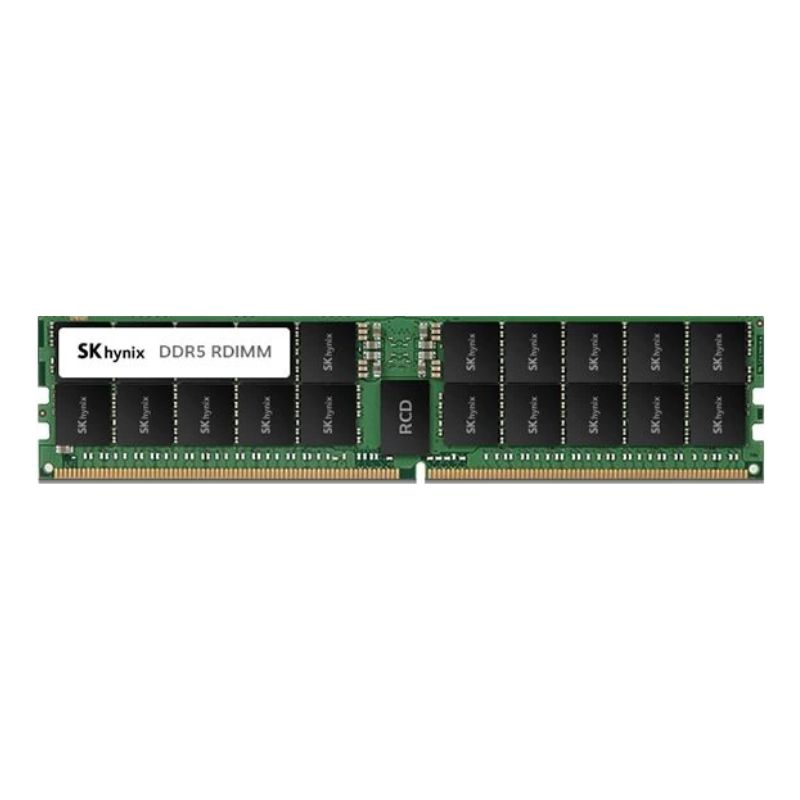


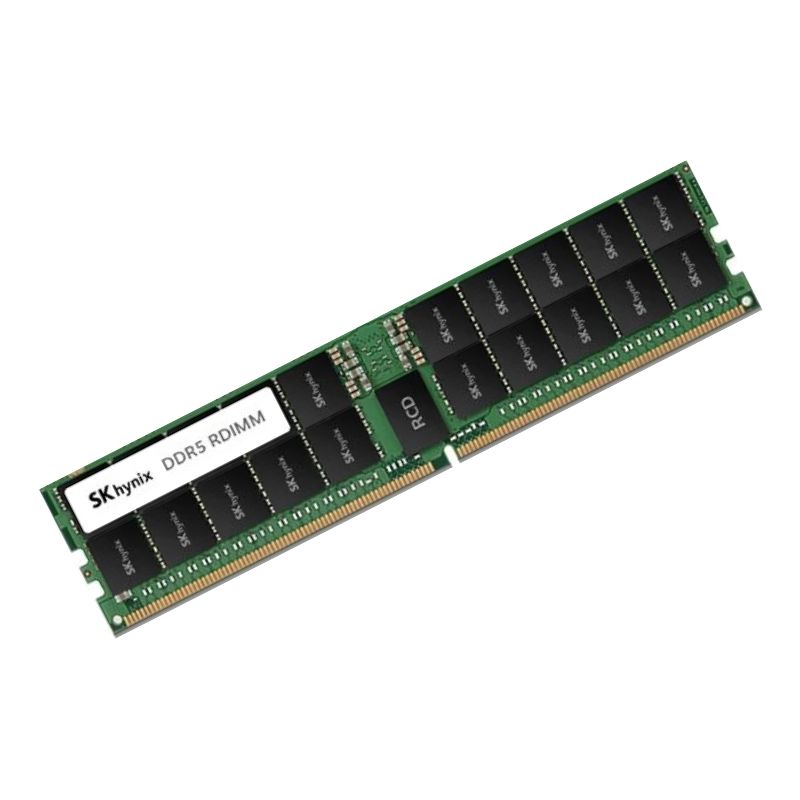
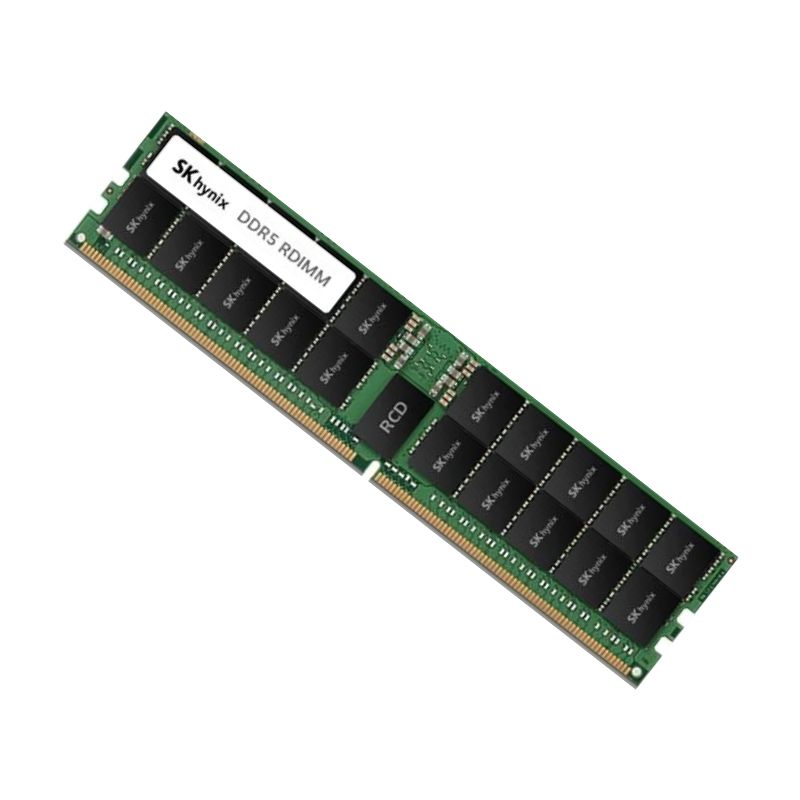
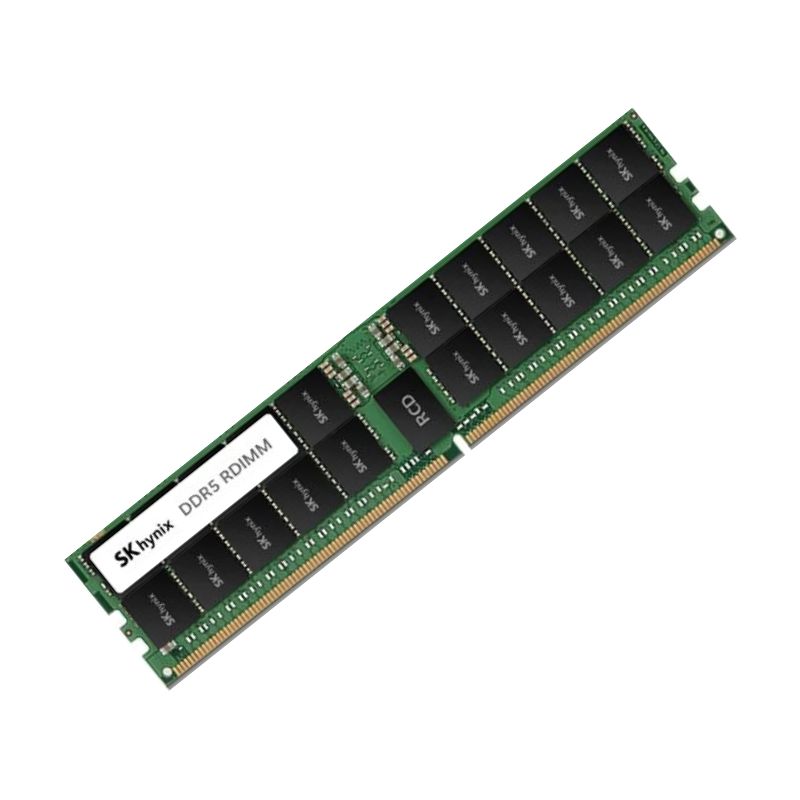
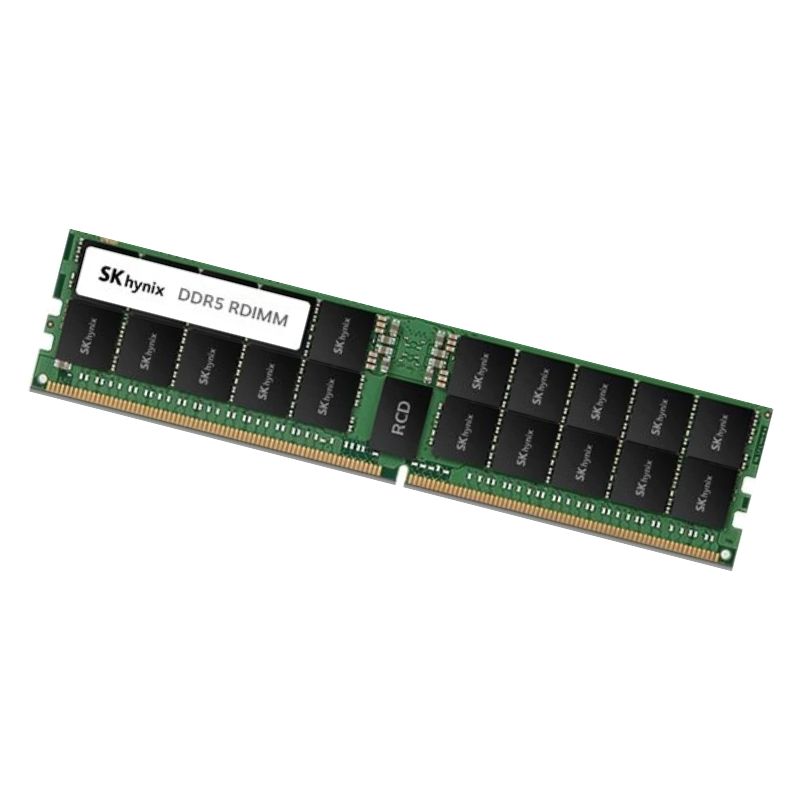
Hynix HMCGM4MGBRB247N 96GB DDR5 5600mt/s Pc5-44800 288-pin Dimm Server Memory Module. New (System) Pull with 1 Year Replacement Warranty
The Hynix HMCGM4MGBRB247N is a high-capacity 96GB DDR5 ECC Registered server memory module designed for enterprise-class systems requiring maximum stability, superior bandwidth, and improved reliability. Built to operate at 5600MT/s with PC5-44800 standards, this module ensures advanced data integrity with ECC technology and enhances multitasking performance in mission-critical workloads.
The Hynix HMCGM4MGBRB247N 96GB DDR5 5600MT/s PC5-44800 CL46 ECC Registered Dual Rank 288-pin DIMM is a high-capacity, server-class memory module engineered to meet modern data-center and enterprise workload demands. As a DDR5 RDIMM, it integrates on-module power management, advanced ECC capabilities, and higher burst lengths to deliver more bandwidth per watt and stronger reliability than DDR4 generations. With a nominal 1.1V operating voltage, 5600MT/s data rate, and CL46 primary latency, this 96GB stick provides a compelling blend of density and speed for dual- and multi-socket platforms running virtualization stacks, large in-memory databases, content delivery, analytics engines, AI inference pipelines, and cloud-native microservices.
Positioned squarely in the server RDIMM subcategory, the HMCGM4MGBRB247N pairs Dual Rank organization with on-module Register (RCD) buffering to improve signal integrity across populated channels. This approach supports high slot fill rates—vital for dense compute nodes—while the 288-pin layout ensures broad compatibility with current-generation server motherboards certified for DDR5 Registered DIMMs. Whether you are upgrading a single node or standardizing memory configurations across a fleet, this module provides the performance headroom and reliability controls expected for mission-critical environments.
The 5600MT/s data rate corresponds to a theoretical peak bandwidth of 44.8GB/s per module under ideal conditions. In multi-channel, multi-DIMM configurations, this scales linearly, assuming the CPU’s memory controller and topology are optimized. For applications like columnar analytics, real-time event processing, or HFT risk calculations, higher channel bandwidth translates directly into reduced query latency and faster batch windows.
While CL46 might seem numerically higher than DDR4 timings, DDR5’s increased frequency means the actual nanosecond latency is competitive. The HMCGM4MGBRB247N’s timing profile balances high transfer rates with predictable access times—particularly important for latency-sensitive microservices and real-time inference where tail latency, not just averages, dictates user experience.
As an ECC Registered DIMM, this module uses an on-board register (RCD) to buffer the address/command bus, improving signal integrity especially in high-density, multi-DIMM channel configurations. ECC continuously detects and corrects single-bit errors and flags multi-bit anomalies, reducing the risk of data corruption and unexpected crashes. In revenue-critical workloads—payments, transaction logging, customer personalization engines—ECC is not optional; it’s foundational for compliance and uptime.
DDR5’s standard 1.1V operating voltage, paired with the PMIC, curbs power draw while sustaining higher frequencies. Lower per-DIMM power means thermal headroom to populate more slots or boost CPU TDP in the same rack power envelope. For colocation facilities where power is a major OPEX line item, the HMCGM4MGBRB247N’s efficiency contributes to a better performance-per-watt profile.
The Hynix HMCGM4MGBRB247N 96GB DDR5-5600 RDIMM targets server platforms that officially support DDR5 Registered DIMMs, including—but not limited to—systems built on recent Intel Xeon Scalable and AMD EPYC generations. Check your motherboard vendor’s Qualified Vendor List (QVL) and CPU memory controller specs to confirm the maximum supported data rate and DIMM population rules for 96GB modules per slot.
Most enterprise motherboards provide multiple channels per CPU socket. To maximize bandwidth, populate DIMMs symmetrically across channels. If your board supports mixed capacities, keep ranks balanced per channel when possible. Running at 5600MT/s typically requires adherence to DIMM-per-channel (DPC) limits; adding more DIMMs per channel may down-clock the data rate to maintain signal integrity.
Ensure the latest BIOS/UEFI and BMC firmware are installed to unlock updated memory microcode, PMIC profiles, and training algorithms. Many vendors improve DDR5 timings and compatibility over time, especially for non-standard capacities like 96GB.
Enabling channel interleaving and distributing DIMMs uniformly per socket allows CPUs to access memory with predictable latency. Combine with NUMA-aware scheduling (Kubernetes, systemd-numa-policy, or hypervisor pinning) to keep workloads close to their memory. Avoid cross-socket memory access where possible to minimize remote latency penalties.
DDR5 training can take longer than DDR4, especially at 5600MT/s. After configuration changes, allow full cold boots so the IMC can calibrate read/write leveling and command timings. If stability issues arise at maximum speed with many DIMMs per channel, consider one step lower data rate as a conservative baseline, or reduce the DPC count to preserve 5600MT/s.
The HMCGM4MGBRB247N supports SECDED (Single-Error Correction, Double-Error Detection) at the module level along with DDR5’s On-Die ECC. Many server platforms also expose error scrubbing and patrol scrubbing features—when enabled, they scan memory proactively to detect and correct bit flips. Log review via IPMI/BMC or OS tools helps identify DIMMs that may need replacement before issues escalate.
The RCD (Register Clock Driver) stabilizes high-speed signaling, while the PMIC ensures consistent on-module power rails. Together they reduce jitter and voltage droop that can cause intermittent faults at high speeds. For deployments requiring five-nine uptime, this electrical stability is a key differentiator.
Consolidating more VMs or containers per node requires both capacity and consistency. The 96GB density improves consolidation ratios; the 5600MT/s rate improves memory transaction throughput; and ECC ensures guest isolation isn’t undermined by silent data corruption. The result is higher utilization without sacrificing stability.
OLTP and OLAP engines benefit from larger buffer pools and page caches. With the HMCGM4MGBRB247N, hot partitions and frequently accessed indexes remain in memory longer, reducing storage I/O and improving query response. For Redis, Aerospike, and Memgraph, DRAM density directly translates into bigger in-RAM datasets and fewer evictions.
Many HPC codes—CFD, FEA, molecular dynamics—are memory bandwidth constrained. Populate each channel with HMCGM4MGBRB247N modules to lift the sustainable bandwidth ceiling. The dual-rank design helps with parallelism, while ECC protects lengthy simulations from silent errors that could invalidate results hours into a run.
This module follows the standard 288-pin DDR5 RDIMM outline with keying to prevent mis-insertion. Always verify the RDIMM notch aligns with the slot key and avoid flexing the PCB during installation.
Operating at 1.1V with on-module regulation improves efficiency and reduces board-level power noise. Actual power draw varies with workload, refresh operations, and timing bins. Data-center operators should include DIMM power in their capacity planning and thermal models, especially at high socket counts.
If the HMCGM4MGBRB247N trains below 5600MT/s, check DPC count, rank balance, and whether mixed DIMM types are installed. Some CPUs down-clock when channels are fully populated. Removing one DIMM per channel or matching ranks can restore higher speeds.
Intermittent correctable errors (CEs) may occur under heavy thermal stress. Improve airflow, reseat the module, and review scrubbing intervals. A spike in uncorrectable errors (UEs) indicates a DIMM or slot issue; isolate by moving modules between slots or sockets.
The HMCGM4MGBRB247N supports platform-level security features exposed by server vendors. While the DIMM itself does not encrypt contents, its reliable operation under ECC is essential to secure compute flows: failed queries, panics, or data corruption events can introduce risk in regulated environments. For PCI-DSS, HIPAA, or SOC 2 workloads, stable memory is a compliance enabler.
By pairing 96GB density with 5600MT/s speed at 1.1V, you can achieve higher per-node performance without exceeding typical power envelopes. This reduces the number of nodes required for a given workload, lowering embodied carbon and operational emissions through consolidation.
Track DIMM serials in your CMDB. Plan sparing strategies—keep a few HMCGM4MGBRB247N units per rack or per cluster for rapid replacement. Regular firmware updates and thermal inspections extend service life and minimize unscheduled downtime.
For an 8-node cluster running mixed microservices, deploying two Hynix HMCGM4MGBRB247N modules per node provides 192GB per node without occupying every slot. This leaves room for future growth while enabling tighter pod bin-packing and reducing out-of-memory throttling.
A BI stack (Presto/Trino + Spark) benefits from larger executor heaps. Using four 96GB RDIMMs per analytics node (384GB) increases partition concurrency and reduces shuffle spills, shortening job runtimes and improving dashboard freshness for end users.
VDI deployments are sensitive to login storms and sustained concurrency. With 96GB modules, host memory can be partitioned cleanly per desktop pool. Faster DDR5 speeds smooth bursty IO from profile loads and application launches, improving user experience during peak hours.
In edge compute and telco MEC nodes, space and power are constrained. The HMCGM4MGBRB247N provides high density per slot, enabling compact 1U/2U nodes to host real-time packet inspection, CDN caching, or RAN control applications with minimal latency.
For CDN and streaming control planes, larger DRAM caches decrease backend origin hits and smooth spikes in demand. DDR5-5600 keeps metadata and segment indexes hot for rapid retrieval.
Risk engines, order books, and pricing services push memory bandwidth and latency. Dual-rank 5600MT/s RDIMMs help sustain deterministic response under bursty loads while ECC ensures integrity for audit trails.
Transitioning from DDR4 to DDR5 requires platforms designed for DDR5; modules are not cross-compatible. However, once on a DDR5 platform, progressively moving to 96GB RDIMMs can increase capacity without wholesale server replacement.
Use Ansible or vendor tooling to validate DIMM presence, speed, and error counters during provisioning. Automating these checks ensures the HMCGM4MGBRB247N modules operate at intended specs across large fleets.
For JVM services, allocate heap sizes that balance GC pause times with memory locality. With 96GB modules, services can reserve generous heaps without triggering frequent major GCs. Combine with G1/ZGC configuration to minimize tail latencies.
With 8 memory channels and 1 DPC using HMCGM4MGBRB247N, total memory equals 768GB (8×96GB) at up to 5600MT/s, ideal for dense cache layers or medium data warehouses.
With 16 channels total and 1 DPC, total memory equals 1536GB (16×96GB). This configuration emphasizes bandwidth and capacity simultaneously, supporting high-throughput analytics and AI inference farms.
The Hynix HMCGM4MGBRB247N 96GB DDR5 5600MT/s PC5-44800 CL46 ECC Registered 1.1V Dual Rank 288-pin RDIMM occupies a compelling niche: enough capacity for serious consolidation, a speed grade that unlocks the promise of DDR5, and enterprise-grade reliability through ECC and RCD buffering. For organizations upgrading to modern server platforms, it is a strategic building block for dependable, high-bandwidth memory configurations.


 Contact Us
 Information
 Catalog
 Solid State Drives (SSD)
 Network Switches
 Hard Disk Drives
 HBA & Controllers
 PC & Servers
 PC & Server Memory
 CPU & Processors
 Network Routers
 Power Supplies
 Tape Drives & Libraries
 Network Devices
 Computer & Network Cables