(7% discount is applied at checkout)
Cart is empty
Your go-to destination for cutting-edge server products
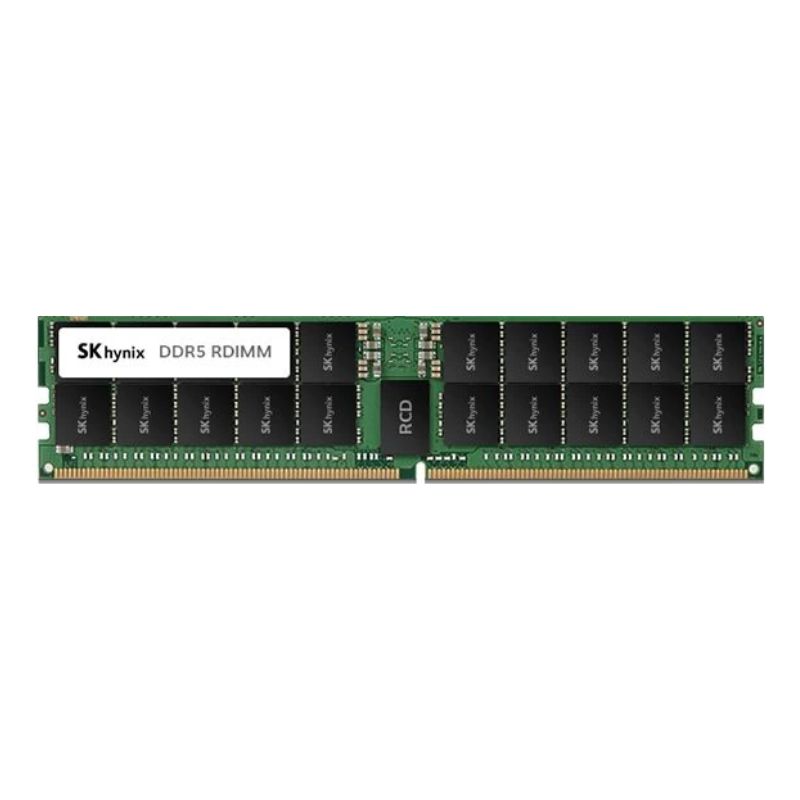


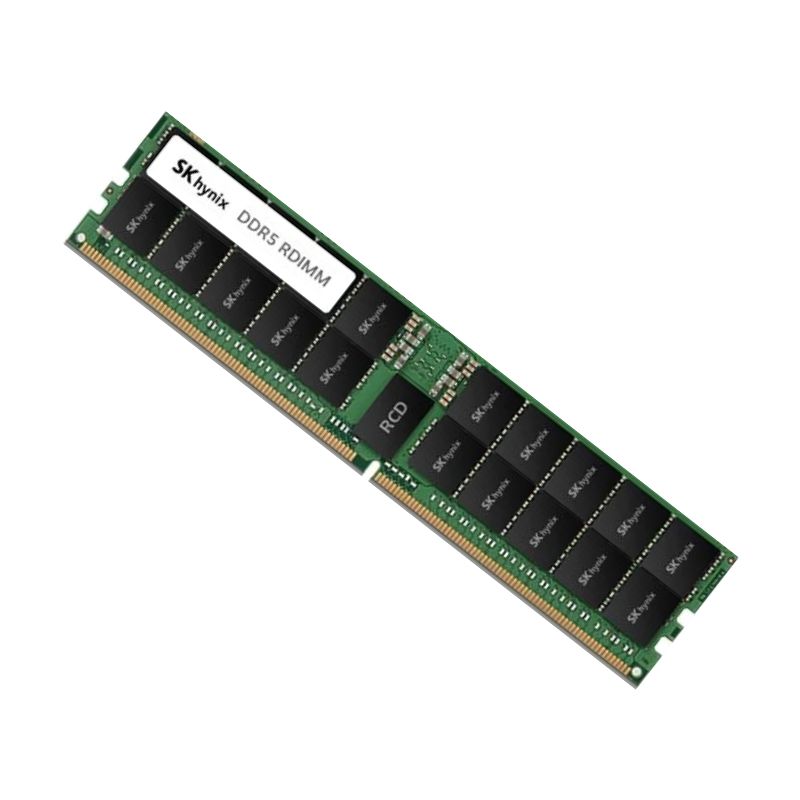
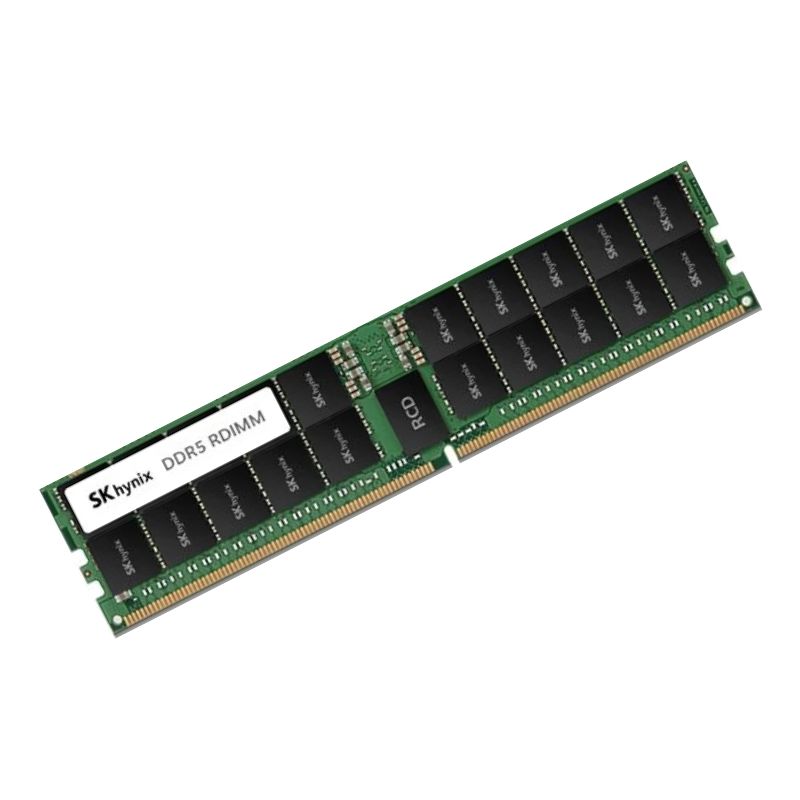
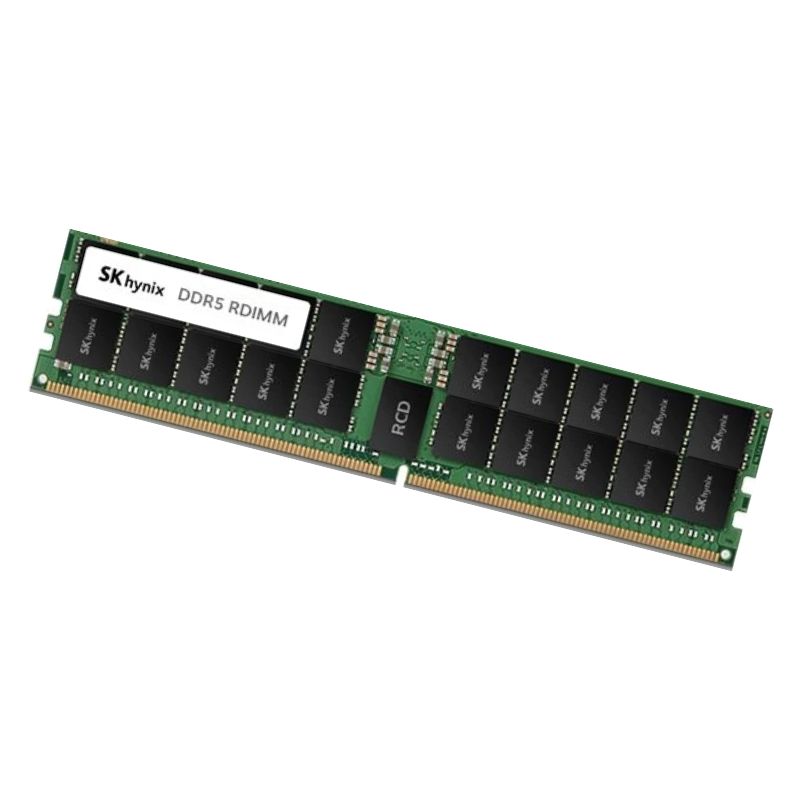
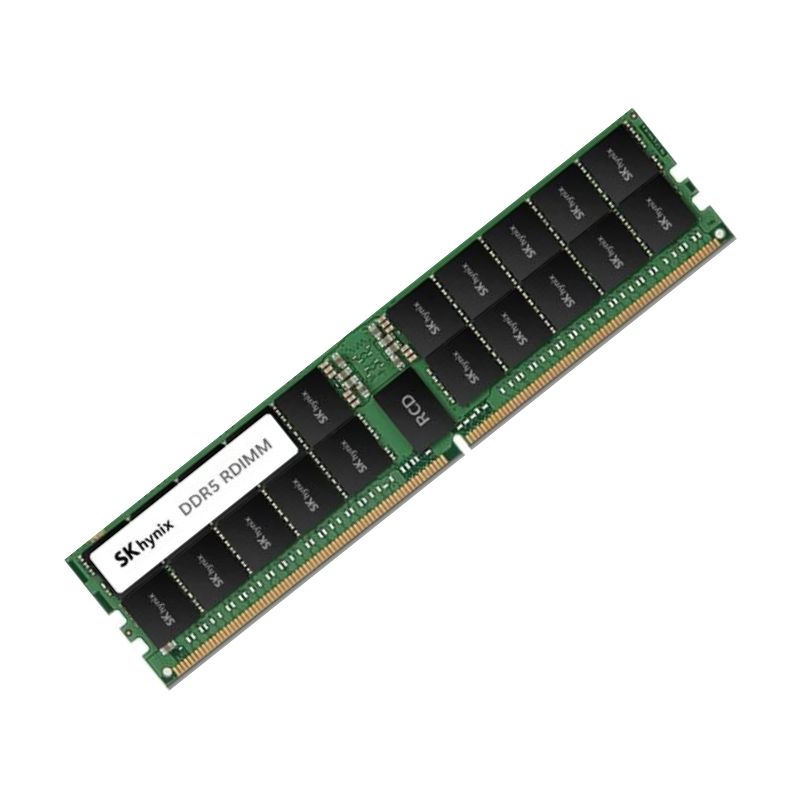
Hynix HMCGM4MGBRB611N 96GB DDR5 5600mt/s Pc5-44800 Dual Rank 288-pin Dimm Server Memory Module. New (System) Pull with 1 Year Replacement Warranty
The Hynix HMCGM4MGBRB611N is a high-capacity, next-generation DDR5 registered ECC server DIMM that delivers superior reliability, exceptional bandwidth, and enhanced efficiency for modern enterprise systems. Designed for heavy-duty server workloads, this 96GB memory module ensures smoother multitasking, reduced latency, and dependable data integrity across data centers and mission-critical environments.
With massive capacity and high transfer speeds, the HMCGM4MGBRB611N is built for data center workloads, supporting applications such as virtualization, machine learning, and distributed computing.
Businesses running enterprise-grade ERP, CRM, and analytics software benefit from the robust performance and ECC protection of this DIMM, ensuring that data remains consistent even under heavy demand.
Researchers and institutions that require parallel processing, simulation, and large dataset handling will find this memory module exceptionally well-suited for intensive workloads.
Modern IT infrastructures require memory scalability to handle growing workloads. The HMCGM4MGBRB611N enables flexible expansion, making it suitable for businesses scaling their server clusters without compromising speed or stability.
Built on cutting-edge DDR5 technology, this memory module provides a future-ready upgrade path for organizations adopting the latest generation of server processors and platforms.
The Hynix HMCGM4MGBRB611N is a high-capacity, high-performance server memory module engineered for modern data centers, enterprise servers, and mission-critical systems. Built to the DDR5 standard and specified as 96GB DDR5-5600 (PC5-44800) with CL46 timing, ECC Registered functionality, Dual Rank organization, and a 288-pin DIMM form factor, this module is tailored for workloads that demand both large memory footprints and low-latency throughput. It operates at a nominal voltage of 1.1V and is optimized for reliability, scalability, and energy efficiency in multi-socket server architectures.
Hynix designed this module to deliver a combination of high capacity and next-generation DDR5 features. The following subsections unpack the architectural choices that make the HMCGM4MGBRB611N appropriate for modern server deployments.
DDR5 introduces a range of improvements versus DDR4 that are particularly beneficial for servers: higher peak bandwidth per DIMM, improved power efficiency through lower nominal voltage and on-die power management, increased bank groups enabling better concurrency, and the option for significantly larger module capacities. At 5600 MT/s, this Hynix part offers substantial raw bandwidth gains that help reduce memory-bound bottlenecks in data-intensive workloads such as in-memory databases, virtualization, and analytic platforms.
In addition to system-level ECC, DDR5 brings on-die ECC for improved device-level resiliency. The HMCGM4MGBRB611N benefits from device-level error detection and correction which helps reduce latent device-level errors and improves overall module robustness when combined with Registered ECC at the system level. These enhancements are crucial for enterprise environments that require high availability and data integrity.
Operating at 1.1V, the module leverages DDR5’s improved power envelope to increase energy efficiency per transferred bit. Lower operating voltage coupled with higher throughput yields a better performance-per-watt ratio — an essential metric for data centers managing rack-level power budgets.
As a 288-pin RDIMM, the HMCGM4MGBRB611N matches the physical and electrical interface of modern DDR5 server platforms. Compatibility depends on the server CPU/motherboard supporting DDR5 RDIMMs and recognizing dual-rank, high-capacity modules. When planning system builds or memory upgrades, verify motherboard firmware (BIOS/UEFI) support, memory population rules per channel, and any vendor-specific compatibility lists (HCLs) to ensure predictable performance and full stability under load.
The 96GB capacity and 5600 MT/s data rate place this module in a category that targets memory-hungry server workloads. Below we break down typical use cases where this DIMM excels, and describe the performance characteristics you can expect.
High-speed DDR5 modules like this Hynix DIMM prioritize throughput, which helps sustained data transfer scenarios. CL46 indicates CAS latency in cycles; combined with the faster clock/rate of DDR5-5600, real-world latency in nanoseconds remains competitive. For latency-sensitive microservices, pairing this module with CPUs that have strong memory controllers and careful NUMA-aware configuration will extract the best results.
In multi-socket servers, population of memory channels across sockets and channels affects both usable capacity and throughput. Dual-rank modules often provide better electrical loading and can enable higher aggregate capacity per channel. However, verify per-platform guidance: some systems may limit top speeds when certain ranks or mixed capacities are used. Balanced population per channel and use of identical modules across channels usually yields the most predictable scaling behavior.
The Hynix HMCGM4MGBRB611N incorporates features aimed at enterprise RAS: register buffering, ECC support, and on-die error correction. These mechanisms reduce the likelihood of silent data corruption and simplify recovery from transient faults. Below we outline important RAS considerations for architects and administrators.
Registered ECC (RDIMM) adds a level of protection by enabling the memory controller to correct single-bit errors and detect multi-bit errors. When combined with on-die ECC, the module reduces both device-level and system-level error rates. Administrators should configure system logs and alerting to capture DIMM failure events and set policies for proactive replacement when correctable error counters climb.
Enterprise-grade DIMMs are designed to operate across a wide temperature range and under continuous load. Adequate chassis airflow, attention to DIMM population (which affects airflow), and firmware-based thermal throttling help maintain long-term reliability. Registered modules also provide electrical buffering between the memory controller and DRAM devices, helping signal integrity across larger memory arrays.
Server firmware updates often contain memory compatibility and stability fixes. When deploying HMCGM4MGBRB611N modules, ensure your platform vendor’s firmware is current and consult the memory compatibility list. Firmware-level training and initialization sequences (e.g., memory training) significantly influence startup stability and final operational speeds.
Symmetric population is essential. For best performance, populate matching DIMMs in each memory channel and follow the manufacturer’s channel population order. When mixing capacities, be mindful that motherboard rules may reduce maximum supported frequencies or require matched pairings for optimal stability.
After installation, validate that BIOS/UEFI detects the correct capacity and speed. Pay attention to memory frequency, XMP/JEDEC profiles, and any vendor-specific performance or power-saving options. In some platforms, manual tuning of voltage, timing, or training parameters may be necessary to reach the module’s rated speed.
Vendors frequently publish validated memory lists for server platforms. Relying on validated configurations reduces the risk of unexpected compatibility issues and accelerates time-to-production for deployments that include high-capacity DDR5 modules.
Before procurement or upgrade, consult server vendors’ Hardware Compatibility Lists (HCLs), technical advisories, and BIOS change logs to confirm the Hynix HMCGM4MGBRB611N is supported at 96GB/slot and that it will run at DDR5-5600. Some systems may boot at a lower JEDEC speed if vendor support for higher grades is absent.
Enterprise hardware vendors occasionally implement unique memory population rules or require specific registered buffer ICs. Verify whether the server requires particular SPD (Serial Presence Detect) settings or whether the vendor will only support modules from certain qualified suppliers. If deploying at scale, consider engaging vendor technical support for pre-deployment validation.
Energy efficiency is an increasingly important metric. DDR5’s lower operating voltage is advantageous, but higher operating speeds and larger capacity DIMMs affect absolute power draw and thermal dissipation. Understand how module population affects per-rack power and cooling demands.
While exact power draw varies with workload and operating conditions, administrators should account for additional heat from populated DIMM slots and balance it against rack cooling capacity. Use vendor-provided thermal guidelines and real-world monitoring to refine power estimates per server.
Maintain a modest pool of identical spare modules to accelerate recovery from field failures. Spares should match capacity, speed, and rank to prevent configuration mismatches during emergency swaps.
Memory modules are a part of the overall security posture. While physical memory does not store persistent data in the same sense as disks, certain risks exist (for example, cold-boot attacks or data remanence in DRAM). Enterprise deployments should adopt appropriate physical security, memory clearing policies, and cryptographic protections where applicable.
Compared to lower-capacity DIMMs or earlier DDR generations, the Hynix 96GB DDR5-5600 RDIMM provides a clear advantage in capacity-per-slot and bandwidth. Below are comparative observations to assist procurement decisions.
DDR5-5600 modules deliver higher bandwidth and often larger capacities than DDR4. Migrating to DDR5 means platform changes (CPU and motherboard) but yields long-term performance and density benefits. For workloads tightly bound by memory throughput and capacity, the upgrade frequently justifies associated costs.
Within DDR5 offerings, modules vary by capacity, rank, and speed grade. The 96GB density is a strong middle-ground for many enterprises — offering more capacity than 32GB/64GB DIMMs while avoiding some of the higher cost-per-GB multiples of very large specialty DIMMs. If ultimate bandwidth is paramount, higher speed grades (if supported by the platform) may be preferable; if absolute capacity is the goal, investigate platform maximums and potential 128GB+ module availability.
Not every deployment requires 96GB modules. Assess workload characteristics, density needs, and budget constraints when deciding between multiple smaller DIMMs versus fewer high-capacity modules. Below guidance helps match the Hynix HMCGM4MGBRB611N to typical purchasing decisions.


 Contact Us
 Information
 Catalog
 Solid State Drives (SSD)
 Network Switches
 Hard Disk Drives
 HBA & Controllers
 PC & Servers
 PC & Server Memory
 CPU & Processors
 Network Routers
 Power Supplies
 Tape Drives & Libraries
 Network Devices
 Computer & Network Cables