(7% discount is applied at checkout)
Cart is empty
Your go-to destination for cutting-edge server products
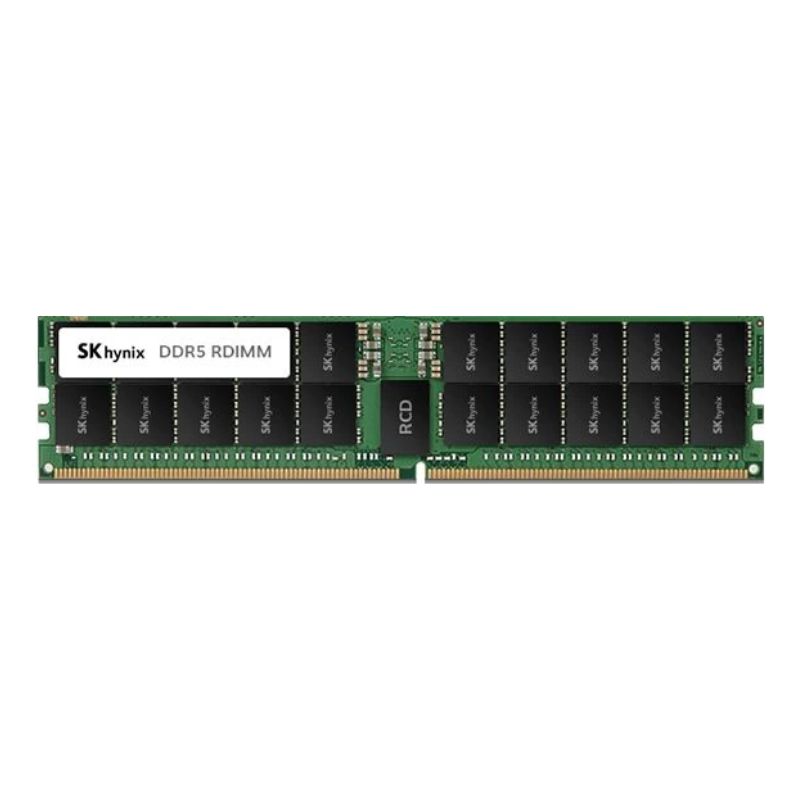


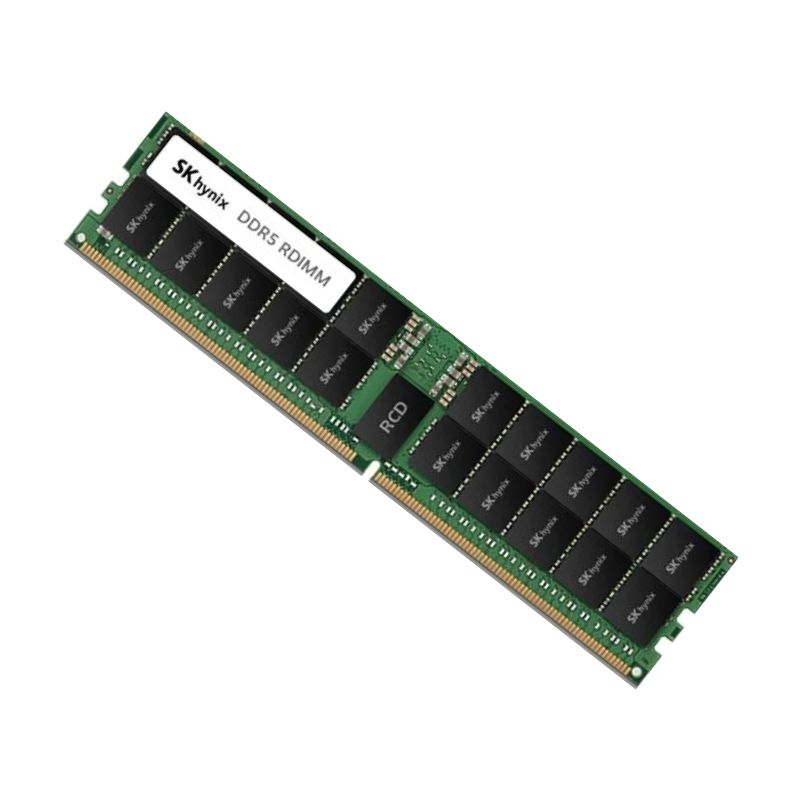
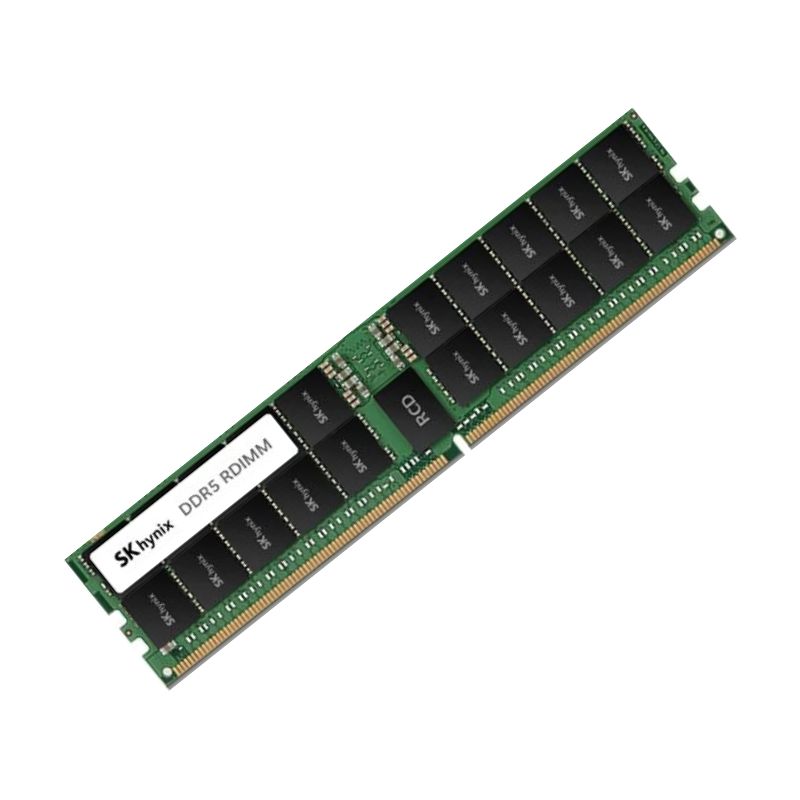
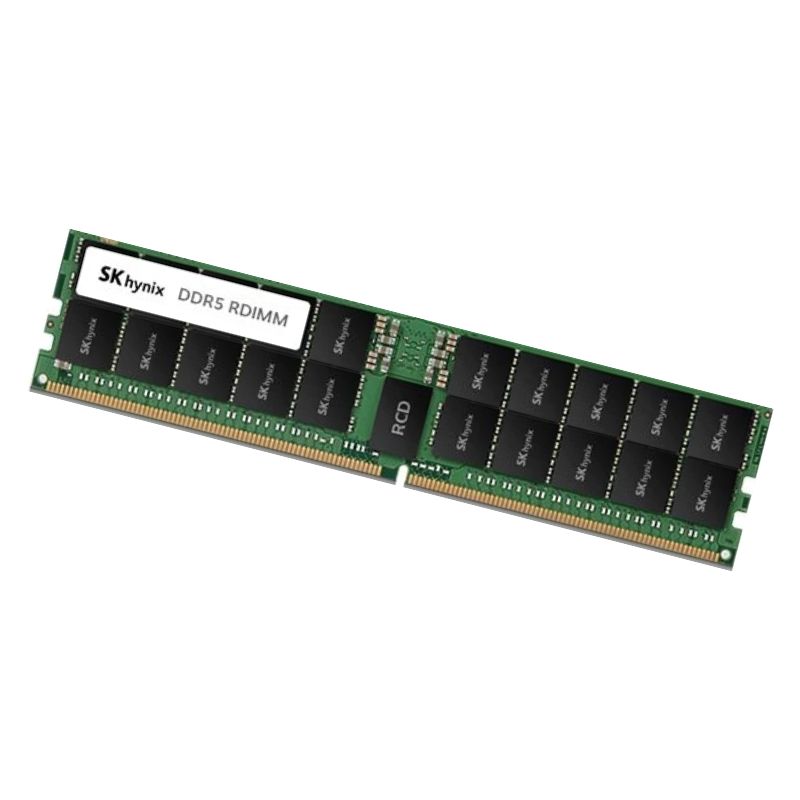
Hynix HMCT04AEERA128N 128GB DDR5-4800mhz Pc5-38400 Ecc Registered Cl46 288-pin Rdimm Memory Module. New (System) Pull with 1 year replacement warranty
The Hynix HMCT04AEERA128N 128GB DDR5-4800MHz RDIMM stands as a high-performance enterprise-grade memory module designed for servers and data-intensive computing environments. With its quad-rank configuration, advanced ECC support, and superior DDR5 technology, it delivers exceptional bandwidth and reliability for mission-critical operations.
Hynix HMCT04AEERA128N 128GB DDR5-4800MHz PC5-38400 ECC Registered CL46 288-pin RDIMM 1.1V Quad Rank x4 memory module represents a high-density, enterprise-grade DDR5 registered DIMM designed specifically for modern servers, workstations, and mission-critical systems. This category covers high-capacity registered ECC DDR5 modules with quad-rank organization and x4 device topology, optimized for data center workloads, virtualization, memory-intensive databases, and AI inference nodes. In this category description we explore technical specifications, real-world performance characteristics, compatibility considerations, installation and testing best practices, reliability and error-correction features, procurement and sourcing advice, SKU and part-number details, comparison to alternative memory types.
The HMCT04AEERA128N is a 128GB module — a high-density option for contemporary server platforms. “Quad Rank” indicates the module contains four independently addressable ranks of DRAM devices, which increases capacity and may improve parallelism for certain memory controllers. The “x4” topology means each DRAM device exposes a 4-bit wide data interface, commonly used in high-density DRAM assemblies for server memory to balance capacity and signal integrity.
DDR5-4800 (shown as PC5-38400) denotes a theoretical peak bandwidth of 38,400 MB/s per module transfer rate at 4800 MT/s. The CL46 refers to CAS Latency 46 — the column access strobe timing — which is typical for early DDR5 ECC registered parts at this speed and rank. Despite higher latencies compared to DDR4 in absolute cycles, DDR5 delivers greater effective throughput and advanced features (like per-bank refresh and on-die ECC) that improve overall system performance on heavy memory workloads.
ECC Registered (RDIMM) modules include both Error-Correcting Code and register/buffer logic. ECC corrects single-bit memory errors and detects multi-bit errors, an essential capability for server uptime and data integrity in enterprise deployments. The RDIMM register buffers control/address signals, which helps maintain signal integrity for systems using multiple DIMMs per channel or running at higher speeds.
The module is specified for 1.1 volts operation — DDR5's standard nominal voltage — which contributes to lower power consumption versus older DDR technologies. A 288-pin edge connector follows the JEDEC standard for DDR5 RDIMMs; physical compatibility depends on the host board's support for registered (RDIMM) DDR5 modules.
For memory-limited workloads, the jump to DDR5-4800 delivers appreciable gains in sustained bandwidth versus DDR4 modules. The HMCT04AEERA128N's quad-rank organization allows systems to populate fewer physical slots while achieving large pool sizes, which is especially valuable for virtualization hosts running high VM densities, in-memory databases (e.g., Redis, SAP HANA), and analytics engines. The CL46 latency is higher in cycles but because DDR5 doubles internal bank groups and increases bank counts, effective parallelism often mitigates raw cycle latency in multi-threaded server workloads.
Typical ideal use-cases include large-scale virtualization (many VMs per host), high-capacity in-memory caching, database buffer pools, analytics and batch processing, HPC nodes that rely on memory capacity rather than single-thread latency, and AI/ML inference servers that require large models to be memory-resident. Consolidation scenarios where minimizing DIMM slots while maximizing capacity is important also benefit from quad-rank 128GB RDIMMs.
In multi-socket servers, memory placement (NUMA node awareness) affects latency and throughput. High-capacity RDIMMs like the 128GB Hynix part make it practical to balance memory across sockets with fewer modules, but administrators should profile NUMA behavior and ensure critical processes are scheduled on sockets local to the data they access most frequently to avoid cross-socket access penalties.
Compatibility hinges on server motherboard and CPU support for DDR5 Registered ECC memory and quad-rank modules. Modern enterprise platforms from major server CPU vendors support DDR5 RDIMM, but exact compatibility lists (QVLs) must be checked on the motherboard or server vendor site. OEM servers often publish qualified memory lists — look for Hynix HMCT04AEERA128N or generic 128GB DDR5-4800 RDIMM QUAD-RANK x4 entries for guaranteed support.
Modules expose SPD (Serial Presence Detect) tables that the system firmware reads to configure timing and voltage. For enterprise RDIMMs, platforms typically read SPD and apply conservative JEDEC timings; some server vendors allow specific performance profiles to be enabled in BIOS/UEFI for validated higher speeds. Ensure motherboard firmware is up-to-date for optimal DDR5 training and rank handling.
Mixing different ranks (single/dual/quad) or mixing RDIMM with LRDIMM (load-reduced DIMM) is not recommended unless the server vendor explicitly supports the configuration. Mixed rank/count modules can cause the memory controller to fall back to slower timings or reduce usable capacity. For predictable performance, standardize on identical module type, speed, and rank across channels.
DDR5 introduces on-die ECC in certain DRAM devices, but system-level ECC (the ECC logic between the module and memory controller) remains critical to correct single-bit soft errors and detect multi-bit failures. The HMCT04AEERA128N’s ECC Registered design ensures the DIMM participates in system ECC operations to provide robust error correction necessary for enterprise availability SLAs.
For production deployment, memory burn-in and validation testing are recommended. Standard procedures include running MemTest86/MemTest86+ variants, vendor-supplied memory diagnostics, stress testing (Memtester, stress-ng), and real-workload soak-testing. Validate under the target workload and observe for correct ECC logging, corrected and uncorrected error counts, and stability under elevated temperature conditions that simulate a densely populated rack.
Enterprise DIMMs typically come with manufacturer MTTF (Mean Time To Failure) and reliability guarantees; review Hynix product datasheets for specifics on life cycle and operating conditions. Ensure server logging (IPMI, BMC, syslog) is configured to gather memory error reports so that proactive replacement can occur if corrected errors trend upward.
Follow server vendor documentation for slot population order and balancing across channels. For quad-rank modules, firmware may restrict the number of DIMMs per channel to preserve signal integrity. Properly balance ranks across memory channels to achieve full bandwidth and predictable latency — most server manuals include diagrams and rules for optimal DIMM placement.
The Hynix HMCT04AEERA128N identifier contains encoded information about density, speed, module design and vendor manufacturing series. When procuring, verify the full part number and any additional suffixes that denote packaging, revision, or specific tested bins. Request vendor datasheets and certificate of conformity for enterprise procurement.
Purchase through authorized distributors or directly from Hynix-approved channel partners to ensure warranty support and authenticity. Enterprise memory often includes multi-year manufacturer warranties; check return policies, RMA processes, and cross-shipment options for mission-critical replacements.
High-value modules can be a target for counterfeiters. Verify labels, holograms (if supplied), product markings, and test a sample unit in a controlled server to ensure it reports correct SPD data and performs as expected. Work with suppliers who provide traceability and provenance documentation.
When comparing, evaluate cross-vendor benchmarks, warranty terms, and compatibility lists. Hynix is a major DRAM manufacturer with a long track record; positioning often emphasizes stable supply, manufacturing scale, and validated server compatibility. Compare latency, power consumption, and real-world throughput using representative workloads rather than relying solely on JEDEC speed ratings.
Quad-rank RDIMMs like the HMCT04AEERA128N offer high capacity with a standard RDIMM electrical interface. LRDIMMs use an onboard buffer to reduce electrical loading and often allow higher memory population per channel at the cost of additional latency and slightly different power profiles. Choose LRDIMM if your platform requires extreme population density and supports LRDIMMs; choose quad-rank RDIMM when aiming for maximum capacity with standard registered buffering.
Example: populate a single-socket server with 8 x 128GB HMCT04AEERA128N modules to reach 1 TB memory capacity while retaining free channels for expansion. This minimizes DIMM counts and simplifies spares management.
Example: two sockets with 4 modules per socket (8 modules total) for a dual-socket host achieving 1 TB (8 x 128GB) with balanced memory across NUMA nodes. Validate the server’s maximum supported ranks per channel when configuring quad-rank modules.
Virtualization hosts benefit from fewer DIMMs with larger capacities; use same-part modules across the cluster to reduce variance in performance and simplify inventory.
Corrected ECC errors (single-bit corrections) should be logged but are not immediate cause for module replacement; however, an increasing trend of corrected errors can indicate developing hardware issues. Uncorrectable errors (multi-bit) require immediate investigation and RMA. Maintain proactive monitoring with BMC/IPMI alerting to avoid silent degradation.
For system tuning, start with JEDEC default SPD timings and then enable validated performance profiles where vendor-provided. Changes to memory speed or voltage should be incremental and validated with stress tests to prevent instability. Confirm thermal profiles to ensure adequate airflow with high-density RDIMM deployments.
Offerings to cross-sell include 64GB DDR5 RDIMM options, LRDIMM high-density modules for platforms that prefer load-reduced topology, and low-latency DDR5 modules where single-thread latency is critical. Also recommend memory installation kits and anti-static packaging for safe field replacement.
Value-added services include memory validation testing, on-site installation, firmware compatibility checks, and extended cross-ship RMAs to minimize downtime. Highlight warranty extensions and bulk-purchase discounts for enterprise customers.


 Contact Us
 Information
 Catalog
 Solid State Drives (SSD)
 Network Switches
 Hard Disk Drives
 HBA & Controllers
 PC & Servers
 PC & Server Memory
 CPU & Processors
 Network Routers
 Power Supplies
 Tape Drives & Libraries
 Network Devices
 Computer & Network Cables