(7% discount is applied at checkout)
Cart is empty
Your go-to destination for cutting-edge server products
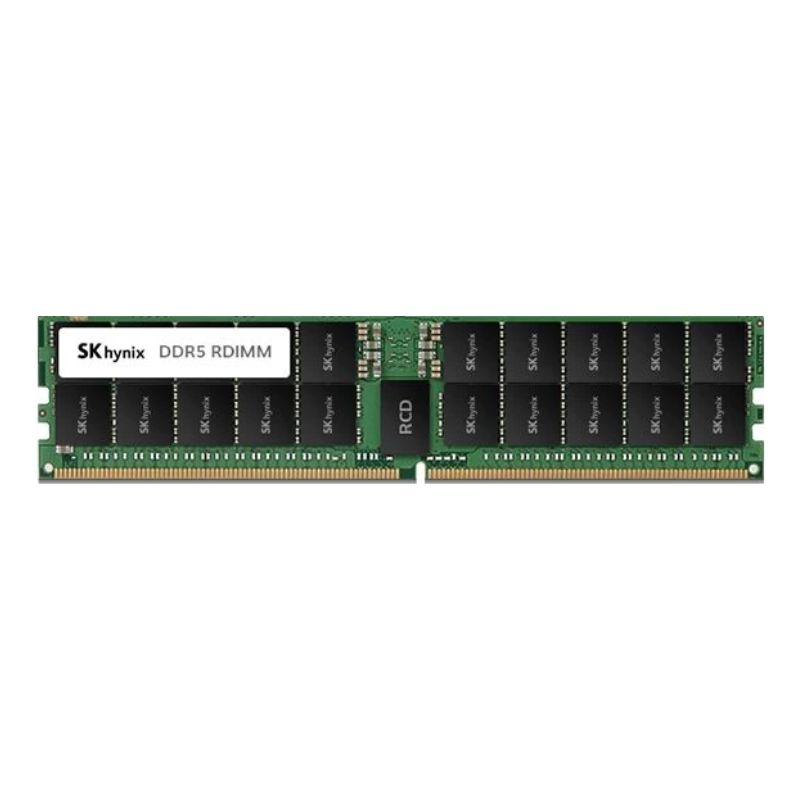


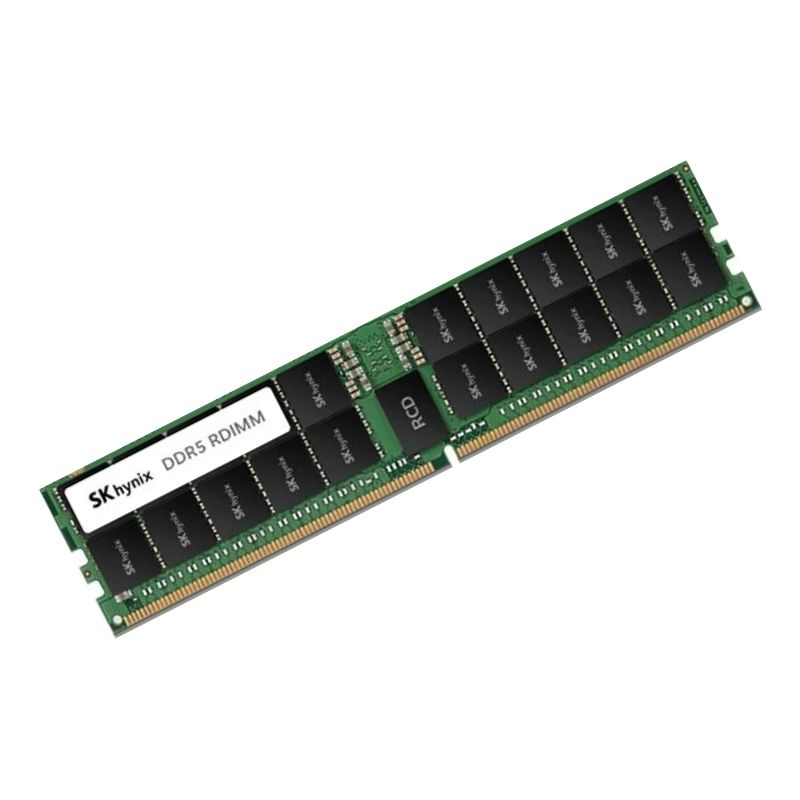
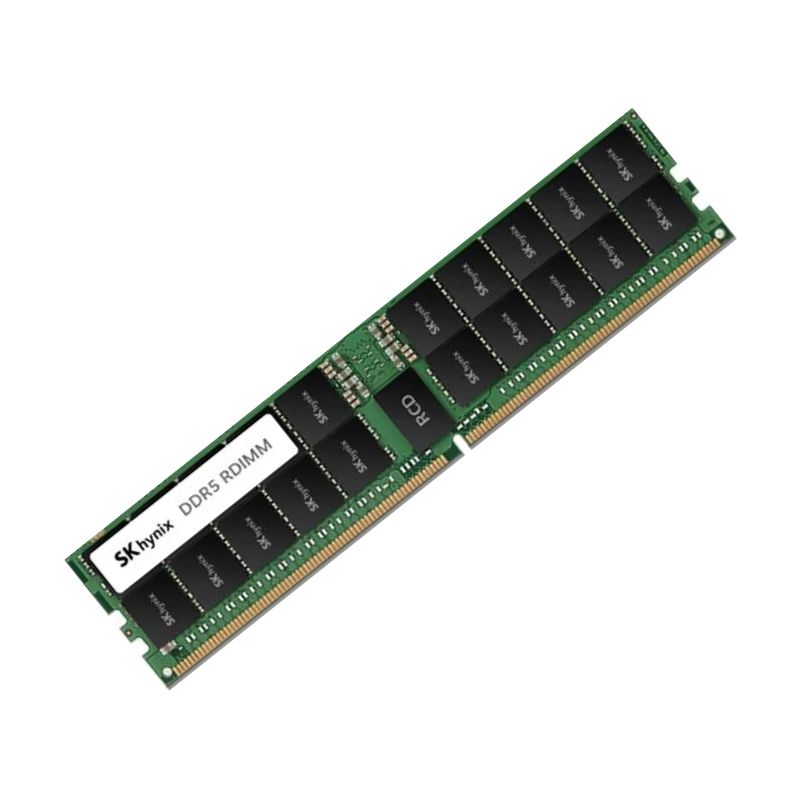
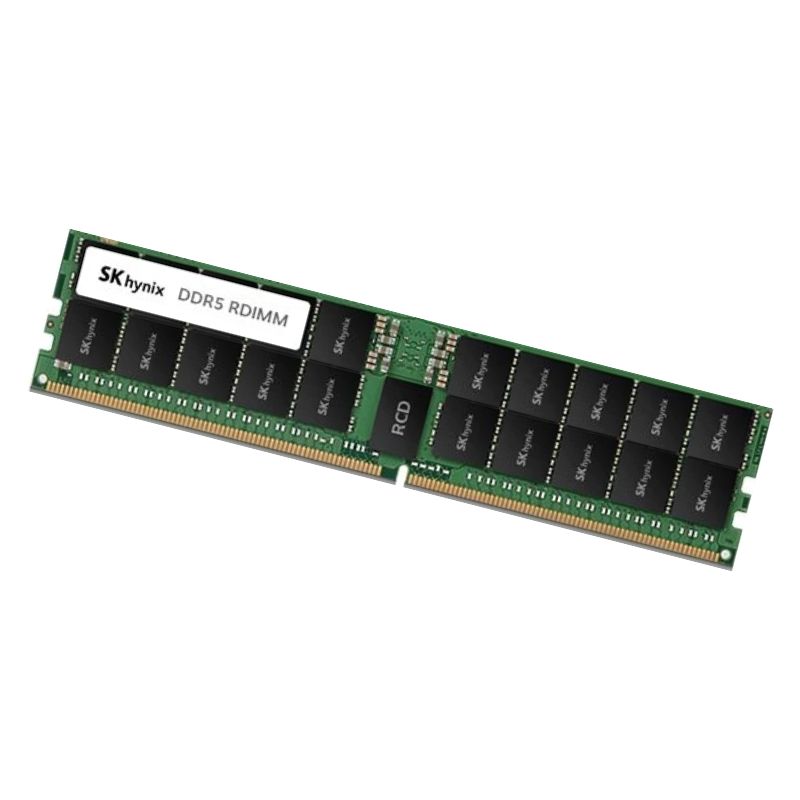
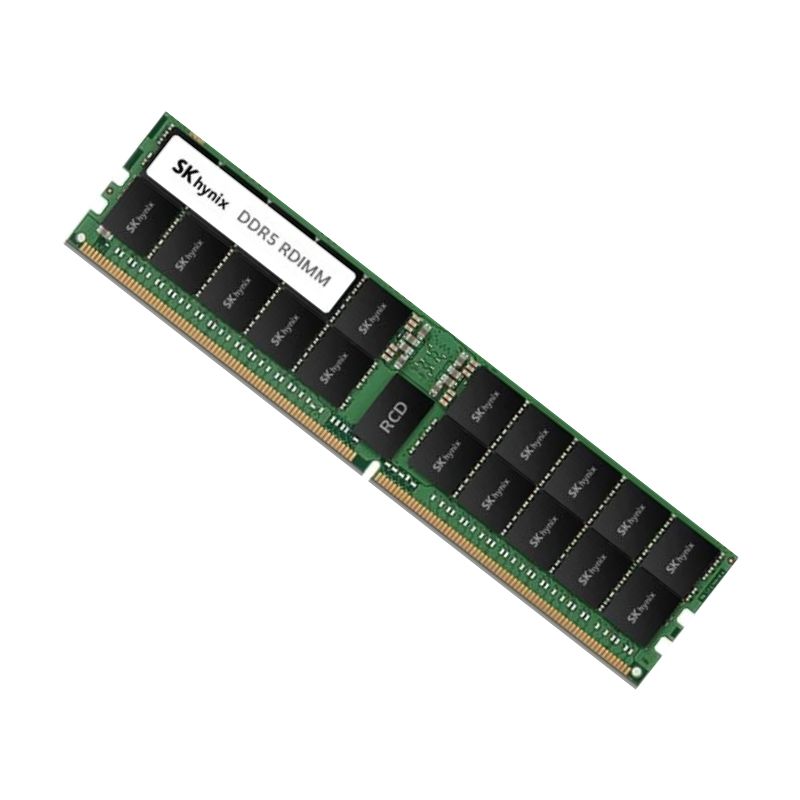
Hynix HMCT04AEERA137N 128GB DDR5 4800mhz Pc5-38400 Ecc Registered SDRAM Cl46 288-pin Rdimm 1.1v Quad Rank X4 Memory Module. New (System) Pull with 1 year replacement warranty
The Hynix HMCT04AEERA137N delivers advanced memory performance for enterprise-grade computing environments. With an impressive 128GB storage capacity and DDR5 technology, this registered module ensures stability, efficiency, and reliability in high-performance servers and workstations.
The Hynix HMCT04AEERA137N 128GB DDR5 4800MHz PC5-38400 ECC Registered RDIMM is a high-density server memory module engineered for modern data centers, enterprise servers, and workstation platforms that require maximum memory capacity, reliability, and error-correcting support. This category focuses on quad-rank, x4-wide DRAM architecture modules designed to deliver large-memory footprints with the stability of ECC Registered (RDIMM) buffering. The module’s defining characteristics—DDR5 technology, 4800MT/s (commonly marketed as 4800MHz), CL46 latency, 288-pin DIMM form factor, 1.1V JEDEC-standard operating voltage, and quad-rank x4 organization—make it a specialist offering that sits in the high-capacity, mission-critical memory segment.
This product is DDR5 SDRAM, rated at PC5-38400 (which corresponds to 4800MT/s). DDR5 brings architectural changes over DDR4—such as doubled burst length and improved power management—that make it more efficient for highly parallel server workloads. The 4800MT/s speed provides a solid baseline for DDR5 performance and is commonly supported by a wide range of server CPU families and motherboards that were designed with DDR5 compatibility in mind.
With 128GB per module, the Hynix HMCT04AEERA137N enables extremely large memory pools when deployed in multi-DIMM server configurations. It is specified as a quad-rank (4R) module. Quad-rank modules enable greater capacity per slot but can place additional electrical loading on the memory controller; understanding rank and system compatibility is crucial for successful deployment.
The x4 internal chip organization works with the RDIMM ECC architecture to provide error-correction capabilities essential for server reliability. ECC Registered memory contains a register and ECC logic that reduce electrical load on the memory controller and detect/correct single-bit errors while often detecting multi-bit errors—features that are essential for uptime-critical applications like virtualization, databases, and scientific compute.
Operating at the DDR5 JEDEC standard 1.1 volts and using the industry-standard 288-pin DIMM mechanical interface, this module adheres to common server motherboard designs for DDR5 RDIMMs. Always confirm motherboard and CPU memory controller support for 288-pin DDR5 RDIMM modules and 1.1V operating profiles.
The 128GB module density is ideal for virtualization hosts (VMware ESXi, Hyper-V, KVM) where consolidating many virtual machines onto fewer hosts reduces cost and increases operational efficiency. Large capacity modules simplify RAM provisioning for dense VM deployments and permit scaling without fully occupying all memory slots.
Databases that benefit from large in-memory caches—such as in-memory analytics, Redis, SAP HANA, and large buffer pools in RDBMS engines—gain immediate value from high-density DDR5 RDIMM modules. ECC safeguards data integrity for transactions and in-memory analytics workloads.
Scientific simulations, machine learning training datasets, and large-scale modeling require large memory footprints. Quad-rank, high-capacity modules enable researchers and data scientists to configure nodes with greater working sets, reducing paging and improving throughput.
CDN edge servers and caching appliances often require substantial memory to hold frequently accessed content. 128GB modules allow implementers to provision sizeable caches while maintaining ECC protections for content consistency.
Before purchasing or installing quad-rank RDIMMs, confirm the target motherboard and CPU memory controller support: many server platforms accept RDIMMs but may have limitations on the number of quad-rank modules per channel or per CPU. Rank loading rules differ by manufacturer and platform generation; for example, mixing ranks or using multiple quad-rank modules on the same channel may reduce available memory channels or require reduced clock speeds. Always consult platform documentation for validated memory lists (QVL) and supported topologies.
Do not mix registered ECC RDIMMs with unbuffered (UDIMM) or load-reduced (LRDIMM) modules in the same system. Mixing can lead to system instability or failure to POST. If upgrading a server, replace modules in matched sets following the server vendor’s guidelines. For multi-CPU systems, ensure symmetric population across CPU sockets when required by the motherboard.
BIOS/UEFI settings may need adjustment after installing high-density modules—especially on older systems that default to conservative timings or voltages. Enable automatic SPD/JEDEC configuration where supported, or load vendor-recommended memory profiles. For mission-critical servers, apply vendor-supplied validated firmware and microcode updates that improve DDR5 memory compatibility and stability.
The CL46 latency is a specification indicator for DDR5 timings at rated JEDEC frequencies. While CL numbers are relevant, actual performance depends on the combination of clock rate, CAS latency, and system architecture. In many server workloads—database operations, virtualization, and large data processing—capacity and memory bandwidth outweigh nominal latency differences; therefore, a 128GB DDR5-4800 RDIMM often delivers greater real-world benefit than lower-latency, lower-capacity alternatives.
DDR5 improves per-DIMM bandwidth and internal bank architecture relative to DDR4, enabling improved throughput for multi-threaded server applications. When combined with multi-channel memory controllers, DDR5-4800 modules provide ample bandwidth for most mainstream enterprise workloads.
Quad-rank modules slightly increase electrical loading which can limit maximum achievable frequency in some configurations; system-level tradeoffs between maximum frequency, rank count, and number of populated DIMM slots may require tuning. For large-capacity use cases, prioritize capacity and stability—most server workloads are constrained by memory size rather than the marginal gains of higher frequencies.
RDIMMs with ECC provide a register that buffers the command and address signals, easing the load on the memory controller and allowing stable operation with higher densities. ECC (Error-Correcting Code) ensures single-bit errors are corrected transparently, and double-bit errors are typically detected and reported—this reduces silent data corruption risk and is essential for enterprise-grade reliability.
Many server platforms support DIMM health monitoring through telemetry exposed in firmware (IPMI/iLO/DRAC) or vendor utilities. Monitoring DIMM temperature, ECC event counters, and SMART-like memory diagnostics supports proactive maintenance and helps prevent unplanned downtime by flagging failing modules or rising error rates.
Conduct validation tests—memtest-like stress tests, platform burn-in, and application-level load tests—after installing new RDIMMs. For production deployments, run extended memory stress tests to verify stability under sustained loads and surface any marginal compatibility issues with specific BIOS/firmware revisions.
Keep accurate inventory records of module part numbers, capacities, and serial numbers. For homogeneous server fleets, standardize on a single module part number family to simplify procurement and RMA processing. Track module age and error events to plan replacements before failures impact service levels.
Quad-rank modules offer twice the rank density of typical dual-rank modules, enabling larger per-slot capacity. However, some motherboards may limit the number of quad-rank modules that can be used per channel or per CPU, or may require down-clocking. Dual-rank modules can permit higher densities per channel in some topologies when more slots are populated, so compare based on platform rules and desired total capacity.
Load-Reduced DIMMs (LRDIMMs) reduce electrical load on the memory controller by buffering both address/command and data lines, which can enable higher population densities at the cost of increased latency and cost per module. RDIMMs remain a cost-effective choice for many enterprise deployments; choose LRDIMM only when platform validation shows RDIMM limitations for required capacities.
DDR5 brings increased per-module density and architectural improvements but requires platform support (DDR5-compatible CPUs and motherboards). For organizations still on DDR4, DDR5 adoption typically aligns with server refresh cycles. When planning large deployments, evaluate total cost of ownership (TCO), expected lifespan, energy savings from DDR5 power efficiencies, and software workloads that will benefit most from the added capacity.
The fifth generation of Double Data Rate synchronous DRAM, offering higher bandwidth, increased per-module capacity, and improved power management compared to DDR4.
Bandwidth designation for DDR5-4800 modules; PC5-38400 indicates theoretical peak transfer rates in MB/s per module at the specified speed.
Registered DIMM with a register to buffer command/address signals, commonly used in servers to support higher densities and improve signal integrity.
A module organization where four independent ranks of DRAM chips are presented to the memory controller; used to achieve higher capacities per module.


 Contact Us
 Information
 Catalog
 Solid State Drives (SSD)
 Network Switches
 Hard Disk Drives
 HBA & Controllers
 PC & Servers
 PC & Server Memory
 CPU & Processors
 Network Routers
 Power Supplies
 Tape Drives & Libraries
 Network Devices
 Computer & Network Cables